
Strategic Isolation at the Tonggo-ri Headquarters
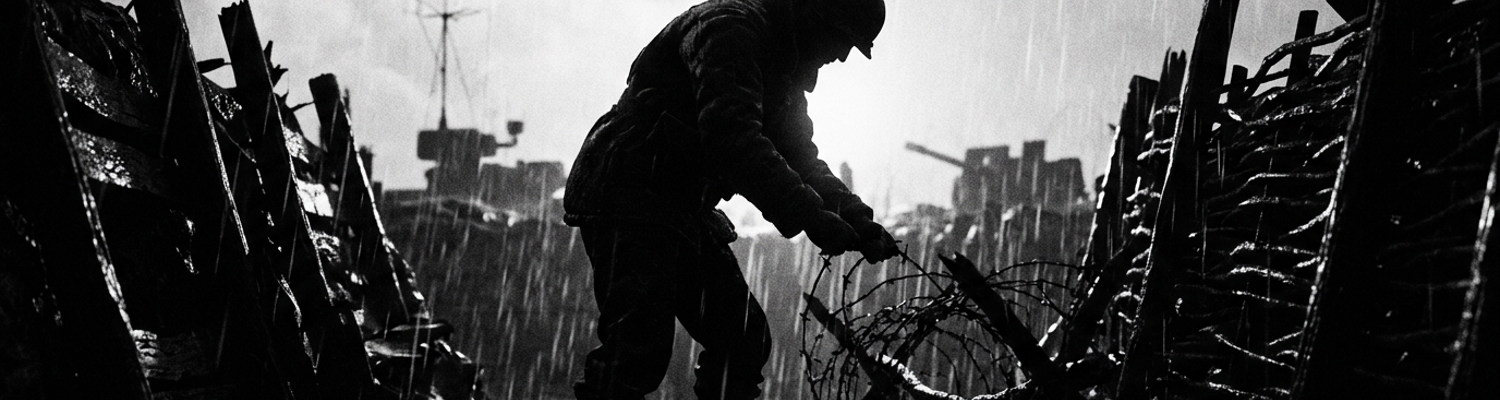
Technician Fifth Grade Donald Higgins sat in a dirt trench three feet below the sandbag parapet (Grid Coordinates CT 428413). He methodically scraped lead-antimony oxidation off the copper terminals of an SB-22 switchboard using the serrated edge of a pocketknife. Metal shavings gathered on his olive-drab trousers. The June humidity softened the grease on his fingers. A fresh spool of WD-1/TT field wire rested against his combat boots. Vehicle traffic along the Kumhwa supply corridor had already cracked its plastic coating. Two miles north, Chinese artillery shells severed the line three times in twenty minutes. Higgins twisted the raw copper strands together. He wrapped the splice in black friction tape and slammed the terminal binding post shut.
The line went dead while his thumb was still pressed against the brass screw.
When examining the historical record, the physical distance separating the 3rd Infantry Division command post at Tonggo-ri from the front line dictated every subsequent failure. The division headquarters occupied a series of sandbagged revetments and canvas tents tucked behind a granitic spur. This location sat roughly seven miles south of the active firing lines. Staff officers assigned to Major General Eugene W. Ridings tracked tactical movements by pushing red and blue plastic grease-pencil markers across clear acetate overlays. The surrounding mountain fingers of the Iron Triangle blocked the sound of incoming Chinese 122mm artillery barrages.
Division planners made fire support calculations based on map grids drawn twenty-four hours earlier.
Up forward, Outpost Harry absorbed thousands of high-explosive rounds per hour. Inside the Tonggo-ri bunker, the only physical evidence of the attack was the faint vibration of generators running in the communication trenches. The rear echelon operated without visual confirmation. They lacked telemetry and direct contact with the perimeter rifle pits.
Tactical radio nets offered no remedy.
Operational logs indicate that the primary tactical link failed almost immediately once combat commenced. The SCR-300 FM transceiver (Signal Corps Radio) operated across a narrow frequency spectrum between 40.0 and 48.0 megahertz. The 0.5-watt transmitter relied strictly on line-of-sight propagation. The steep terrain of the Chorwon-Kumhwa valley funneled the VHF signals directly into rock walls. Heavy thermal inversions generated by dense summer ground fog dispersed the remaining signal energy.
Chinese People's Volunteer Army electronic warfare teams exploited this physical vulnerability.
Enemy technicians set up high-output spark transmitters and sweeping continuous-wave jamming arrays on the forward slopes opposite Outpost Harry. Squealing static filled the headset channels of the BC-1000 receiver units. Radio operators at Tonggo-ri spun the tuning dials across eighteen preset channels. They found every frequency blocked by deliberate Soviet-supplied jamming or atmospheric backscatter. The forward dugouts broadcast distress coordinates. The carrier waves dissipated long before reaching the Tonggo-ri receiver masts.
Archival evidence shows that division leadership fell back on infantry runners to ferry written message books between the front and the rear.
Messengers dispatched from the command bunker of Company E, 15th Infantry Regiment had to traverse the open 420-meter saddle connecting the outpost to the Main Line of Resistance on foot. Massed Chinese 76mm guns and mortar batteries zeroed this trail. The bombardments turned the shallow communication ditches into pulverized shale and mud. Couriers scrambled over blown-in parapets and slipped across dead wire entanglements. They ran through continuous artillery interdiction before reaching the secondary battalion switchboard near Surang-ni.
Runners had to secure transport on rough dirt supply trails or continue south on foot toward Tonggo-ri.
Tactical situation reports arrived on the division operations desk three to five hours after the events described on the paper had occurred. Division artillery batteries received fire mission requests to strike Chinese assault waves. Those enemy formations had already overrun the coordinates and consolidated into abandoned American fighting bunkers.
Severance of WD-1/TT Field Wire Networks
A close review of operational logs indicates that the physical destruction of the wire grid began with the initial preparatory fires of the Chinese 24th Army. Chinese batteries concentrated north of the line unleashed barrages exceeding 20,000 high-explosive rounds per night directly into the Outpost Harry sector. The incoming inventory included Soviet-pattern M1938 122mm divisional howitzers and ZIS-3 76mm field guns. Heavy 120mm mortars targeted an infantry defensive footprint measuring scarcely four hundred yards across.
The defensive position relied entirely on WD-1/TT field wire.
This twin-conductor grid contained four tinned-copper strands for signal transmission and three galvanized-steel strands for tensile strength. Thermoplastic polyethylene and nylon encased the metal cores. Signalmen laid these lines along trench walls or strung them across churned surface dirt between Outpost Harry and the Main Line of Resistance. Shrapnel from airburst detonations severed the tensile steel strands instantly. Ground bursts blew three-foot craters through wire paths. The explosions sliced insulated jackets and scattered fragments into the rubble. Vehicular movement along the rear supply trail pulverized surviving connections. Burning cordite and phosphor dissolved the outer nylon sheaths.
Steel-reinforced wire could not withstand high-explosive saturation.
American defensive doctrine prescribed closed loop circuits to maintain redundancy across exposed front sectors. Signal teams ran dual WD-1/TT trunk lines out from the regimental exchange near Surang-ni. They split the feed into separate western and eastern paths that entered Outpost Harry from opposite sides of the defensive bowl. Inside the forward perimeter, an SB-22 switchboard in the Company E command bunker connected through terminal strips to individual EE-8 field telephones. Infantrymen placed these phones inside automatic weapons shelters and forward observation posts.
Massed artillery fire dismantled this entire redundant architecture within two hours of darkness.
Heavy mortar rounds pulverized the shallow communication ditches where the lateral loops intersected. The strikes destroyed primary feed lines before slicing through secondary return circuits along the reverse slope. Repair crews attempting to splice broken lines found hundred-yard sections of wire completely missing. The lines were vaporized or buried under collapsed trench revetments. Forward bunker occupants spun the hand-crank magneto generators on their EE-8 telephones. They heard only dead silence or the hum of short circuits caused by bare copper wires grounded against wet shale.
Isolated squad leaders defending the northern finger could not alert company commanders eighty yards away.
Chinese assault teams breached the concertina wire while the phones remained dead.
Archival evidence shows that the Chinese People's Volunteer Army coordinated signal severance directly with acoustic operations across the broken perimeter. Frontline psychological warfare units brought high-output loudspeaker horns up the forward slopes of Star Hill and Hill 417. They positioned the speakers within four hundred yards of the American rifle pits. Forward telephone lines went silent. Artillery fires shifted toward rear supply routes. The speaker arrays began broadcasting demoralization messages across the severed sectors.
Chinese operators broadcast through heavy amplification systems powered by portable generator units hidden in reinforced mountain tunnels.
The broadcasts paraphrased names and serial numbers of captured personnel from the 15th Infantry Regiment. The announcers told the forward riflemen that division headquarters had abandoned them to die in the dark. They stated that all wire lines running back to the rear switchboards had been severed permanently. No reinforcements would cross the valley. Sound waves reverberated off the granitic rock faces of the Iron Triangle. The noise drowned out verbal orders between adjacent fighting positions. Gunners held dead handsets to their ears while enemy assault waves swarmed over the parapets beneath the blare of the loudspeakers.
Combat Linemen and Under-Fire Wire Maintenance
Wire repair under sustained bombardment was an exercise in physical attrition.
Trouble teams from the 3rd Signal Company received orders to re-establish severed circuits the moment switchboard drop indicators fell at the regimental command bunker. Operating in two-man teams, these signalmen moved forward into the open approach trench connecting the main defensive positions at Hill 388 to Outpost Harry. Incoming Chinese 82mm and 120mm mortar rounds detonated across the saddle at intervals of three to five seconds.
Linemen carried the RL-39 reel apparatus strapped to their chest harnesses.
They fed fresh WD-1/TT wire by hand while crawling on their stomachs across the cratered slope. Shrapnel constantly severed the newly laid lines before technicians could even anchor them to picket stakes. Battalion commanders enforced radio silence across several tactical nets. They refused to delay the repair runs until artillery fires subsided. Line crews crawled directly through impact zones. They ran their bare fingers along burning mud-caked wires to find the jagged breaks caused by fragmentation.
Darkness made visual inspection impossible.
A close review of operational logs indicates that the physical mechanics of trench maintenance broke down under the sheer volume of high-explosive concussions. Shell impacts repeatedly blew down the timber revetments of the communication ditches. The debris buried communication lines beneath several feet of wet clay and fractured shale. Linemen dug through the rubble with their hands while kneeling in waist-deep water that flooded the trench floor.
Once a severed wire was recovered, the technician used a TL-29 pocketknife to strip the outer nylon and polyethylene jackets.
They performed this task without slicing the inner metal cores. Working completely blind in the dark to avoid drawing sniper fire, the lineman separated the four tinned-copper signal strands from the three high-tensile steel load strands. Signal doctrine required tying the steel cores in a square knot to absorb mechanical strain. The technician then twisted the copper conductors together in a tight Western Union splice. Cold rainwater diluted the adhesive on the friction tape. This prevented a watertight seal and shorted out the repaired circuit against the conductive mud within minutes.
Every functional line lasted less than an hour.
When examining the historical record, the physical exposure demanded by open-wire maintenance produced extreme loss rates across the division signal elements. Linemen assigned to the 3rd Signal Company and regimental communications platoons suffered casualty rates exceeding thirty percent during the opening four days of the engagement. Chinese forward observers directed indirect mortar patterns onto known trench choke points. They caught repairmen pinned down during five-minute splicing operations.
Airburst detonations along the main line of resistance peppered open communication ditches with casing fragments.
The jagged steel penetrated helmets and unarmored torsos. Medical evacuation teams could not reach the disabled technicians through the continuous artillery interdiction falling along the supply trenches. By June 13, the 15th Infantry Regiment lost nearly half of its primary wire specialists. Commanders assigned untrained infantry riflemen to carry DR-8 spools into forward fire zones.
Division casualty rosters listed forty-seven signalmen killed or wounded along the Outpost Harry communication axis before relief battalions arrived.
Structural Collapse of the Defensive Trench Network
The physical breakdown of Outpost Harry involved the total destruction of a 1,000-yard defensive trench system.
American combat engineers originally constructed the perimeter using heavy timber revetments (12x12 inch pine logs) and stacked sandbags designed to withstand intermittent mortar fire. The continuous high-explosive concussions from the Chinese 24th Army artillery barrages exceeded the structural tolerances of the pine logs. Shells detonating at a rate of one per second liquefied the surrounding topsoil. Torrential summer downpours compounded the geological instability. The rain turned the steep slopes of the outpost into deep mudslides that pressed against the weakened retaining walls.
Timber revetments snapped under the combined weight of mud and hydrostatic pressure.
A close review of operational logs indicates that the collapse of the communication ditches trapped forward defenders in flooded subterranean bunkers. Infantrymen from Company E sought shelter in deep dugouts carved into the reverse slope. Artillery strikes directly above these positions caved in the overhead cover. The impacts sent hundreds of pounds of wet earth and splintered wood crashing into the fighting compartments.
Soldiers found themselves sealed underground in total darkness.
Water from the flooded trenches poured down the narrow entrance shafts. The subterranean bunkers rapidly filled with waist-deep water mixed with human waste and blood. Shrapnel casualties lay on canvas cots that floated in the rising muck. Medics operated without flashlights to avoid drawing enemy fire through the collapsed apertures. They applied tourniquets by feel while standing in the freezing water.
Toxic cordite fumes settled into the low-lying dugouts.
The heavy gas displaced the remaining oxygen in the sealed compartments. Riflemen choked on the chemical residue of thousands of detonated artillery shells. Ventilation shafts constructed from empty artillery canisters crumpled under the external soil pressure. The trapped men lacked entrenching tools to dig themselves out of the collapsed bunkers. They waited in the dark while Chinese assault teams walked directly over the buried roofs.
The structural failure of the trench network erased the physical boundaries of the outpost.
Without defined firing steps or parapets, the surviving American defenders fought from shallow shell craters filled with rainwater. The defensive perimeter dissolved into a fragmented collection of isolated mud holes. Platoon leaders could not move laterally across the position to coordinate interlocking fields of fire. The collapse of the trench walls eliminated the only covered routes for ammunition resupply and casualty evacuation.
Men fought and died exactly where the mud trapped them.
Blind Tactical Commitments of Reserve Regiments
Rear echelon maps displayed friendly positions that had ceased to exist hours prior.
A close review of operational logs indicates that the regimental command post at Surang-ni repeatedly committed reserve counterattack formations from the 15th Infantry Regiment straight into unverified hostile terrain. Between 0200 and 0415 on the morning of June 12, tactical officers pushed Company B and Company C out from the reverse slopes of Hill 388. They ordered the men forward across the zeroed northern saddle to reinforce defensive positions that battalion planners assumed were still holding. Regimental dispatchers possessed no telemetry. They lacked visual confirmation and held zero wire contact with the Outpost Harry bunker complex.
Company commanders led their rifle platoons in single file along obliterated communication trenches.
Chinese 122mm artillery fire had already leveled these paths. The advancing officers remained unaware that Chinese 73rd Division infiltration groups had overrun the eastern approach trench forty-five minutes earlier. The advancing riflemen carried forty-pound combat loads over blown-in revetments and detonated trip flares. They walked directly into prepared Chinese machine gun kill zones established inside the outer American trench line.
Company B suffered fifty-four casualties within twelve minutes of crossing the assembly line.
Squad leaders could not establish the location of the main outpost trench. Platoon radios broadcast frantic position reports back to Surang-ni on 46.5 megahertz. Staff officers marked the company as fully integrated into the outpost perimeter.
Reservists stepped out of the dark and into crossfires set inside their own trenches.
Archival evidence shows that relief elements of the 65th Infantry Regiment suffered an identical breakdown in command awareness. Dispatchers instructed the 1st Battalion of the 65th Infantry to execute a full night relief across the disputed forward slopes. They provided no route clearance. They issued no verified enemy disposition maps. They attached no dedicated artillery liaison teams. The Puerto Rican riflemen pushed across the pulverized rock trails under the assumption that the 15th Infantry maintained functional defensive sectors along the northern finger.
Incoming Chinese mortar concentrations from Star Hill and Hill 417 boxed the relief columns into the open communication cuts near Checkpoint Charlie.
Division fire direction centers refused repeated radio requests for defensive box barrages. Rear staff officers could not confirm whether the requested target coordinates contained American or Chinese personnel. Battery commanders at the 39th Field Artillery Battalion finally approved indirect fires. The 105mm rounds detonated against the reverse slope of Hill 388. The shells landed inside the assembly areas of the advancing relief platoons rather than the Chinese assault trenches on the forward crest.
Men scattered into bomb craters along the trail without telephone wire.
They lacked operative radios and possessed no method of halting friendly battery salvos falling from the south. Forward defensive strongpoints operated without central direction entirely. Separated fire teams conducted brutal hand-to-hand combat across fractured redoubts. The physical link to both company and battalion leadership vanished once a 120mm mortar strike buried the command bunker of Company E. The explosion severed all internal phone lines connecting the squad dugouts.
The garrison split into isolated clusters of four to six men.
They fought inside timber-and-dirt shelters along the communication trench. Chinese assault teams armed with PPSh-41 submachine guns (firing 7.62x25mm Tokarev rounds from 71-round drum magazines) and stick grenades cleared the perimeter yard by yard. They dropped satchel charges through splintered overhead logs. American riflemen fired M2 carbines through collapsed sandbag apertures at point-blank range. Soldiers fought in waist-deep water and mud using trench knives and M1 rifle bayonets. They swung steel entrenching tools to defend individual shelter entrances.
They remained completely ignorant of whether the adjoining trench line sixty feet away was held by friendly survivors or Chinese combat engineers.
Platoon sergeants received no orders to withdraw. They received no status updates on approaching counterattack forces. They obtained no tactical guidance on where to concentrate fire. The battle became a series of disconnected private struggles contained entirely within six-foot dirt holes. Staff officers at the division headquarters seven miles south marked the outpost as contested on their map boards.
They remained unaware that the position was held by sixteen bleeding men wedged behind a pile of blown timbers and spent shell casings.