
SAC Ground Alert Mandates at Biggs Air Force Base
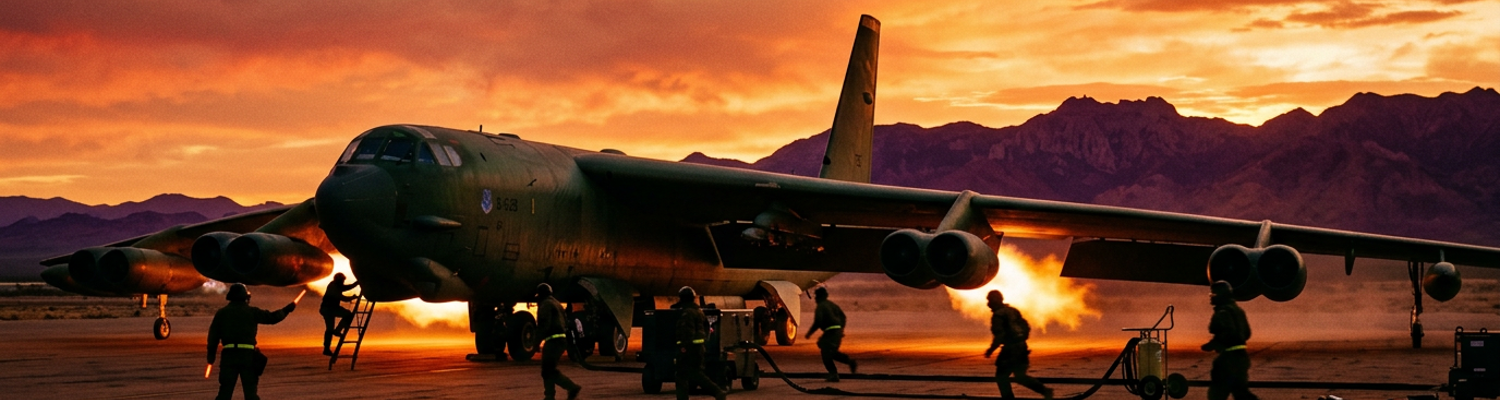
Soviet intercontinental ballistic missile batteries positioned across the Arctic frontier turned the sunbaked desert basin of Biggs Air Force Base into a primary target. Radar warning networks constructed in the far north provided headquarters with less than fifteen minutes of notice before incoming nuclear warheads would strike the military runways clustered against the Franklin Mountains. Geography bounded the airfield on the western edge, leaving pilots narrow escape corridors over the desert floor while rigid war plans demanded flawless execution without a single delay. Plumes of acrid propellant smoke suddenly spat across the flightline as a solid fuel cartridge starter suffered a catastrophic mechanical failure inside the engine cowl of a parked Boeing B-52B bomber. Ground crewmen dropped their heavy steel wrenches and sprinted across the asphalt toward the smoking engine nacelle, pulling heavy foam extinguishers from safety racks to suppress the chemical fire before the intense heat warped the delicate turbine housing.
Technicians smothered the smoldering starter casing with thick carbon dioxide foam, clearing the air just as evaluation inspectors with stopwatches marked the first mechanical breakdown against the base readiness record. Strategic Air Command planners in Omaha viewed the base through rigid statistical charts, yet the 95th Bombardment Wing maintained one third of its Boeing B-52B bombers and KC-135A tankers on continuous fifteen minute ground alert throughout March 1960 under punishing desert conditions. Headquarters doctrine treated these complex jet aircraft as dependable push button weapons, but the actual machines suffered under the constant physical strain of standby status. Heavy bombers sat fully fueled with wings sagging toward the tarmac, their bomb bays loaded with live thermonuclear weapons that ground crews checked day and night. Desert dust ground into external control linkages while fluctuating spring temperatures caused rubber seals to shrink and fuel lines to drip raw aviation kerosene onto the hot concrete. Mechanics worked grueling twelve hour shifts on the open ramp to replace fouled starter valves and keep eight temperamental J57 turbojet engines per aircraft ready for immediate ignition.
Flight crews endured an equally exhausting routine to guarantee they could reach those cockpits before the countdown timer reached zero. Airmen on alert rotation lived inside subterranean mole hole living quarters constructed directly adjacent to the Biggs flightline to meet strict launch deadlines. Steel blast doors sealed the personnel underground for seven continuous days, where pilots, navigators, and gunners slept in their heavy canvas flight suits next to red emergency telephones. Fluorescent lights burned around the clock in the windowless bunkrooms, and the men ate prepackaged meals while studying classified target folders that mapped flight routes directly into hostile airspace. Operational regulations strictly forbade anyone from walking beyond the bunker tunnels, forcing the men to remain within sprinting distance of the surface exits at every hour of the day.
Klaxons wailed through the concrete bunker hallways without warning as evaluation teams triggered another unannounced readiness test. Officers pushed open the heavy security doors, scrambled up the exit stairs, and jumped into idling alert trucks that sped across the tarmac toward the waiting dispersal pads. Trucks screeched to a halt beneath the massive swept wings, allowing the men to climb up the belly hatches and strap into their ejection seats within two minutes of the alarm. Pilots hit the battery switches, established radio contact with the control tower, and prepared to trigger the remaining explosive cartridge starters across the wing. Inspectors positioned along the taxiways raised their clipboards and watched the exhaust pipes, waiting to see how many bombers could turn their turbines and begin rolling toward the runway before the fifteen minutes ran out.
No Notice Inspections and Flightline Scramble Procedures
Stopwatches marked every passing second on the flightline after SAC inspectors triggered unannounced klaxon alerts to evaluate unit capability against a hypothetical fifteen minute Soviet missile attack. Headquarters war plans assumed that hostile intercontinental ballistic missiles launched from Arctic sites would strike Biggs Air Force Base within nine hundred seconds of radar detection. Standard operating procedures left no room for warm up delays, navigational rechecks, or mechanical hesitation. Base commanders had to get their nuclear strike forces airborne into the airspace over New Mexico and Texas before incoming warheads destroyed the runway surfaces. Evaluation officers from headquarters walked directly behind maintenance chiefs and flight commanders, observing whether base personnel followed emergency checklists without taking unauthorized shortcuts. Inspectors recorded every hesitation on their clipboards, tallying fractions of minutes while safety crews stood by with chemical fire extinguishers and emergency vehicles.
Crewmen scrambled across the hot ramp as alert crews sprinted to dispersed aircraft parking revetments to begin sequenced multi aircraft engine run ups under rigid timetable constraints. Dispersal revetments separated the bombers by hundreds of yards along the perimeter taxiways to protect the airframes from sympathetic detonations and blast pressure, but this wide spacing forced personnel to cover long distances on foot carrying heavy flight gear. Pilots climbed the narrow entry ladders beneath the fuselage, squeezed into their cockpit positions, and hit starter switches in a strict sequence. Solid propellant cartridges detonated inside the starter housings, hissing with high pressure gas that rapidly spun the compressor rotors of the Pratt and Whitney J57 engines without relying on external power carts. Turbines ignited in rapid succession, generating intense noise levels and high exhaust temperatures across the concrete aprons. Copilots monitored exhaust gas temperatures on crowded cockpit instrument panels, watching needles climb toward redline limits where excess heat could destroy internal turbine components.
Instrument dials fluttered as pilots stabilized fuel flow to prevent engine stalls during the hurried ignition sequence. Technicians on the ground unhooked grounding cables and pulled heavy wooden chocks away from the multi wheel main landing gear trucks the moment all eight engines reached operational power. Jet exhaust blasted against the earthen revetment walls, blowing loose gravel, sand, and unburned propellant smoke across the maintenance paths while pilots released the hydraulic brakes. Pilots taxied their heavy Boeing B-52B bombers out of the dispersal revetments in numerical order, steering the long swept wings into single file along the main taxiway. Ground guides used hand signals to direct the multi engine jets past parked tankers and maintenance stands, keeping the procession moving forward at maximum safe taxi speeds. Inspectors tracked the nose gear of each bomber as it rolled across painted white timing lines on the pavement, checking whether the aircraft met the mandatory launch deadline before the fifteen minute countdown expired.
Tires rolled across the runway threshold as pilots steered their bombers directly onto the center line of the main runway. Air traffic controllers cleared each bomber for immediate departure under minimum interval takeoff procedures, requiring aircraft to launch every fifteen seconds into the hot desert air. Cockpit crews engaged water injection systems to increase engine thrust, sending thick dark exhaust trails across the runway pavement as the heavy bombers accelerated down the strip. Pilots pulled their control columns back, lifting the loaded bombers into the air and clearing the peaks of the Franklin Mountains with narrow margins of terrain clearance. Evaluation officers lowered their clipboards and radioed base headquarters with the final tally of aircraft successfully airborne inside the fifteen minute limit. Ground personnel on the flightline then turned to inspect the empty parking revetments, documenting blown starter seals and damaged tires caused by the high speed scramble.
Cartridge Starter Failures and Mechanical Attrition
Mechanics cataloged the physical wreckage across the empty parking pads where explosive cartridge starters on the B-52B Pratt and Whitney J57 engines had failed to ignite cleanly. Explosive cartridge starters frequently misfired, spewing dense propellant exhaust across the flight ramp instead of spinning the turbines. Solid chemical charges loaded into the internal starter breech were designed to burn rapidly to spin the jet turbine rotors up to starting speed without ground power. Corroded electrical contacts and desert moisture inside the firing caps caused these heavy charges to smolder and pop without turning the compressor shafts. Technicians coughed through blinding clouds of chemical smoke to pry open warped breech faces and remove unexploded propellant cylinders before lingering embers could detonate the remaining powder. Each failed breech left a multi million dollar bomber stranded on the tarmac with a dead engine nacelle while evaluation teams marked down the mechanical abort.
Ground crews scrambled to connect auxiliary pneumatic start hoses to bypass the dead cartridge systems on stalled aircraft. Pneumatic starter systems and high pressure bleed air ducting repeatedly fractured during rapid ground start attempts in the desert climate. Extreme temperature shifts between freezing desert nights and intense daytime heat weakened the thin walled stainless steel pipes routed through the wing roots and engine pylons. High pressure air surging suddenly from ground compressor carts struck cold brittle metal joints with violent force. Ruptured ducting hissed loudly as escaping air ripped through insulation blankets and blasted sheet metal cowlings open across the ramp. Maintenance chiefs redirected spare pneumatic carts across the flightline, but the sudden loss of internal air pressure meant crews could not crank the remaining J57 engines in time to salvage the alert sortie.
Replacement parts depleted rapidly as maintenance squadrons exhausted their on hand inventories of starter turbines, valves, and metal clamps. Airmen dragged heavy rolling toolboxes and hydraulic jacks across the grit covered concrete to strip functional components from non alert B-52B airframes parked on distant maintenance aprons. Blowing sand from the Franklin Mountains settled into every opened fuel manifold and starter housing, accelerating the wear on delicate seals and turbine bearings. Maintenance officers bypassed standard overhaul intervals to return grounded bombers to alert status within mandatory SAC turnaround windows. Fatigued mechanics bolted newly scavenged bleed air lines into place using safety wire and torque wrenches while inspectors logged the exact labor hours against the wing operational readiness rating.
Evaluation teams gathered clipboard tallies from the flightline to calculate the wing launch success rate under simulated nuclear combat conditions. Inspectors noted that nearly half of the scramble delays traced directly to mechanical failures in the J57 starting systems rather than human crew hesitation. Base commanders in the operations center studied reports of cracked ductwork and burned out starter turbines, realizing that repeated rapid scrambles were degrading their frontline airframes faster than normal flight hours. Wing leaders ordered emergency cannibalization of grounded aircraft to supply replacement parts for the disabled alert bombers. Ground crews immediately dragged heavy tow bars into position and hitched diesel tractors to the disabled bombers, clearing the ramps for the next wave of simulated launches.
Fuel Sealant Degradation Under Extreme Operational Stress
Tractors hauled the eight engine bombers into parking revetments, exposing dark stains where aviation fuel had escaped onto the concrete during the engine run ups. Synthetic fuel tank sealants in early model B-52B airframes degraded and split under repeated thermal cycling on the Biggs tarmac. Desert temperatures swung violently across west Texas, rising toward blistering daytime heat that baked the swept aluminum wings before dropping near freezing during clear desert nights. Aluminum wing spars and skin panels expanded and contracted constantly under these rapid temperature shifts, pulling repeatedly at the rubberized sealant beads inside the integral fuel cells. Early synthetic rubber formulas lacked the elasticity to endure this continuous physical movement, becoming brittle and tearing away from structural seams inside the wet wing cavities. Vibrations from high power engine scrambles further fractured the compromised sealant, allowing thousands of gallons of fuel to seep through internal fastener holes and drip through the lower wing skins onto the ground.
Fuel drops splashed onto the concrete apron beneath the engine pylons, creating an immediate fire hazard that threatened the entire dispersal area. Flightline ground crews performed hurried repairs on volatile JP-4 fuel leaks while striving to prevent aircraft from dropping off the alert roster. Headquarters war plans strictly required the 95th Bombardment Wing to keep a set proportion of its bombers armed and ready for instantaneous launch, leaving zero margin for maintenance downtime. Removing an alert bomber from the active roster meant filing an operational deficiency report with Strategic Air Command evaluators, bringing immediate official reprimands down on base commanders. Aviation fuel possessed a low flash point and vaporized rapidly in the desert heat, creating invisible clouds of combustible gas that hung beneath the wing roots. Maintenance chiefs deployed foam trucks, warning signs, and static bonding cables across the ramp to manage ignition risks while teams worked against the clock.
Mechanics climbed through cramped access ports beneath the wing surfaces to reach the leaking fuel cells without draining the main tanks. Standard depot maintenance procedures called for purging the entire fuel system and allowing the tanks to air out for several days, but operational alert deadlines prohibited such delays. Airmen strapped on full face respirators and squeezed into the narrow internal cavities, crawling between internal baffles where wet JP-4 fuel still coated the lower stringers. Hand tools made of non sparking beryllium copper scraped away strips of hardened synthetic sealant from the interior seams. Toxic fuel vapors irritated exposed skin and made prolonged work impossible, forcing airmen to rotate out of the dark wings every twenty minutes while fresh workers took their places.
Technicians pressed fresh polysulfide sealant into the cleared rivet lines using wooden spatulas and pneumatic caulking guns. Portable hot air blowers aimed heated air ducts into the open wing bays to speed the curing process of the sticky synthetic rubber compound. Quality control inspectors wiped the exterior wing skins clean with dry rags and watched the seams beneath bright handheld work lights to verify that no new drops emerged. Maintenance officers signed the return to service logbooks the instant the patches held, clearing each repaired B-52B bomber back to mission status before SAC inspectors tallied an alert loss. Drivers backed diesel tow tractors up to the nose gear and hauled the bombers directly back onto the alert pads to resume the fifteen minute countdown.
SIOP Launch Procedures and Offutt Communications Links
Steel wheel chocks locked against the massive rubber tires as base operations personnel restored the bombers to immediate launch readiness on the concrete dispersal pads. Commanders inside the subterranean wing command post executed simulated Emergency War Order launch sequences in complete operational isolation during these exercises. Heavy blast doors swung shut and sealed behind the commanders, cutting off telephone lines to local base offices and enforcing absolute operational privacy. Armed air police stood guard in the concrete access tunnels to ensure that no unauthorized personnel crossed into the secure operations center during the simulated strike execution. Staff officers spread large routing charts across wooden conference tables, reviewing predetermined flight corridors, high altitude tanker rendezvous points, and target coordinates assigned to each aircraft. Evaluators stood directly behind the operations controllers with stopwatches, timing how rapidly the wing translated complex war plans into immediate flight directives without consulting outside commands.
Radio antennas rising above the desert scrub maintained the vital electronic path between the isolated wing command center and the outside military command structure. Alert command depended on high frequency primary radio links connecting Biggs Air Force Base to SAC headquarters at Offutt Air Force Base. High frequency transmitters pushed coded voice and teletype signals across more than nine hundred miles of open country between eastern Nebraska and west Texas. Atmospheric interference from desert heat and unpredictable ionospheric conditions frequently distorted these signals, forcing communications airmen to constantly adjust quartz crystal tuners and signal amplifiers. Operators sat before glowing vacuum tube radio sets with heavy black headphones clamped over their ears, straining to hear call signs through loud bursts of static. Any breakdown along these delicate airwave channels meant the wing commander could miss a direct launch directive from headquarters, stranding loaded bombers on the ground during a genuine national emergency.
Teleprinters clattered loudly inside the communications room as automated keys hammered out strings of encrypted letters onto continuous paper rolls. Communications specialists tore the yellow paper ribbons from the machines and ran them directly to the controller desk for immediate decoding. Controllers pulled sealed red envelopes from metal wall safes, matching incoming alphanumeric combinations against predetermined verification lists to confirm that the transmission originated from SAC headquarters. Two officers inspected every decoded line side by side, strictly obeying the two man concept to verify that the message was authentic before passing it to the wing commander. Base commanders verified the printed instructions, approving simulated fuel loads, takeoff intervals, and flight paths toward designated fail safe points over northern Canada. Officers stamped the decoded orders with red ink, logged the exact receipt time in the wing operations binder, and picked up the direct telephone handsets connected to the alert revetments.
Loudspeakers mounted on wooden utility poles across the dispersal area blared the launch confirmation directly into the cockpits of the waiting B-52B bombers. Pilots flipped ignition switches and adjusted throttle quadrants, checking their cockpit instruments as engine-driven generators surged to support full navigation systems. Evaluators stood along the taxiways, noting whether commanders met their assigned takeoff windows while operating under the simulated electronic blackout. Maintenance officers tracked fuel consumption and airframe temperatures on clipboards, calculating how rapidly the strained bomber components would wear out if these intensive scrambles continued throughout the week. Base commanders watched from the flight tower as the lead bomber released its brakes, swung its nose into the prevailing desert wind, and rolled toward the runway threshold to complete the simulated launch sequence.