
The plan was a fantasy from its inception. War Plan Orange-3 (WPO-3), the strategic doctrine for defending the Philippine archipelago, was never a plan for victory. It was a blueprint for a fighting retreat, a carefully choreographed delay action. Upon a Japanese invasion, United States Army Forces in the Far East (USAFFE) would execute a retrograde movement from across Luzon, consolidating on the Bataan Peninsula. This small, rugged piece of land was the key. By holding Bataan and the fortified island of Corregidor, USAFFE could deny the Japanese access to Manila Bay, the finest deep-water port in the Orient. The defenders, a composite force of the U.S. Army’s Philippine Division and ten newly mobilized Philippine Army divisions, were expected to hold out for six months.
Six months.
This was not an arbitrary number. It was the absolute minimum time calculated for the U.S. Pacific Fleet to mobilize, cross the Pacific, engage and defeat the Imperial Japanese Navy, and arrive to break the siege. The entire strategy rested on this naval relief. It was a concept born from decades of Mahanian naval theory emphasizing a single, decisive fleet battle. The planners envisioned a battered but defiant garrison on Bataan being rescued at the last possible moment by a powerful American armada.
This core assumption was fatally flawed. The attack on Pearl Harbor on December 7, 1941, was not the cause of this strategic isolation. It was merely the final confirmation. The powerful relief armada promised by the plan was a ghost fleet. It had never truly existed in the operational timelines of the U.S. Navy, which, by early 1941, estimated a two-year transit time to the Philippines, not the six months the Army defenders were supplied for. The official adoption of the “Europe First” strategy had already relegated the Philippines to a secondary theater. The destruction of the battleships at Pearl Harbor simply stripped away the last veneer of hope. The small U.S. Asiatic Fleet based in the Philippines was hopelessly outmatched and withdrew south, leaving the ground forces completely alone.
The ground defense itself was a fragile construct. WPO-3 laid out five defensive lines across the central plains of Luzon to slow the anticipated Japanese pincer movement from landings at Lingayen Gulf and Lamon Bay. General Jonathan M. Wainwright’s North Luzon Force was to hold back the main Japanese 14th Army while General George Parker’s South Luzon Force escaped into Bataan. Archival evidence of unit composition (found in NARA Record Group 407) reveals the hollowness of this concept. The Philippine Army divisions were paper formations, mobilized in the fall of 1941 and armed with obsolete M1917 Enfield rifles. They had little ammunition, almost no modern artillery, and no effective anti-tank weapons. When the main Japanese landings occurred on December 22, the defenders at Lingayen Gulf could not hold. On December 26, General MacArthur abandoned his own, more ambitious plan to defend all the islands and ordered a reversion to WPO-3, initiating the desperate race for Bataan.
The theoretical timeline of War Plan Orange-3 became irrelevant within hours of the war’s start. A review of operational logs from December 8, 1941, shows a catastrophic paralysis at the highest levels of command. News of the Pearl Harbor attack reached General MacArthur’s headquarters in Manila at approximately 03:00 local time. This provided a nine-hour warning before any major strike on the Philippines. The commander of the Far East Air Force (FEAF), Major General Lewis H. Brereton, repeatedly requested permission from MacArthur’s chief of staff, General Richard Sutherland, to launch his B-17 Flying Fortresses from Clark Field for a preemptive strike on Japanese airbases on Formosa. Permission was denied. An order was given to fly the bombers to avoid being caught on the ground, but without an attack order, they were recalled to refuel.
At 12:35 PM, while the aircraft were at their most vulnerable, the attack came. Over one hundred Japanese bombers and fighters from the 11th Air Fleet, their own departure delayed by fog, found the American planes parked in neat rows. The strike was brutally efficient. A simultaneous attack hit the fighter base at Iba. In less than an hour, the core of American airpower in the Pacific was annihilated. Twelve of the seventeen B-17s at Clark were destroyed on the ground, along with nearly forty P-40 fighters. The FEAF was eliminated as a fighting force.
Two days later, on December 10, Japanese air power turned its attention to the Cavite Navy Yard. With no American air cover, 54 bombers flew over the base at high altitude, immune to the yard's weak anti-aircraft fire. The two-hour attack was methodical. Direct hits crippled the power plant and workshops, but the resulting fires caused the most damage. The submarine USS Sealion, in for repairs, took two bombs and sank at her mooring. Her sister ship, USS Seadragon, was damaged but saved. A massive explosion in a torpedo workshop destroyed nearly 200 torpedoes, gutting the offensive capability of the submarine force. The destruction of the Cavite facility, the only major naval repair base in the Far East, left the Asiatic Fleet without a home. Admiral Thomas C. Hart ordered his remaining surface ships to withdraw south. The ground troops were now completely cut off. The loss of local air and sea power in the first days of the war, not the distant disaster at Pearl Harbor, was the immediate event that sealed Bataan’s fate.
The elegant lines drawn on the maps of War Plan Orange-3 dissolved upon contact with the Japanese 14th Army. The planned defensive positions across Luzon’s central plains were designed for a conventional, road-bound enemy. Lieutenant General Masaharu Homma’s forces, however, were a modern combined-arms organization. Engagements after the December 22 landings at Lingayen Gulf show a clear pattern. Japanese reconnaissance aircraft, enjoying total air supremacy, identified USAFFE positions for bypass or precision attack. Type 95 Ha-Go light tanks spearheaded infantry assaults, easily breaking through the lines of the undertrained Philippine Army divisions. These Filipino units, like the 71st and 91st, had no answer to the armor. Japanese infantry, experienced from years of war in China, would then exploit these breaches, enveloping and collapsing the defensive positions. The American M3 Stuart light tanks of the Provisional Tank Group fought well in isolated actions but were too few to make a difference. The systematic failure of the defensive lines was a failure of doctrine to account for an enemy that integrated air, armor, and infantry into a fluid tactical system.
Pre-war American training manuals offered no solutions. The doctrine was based on the expected battlefields of Europe, with an emphasis on static positions and clear fields of fire. The ten Philippine Army reserve divisions had barely begun this training. Most Filipino soldiers had minimal marksmanship practice with their long, unwieldy M1917 Enfield rifles. Mortar ammunition was so old that its dud rate approached seventy percent. Japanese soldiers, in contrast, were masters of infiltration, using the dense jungle to bypass strongpoints and attack command posts and artillery in the rear. The American concept of a continuous, fixed line was impossible to maintain.
The terrain itself became an enemy. This was most apparent during the defense of the Abucay Line in January 1942, the first major defensive front on Bataan. The line stretched from the coast to the slopes of the 4,222-foot Mount Natib. USAFFE commanders deemed the rugged, jungle-covered terrain of the mountain to be impassable and left a significant gap between their I and II Corps. It was a fatal error. Operational logs from the battle show that elements of the Japanese 9th and 141st Infantry Regiments did exactly what was thought impossible. They scaled the volcanic slopes and moved through the jungle, emerging behind the flank of the 51st Division. The infiltration made the entire Abucay Line untenable, forcing a costly retreat. The jungle fortress had become a fatal vulnerability.
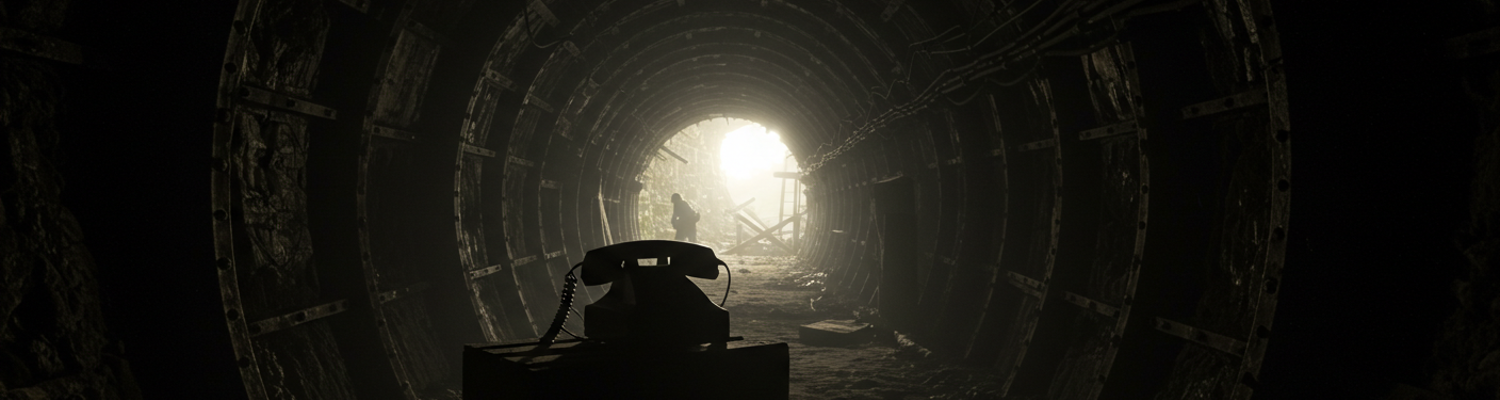
On December 24, 1941, General MacArthur moved his USAFFE headquarters not to the front lines on Bataan, but to the island fortress of Corregidor. His command post was deep inside the Malinta Tunnel complex, a massive engineering work bored through a 390-foot hill. A specific lateral tunnel, the third on the north side, became the nerve center of the campaign. This bombproof shelter, with its concrete walls and electric car line, was a world away from the fighting. This security created a profound isolation. The men fighting in the malarial jungles of Bataan began to refer to the headquarters staff with contempt.
The physical and psychological distance between the command staff in the tunnel and the soldiers on Bataan was immense. A review of operational directives reveals a command structure managing a desperate battle from a static, removed location. MacArthur, and later Lieutenant General Jonathan Wainwright, directed forces only a few miles away, but the conditions were entirely different. Commanders on Corregidor ate regular meals while troops on Bataan starved. This disparity bred resentment, but the operational disconnect was more destructive. Orders for counterattacks were issued to units so decimated by hunger and disease they lacked the strength to move. MacArthur himself visited Bataan only once during the entire siege, a fact that underscored the remote nature of his command.
This was a failure of perspective. The command doctrine depended on a flow of information and an understanding of battlefield conditions that was impossible to maintain from an island fortress. The entire system of remote command relied on a fragile communications network. The primary link was a submarine telephone and telegraph cable between Corregidor and Bataan. This was supplemented by a mix of radio sets, many of them older models scavenged from civilian sources. Signal Corps personnel worked constantly to keep these channels open, but the system was highly vulnerable. Radio antennas on Malinta Hill were a constant target for Japanese artillery. Wire and cable lines were frequently severed. One maintenance crew recorded making 57 splices to repair 29 separate hits in a single night. When the cable link was working, operators transmitted over a million words a month, mostly in code. The fall of Bataan on April 9, 1942, cut the primary link, and the final messages from Corregidor before its own surrender were tapped out in desperation.
After the collapse of the Abucay Line, the combined American and Filipino forces fell back to their final position, the Orion-Bagac Line. A review of operational logs from late January and February 1942 shows a shift in Japanese tactics from frontal assaults to a campaign of infiltration designed to bleed the defenders. This period became known as the Battle of the Pockets. Elements of the Japanese 20th and 9th Infantry regiments exploited gaps in the I Corps sector, establishing pockets of resistance deep behind the main line. One such pocket contained nearly a thousand Japanese soldiers. For three weeks, a desperate, close-quarters battle raged in the jungle as USAFFE units were pulled from the main front to contain these infiltrations.
It was a battle against time, governed by logistics.
The physical decay of the besieged force was catastrophic. Pre-war planning called for six months of supplies; in reality, only a two-month supply was ever in place. By January, troops were on half-rations. Survivor accounts and medical records (archived at the U.S. Army Medical Department Center of History and Heritage) paint a grim picture of systematic starvation. The daily intake dropped to a handful of rice. Soldiers lost thirty percent of their body weight. They ate pack mules, then monkeys. This malnutrition was compounded by rampant disease. The Bataan peninsula was a breeding ground for the mosquito that carries malaria. With anti-malarial drugs exhausted by mid-February, the disease tore through the ranks. Daily hospital admissions for malaria reached 500 to 700 cases by late March. Out of 75,000 defenders, an estimated 24,000 had malaria by the time of the final assault. This was combined with an epidemic of dysentery from a lack of sanitation. The fighting force was physically shattered before the final Japanese attack began.
This physical isolation was matched by a communications breakdown. Field telephone wire was laid directly on the jungle floor, vulnerable to artillery and Japanese patrols that cut the lines. Radio was the only alternative, but batteries died and could not be replaced. Spare parts were nonexistent. With radio silence often imposed to prevent Japanese direction-finding, commanders relied on runners. These soldiers carried critical messages by hand, moving through terrain patrolled by the enemy. A message sent was never guaranteed to be a message received, leaving commanders isolated and forced to make decisions with incomplete information.
Even as the last lines on Bataan disintegrated, the administrative machinery of USAFFE continued to demand its paperwork. A review of surviving headquarters documents from Record Group 338 reveals a surreal insistence on the timely submission of routine reports from units that were ceasing to exist. The most critical of these was the company morning report, the daily administrative bedrock of the U.S. Army. For a company commander in March 1942, this was a grotesque exercise. He was required to have a clerk, a man weak with malaria and subsisting on a few ounces of rice, document the exact status of every soldier. The forms demanded numerical precision for a unit that was a wreck of starving, feverish men.
The paperwork had to be perfect. These reports were consolidated at battalion and regimental levels. Runners, already gambling with their lives, were burdened with carrying these sheaves of paper back to headquarters. The objective was to provide the command staff on Corregidor with a clear, statistical picture of the army’s strength. The data flowing into the Malinta Tunnel showed divisions and regiments with specific personnel numbers. An officer reviewing these numbers could calculate combat power based on established doctrine. What the numbers could not convey was the physical state of those men. A regiment shown on a morning report at fifty percent strength was, in fact, combat-ineffective. The bureaucratic process was a system designed for a peacetime army that collapsed under the strain of a siege, yet its procedures were enforced to the end.
Official communications from the Malinta Tunnel prioritized the collection of this data. Radio traffic logs show a command staff obsessed with quantifiable metrics. Frontline commanders pleading for food were often met with requests for enemy casualty estimates or the precise coordinates of the forward line of troops. From the remote sanctuary of Corregidor, the battle was a problem to be managed through the allocation of assets, and assets were numbers on a page. This created a bifurcated conflict: the statistical war being tracked in the tunnel and the biological war of attrition being lost in the jungle. This administrative failure led directly to tactical catastrophes. The data collected was fundamentally flawed. When General Edward P. King Jr., the final commander of the Luzon Force, received orders from Corregidor in early April 1942, they were based on strength reports showing thousands of men available for duty. Plans for large-scale counterattacks were formulated. But when the orders reached the front, they were delivered to commanders of ghost formations. The numbers on the morning report did not bleed. The insistence on maintaining a facade of bureaucratic normalcy meant that the army’s final battle was directed based on a fantasy. The surrender on April 9 was not just a military defeat; it was the terminal outcome of a command system that chose to trust its paperwork over the grim reality.
The doctrine of tactical denial, a key part of WPO-3, inflicted the first wave of suffering on the Filipino civilian population. USAFFE operational orders from late December 1941 detail a systematic scorched-earth policy. As units raced towards Bataan, they were directed to destroy anything of value to the advancing Japanese. This included burning rice warehouses and demolishing bridges. In Pampanga province, a primary rice-producing region, USAFFE engineers dynamited key bridges, trapping thousands of civilians. The destruction of food stocks was a direct catastrophe for the local population. The collateral damage from combat was also severe. American artillery often drew counter-battery fire from Japanese guns, with shells falling indiscriminately on towns and barrios.
They were an obstacle.
Inside the Bataan perimeter, the humanitarian crisis grew exponentially. An estimated 26,000 civilians had fled into the peninsula alongside the 80,000 military personnel. These refugees placed an unforeseen strain on an already inadequate supply chain. By February 1942, as soldiers were reduced to two meals a day, the civilian situation had become desperate. They received a smaller share of the dwindling rations and were forced to forage in the jungle. Medical records from ad-hoc clinics reveal widespread cases of beriberi and dysentery among the refugee population. Simultaneously, Japanese forces on the exterior of the peninsula began a policy of forced labor, conscripting Filipino men to work on military projects with extreme brutality.
This human cost was methodically scrubbed from the official record. Daily communiques transmitted from MacArthur’s headquarters to Washington focused exclusively on military operations. They spoke of heroic resistance and enemy casualties. They contained no mention of the thousands of Filipino civilians starving within the Bataan perimeter. The civilians who were acknowledged were framed purely as a logistical issue, a drain on military food supplies. There was no official system for quantifying or reporting on the civilian condition. The bureaucratic language of the U.S. Army was designed to measure military effectiveness through metrics like troop strength and equipment inventories. The suffering of non-combatants was a non-quantifiable data point and was therefore excluded from the official calculus of the campaign. The official record noted the tactical error of leaving a gap on Mount Natib but failed to document the humanitarian catastrophe caused by burning a rice harvest in Tarlac.
Post-war analysis of the Philippine campaign identified the physical and psychological chasm between the USAFFE headquarters in the Malinta Tunnel and the combat units on Bataan as a primary cause of failure. The bomb-proof security of the command post fostered a dangerous detachment from the front line. Directives for counterattacks were formulated based on map locations and outdated unit strength reports, failing to account for the biological attrition that had destroyed the force. An order for a battalion to execute a flanking maneuver was operationally meaningless when that battalion’s effective strength was reduced to a company of men suffering from malaria and subsisting on 800 calories a day.
This was a catastrophic failure of perspective. Post-war studies by the Army's Command and General Staff College used Bataan as a case study in how a communication network can transmit data that is devoid of context. The morning reports arriving at Corregidor provided numbers, but they did not convey the physical weakness of soldiers listed as present for duty. The analysis concluded that the decision to command from Corregidor created a leadership vacuum at the tactical level and institutionalized a system of remote control that was unresponsive to the fluid, desperate nature of the fighting.
The lessons from this failure directly reshaped U.S. military doctrine. The reevaluation led to a formal move away from centralized, remote control towards a philosophy of decentralized execution. Post-war doctrinal publications began to emphasize the principle of “mission-type orders,” which would evolve into what is now known as mission command. This concept held that senior commanders should define their intent and the objective but grant subordinate commanders maximum freedom in how to achieve it. This was a direct reversal of the Bataan experience. The Army invested heavily in new communications technology, not to enable more micromanagement, but to ensure that commanders at all echelons had a common operational picture, empowering them to make informed decisions within the scope of the higher commander’s intent. The new doctrine stressed the importance of commanders being physically forward, able to see and feel the battlefield, a principle that stood in direct opposition to the model of the Malinta Tunnel. This doctrinal shift also demanded a new approach to intelligence. The campaign proved that a rigid strategic plan like WPO-3 would shatter when confronted with unanticipated enemy actions. Future doctrine required the integration of reconnaissance and signals intelligence directly into the operational planning cycle at all levels. The goal was to eliminate the information lag that had plagued USAFFE, where intelligence about a new Japanese thrust might take hours to filter back to Corregidor, be analyzed, and result in new orders that were obsolete by the time they reached the front. Strategy could not be a static document; it had to be a living process, constantly updated by a flow of accurate, real-time battlefield information.