
Task Force 58 Deep Strikes on Kyushu
At 0400 hours on March 18, 1945, total darkness covered the Philippine Sea. The exterior decks of the American fleet remained completely silent. Enlisted sailors stood at their general quarters stations. They felt the high-frequency vibration of the steel deck plates. The propulsion shafts rotated directly beneath their boots. The air temperature hovered near forty degrees Fahrenheit. Nobody spoke. Men stared into the black horizon. They listened to the rushing water against the hull plating while awaiting radar contacts.
Archival evidence shows this specific pre-dawn window generated acute physiological stress among radar operators and gunnery crews.
A close review of operational logs indicates Task Force 58 executed a high-risk operational profile. The fleet closed to within ninety miles of the Japanese home islands. The objective was the systematic destruction of forty-five separate aviation facilities arrayed across the southern prefecture of Kyushu.
Vice Admiral Marc Mitscher directed this large-scale preemptive assault. The tactical goal was neutralizing the rapidly expanding kamikaze threat prior to the impending amphibious landings on Okinawa. Navy planners identified Kanoya, Miyazaki, and Tsuiki as primary target coordinates. These specific airfields housed hundreds of twin-engine Mitsubishi G4M bombers and single-engine Yokosuka D4Y dive bombers.
The Fifth Air Fleet under Vice Admiral Matome Ugaki actively dispersed aircraft. Ground crews moved them into camouflaged revetments carved directly into the hillsides of Oita and Kagoshima prefectures. Intelligence officers utilized high-altitude reconnaissance photographs to map these dispersed zones. Command staff calculated that suppressing these specific coordinates would degrade the enemy ability to launch massed attacks against the Fifth Fleet.
Maintenance crews on the American carriers worked through the night. They replaced fouled spark plugs and adjusted carburetor mixtures on the Pratt and Whitney R-2800 radial engines. Flight deck crews aboard the heavy carriers USS Enterprise and USS Yorktown fueled and armed F6F Hellcats and TBM Avengers under absolute radio silence.
Ordnance men manually hoisted five-hundred-pound general-purpose bombs onto wing racks. They secured the heavy iron casings with cold, grease-covered hands. Operations officers plotted the strike packages to launch exactly at first light. The timing was exact. The tactical requirement forced the entire carrier group deep into the operational radius of land-based Japanese aviation units. Radar pickets formed a protective perimeter twenty miles ahead of the main body. This screen provided early warning against incoming hostile formations.
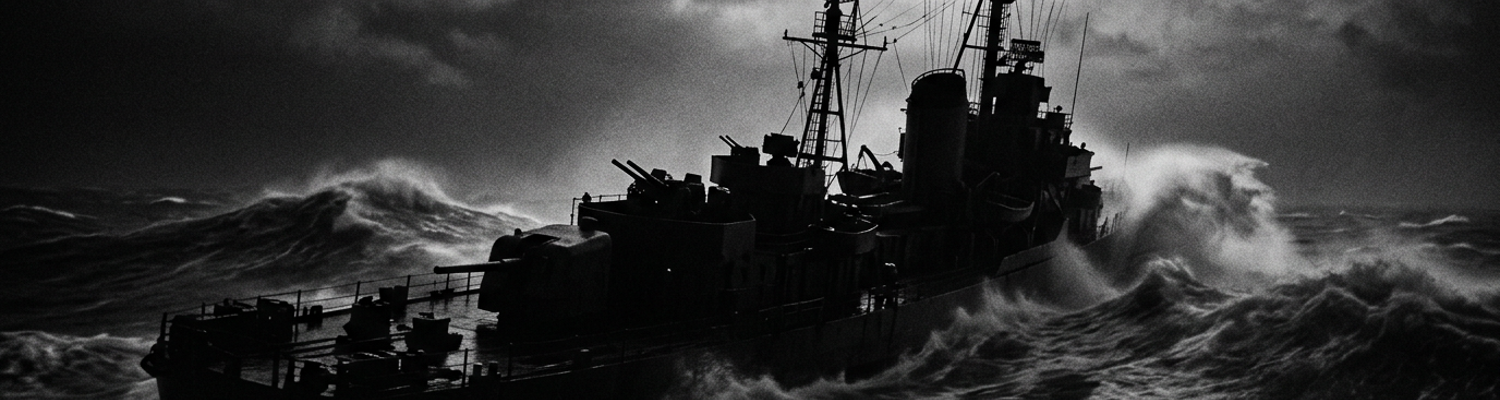
The Fletcher-class destroyer USS Stembel occupied a forward station in this outer protective ring.
Assigned directly to the screening force, DD-644 carried a standard complement of 329 enlisted personnel and 27 officers. The ship measured 376 feet in length. It was constructed around a heavily compartmentalized steel hull. This design offered minimal protection against armor-piercing munitions. Down in the forward engineering spaces, water tenders monitored the pressure gauges on four Babcock and Wilcox boilers. They adjusted fuel oil sprayers by hand to maintain a constant 600 psi of superheated steam. This thermal energy fed into General Electric geared turbines. The turbines drove the twin screws at 300 revolutions per minute.
The noise was deafening.
Up in the Combat Information Center, radarmen sat in windowless, red-lit compartments. They stared intently at the green phosphor glow of the SG surface search and SC air search radar repeaters. The ventilation systems in these compartments failed to circulate the humid air effectively. The crews soaked in sweat despite the ambient cold outside. The ship anti-aircraft battery featured five twin 40mm Bofors mounts and seven single 20mm Oerlikon cannons. Loaders assigned to the Bofors guns stood on the open weather decks. They strapped four-round clips of high-explosive tracer ammunition to their chests.
The physical weight of the ordnance dug into their shoulders. They braced against the pitch and roll of the vessel. Inside the Mk 37 director, the rangefinder operator pressed his face against the rubber eyecups. He stared into the pitch-black optics while waiting for the fire control radar to lock onto an incoming target.
A sudden cluster of returns appeared on the SC radar scope at a bearing of three-five-zero. Distance forty miles.
The physical mechanics of the ship immediately shifted into a combat configuration. The general alarm klaxon sounded over the 1MC public address system. Gunners mates in the five enclosed 5-inch/38 caliber Mk 30 gun mounts slammed twenty-two-pound powder casings into the loading trays. The breech blocks slammed shut with a heavy metallic clack. High above the bridge, the Mk 37 Fire Control Director rotated on its axis. Its internal gyroscope whined as the analog Ford Mk 1 Fire Control Computer processed the target elevation and deflection data. Electrical servos engaged. The two forward gun houses slewed to starboard. The gun captains inside the mounts watched the mechanical pointers align on their dials. They kept their hands gripped tightly around the firing keys.
Intelligence Gaps at Kanoya Airfield
Kanoya Air Base operated as the primary staging hub for kamikaze sorties directed at the approaching Fifth Fleet. Situated on the flat agricultural plains of the Osumi Peninsula in Kagoshima Prefecture, the facility featured two intersecting concrete runways surrounded by dense pine forests. Vice Admiral Matome Ugaki concentrated the striking power of the Fifth Air Fleet at these specific geographic coordinates.
Enlisted Japanese aviation mechanics worked continuously in the freezing pre-dawn darkness. They prepared hundreds of A6M5 Model 52 Zero fighters for one-way missions.
Ground crews manually transferred low-octane aviation fuel from dispersed fifty-five-gallon drums into the wing tanks. They used hand-cranked rotary pumps. The physical exertion left the men exhausted and shivering in the damp coastal air. Armorers hoisted 250-kilogram armor-piercing bombs onto the centerline racks of the fighters. They secured the release shackles with heavy iron wrenches. Deep inside the perimeter tree line, specialized maintenance units attached Yokosuka MXY-7 Ohka rocket-powered aircraft to the ventral bomb bays of twin-engine Mitsubishi G4M2e bombers.
The unheated hangars reeked of spilled hydraulic fluid and human sweat.
Pilots assigned to the 201st Naval Air Group sat on the dirt floors of their barracks. They tied white hachimaki headbands around their leather flight helmets. They listened to the mechanical whine of Nakajima Sakae radial engines turning over on the flight line.
The base held over three hundred fully armed aircraft ready for immediate deployment.
When examining the historical record, the survival of this large aviation force stemmed directly from the failure of American aerial reconnaissance to identify concealed aircraft revetments. Navy intelligence officers at the Joint Intelligence Center Pacific Ocean Areas relied entirely on high-altitude photography. Converted B-24 Liberators captured these images flying above twenty-five thousand feet. The Fairchild K-17 cameras utilized twenty-four-inch focal length lenses to shoot overlapping nine-by-nine-inch negative film exposures. Photo interpreters back at Pearl Harbor placed these developed prints under stereoscopic viewers. They calculated target dimensions and plotted strike maps for Task Force 58.
The analysts completely missed the dispersed Japanese aircraft.
Imperial Japanese Navy engineering battalions had spent the previous three months carving hundreds of U-shaped earthen bunkers directly into the volcanic hillsides surrounding Kanoya. Enlisted laborers reinforced the dirt walls with heavy timber framing. They covered the open tops with wire netting. Work details systematically wove freshly cut pine branches and local bamboo into the mesh. This matched the infrared signature of the adjacent forests.
The camouflage perfectly absorbed the shadows cast by the morning sun.
American target maps distributed to the carrier air groups falsely depicted the enemy aircraft parked in neat rows along the concrete aprons. Flight leaders briefing their squadrons aboard the USS Enterprise instructed their pilots to drop their five-hundred-pound general-purpose bombs directly onto these exposed tarmac coordinates. The actual Japanese fighters sat locked inside the hillside revetments up to two miles away from the primary runways.
The F6F Hellcats and F4U Corsairs finally broke through the low cloud ceiling over Kagoshima. The pilots found the air base completely devoid of visible targets. Strike commanders ordered their formations to release their ordnance on the empty hangars and crater the runways. Down on the ground, Japanese mechanics huddled against the damp earth inside the camouflaged bunkers. They felt the concussive shockwaves of the explosions tearing through the soil. Dirt and dislodged timber rained down on the aluminum wings of the hidden Zeros.
The heavy iron casings of the American munitions detonated harmlessly against the abandoned concrete taxiways.
The tactical intelligence gap allowed Ugaki to preserve his primary striking force while absorbing the American carrier raids. These U-shaped revetments featured protective earthworks measuring twelve feet thick at the base. A direct hit from a five-hundred-pound bomb equipped with a one-tenth-second delay fuse could not penetrate the compacted volcanic soil to reach the aircraft inside. Shrapnel from near misses embedded into the outer timber retaining walls without compromising the internal structures. Enlisted armorers inside the bunkers simply brushed the loose dirt off the 250-kilogram bombs. They continued inspecting the arming wires.
Kamikaze Counter-Strikes on the Screening Picket
Japanese aviation units systematically exploited the physical limitations of American surface-search radar systems. Pilots assigned to the 201st Naval Air Group dropped their A6M5 Model 52 Zeros to an altitude of fifty feet above the wave crests during their final approach. At this extreme low level, the curvature of the earth and the heavy sea state masked their inbound flight paths. The SC-2 air-search antennas rotating on the destroyer masts failed to register the contacts.
The radar transmitters sent directional pulses of radio frequency energy out across the Philippine Sea. The signals scattered against the rolling whitecaps. Radarmen locked inside the windowless Combat Information Center aboard the USS Stembel stared at their A-scopes. They saw nothing but the jagged green spikes of ocean waves reflecting the energy back to the receivers. The ambient temperature inside the unventilated compartment reached ninety-five degrees. Excess heat radiated directly from the vacuum tubes powering the radar repeaters. Enlisted operators wiped sweat from their eyes. They constantly manipulated the gain dials to filter the background interference.
They failed to detect the approaching formation.
The mechanical drone of Nakajima Sakae radial engines became audible over the rushing water before any electronic warning registered on the bridge.
Archival evidence shows the outer screening destroyers absorbed the full impact of these concentrated aerial assaults without early warning. Lookouts on the open bridge wings of DD-644 spotted three inbound fighters breaking through the morning mist at a range of four thousand yards. The general alarm klaxon blared across the exterior decks. Gun captains inside the 5-inch/38 caliber Mk 30 mounts stomped on their firing pedals. They sent twenty-two-pound proximity-fused shells detonating into black puffs of shrapnel directly in the flight path of the leading Zero.
The Japanese pilot ignored the anti-aircraft fire. He held the control stick steady as chunks of jagged steel tore through his aluminum wing roots. Down on the weather decks, enlisted loaders shoved heavy four-round clips of high-explosive tracer ammunition into the top hoppers of the twin 40mm Bofors cannons. Empty brass casings ejected from the bottom of the gun breeches. They piled up rapidly around the boots of the gun crews. The deck vibrated violently under the recoil of the automatic weapons.
The acrid smell of burnt cordite choked the sailors.
The lead aircraft crossed the final five hundred yards in under three seconds.
The Zero slammed directly into the starboard side of the forward superstructure just below the main director. The physical impact instantly crushed the aluminum airframe. The heavy radial engine block drove straight through half-inch steel bulkhead plating. A 250-kilogram armor-piercing bomb attached to the centerline rack detonated deep inside the internal passageways. The resulting blast wave sheared the mounting bolts off the adjacent 20mm Oerlikon pedestals. Gunners were thrown violently across the non-skid decking. Unspent aviation fuel from the ruptured wing tanks vaporized instantly upon contact with the exposed electrical wiring. A high-temperature fire ignited and spread through the ventilation ducts.
Down in the forward engineering spaces, damage control parties scrambled to close watertight doors. Thick black smoke filled the compartment. High-pressure steam lines ruptured overhead. They sprayed 600-psi superheated vapor into the confined workspace. Men dropped to the steel deck plates. They dragged heavy canvas fire hoses over the hot metal while struggling to attach the brass nozzles in total darkness.
The main electrical switchboard shorted out. Power to the forward gun mounts died.
Command decisions on the picket lines required absolute discipline to maintain formation under this concentrated pressure. The bridge officers ordered the helm hard to port. This forced the burning destroyer into a tight tactical turn to present a smaller target profile to the two remaining Zeros. Manual operation of the 5-inch guns commenced immediately. Enlisted sailors inside the dark, unpowered gun houses cranked heavy iron handwheels to traverse the heavy turrets. The deck angle exceeded fifteen degrees during the high-speed maneuver. Loaders slipped on the hydraulic fluid pooling on the deck. They fought gravity to ram the powder casings into the open breeches by hand.
Enlisted Deck Crew Physical Endurance
Task Force 58 destroyers remained at general quarters for up to eighteen consecutive hours while stationed on the radar picket lines ahead of the main carrier force. The tactical doctrine required surface vessels to maintain continuous anti-aircraft readiness during the daylight hours of March 18 and 19. Aboard the USS Stembel at coordinate 31 degrees 15 minutes North, 133 degrees 30 minutes East, the sheer duration of this combat state rapidly degraded the physical capacity of the enlisted gun crews.
Deck officers implemented an improvised rotation cycle for the exposed 40mm Bofors and 20mm Oerlikon batteries. The command staff ordered port and starboard crews to swap firing and loading duties in thirty-minute intervals. This prevented total muscular failure. Enlisted loaders hauled four-round clips of high-explosive tracer ammunition from the ready-service lockers to the gun tubs. Each clip weighed nearly twenty pounds. Men repeated this lifting motion hundreds of times while bracing against a thirty-degree roll in Sea State 4 conditions.
The physical friction of the steel decks wore through the rubber soles of their boots.
Lactic acid saturated the forearms of the sailors manually turning the elevation handwheels on the unpowered 20mm mounts. The water-cooling jackets on the Bofors barrels boiled off their internal fluid. Intense heat radiated across the gun platforms. Loaders wearing thick asbestos gloves suffered second-degree burns on their forearms. Their bare skin brushed against the superheated steel breech casings.
The physical exhaustion forced gun captains to strap their pointers directly into the metal bucket seats. This prevented them from collapsing overboard.
The mechanical output of the defensive screen directly caused severe physiological damage to the personnel operating the weapons. The five enclosed 5-inch/38 caliber Mk 30 gun houses engaged in prolonged barrage fire against dispersed Japanese formations. Gun crews inside these steel boxes sustained a firing rate of fifteen rounds per minute for extended intervals. The breech block extractors forcefully ejected hot brass powder casings onto the deck plates. Each discharge released thick clouds of burnt cordite gas directly into the confined workspace.
The electric exhaust blowers installed in the mount roofs lacked the cubic-feet-per-minute capacity to clear the chemical smoke. The toxic fumes displaced the oxygen inside the turret. Men choked on the sulfurous air. The airborne particulates burned their corneas and triggered violent coughing fits. Loaders routinely vomited onto the non-skid decking. They continued shoving twenty-two-pound powder charges into the open breeches. Empty brass accumulated rapidly. Gunners mates had to kick the scorching hot casings out the rear access hatches to keep the loading mechanisms clear.
Several gunners collapsed from acute hypoxia right next to the ammunition hoists.
The acoustic trauma inflicted by this continuous barrage permanently altered the physical senses of the deck crews. A single 5-inch/38 caliber weapon generates an overpressure wave exceeding 160 decibels at the muzzle. Destroyers operating in the screen fired hundreds of these proximity-fused shells in overlapping patterns. The concussive shockwaves slammed into the unprotected bodies of the light anti-aircraft crews stationed on the open weather decks just below the main battery. The standard-issue Mk 9 kapok earplugs provided inadequate acoustic attenuation against this level of low-frequency blast energy.
The rapid pressure differentials ruptured the tympanic membranes of the sailors manning the Bofors directors. Capillaries burst deep inside their ear canals. Blood leaked down the necks of the enlisted men. They tracked incoming targets through their optical ring sights. The constant concussions scrambled their inner ear fluid. This destroyed their equilibrium and caused severe vertigo.
The deafening environment rendered the sound-powered telephone circuits entirely useless.
Talkers assigned to relay target elevation and deflection data from the Combat Information Center screamed into their chest-mounted transmitters to no effect. The ambient noise floor simply drowned out human vocal cords. Gun captains abandoned verbal orders entirely. They directed their crews through physical violence. They kicked the loaders in the calves to signal a magazine change. They struck the pointers on their steel M1 helmets to shift their fields of fire. Down in the handling rooms below the main deck, the ammunition passers worked in near-total blindness. The concussive vibrations shattered the glass bulbs of the overhead battle lanterns. Men navigated the pitch-black compartments by touch. They dragged heavy fifty-four-pound projectiles across the steel grating and shoved them into the mechanical dredger hoists.
Emergency Night Underway Fueling Operations
Task Force 58 destroyers consumed their fuel reserves at an unsustainable rate during high-speed evasive maneuvers against kamikaze formations. By 2200 hours on March 19, the USS Stembel dropped out of the protective screen. The ship moved to replenish bunkers alongside the Cimarron-class fleet oiler USS Ashtabula. The rendezvous occurred at coordinate 29 degrees 45 minutes North, 134 degrees 10 minutes East under absolute blackout conditions. Tactical doctrine prohibited the use of running lights or radio transmissions to prevent Japanese submarine detection.
Bridge officers navigated solely by the faint phosphorescent wake trailing from the stern of the supply vessel.
The destroyer approached the starboard quarter of the oiler at fifteen knots. Maintaining this high velocity was a direct command decision. It minimized vulnerability to Type 93 torpedo attacks during the transfer. Hydrodynamic pressure generated by hundreds of thousands of tons of displacing water created a violent suction between the two hulls. Helmsmen wrestled with the brass steering wheels. They constantly adjusted the rudder angle by half-degree increments to prevent a catastrophic collision. The distance between the steel plates narrowed to exactly sixty feet. The margin for error vanished.
The ambient air temperature dropped to thirty-eight degrees. Freezing rain began falling across the exposed weather decks.
A close review of operational logs indicates the physical demands placed on the deck divisions during these underway replenishments routinely pushed enlisted personnel past their physiological limits. First Division sailors aboard the destroyer stood on the slippery, non-skid decking. They braced their bodies against the violent pitch and roll of Sea State 5 conditions. Oiler crews fired brass line-throwing guns across the sixty-foot gap. Thin nylon messenger lines whipped over the destroyer guardrails.
Boatswains mates grabbed these cords with bare, freezing hands. They began hauling the heavy block-and-tackle rigs across the churning water. Primary fuel transfers utilized reinforced six-inch rubber hoses filled with heated, high-viscosity Bunker C fuel oil. The sheer weight of the suspended hose assembly exceeded two thousand pounds. Enlisted men formed human chains along the port side. They dug their rubber-soled boots into the deck plates while pulling rhythmically on the thick manila outhaul lines.
Seawater crashed over the gunwales. The water soaked the work details in freezing foam and washed away their footing. Lactic acid accumulated rapidly in their shoulders and lower backs. They fought the unpredictable tension caused by the ships rolling out of phase.
Mechanical steam winches on the oiler frequently jammed due to salt corrosion on the brake bands.
Equipment failures during these blackout maneuvers directly caused severe injuries among the handling crews. A sudden fifteen-degree roll by the Ashtabula yanked the primary fuel hose taut. A three-inch manila securing line snapped under extreme kinetic strain. The frayed rope whipped backward across the destroyer deck. It shattered the collarbones of two seamen manning the forward bitts. Heavy bronze fueling probes slammed violently against the steel coaming of the receiving trunk. The locking flange fractured. Pressurized bunker oil sprayed directly into the faces of the deck gang.
Sailors choked on the toxic petroleum fumes. They scrambled on their hands and knees across the oil-slicked deck to manually shut the gate valves. Damage control parties dragged heavy canvas sandbags to absorb the highly flammable spill before it could spread to the hot casings of the forward boiler uptakes. An emergency breakaway siren sounded across the 1MC system. The helmsman threw the rudder hard to starboard to separate the vessels. Ruptured hoses sheared completely in half. Hundreds of gallons of black fuel dumped directly into the dark ocean.
High Speed Maneuvers and Mechanical Attrition
Destroyer captains in the radar picket stations ordered maximum rudder deflection at flank speed to disrupt Japanese aerial targeting solutions. At 1415 hours on March 19, the USS Stembel detected a low-altitude formation of Yokosuka D4Y dive bombers. The aircraft closed from the north at coordinate 31 degrees 10 minutes North, 133 degrees 20 minutes East. The bridge officers immediately rang up thirty-three knots on the engine order telegraph. The helmsman spun the brass steering wheel hard over. He applied a thirty-five-degree right full rudder to break the ship out of its linear track.
A Fletcher-class destroyer displacing 2,500 tons of seawater requires massive hydrodynamic force to alter its momentum at that velocity. The sudden sheer pressure against the rudder blade caused the entire hull to shudder violently. The ship snapped into a twenty-five-degree starboard list. Unsecured gear ripped free from the bulkheads. Centrifugal forces generated by the tight turning radius pinned enlisted sailors directly against the portside steel plating. Rivets popped along the main deck seams. The keel flexed under the extreme torsional strain.
The physical violence of this sudden course alteration threw unrestrained personnel across the steel compartments.
Down in the forward handling rooms, fifty-four-pound high-explosive projectiles broke loose from their brass retaining clips. These heavy steel shells rolled aggressively across the non-skid decking. They crushed the ankles and fractured the tibias of the ammunition passers trying to secure them. Cooks stationed in the aft galley suffered severe third-degree burns. The violent roll sloshed boiling cooking oil out of the deep fryers directly onto their torsos. Pharmacists mates scrambled down the narrow passageways. They braced themselves against the watertight doors to apply tourniquets while the deck pitched wildly under their boots. Enlisted loaders topside lost their footing entirely. They tumbled over the 40mm gun tubs and collided head-first with the steel ammunition hoists.
Blood pooled on the weather decks. It mixed with the spilled hydraulic fluid from the ruptured gun mount lines.
Archival evidence shows the bridge officers ignored the internal casualty reports. They maintained the evasive zig-zag patterns.
This sustained high-velocity operation pushed the destroyer propulsion plants far past their rated thermal limits. The four Babcock and Wilcox boilers operated at one hundred and twenty percent capacity. This generated the required steam pressure for thirty-three knots. Water tenders stared at the mechanical pressure gauges pinned at 600 psi. Superheated steam flowed through the carbon-steel piping at 850 degrees Fahrenheit. It radiated intense thermal energy into the confined engineering spaces.
The twin bronze propellers cavitated in the turbulent water during the hard rudder turns. This cavitation sent violent mechanical vibrations straight up the propeller shafts. The vibrations transferred directly into the General Electric main reduction gears. The heavy asbestos insulation wrapped around the high-pressure steam lines began to crack and flake off. Toxic white dust filled the compartment.
The ambient temperature inside the unventilated fire rooms reached one hundred and thirty-five degrees.
Catastrophic mechanical failures multiplied rapidly in the forward engine room under this continuous strain. Forced draft blowers sucked heavy salt spray down the intake trunks. Corrosive sodium deposits coated the exterior boiler tubes. Lubricating oil inside the main thrust bearings overheated and lost its necessary viscosity. Metal ground directly against metal. Machinists mates wrapped wet canvas rags around their hands to manually turn the scorching brass valve wheels. They attempted to bypass the failing rotary pumps. The main reduction gear teeth began chipping under the extreme torque.
Jagged steel shrapnel circulated through the pressurized oil lines. It tore the internal seals of the hydraulic governors. Thick black smoke poured out of the turbine casings. The residual oil baked onto the superheated exterior housings.
The engineering officer reported a complete loss of port engine lubrication directly to the bridge.
The tactical situation prevented any reduction in speed. The destroyer commander ordered the engineering division to bypass the safety interlocks. They kept the port shaft turning at 300 revolutions per minute. Enlisted men down in the bilges used hand-cranked transfer pumps. They dumped raw reserve oil directly into the smoking gear casings. They stood ankle-deep in boiling bilge water. They inhaled vaporized petroleum while the heavy steel gears ground violently against their ruined bearings.
Screening Destroyer Legacy at Kyushu
Task Force 58 command staff actively traded the structural integrity of forward screening destroyers to ensure the survival of the heavy fleet carriers. During the Japanese counter-strikes on March 20, 1945, Task Group 58.2 operated seventy miles southeast of Kyushu. The coordinates were 30 degrees 15 minutes North, 133 degrees 45 minutes East. Vice Admiral Marc Mitscher positioned his Fletcher and Allen M. Sumner-class destroyers in a tight circular formation. They sat exactly three thousand yards from the hulls of the USS Enterprise and USS Franklin.
Doctrine required these unarmored vessels to project a dense wall of proximity-fused anti-aircraft fire directly into the flight paths of incoming Yokosuka D4Y dive bombers. The tactical geometry forced the destroyers to physically intercept aircraft that slipped past the outer combat air patrols.
Aboard the USS Halsey Powell (DD-686), bridge officers deliberately maintained a flanking station alongside the carrier Hancock. A plunging A6M Zero locked onto the carrier wooden flight deck. The destroyer absorbed the full physical impact of the fighter. The Japanese airframe disintegrated against the aft motor whaleboat davits. The heavy Nakajima radial engine block drove through the main deck plating and into the aft steering gear room. High-octane aviation fuel flooded the steering compartments. A high-temperature fire ignited and warped the rudder control assemblies.
Twelve enlisted men burned to death inside the flooded compartment before damage control parties could secure the watertight hatches.
Casualty rates among the screening pickets spiked drastically due to these specific interception maneuvers. Planners calculated that a single kamikaze penetrating the inner screen could disable a 27,000-ton Essex-class carrier. This would neutralize eighty strike aircraft and thousands of personnel. Destroyer captains ordered their helmsmen to steer directly into the attack vectors of descending hostiles. They presented their own superstructures as alternative targets to protect the high-value assets.
The USS O'Brien (DD-725) executed this exact profile while defending the USS Franklin at 0615 on March 21. A two-hundred-and-fifty-kilogram armor-piercing bomb attached to a crashing D4Y dive bomber penetrated the port side of the O'Brien. It detonated inside the forward magazine handling room. The blast wave killed fifty sailors instantly. It severed the primary electrical cables feeding the Mk 37 fire control computer. Shrapnel shredded the internal bulkheads. Immediate flooding occurred in the forward ammunition spaces. Damage control personnel waded through chest-deep, oil-slicked seawater in total darkness. They shored up the buckling steel plates with heavy wooden timbers.
The ship lost all automated gunnery solutions while still taking incoming fire from secondary Japanese formations.
Navy intelligence and operational commanders immediately dismantled and rebuilt their screening protocols based on the physical damage sustained off Kyushu. Planners stationed at Ulithi Atoll analyzed the radar blind spots and high casualty reports. They rewrote the defensive doctrine for the impending amphibious assault on Okinawa. The primary tactical adjustment involved pushing the radar picket stations significantly farther out from the main carrier groups. This increased interception time.
For Operation Iceberg, Fifth Fleet engineers mapped out fifteen distinct radar picket stations. These were arrayed up to one hundred miles away from the transport anchorages. Station 1 was located at coordinate 29 degrees North, 127 degrees East. Technicians installed upgraded SP height-finding radar antennas on the masts of the newly designated picket ships. This solved the problem of low-altitude radar evasion observed over the Philippine Sea. Fleet commanders authorized the deployment of specialized Fighter Director Teams directly aboard these isolated destroyers.
These officers stood in the cramped Combat Information Centers. They utilized VHF radio channels to vector dedicated combat air patrols directly over the destroyer stations. Enlisted radarmen tracked inbound bogeys on their glowing A-scopes. They plotted the coordinates on vertical Plexiglas tracking boards using grease pencils. The Fighter Director Officers then ordered four-plane divisions of F4U Corsairs to intercept the formations at twenty thousand feet. They relied on the fighter aircraft rather than shipboard anti-aircraft fire to break up the raids.
The modified doctrine required these forward destroyers to operate entirely without the overlapping anti-aircraft support of the heavy cruisers.