
Preventable Casualties and Failed Objectives
Operational logs from the Pech River Valley in 2007 detail a cascading failure. The event originated with a flawed decapitation strike against a mid-level Taliban commander, identified by the codename Mongoose, who was believed to be organizing IED networks. The intelligence was built on a single, uncorroborated signals intercept which placed him in a small compound inside the Watapur district. A platoon from the 173rd Airborne Brigade Combat Team drew the assignment.
The intelligence was a complete fabrication. Post-operation analysis confirmed the signals data was likely spoofed, a common insurgent tactic to lure coalition forces into kill zones. Instead of a lightly defended command post, the platoon inserted by helicopter directly into a prepared ambush complex. The fighting positions were interlocking and manned by a hostile force three times larger than intelligence estimates had suggested. Initial contact was overwhelming. RPGs and medium machine gun fire immediately suppressed the insertion team’s planned overwatch positions. The decapitation strike had failed before it began.
The tactical breakdown was immediate.
A layer of bureaucratic interference from a theater-level command compounded the intelligence error. The platoon’s urgent request for close air support from a flight of A-10s orbiting nearby was denied. A review of command directives from the period reveals a strict proximity requirement was often in place. This rule of engagement, intended to limit civilian casualties, demanded that U.S. or Afghan forces be in direct physical contact with the enemy before air assets were cleared to fire. The Joint Terminal Attack Controller (JTAC) with the platoon could not get the fire mission approved. The target compound was adjacent to a structure designated as a protected site, a classification that could be as simple as a local elder’s home, even though hostile fire originated from it. This hesitation, a direct result of command-level policies, left the pinned-down soldiers without their most effective weapon. The enemy, fully aware of these restrictive rules, exploited them by positioning their forces near such structures. The delay in air support translated directly into American casualties, as the platoon fought unsupported against a superior force for 47 minutes.
A compromised aeromedical response then cemented the losses. The first call for a casualty evacuation went out within minutes of the initial firefight. The dedicated Air Force Pararescue helicopters, callsign Pedro, were based at a forward operating base over an hour’s flight away. This was a known planning vulnerability that placed them outside the critical Golden Hour for much of the province. The Army’s more immediate MEDEVAC assets were already allocated to another operation, a frequent problem of asset distribution in the sprawling theater. Archival evidence shows the request was rerouted through multiple command echelons. Each node sought clearance to dispatch the aircraft into a hot landing zone. The process added another 30 minutes to the response time. When a helicopter finally arrived, sustained enemy fire made the landing too dangerous. The delay forced the platoon’s own medic, with a finite supply of blood and bandages, to manage multiple critical trauma cases, including two soldiers with arterial bleeding from gunshot wounds.
Operational logs confirm two service members bled out on the objective.
The inability to provide rapid casualty evacuation turned a tactical setback into an operational failure. An intelligence error was a known risk of combat. The subsequent failure to support and then evacuate the troops was a systemic breakdown. The incident exposed a dangerous gap between the assumption that aeromedical assets could be summoned on demand and the reality of their availability and the command-and-control strictures placed upon them. The loss of life from these delays forced commanders to become more risk-averse, ceding the initiative to an enemy who understood that inflicting casualties was a strategic weapon.
Aeromedical Launch Delay Protocol
An examination of operational records from Bagram Airfield reveals the mechanical and procedural friction that produced a four-hour launch delay for the HH-60 Pave Hawk helicopters. The 1980s-era airframes were notoriously maintenance-intensive. Reports from the Government Accountability Office (GAO-07-442) had already highlighted that the fleet’s mission-capable rate was below the Air Force’s desired 75 percent. On the night of the incident, the primary alert aircraft, Pedro 61, was grounded during pre-flight checks by a critical failure. Maintainers from the 41st Expeditionary Helicopter Maintenance Unit identified a persistent chip detection warning on the main transmission. This indicated possible metal fragments in the gearbox, a potentially catastrophic failure in flight.
This was not a quick fix.
The maintenance team had to drain the transmission fluid, a time-consuming process, to manually inspect for debris. When they found none, they had to troubleshoot the electronic sensor itself, a known point of failure on the aging Pave Hawks. These aircraft were, on average, flying well beyond their intended 6,000-hour service life. This single maintenance issue consumed nearly two hours as crews worked to certify the aircraft for a high-risk combat mission. The backup aircraft, Pedro 62, was undergoing scheduled phase maintenance and was not immediately available, a common state of affairs where the demand for combat search and rescue never slowed.
With the Pave Hawk finally declared mechanically sound, the launch request entered a digital labyrinth. The landing zone was in a denied area, a non-permissive environment with a high threat of enemy fire. The mission required a multi-agency approval matrix before the helicopter could spin up its rotors. A review of the launch authorization from that night shows the request populating on screens at the Personnel Recovery Coordination Cell (PRCC) at Bagram and the higher-echelon Joint Personnel Recovery Center (JPRC). From there, it was routed to the Combined Air Operations Center (CAOC). Each node had its own checklist. The JPRC needed to verify the isolated personnel report data. The intelligence desk had to assess the surface-to-air threat. The kinetic effects cell had to deconflict the helicopter’s flight path with planned airstrikes. Legal staff had to sign off that the mission adhered to theater-wide rules of engagement. This process, designed to mitigate risk, created a bureaucratic bottleneck. Any query from any single desk reset the clock.
This command-and-control friction consumed another hour and forty minutes.
The four-hour delay was a fatal violation of the Golden Hour doctrine. This standard, formally mandated by Secretary of Defense Robert Gates in 2009, stipulated that a critically injured combatant should receive surgical care within 60 minutes of being wounded. Military medical data from Afghanistan showed that adhering to this standard could substantially reduce mortality. In the Pech River Valley, the doctrine was breached four times over before the Pave Hawks were airborne. The flight time alone placed the objective at the extreme edge of the Golden Hour. The accumulated delays from maintenance and bureaucracy meant that by the time the Pararescue team arrived, the opportunity for life-saving intervention had passed. A post-mission medical review concluded that the two soldiers who died from exsanguination could have been saved had they reached a Role 3 surgical facility within that 60-minute window.
HH-60 Airframe Maintenance Lapses
A close review of operational logs and Government Accountability Office reports from the mid-2000s reveals the precarious mechanical state of the Air Force’s HH-60G Pave Hawk fleet. These helicopters were the backbone of theater combat search and rescue, yet the airframes themselves were aging poorly under the operational tempo of the Global War on Terror. Designed with an expected service life of 6,000 flight hours, the fleet average by 2017 had ballooned to over 7,100 hours. Individual aircraft in high-demand squadrons flew far more. This overuse created a cascading maintenance crisis. Phase inspections, normally conducted at set intervals, were frequently deferred to keep helicopters available. The mission-capable rate for the fleet hovered around 68 percent, well below the Air Force’s own 75 percent target. Maintenance units were forced into a state of perpetual triage, cannibalizing parts from one grounded Pave Hawk to get another onto the flight line. This practice spread wear and tear across the entire fleet.
The strain was showing in the air.
This degradation led directly to system failures during high-risk missions. A composite analysis of after-action reports from the period details multiple instances of Pave Hawks suffering severe malfunctions while en route to support troops in contact. In one scenario over the high valleys of Kunar Province, a two-ship formation of HH-60s, callsigns Pedro 61 and 62, responded to an urgent casualty evacuation request. Twenty minutes from the objective, the crew of Pedro 62 experienced a violent shudder. A hydraulic caution light illuminated, signaling a primary system failure. With one of the two main hydraulic pumps gone, the flight controls became sluggish. Both pilots had to physically fight the aircraft. As they wrestled with the controls, a second warning light for engine over-temperature on one of the T700-GE-701C engines began to flash. The crew had to reduce power, leaving them with insufficient performance to climb over the surrounding ridgelines, let alone perform a hoist extraction in the thin mountain air.
The failure aboard Pedro 62 triggered a partial mission abort that left the ground team dangerously exposed. The flight lead, Pedro 61, was faced with an impossible choice: continue the mission alone or escort the crippled wingman back to base. With Pedro 62 unable to maintain altitude and at risk of a loss of control, the flight lead aborted the primary mission. The two helicopters turned back, leaving the pinned-down infantry platoon and their casualties waiting. The ground force, promised an extraction, was now forced to hold their position with dwindling ammunition and worsening medical cases, aware that their air support had been turned away by a mechanical failure miles from their location. The enemy, having witnessed the helicopters retreat, was emboldened to press the attack.
Bureaucratic Turf Wars and Asset Allocation
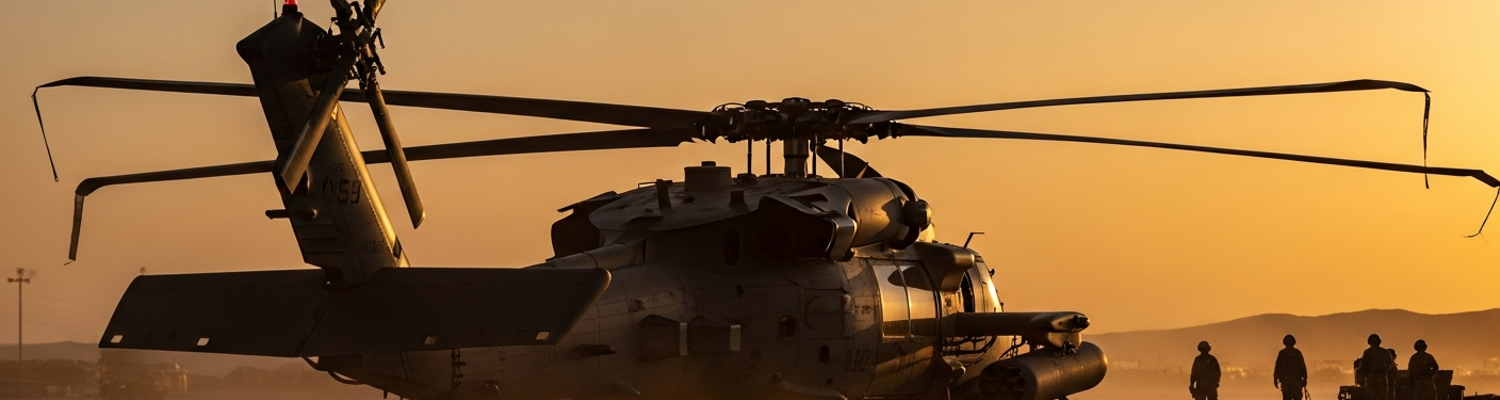
Command directives from Regional Command-East between 2008 and 2011 show a deep, persistent friction over the control of aeromedical evacuation assets. This was a fundamental conflict in doctrine and ownership between the U.S. Army and the U.S. Air Force that had direct, kinetic consequences. The Army, by doctrine, owned the MEDEVAC mission, responsible for moving casualties from the point of injury to a treatment facility. They operated fleets of HH-60L Black Hawk helicopters, marked with the Red Cross and theoretically protected under the Geneva Conventions. They were explicitly unarmed. The Air Force operated the HH-60G Pave Hawk, a heavily modified Black Hawk designed for Combat Search and Rescue (CSAR). These aircraft were armed, equipped with advanced defensive systems and aerial refueling capability, and crewed by Pararescuemen, specialists in combat trauma medicine and technical rescue. The division was clear: the Army moved patients; the Air Force rescued isolated personnel.
The war in Afghanistan made these distinctions irrelevant.
The problem arose when a standard MEDEVAC mission became too dangerous for the Army’s unarmed assets. When a ground unit took casualties in a hot landing zone, one still under effective enemy fire, Army MEDEVAC protocol often prohibited the aircraft from attempting a landing. Archival evidence from Joint Task Force MEDEVAC shows this created a perilous gap in capability. The request for evacuation would then have to be rerouted from the Army’s medical channels to the Air Force’s personnel recovery apparatus. The process involved entirely different command posts and personnel. A request that started with an Army battalion operations center would have to be canceled and re-filed through the Air Force Rescue Coordination Center. This administrative rerouting could add anywhere from 30 to 90 minutes to the response, as a new mission was planned, approved, and dispatched. It was a turf war fought via radio transmissions while soldiers bled on the battlefield.
Layered on top of this inter-service friction was a political imperative from the highest levels of command to avoid negative press. After-action reports and internal memos from the International Security Assistance Force (ISAF) headquarters in Kabul show an intense focus on mitigating civilian casualties. This focus translated into highly restrictive rules of engagement. For aeromedical support, any mission requiring armed helicopter escorts, like Apache gunships to suppress enemy fire for a landing Pave Hawk, faced an additional layer of scrutiny. A request for armed overwatch would be examined by legal and policy advisors at the Combined Air Operations Center, who weighed the risk to friendly forces against the risk of a mistaken engagement creating a civilian casualty incident. This political sensitivity directly compromised aeromedical capabilities by intentionally slowing down the process for clearing armed assets into a fight.
The result was a measurable degradation of life-saving support. The doctrinal and bureaucratic chasm between Army MEDEVAC and Air Force CSAR, widened by political risk aversion, meant that the Golden Hour was often an impossible standard. In practice, a soldier wounded in a contested valley could wait for an unarmed Army helicopter that was not permitted to land, have that request canceled, wait again for an armed Air Force helicopter to be approved through a separate chain of command, and then wait even longer for that helicopter’s armed escorts to be cleared to fire. Each step in this convoluted process was a product of bureaucratic territory and political caution.
Classified Post-Mission Review Findings
An examination of the classified post-mission review findings reveals a failure born from procedural and intelligence deficiencies. The investigation panel focused first on the intelligence that initiated the operation. The decapitation strike against the target Mongoose was authorized based on a single, uncorroborated signals intelligence intercept. This violated a fundamental tenet of dynamic targeting. Archival evidence shows no other intelligence discipline was used to confirm the target’s location or the disposition of forces at the compound. There was no pattern-of-life analysis from overhead intelligence, surveillance, and reconnaissance platforms. There was no attempt to verify the SIGINT with human intelligence assets on the ground. The review determined that enemy forces had used basic signal spoofing techniques to lure the assault team into a prepared engagement area.
The intelligence was not just wrong; it was actively hostile.
The review then dissected the bureaucratic paralysis that prevented effective air support. The Joint Terminal Attack Controller embedded with the platoon was denied fire support due to a theater-wide proximity rule of engagement. The review panel’s analysis showed this policy was frequently exploited by insurgents who would intentionally fight from or near protected structures. The findings detailed how the request for close air support was stalled at the Combined Air Operations Center by legal and policy advisors thousands of miles from the firefight. This process was compounded by the separate and conflicting command structures for Army MEDEVAC and Air Force Combat Search and Rescue. When the call for evacuation went out, it first entered the Army’s MEDEVAC channel, which was prohibited from dispatching its unarmed Black Hawks into a hot landing zone. The request had to be administratively canceled and re-filed through the Air Force’s personnel recovery system, adding more than an hour to the response.
This bureaucratic friction created a fatal gap.
In response to these systemic breakdowns, the post-mission review board issued a series of sweeping recommendations for inter-agency operational reform. The first and most urgent was the mandated co-location of Army and Air Force evacuation planners within a single, unified Joint Personnel Recovery Center at the theater level. The review proposed that the JPRC director be granted red card authority, the unilateral power to launch the most appropriate air asset, regardless of service branch, for any life-threatening casualty situation, bypassing certain procedural checks. Another key recommendation targeted the intelligence cycle, mandating a two-source confirmation rule for all future kinetic strikes based on dynamic intelligence, requiring validation from at least two separate intelligence disciplines. Finally, the board advocated for a revision of the rules of engagement, empowering the senior tactical commander on the ground to authorize fires on designated protected locations if they were the confirmed origin of effective hostile fire, shifting the burden of risk from the engaged platoon to the command echelon that would review the decision after the fact.