
A Contentious Creation
In the aftermath of the American Civil War, the United States Congress faced the complex task of restructuring its military for a new era. The Act of July 28, 1866, a piece of legislation designed to fix the size of the peacetime army, contained a revolutionary provision. It authorized the creation of six regular army regiments composed entirely of Black soldiers. This decision marked the first time African Americans were permitted to serve in the nation’s standing military forces, a direct result of the valor displayed by the United States Colored Troops during the war. The legislation established two cavalry regiments, the 9th and 10th, and four infantry regiments, the 38th, 39th, 40th, and 41st. A subsequent army consolidation in 1869 merged the four infantry units into two, creating the 24th and 25th Infantry Regiments. These four formations, the 9th and 10th Cavalry and the 24th and 25th Infantry, would carve a unique identity on the frontier.
Recruitment for these new units drew heavily from the ranks of Civil War veterans and newly freed slaves. For men facing the bleak economic prospects and violent racial oppression of the Reconstruction South, the army offered a tangible alternative. A private’s pay of thirteen dollars a month, plus food, housing, and clothing, represented a level of economic stability and independence unavailable in civilian life. The army also offered access to education, with post chaplains assigned to teach soldiers basic literacy, a powerful draw for a population long denied such opportunities. The promise of dignity through service motivated thousands to enlist.
Finding white officers to lead these regiments presented a formidable obstacle. Many West Point graduates and career officers viewed an assignment to a Black regiment as a professional dead end, a stain on their record. They actively refused such postings. Consequently, the officers who did accept command were often a breed apart. Colonel Benjamin Grierson, a former music teacher who became a distinguished Union cavalry commander, took charge of the 10th Cavalry. He was a staunch abolitionist who personally oversaw the recruitment of his troopers at Fort Leavenworth, Kansas. Colonel Edward Hatch, another successful volunteer officer from the Civil War, organized the 9th Cavalry in Greenville, Louisiana. These men and their subordinate officers frequently endured professional ostracism for their commitment. The institutional resistance was immediate and material. At Fort Leavenworth, the commander of the post, a man openly hostile to the concept of Black soldiers, forced Grierson’s 10th Cavalry to establish their camp in a flood-prone area of the fort. The War Department compounded these challenges by issuing the Black regiments inferior equipment. They often received worn-out horses, many of them rejects from white cavalry units, and older, sometimes faulty firearms like the Springfield Model 1866 rifle while other units received newer models. This systemic prejudice was a constant reality from their inception.
Trial by Fire on the Plains
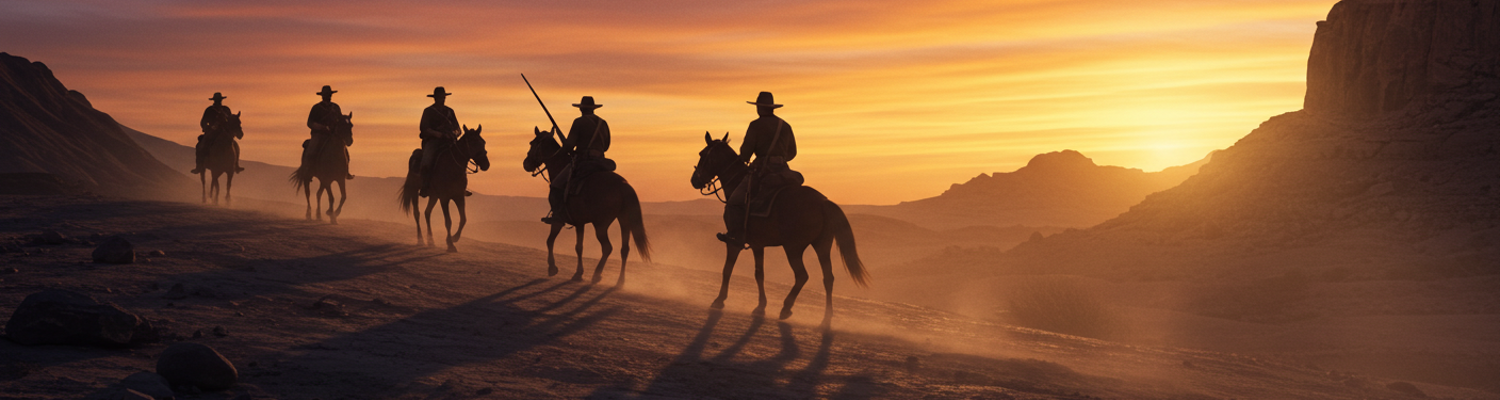
Deployed to the vast and unforgiving territories west of the Mississippi River, the Black regulars became a primary instrument of American expansion. Their duties were grueling, diverse, and relentless. From isolated forts scattered across Texas, New Mexico, Arizona, and the Great Plains, they projected federal power into regions contested by Native American tribes, Mexican bandits, and lawless American settlers. The soldiers of the 9th and 10th Cavalry and 24th and 25th Infantry spent nearly three decades in a constant state of operational readiness. They scouted and mapped millions of acres of uncharted land, their reports forming the basis for future settlement. They strung thousands of miles of telegraph wire, connecting the disparate parts of the nation. They guarded the U.S. mail, protected stagecoach routes, and provided security for the railroad crews laying the tracks of the transcontinental railroad. They built and repaired the very forts from which they operated, from the adobe walls of Fort Davis in Texas to the wooden stockades of Fort Robinson in Nebraska.
Life on the frontier was defined by harshness and isolation. Soldiers performed endless fatigue details, maintained a strict regimen of drill, and endured patrols that pushed men and horses to the absolute limits of their endurance. They lived in crude barracks and subsisted on a monotonous diet of hardtack, salted pork, and coffee. Yet, their operational record was one of remarkable activity and effectiveness. The 9th Cavalry, operating out of a series of forts in West Texas, engaged in a protracted struggle against Comanche and Kiowa raiding parties. The 25th Infantry, after its initial service in Texas, transferred to the northern plains, garrisoning posts across Dakota Territory and Montana, and later gained fame for its experimental Bicycle Corps. The 24th Infantry participated in the final campaigns against the Comanche and later played a vital role in the Apache Wars.
Combat was a frequent and violent reality. The Apache leader Victorio’s campaign in 1879 and 1880 provides a clear example of the regiments’ operational environment. Victorio and his band of Chiricahua Apache warriors launched a series of devastating raids across New Mexico, West Texas, and northern Mexico. In response, Colonel Grierson of the 10th Cavalry orchestrated a brilliant and exhausting campaign of pursuit. Using companies of the 10th Cavalry and elements of the 24th Infantry, Grierson’s strategy focused on denying Victorio’s highly mobile force access to water. The campaign involved a series of hard-fought skirmishes and long, punishing marches across the desert. The climax came in a series of engagements in August 1880, most notably at Rattlesnake Springs, where troopers of the 10th Cavalry ambushed Victorio’s main force, inflicting casualties and forcing them to retreat into Mexico. While Mexican troops ultimately cornered and killed Victorio, the relentless pressure applied by the Black regulars was the decisive factor in his defeat. This was just one of hundreds of actions. Throughout the Indian Wars, the four regiments participated in more than 150 engagements, building a formidable combat reputation.
A Legacy Forged in Bronze
The nickname that would come to define these soldiers, “Buffalo Soldiers,” originated with their Native American adversaries. The Cheyenne and Comanche, among other Plains tribes, were the first to use the term. While its precise origin remains debated, the most common accounts suggest the name stemmed from a perceived resemblance between the soldiers' dark, curly hair and the shaggy mane of the American bison. The name was also a mark of respect for their fighting prowess, an acknowledgment of their tenacity and courage in battle. The soldiers themselves adopted the moniker with pride. The 10th Cavalry went so far as to formally incorporate the image of a buffalo into its regimental crest in 1889, cementing the identity.
Their battlefield performance was consistently recognized. Nineteen soldiers from the four regiments earned the Medal of Honor during the frontier wars. Sergeant Emanuel Stance of the 9th Cavalry became the first Black regular to receive the award for his actions against Apache warriors in May 1870. The regiments also maintained an exceptional standard of discipline, consistently posting the lowest desertion and court-martial rates in the entire U.S. Army. For men who had few rights in civilian society, the structure and meritocratic potential of military life fostered a powerful sense of professionalism and unit pride.
The service of the Buffalo Soldiers provided a powerful, undeniable counterargument to the racist ideologies prevalent in 19th-century America. Their decades of effective, disciplined service proved that Black men could be exemplary soldiers, leaders, and patriots. This record created a foundation for future generations. It paved the way for men like Charles Young. Born into slavery, Young graduated from West Point in 1889 and went on to a distinguished career serving with both the 9th and 10th Cavalry. He rose to become the first African American to achieve the rank of colonel in the Regular Army. Though systemic racism ultimately denied him a combat command during World War I, Young's career demonstrated what was possible. The continuous, documented record of excellence established by the Buffalo Soldiers from 1866 onward provided critical ammunition for civil rights advocates. It was this long, unbroken line of service that helped convince President Harry S. Truman to issue Executive Order 9981 in 1948, the order that finally mandated the desegregation of the United States Armed Forces.