
Final Isolation of Cartiera del Fibreno Triage
Evacuating three hundred non-ambulatory casualties across a single kilometer of exposed floodplain was mathematically impossible. German spotters held registered observation over the entire sector.
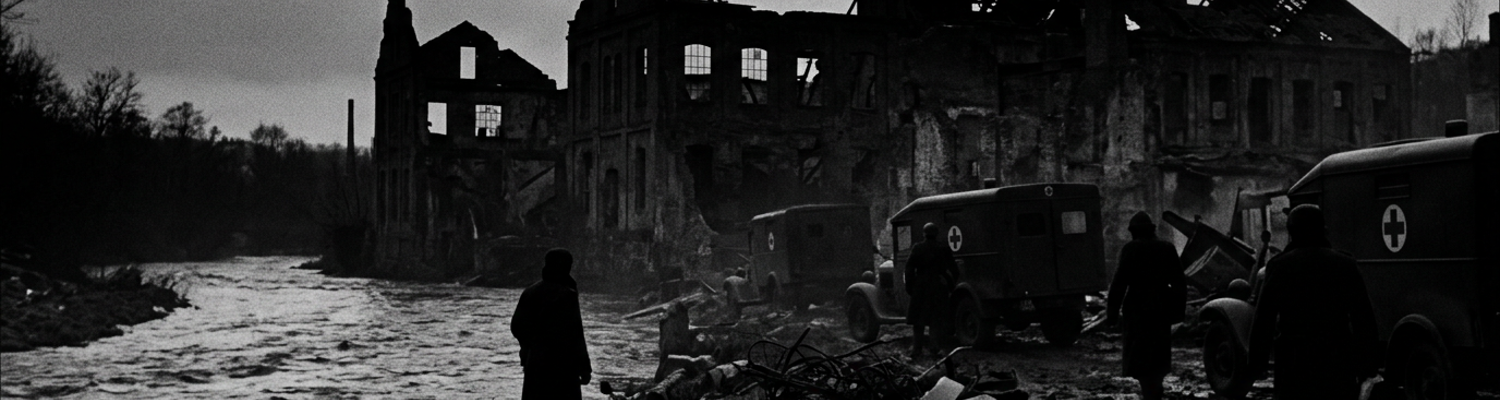
Archival evidence shows the Cartiera del Fibreno triage center collapsed entirely by 1400 hours on the second day of the offensive. The facility sat at grid reference 33T XG 452 718. It rested between the fast-flowing Fibreno River and the steep limestone ridges of the Liri Valley. Medical personnel from the 12th Field Hospital established their primary casualty clearing station inside the reinforced concrete basement of the paper mill. Route 82 served as the sole egress path back to the rear echelon surgical units. German spotters attached to the 1st Fallschirmjäger Division occupied the high ground of Monte delle Fate. These observers pre-registered the intersection of Route 82 and the mill access road. A concentrated barrage from 81mm Granatwerfer 34 batteries began striking in a linear pattern along the unpaved driveway at exactly 1415 hours.
Six Dodge WC-54 ambulances attempted to break out during a brief lull in the firing.
Shrapnel penetrated three engine blocks directly. The inline-six engines seized instantly. Jagged metal fragments shredded the pneumatic tires of the remaining three vehicles. The blasts also severed their rear suspension leaf springs. The damaged vehicles settled into the mud. They sat immobilized in the center of the targeted zone. Stretcher bearers tried to carry patients on foot through the adjacent agricultural tracts. High-explosive rounds detonated in the soft earth. This caused severe secondary casualties among the orderlies. Over two hundred wounded infantrymen remained trapped inside the rapidly flooding basement of the mill.
The primary access bridge collapsed into the river at 1530 hours.
Four direct hits to its wooden support pylons caused the structural failure. A close review of operational logs indicates the disaster stemmed directly from a synchronized failure of three separate command structures. Post-action tribunals investigated the 4th Engineering Battalion alongside the 12th Field Hospital command staff and the 9th Field Artillery Regiment. Medical officers inside the mill relied on standard SCR-300 backpack radios to call for transport and fire support. Their designated frequency experienced heavy interference from the 4th Engineering Battalion transmitters operating three miles to the south. Engineers were simultaneously broadcasting continuous requests for heavy steel Bailey bridge components. They needed these parts to repair a crossing downstream. The overlapping signal traffic drowned out the triage center calls for counter-battery fire. Artillery liaison officers stationed at the rear echelon heard only static and fragmented grid coordinates. Standard operating procedure required artillery units to receive secondary visual confirmation before firing on coordinates near friendly medical facilities.
Forward observers could not see through the dense white phosphorus smoke blanketing the valley floor.
The resulting communication delay allowed the German mortar teams thirty-five uninterrupted minutes to dismantle the upper floors of the mill. Falling masonry crushed the main diesel generator. This severed power to the surgical lamps and the basement sump pumps. Water from the adjacent sluice gates began rising at a rate of four inches per hour inside the holding areas. Surgeons resorted to operating by the light of battery-powered flashlights. They stood in ankle-deep freezing water. Engineering units finally arrived at the Route 82 junction at 1645 hours. They brought two D7 armored bulldozers to clear the destroyed ambulances. One bulldozer slipped on a patch of diesel-slicked mud. It threw its right steel track entirely off the rear drive sprocket. The disabled heavy equipment blocked the narrow defile completely. This prevented any further vehicle access to the mill. Medical personnel began tying standard paper casualty tags to the deceased. They floated the bodies toward a makeshift catch-net erected by stretcher bearers a hundred yards downstream.
Liri Valley Operations During May 1944
Executing a contested river crossing while maintaining an exposed casualty evacuation corridor presented a complex equation. Operation Diadem launched on May 11. The directive required Allied forces to shatter the German Gustav Line defenses anchoring the Liri Valley.
Allied planners under General Harold Alexander mapped a coordinated offensive utilizing the US Fifth Army and British Eighth Army. They intended to push straight up Route 6 toward Rome. The Gustav Line consisted of interlocking reinforced concrete bunkers. Buried Panther tank turrets sat bolted to steel sub-structures. Pre-sighted mortar pits integrated directly into the jagged limestone outcroppings of the Apennine Mountains. German artillery spotters from the XIV Panzer Corps held complete visual dominance over the valley floor. They operated from observation posts situated at elevation 593 and the Monte Cassino massif. Breaking this defensive belt required Allied infantry to traverse a flat floodplain. Deep irrigation ditches and fast-flowing tributaries crisscrossed the terrain.
Planners allocated 1,600 artillery pieces to fire a rolling barrage.
This bombardment targeted the German defensive positions before the infantry advance. First-wave infantry units immediately bogged down in the heavily mined approaches along the Rapido and Gari rivers. Counter-battery fire from hidden 15cm sFH 18 howitzers began striking the Allied staging areas within fourteen minutes of the initial assault. The heavy German shells easily penetrated the quarter-inch steel engine cowlings of the advancing supply trucks. The narrow dirt tracks turned into graveyards of burning vehicles. Engine blocks cracked under the intense heat of secondary ammunition explosions. Pushing into this saturated forward territory required specialized bridging equipment.
The 313th Engineer Combat Battalion received orders to construct heavy bridging across the Fibreno River.
Their objective sat at grid reference 33T XG 448 712. Enemy combatants attached to the 15th Panzergrenadier Division still occupied the opposite bank. The distance measured less than two hundred yards. German MG42 machine gun teams engaged the engineers. The Americans maneuvered six-ton Brockway C666 bridge erection trucks into the muddy shoreline. The heavy six-by-six vehicles sank up to their differential housings in the wet clay. Drivers attempted to engage their front-mounted Gar Wood winches to pull the trucks forward. Steel winch cables snapped under the extreme tension. The cables whipped backward and severed the hydraulic lines controlling the rear boom derricks. Without hydraulic pressure the engineers could not lower the heavy steel treadway track sections into position.
Battalion commander Lieutenant Colonel Richard H. Smith ordered his men to manually unload the bridging components.
They used standard block and tackle rigs attached to adjacent poplar trees. The 313th engineers exposed themselves entirely to enemy fire while wrestling the heavy steel pins into the bridge hinges. Mortar rounds impacted the river surface. Geysers of freezing water and jagged steel fragments washed across the unfinished pontoon structure. The Fibreno River flowed at a dangerous seven knots. This put extreme lateral pressure on the partially assembled bridge. The current threatened to tear the anchor cables from their moorings. Three pneumatic rubber floats deflated instantly after taking direct hits from 7.92mm armor-piercing tracer rounds. The collapse of the bridging timeline choked the casualty evacuation routes leading back to the Cartiera del Fibreno triage center.
Medical transports backing up along the muddy approach roads created a stationary target block stretching for three miles.
Engineers from the 313th abandoned the manual assembly of the M2 Treadway system. Their primary air compressor suffered a catastrophic piston failure. A stray piece of shrapnel sheared off the oil filter housing. This drained the lubricating fluid and seized the LeRoi gasoline engine within seconds. Ground personnel attempted to inflate the remaining eighteen-ton pontoons using hand-operated bellows. Historical field reports document that a single pontoon required four men pumping continuously for forty-five minutes to reach standard operational pressure. German spotters recognized the delay. Artillery batteries shifted their coordinates away from the infantry vanguard. They concentrated their fire directly onto the 313th Engineer Combat Battalion staging area. The first salvo of 105mm high-explosive shells obliterated the remaining Brockway trucks. Heavy steel H-beams from the destroyed truck beds launched into the air. They crushed the makeshift medical aid station established by the engineers on the riverbank.
Repurposing Cartiera del Fibreno for Forward Medical Triage
Converting a structurally compromised industrial paper mill into a sterile forward triage center required heavy mechanical intervention. Operational logs from Company C of the 313th Engineer Combat Battalion detail the exact conditions inside the facility.
The main production floor sat beneath a collapsed section of corrugated iron roofing. Four 40-ton cast-iron pulp vats dominated the center of the room. Moving these vats required the engineers to deploy an M1 Ward LaFrance heavy wrecker. Drivers backed the ten-ton truck through the shattered loading bay doors at 0630 hours. Steel cables attached to the rear winch snapped taut against the cast-iron housings. The heavy vats refused to slide across the concrete floor. Operators resorted to using pneumatic jackhammers to break the mounting bolts holding the machinery to the foundation. This loud mechanical hammering echoed off the limestone ridges of the valley. Medical personnel from the 12th Field Hospital waited outside in idling transport trucks. Engineers cleared a fifty-foot square area. Platoon leaders directed their men to string heavy-gauge copper wiring along the overhead gantry crane rails.
They connected these lines to a captured German 10-kilowatt diesel generator positioned in the exterior courtyard.
Orderlies began carrying standard folding steel operating tables into the cleared space. Heavy steel grating covering the main drainage culverts had to be cut away using oxyacetylene torches. This created level flooring for the incoming surgical teams. A close review of quartermaster reports indicates the engineers utilized over two hundred rough-sawn timber beams. They used these 12x12 supports to shore up the eastern load-bearing wall. This section of the structure had taken a direct hit from a 500-pound aerial bomb three days prior. Standard procedures dictated the installation of cross-bracing every four feet along the damaged masonry. Combat engineers worked in ankle-deep industrial bleach and wet cellulose pulp.
They nailed plywood sheets over the shattered window frames to enforce blackout conditions.
Orderlies designated specific zones for triage using white chalk to draw boundaries on the wet concrete. Archival evidence shows the structural stabilization required constant exterior movement by heavy equipment operators. German spotters attached to the 1st Fallschirmjäger Division occupied heavily camouflaged observation posts. These positions sat on the high ground of Monte delle Fate. Forward observers possessed clear sightlines straight down into the Cartiera del Fibreno courtyard. Communications logs confirm they transmitted the exact coordinates of the engineering activity. The receiving 81mm Granatwerfer 34 batteries positioned behind the ridge adjusted their baseplates. The first incoming mortar salvos began striking the paper plant facility at exactly 0945 hours.
High-explosive rounds equipped with Wgr.Z. 38 point-detonating fuzes detonated directly against the remaining corrugated roof panels.
Jagged steel fragments rained down into the main production floor. The shrapnel sliced through the newly installed copper electrical wiring. A second barrage bracketed the exterior courtyard. Combat engineers were mixing quick-drying cement inside a portable diesel mixer in this exact location. Shrapnel from the third barrage severed the primary fuel line of the captured exterior diesel generator. The mortar teams maintained a sustained rate of fire of fifteen rounds per minute. Baseplates sank into the soft earth on the reverse slope. This tightened the dispersion pattern of the falling shells. Direct hits on the loading dock obliterated a stack of fifty timber beams intended for the basement ceiling supports.
Splintered wood and pulverized concrete filled the air.
A falling section of masonry crushed the front axle of the M1 Ward LaFrance wrecker. The vehicle dropped violently to the left. It pinned a heavy winch cable underneath its cracked engine block. Orderlies attempting to unload crates of blood plasma dropped their supplies. They took cover in the drainage culverts. Mortar fragments punctured the sterile glass plasma bottles. Human blood mixed with the industrial bleach covering the floor. Engineers abandoned the stabilization of the upper floors. They retreated entirely into the basement level.
Casualty Classification and Internal Field Hospital Operations
The internal casualty sorting system disintegrated shortly after the morning artillery barrages severed the primary transport roads. Medical officers from the 12th Field Hospital established their primary classification sector directly on the floor of the paper fabrication room.
This area measured one hundred feet by forty feet. Wet cellulose pulp coated the concrete foundation. Regimental chaplains attached to the 143rd Infantry Regiment abandoned their standard non-combatant duties. They physically managed the priority casualty lines. These officers worked alongside medical corpsmen to drag canvas stretchers through the ankle-deep water accumulating near the cast-iron pulp vats. Corpsmen utilized standard M2 field medical kits to conduct initial assessments of the wounded infantrymen arriving from the riverbank. They pulled Carlisle model first aid dressings from their canvas pouches to pack the largest open wounds. Chaplains applied standard Emergency Medical Tags to the lapels of the wounded using heavy wire ties. They marked these heavy paper tags with black grease pencils. The markings indicated the exact administered doses of morphine tartrate.
The noise of the German 81mm Granatwerfer 34 shells impacting the exterior courtyard forced the triage teams to communicate entirely through hand signals.
Chaplains directed stretcher bearers to align the most severe cases against the eastern load-bearing wall. Archival evidence shows that this specific placement protected the dying men from the secondary shrapnel raining down through the shattered corrugated iron roof. The corpsmen physically separated the incoming soldiers into three distinct columns based on visual trauma assessments. Soldiers with superficial shrapnel lacerations or clean through-and-through 7.92mm Mauser bullet wounds went to the delayed treatment line near the loading dock doors. Men suffering from arterial bleeding in their extremities went to the immediate surgical queue. The chaplains took sole responsibility for the third line.
This expectant category consisted of men with severe head trauma or penetrating abdominal wounds.
Chaplains knelt in the chemical-laced water to administer last rites. They distributed the remaining morphine syrettes and collected stamped aluminum identification tags from the deceased. Stretcher bearers carried thirty-five new casualties into the fabrication room every hour. A close review of operational logs indicates that severe supply shortages forced a shift in medical protocols. The destruction of the Dodge WC-54 ambulances on Route 82 trapped all M3 medical resupply chests two miles behind the frontline. Corpsmen exhausted their initial allocation of Type O whole blood and dried plasma by 1100 hours. The continuous influx of wounded soldiers from the 313th Engineer Combat Battalion quickly overwhelmed the remaining stockpile of crystalline sulfanilamide powder.
Surgeons operating on the folding steel tables required fresh sterile bandages to pack open chest cavities.
Orderlies had nothing left in their supply crates but heavily soiled cotton dressings recovered from the deceased. The chief medical officer instituted a mandatory protocol shift at 1145 hours. Without plasma to maintain patient blood pressure during long operations surgeons completely stopped treating complex torso wounds. Medical corpsmen received direct orders to immediately reclassify all abdominal injuries into the expectant category regardless of the current vital signs of the soldier. The triage teams focused their remaining resources exclusively on amputations and rapid limb ligatures. Corpsmen applied webbed strap tourniquets to shattered legs and arms. They tightened the brass buckles until the canvas tore into the skin.
They dusted the exposed muscle tissue with the last remaining half-ounce packets of sulfa powder.
Orderlies lacking sterile water supplies resorted to boiling steel Kelly hemostats and bone saws in galvanized buckets. They filled these buckets with the heavily chlorinated tap water of the mill. The captured German 10-kilowatt diesel generator powering the electric hot plates sputtered and stalled. This dropped the water temperature below sterilization thresholds. Corpsmen wiped the bloody surgical instruments clean on their canvas uniform trousers. They handed them directly back to the operating surgeons.
River Debris Clearing and Field Litter Crossing Construction
Company B of the 313th Engineer Combat Battalion received direct orders at 1215 hours to physically enter the Fibreno River. The waterway flowed at seven knots. Spring meltwater from the Apennine Mountains dropped the river temperature to thirty-eight degrees Fahrenheit.
The collapsed primary access bridge created an impassable dam of twisted steel H-beams. Sheared rivets and splintered wooden pylons piled directly adjacent to the Cartiera del Fibreno triage center. This massive debris field diverted the rapid current directly into the compromised limestone foundation walls of the mill. Platoon leaders required their men to wade into chest-deep water to attach heavy recovery chains to the submerged wreckage. Soldiers struggled to maintain their footing on the slick riverbed. The extreme lateral pressure of the current constantly threatened to pin the engineers against the jagged concrete chunks of the ruined bridge deck. Men used six-foot steel pry bars to manually lever the crushed wooden supports out of the mud.
German forward observers on Monte delle Fate registered the exact position of the submerged work details within twelve minutes.
The subsequent indirect fire barrage systematically dismantled the manual debris clearing operation. Mortar teams from the 1st Fallschirmjäger Division dropped 81mm high-explosive shells directly into the fast-flowing channel. The deep water absorbed the steel fragmentation. It also transmitted lethal concussive shockwaves through the river. These subsurface pressure spikes ruptured the eardrums and collapsed the lungs of the engineers working below the waterline. Company B attempted to utilize a surviving Diamond T 969 heavy wrecker parked on the eastern bank. They needed it to pull the largest steel girders from the channel. Operators engaged the five-ton Gar Wood winch system mounted behind the armored cab.
The thick steel cable dragged a two-ton section of the bridge deck up the muddy embankment.
An incoming mortar shell equipped with a Wgr.Z. 38 point-detonating fuze detonated directly against the front bumper of the wrecker. The blast shattered the cast-iron winch housing and severed the primary hydraulic lines. The sudden release of mechanical tension whipped the severed steel cable backward into the river. A close review of operational logs indicates the engineers immediately shifted their efforts toward constructing tactical footbridges and specialized litter crossings. Battalion command abandoned all attempts to build vehicle-capable spans across the debris-choked waterway. Platoon sergeants distributed standard M2 kapok infantry footbridge components to the surviving work crews.
These modular units consisted of heavy canvas-covered kapok floats supporting rigid wooden duckboards.
Engineers drove six-foot steel pickets deep into the muddy banks using ten-pound sledgehammers. They lashed one-inch manila ropes between the pickets using double half-hitch knots. This created a rudimentary highline system for the non-ambulatory casualties. Orderlies from the 12th Field Hospital carried wounded soldiers out of the flooding mill basement on standard canvas stretchers. The engineers attached these stretchers to the highline using heavy steel carabiners and brass snatch blocks. Four medics stood on the opposing bank pulling the heavy transport ropes by hand. Transporting a single casualty across the seventy-foot span required eight minutes of continuous physical labor.
The wet manila rope swelled rapidly in the freezing water.
This sudden expansion caused the brass snatch blocks to bind against the braided fibers. Medics strained against the resulting mechanical friction. The heavy canvas stretchers sagged dangerously close to the churning surface of the Fibreno River. Mortar shells continued to impact the surrounding floodplain. Freezing water splashed onto the exposed abdominal wounds of the men suspended over the channel. The constant back-and-forth friction generated intense heat inside the seized pulley mechanisms. A steel carabiner bearing the combined weight of a waterlogged stretcher and a double-amputee snapped entirely under the strain at 1342 hours.
Radio Frequency Miscommunications and Grid Coordinate Errors
The Signal Operating Instructions distributed to the II Corps on May 10 contained a fatal typographical error regarding frequency modulation bands. Forward observers attached to the 143rd Infantry Regiment carried standard SCR-284 generator-powered field radios into the valley.
Corps artillery relays operating behind the lines relied on heavy SCR-608 vehicular sets mounted in the rear compartments of Dodge command cars. Signal officers assigned both the forward observers and the 4th Engineering Battalion to the exact same 48.3 megahertz frequency crystal. This specific frequency allocation violated standard separation protocols for units operating within a five-mile radius. The engineers were positioned three miles south along the riverbank. They were actively broadcasting continuous voice requests for heavy steel Bailey bridge components. Medical personnel inside the Cartiera del Fibreno triage center desperately needed counter-battery fire to suppress the German mortar pits on Monte delle Fate. Forward observers attempted to transmit these urgent fire missions over the designated artillery network.
The overlapping transmissions created a continuous wave of static interference across the valley floor.
Radio operators attached to the 143rd Infantry cranked the hand generators of their SCR-284 units to maximum RPM to boost signal strength. The physical exertion required two men alternating on the crank handles while a third attempted to tune the receiver dial. The heavy limestone ridges of the Apennine Mountains caused severe signal bounce. This geological feature trapped the radio waves within the low-lying Liri Valley basin. The artillery Fire Direction Center received a garbled mix of medical evacuation requests and bridge assembly measurements. Operators sitting at the rear echelon command post heard only fragmented sentences regarding pontoon inflation pressures and casualty counts. Standard operating procedure forbade the artillery batteries from firing blindly without clear voice confirmation from a registered observer.
Communications officers at the command post logged the transmissions as unintelligible enemy jamming efforts at 1418 hours.
A close review of operational logs indicates the total breakdown in voice communications forced forward observers to rely on continuous-wave Morse code transmissions. Infantry radio operators pulled out standard M-209 mechanical cipher machines to encrypt the targeting data. The encryption process took six minutes of manual typing before the transmission could begin. Artillery liaison officers deciphered the incoming text at 1428 hours. The decoded message requested immediate suppression fire at grid reference 33T XG 452 718. This coordinate pointed exactly to the 12th Field Hospital casualty clearing station inside the paper mill. The forward observer had intended to transmit grid reference 33T XG 455 718. That location represented the actual German mortar pits situated three hundred yards east on the reverse slope of the ridge.
A single miskeyed numerical digit shifted the artillery target directly onto the primary medical evacuation corridor.
The Fire Direction Center plotted the incorrect coordinates using standard M1918 firing tables. Artillery officers authorized a three-battery volley from 105mm M2A1 howitzers positioned four miles behind the frontline. The firing sequence commenced exactly at 1432 hours. High-explosive shells equipped with M48 point-detonating fuzes impacted the intersection of Route 82 and the Cartiera del Fibreno access road. This junction constituted the only viable exit route for the Dodge WC-54 ambulances attempting to transport non-ambulatory patients away from the flooding basement. The 105mm rounds blew thirty-foot craters into the unpaved surface. Dirt and pulverized asphalt rained down on the medical staging areas. Shrapnel from the friendly artillery barrage sheared the front axles off two approaching supply trucks.
The disabled two-and-a-half-ton trucks formed an impassable barricade across the narrow defile.
Medical officers inside the mill heard the heavy caliber explosions. They assumed the German units had escalated their bombardment. They ordered stretcher bearers to halt all evacuation efforts and retreat back into the chemical-laced water of the basement. Artillery batteries continued to drop four rounds per minute onto the Route 82 intersection. The bombardment lasted for a full twelve minutes before the forward observer recognized the error and transmitted a manual cease-fire code.
Friendly Fire Destruction of the Primary Evacuation Route
The 9th Field Artillery Battalion maintained a sustained rate of fire of four rounds per minute following the miskeyed target transmission. Three batteries of 105mm M2A1 howitzers dropped their payloads directly onto the Route 82 intersection.
These thirty-three-pound high-explosive projectiles utilized M48 point-detonating fuzes set to explode upon immediate contact with the muddy terrain. Blast waves violently inverted the soft clay of the single designated evacuation corridor. Orderlies from the 12th Field Hospital had spent the previous four hours marking this specific two-hundred-yard path with white engineering tape. The tape guided stretcher teams through the minefields. Friendly artillery barrages obliterated these route markers within the first sixty seconds. Jagged steel casing fragments traveling at over three thousand feet per second shredded the canvas litters being carried by the frontline medics. Concussive overpressure from the overlapping detonations physically lifted heavily laden medical personnel off the ground. It threw them into the adjacent irrigation ditches.
Crater depths reached six feet in the saturated floodplain.
A close review of operational logs indicates the barrage systematically dismantled the makeshift river traverses constructed by Company B of the 313th Engineer Combat Battalion. Engineers from the 313th had anchored their M2 kapok infantry footbridges directly adjacent to the ruined primary access bridge. At 1436 hours a 105mm shell impacted the eastern embankment precisely where the primary highline system originated. Detonating explosives pulverized the six-foot steel pickets driven into the mud. The blast instantly vaporized the primary anchor knots. This sudden release of tension caused the one-inch manila ropes to snap violently across the seventy-foot span of the Fibreno River. Heavy brass snatch blocks attached to the transport rigging dropped straight into the fast-flowing channel.
Canvas-covered kapok floats supporting the rigid wooden duckboards absorbed a secondary direct hit from a short-falling round.
Shrapnel tore through the buoyant material. This caused the modular footbridge sections to flood and immediately sink beneath the thirty-eight-degree spring meltwater. The destruction of these litter crossings permanently severed the last physical link to the rear echelon. Communications officers attached to the 12th Field Hospital had relied on a single strand of WD-1/TT field telephone wire to maintain contact with the Fire Direction Center. Signal corpsmen had hastily routed this copper wire along the primary manila highline rope to keep it above the churning water. Severing the transport ropes snapped the communication line in three separate places.
Medical officers inside the flooding basement of the Cartiera del Fibreno cranked the hand generators on their EE-8 field telephones repeatedly.
These receivers produced only dead air. Earlier overlapping radio interference on the 48.3 megahertz frequency had already rendered their SCR-300 backpack transmitters entirely useless. This triage hub was now completely isolated in the middle of a registered kill zone. Surgeons continued amputations in ankle-deep water while friendly artillery shells pounded the dirt above their heads. The 9th Field Artillery Battalion fired a total of one hundred and forty-four rounds into the medical corridor before exhausting their ready-rack ammunition supply. Forward observers on the ridge could not see the blue smoke grenades popped by the trapped medical personnel. Dense white phosphorus clouds hung in the valley basin.
Ground personnel trapped on the western bank attempted to signal the rear using M1 signal mirrors.
The overcast sky and heavy particulate matter in the air blocked all natural sunlight reflection. Artillery shrapnel had completely shredded the pneumatic tires of the remaining transport vehicles parked near the loading docks. Damaged engine blocks leaked heavy motor oil directly into the industrial bleach coating the courtyard. Orderlies tied standard paper casualty tags to the severed ends of the manila transport ropes. The seven-knot river current dragged the ruined highline rigging downstream alongside the splintered wooden duckboards of the sunken footbridge.