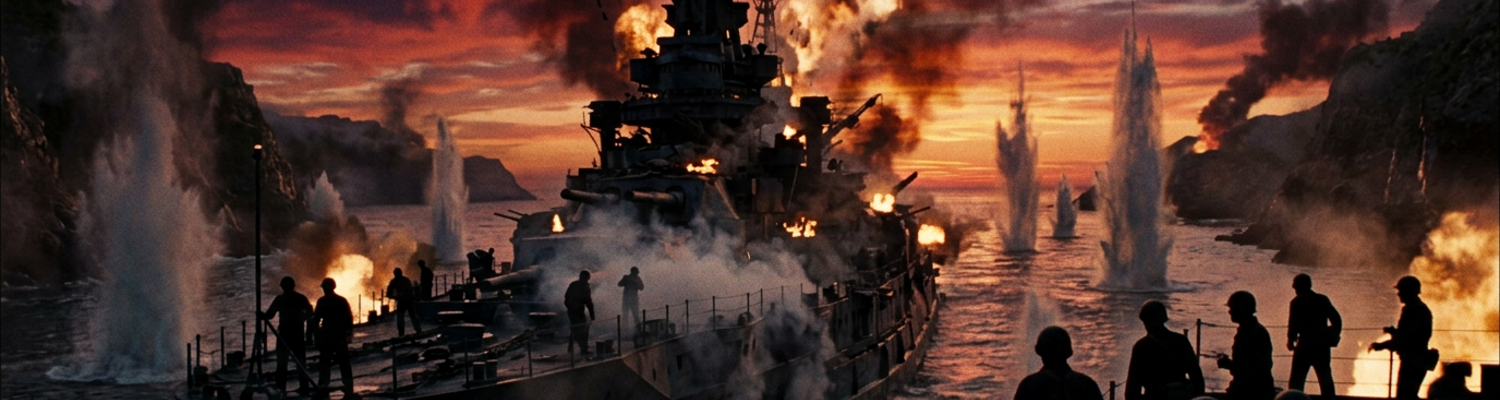

Tactical Disengagement and Channel Navigation under Fire
Soldiers of the VII Corps found that standard Allied training manuals had drastically underestimated the strength of coastal fortifications, as German machine gun nests and concrete bunkers remained intact despite hours of naval bombardment. Radio logs aboard the command cruiser USS Tuscaloosa filled with urgent transmissions from the Ninth and Seventy-Ninth Infantry Divisions, recording how frontline battalions remained pinned down in the hedgerows under intense mortar and artillery fire. Communications personnel recorded the exact coordinates where American ground units were stopped along the outer ridge lines of Cherbourg, unable to crawl forward through uncut barbed wire. Army spotters ashore reported that heavy naval shells had blasted open pastures but failed to pierce the reinforced roofs of the primary German casemates. Rear Admiral Morton L. Deyo studied these frantic radio logs on the flag bridge, realizing that the planned naval support had not broken the stalemate for the soldiers fighting in the mud below.
Deyo coordinated combat operations closely with the army ashore as Task Force 129 began its scheduled bombardment run around 1200 hours. High command wanted the warships out of the coastal waters by noon, but Deyo openly defied the scheduled signal after seeing that the infantry could not advance without continued naval gunnery. Deyo made the operational decision to prolong combat operations until 1500 hours, keeping his battleships and cruisers in their exposed firing lanes for three additional hours. Gunnery officers immediately relayed fresh firing coordinates down to the plotting rooms, directing the big guns of the Nevada, Texas, and Arkansas to resume heavy bombardments against the stubborn German casemates. Staff clerks hurriedly logged the unauthorized extension in the ship journals, noting down the high consumption of heavy caliber shells while German shore batteries continued to return accurate counterfire. Gun crews loaded powder bags and heavy shells without rest until 1500 hours, when Deyo finally acknowledged that the fleet had exhausted its tactical window and ordered an immediate withdrawal.
Task Force 129 executed a sharp turn toward open water, steering into the narrow swept mine channels that Allied minesweepers had cleared through the minefields of the Baie de la Seine. German battery commanders at Battery Hamburg and surrounding strongpoints concentrated their fire on the retreating formation, sending salvos of heavy shells plunging into the restricted sea lanes. Geysers of saltwater rose beside the cruiser decks as German gunners straddled the ships, threatening to push vessels into the unswept minefields flanking both sides of the narrow channels. Navigators watched their plotting tables closely, measuring the drift of the ships against the channel buoys to prevent emergency turns from carrying the hulls onto naval mines. Destroyers moved alongside the column to lay dense chemical smoke screens, hiding the heavy cruisers and battleships from the view of German optical rangefinders on the cliffs. Engine rooms maintained high speed despite the strong vibrations shaking the hull plates, racing past the final channel markers while German shells continued to explode in the water behind them.
Officers gathered in the smoke-filled plotting rooms as the German gunfire finally ceased, entering the surreal and quiet hours that followed the violent engagement. Intelligence officers and gunnery ensigns frantically recorded the raw tactical lessons of the duel, filling notebooks with details about how standard training had failed to prepare them for fortified concrete. Scribes noted that dueling heavy shore guns from constricted mine channels severely limited ship maneuverability and increased vulnerability to counter-battery fire. Yeomen typed up official action reports documenting that the VII Corps infantry remained pinned along the fortified Cotentin perimeter despite Deyo prolonging the fight until 1500 hours. Admiral Deyo signed the initial logs on the bridge of the Tuscaloosa, ending the mission and setting a course for southern England to rearm the warships.
Structural Damage Control aboard Battleship Texas
Battleship Texas followed the retreat column toward southern England while dense gray smoke drifted from the ruined superstructure above its conning tower. A 240-millimeter German shell had struck the navigation bridge directly above the armored conning station during the final minutes of the duel, detonating with violent force inside the pilot house. The blast instantly killed helmsman Christen Christensen at the wheel and wounded eleven other bridge watchstanders, while Captain Charles A. Baker miraculously escaped uninjured. Flying fragments shredded the chart tables, severed the main electrical wiring, and sprayed jagged steel splinters across the deck where the wounded lay pinned under fallen equipment. Executive officer Commander José Cabanillas assisted as Captain Baker ordered the shattered bridge cleared, directing corpsmen to treat the wounded while orderlies carried casualties down to emergency dressing stations. Bridge officers grabbing the shattered helm discovered that the explosion had severed the primary control linkages to the rudder, leaving the thirty-two-thousand-ton dreadnought unable to steer as it entered open waters.
Helmsmen shifted steering control to the secondary conning stations deep inside the armored citadel under complete blackout conditions, working by the dim beams of battle lanterns to regain manual command of the rudder. Engineers deep in the auxiliary steering compartment below the waterline wrestled the hydraulic valves into alignment, reconnecting the massive steering engines to the aft helm stations to steady the swinging bow. Damage control parties simultaneously rushed to the damaged superstructure with heavy timbers, screw jacks, and steel wedges to begin emergency shoring of blown deck plates around the bridge structure. Shipfitters hammered structural supports beneath the buckled steel plates of the navigation deck, bracing the warped metal to keep tons of ruptured armor from collapsing onto the conning tower below. Repair crews sealed off torn ventilation ducts with canvas and wooden plugs, stopping combustion gases from entering the lower living decks as the ship gathered speed toward the English coast.
Inspectors searching these lower living compartments discovered a second 240-millimeter armor-piercing projectile embedded unexploded inside the warrant officers mess deck. The heavy German projectile had punched through the exterior hull plating beneath the main deck, pierced several internal bulkheads, and bounced along the deck before skidding to a halt beneath a mess table. Sailors cleared away broken bunks and shattered furniture in absolute silence, shining muffled flashlights across the unexploded warhead to examine its armed mechanical fuse. Officers ordered an immediate evacuation of the surrounding compartments, establishing a safety perimeter with sandbags and posted sentries to ensure no vibration or electrical spark disturbed the live projectile. Gunners and bomb disposal technicians rigged temporary timber cradles around the heavy steel casing, preventing the bomb from rolling with the heavy swells of the English Channel until the battleship could dock in Portland. Battleship Texas pushed through the open sea lanes under auxiliary steering, maintaining steady radio silence as repair crews monitored the wedged bomb and tended to the wounded crew members through the night.
Destroyer Bridge Carnage on USS O'Brien
O'Brien struggled through the heavy swells directly behind the damaged battleship after a high-explosive German coastal shell slammed straight into the destroyer bridge superstructure. The direct hit detonated with catastrophic violence, instantly killing thirteen crew members and inflicting severe shrapnel wounds on nineteen other sailors stationed at the command controls. Flying steel splinters shredded the chart house walls, tore through electrical cable trunks, and ignited navigational charts across the pilot house. Blast damage knocked out the primary fire-control directors and obliterated the main navigational radar antenna, leaving the warship unable to detect distant targets and stripping away automated gunnery tracking. Surviving bridge watchstanders dragged fallen comrades out of the burning wreckage as thick acrid smoke poured through shattered viewports, filling the enclosed command spaces with choking fumes.
Fumes from burning electrical cables forced hospital corpsmen to move surviving casualties deep into the lower living compartments, where medical teams immediately initiated emergency passageway triage operations. Hospital corpsmen laid the casualties along the narrow linoleum passageways and across mess tables, cutting away scorched uniforms to bandage severe burns and deep fragmentation wounds. Medical personnel worked under dim red battle lanterns, administering morphine and securing wire splints to shattered limbs while shipmates held flashlight beams steady over the bleeding wounded. Other sailors carried plasma bottles down the crowded ladders, stepping carefully over torn metal and medical supplies to reach the nineteen wounded men awaiting urgent treatment. Corpsmen marked casualty tags to prioritize surgery cases for arrival in England, while quiet working parties moved the thirteen fatal casualties into secure stowage compartments deep below the waterline.
Shipfitters climbed above these quiet lower compartments carrying cutting torches, axes, and heavy crowbars to clear away the mangled structural steel hanging over the starboard side. Damage control parties sliced through twisted support beams and buckled bridge plating that hung precariously over the hull, threatening to puncture life rafts or jam the forward five-inch gun mounts. Working teams shoved tons of scorched steel fragments, ruptured lockers, and dangling signal halyards into the sea to reduce top-heavy weight and clear obstructed walkways. Sailors sealed ruptured ventilation ducts and dogged down buckled watertight doors with wooden wedges to contain secondary fires and stop firehose runoff from seeping into the electrical generators below. Welders worked rapidly under the constant threat of further counter-battery fire, cutting free jagged structural debris while the ship continued its withdrawal away from the active German battery arcs.
Shellfire from the Cotentin batteries trailed the wake of the retreating destroyer as surviving officers organized emergency manual steering through the designated swept lanes. Quartermasters stationed in the aft steering compartment grabbed the heavy auxiliary helm wheels, wrestling the rudder into position using sound-powered telephone orders passed down from the surviving secondary conning station. Navigators relied on magnetic compasses and visual pelorus sightings from the open deck to identify channel marker buoys, because the destroyed radar prevented electronic tracking through the minefields. Helmsmen kept the destroyer precisely within the narrow swept channel borders, avoiding the lethal moored minefields flanking both sides of the escape route. Engineering personnel maintained maximum boiler output despite the heavy structural vibrations, pushing O'Brien safely out of coastal artillery range alongside the retreating warships of Task Force 129.
Rangefinding Superiority of German Battery Hamburg
Task Force 129 gunnery officers aboard the withdrawing warships unrolled target track charts across their plotting tables to understand how coastal gunners at Batterie Hamburg had targeted their hulls with such immediate, devastating precision. Surviving battle logs revealed that the German battery commander had exercised strict fire discipline, withholding all fire while Allied battleships and cruisers approached the French coastline in plain view. German gun crews kept their four heavy 240-millimeter barrels completely silent until the Allied warships closed to 15000 yards, drawing the formation deep into their pre-calculated target grid. Standard naval training manuals had led American captains to expect inaccurate opening ranging shots and wide dispersal patterns from fixed shore installations. Batterie Hamburg bypassed the customary bracketed ranging phase entirely, unleashing coordinated opening salvos that straddled American hulls within seconds of the first muzzle flashes. Geysers of seawater and jagged steel fragments slammed across warship decks before helmsmen could initiate evasive zigzag patterns.
Radar stations paired with elevated cliffside stereoscopic optical rangefinders anchored the German fire-direction network that achieved this instant accuracy. Coastal radar units sheltered beneath reinforced steel cupolas swept the sea approaches through dense morning fog, capturing electronic range and bearing readings on every advancing warship. German spotters perched inside concrete observation posts along the high Cotentin ridges confirmed these electronic plots using wide-aperture stereoscopic rangefinders, peering through dual lenses to triangulate ship distances with mechanical exactness. Hardened underground telephone cables buried deep beneath layers of crushed rock and concrete relayed these synchronized optical and electronic coordinates straight to central plotting rooms. Mechanical calculating machines inside the bunkers factored in barometric pressure, wind drift, and ocean tides, transmitting firing solutions directly to the gun crews before the warships cleared the outer swept channels. German loaders rammed heavy armor-piercing shells into the breeches and adjusted traverse gears according to these continuous calculations.
Action dispatches arriving in the flag plotting rooms confirmed that these fully functioning gun networks immediately invalidated Allied intelligence assumptions regarding pre-invasion aerial neutralization of coastal casemates. Pre-invasion planning dossiers had assured naval task commanders that heavy Allied air raids throughout May and June had crushed the Cherbourg fortifications, cracked the heavy embrasures, and buried the gun mechanisms under rubble. Physical reality along the Cotentin cliffs contradicted every optimistic intelligence briefing, as hundreds of aerial bombs had merely churned the surrounding soil into dust while leaving the primary casemates structurally sound. German engineers had poured thirteen feet of reinforced concrete over each gun bunker, adding sloped outer aprons that deflected direct bomb impacts and absorbed the blast waves of heavy aerial ordnance. Electric ammunition hoists, emergency diesel generators, and internal ventilation blowers had operated without interruption throughout the entire engagement, completely protected beneath the thick concrete overheads.
Yeomen typed these raw tactical lessons into urgent communiques bound for Supreme Headquarters, warning that reinforced concrete coastal casemates could not be neutralized by conventional aerial bombardment alone. Intelligence yeomen typed out technical assessments documenting how standard air assault doctrine had failed to account for deeply buried fire-direction cables and armored radar domes. Scribes noted that future amphibious assault plans had to treat fortified coastal batteries as fully operational combat networks until ground troops physically seized the bunkers from the rear. Senior gunnery officers signed these preliminary damage reviews and sealed the documentation packets for dispatch to naval planners in southern England.
Breakdown of Air Spotting and Shore Communications
Logbooks filed inside those sealed documentation packets recorded the total breakdown of the forward targeting grid along the Normandy coast. German artillery batteries firing from inland ridges had blanketed the American frontline positions with constant fragmentation barrages, pinning the Army Shore Fire Control Parties flat against the earth. Infantry radio teams attached to VII Corps could not raise whip antennas or erect portable transmitters without drawing immediate mortar concentrations and sniper fire. Soldiers carrying heavy SCR-284 radio sets watched shrapnel smash their delicate vacuum tubes and sever field telephone wires before they could transmit a single set of map coordinates back to the fleet. Trained naval liaison officers crouched in flooded ditches and sunken cart tracks alongside the pinned infantry, unable to observe German gun flashes or direct counter-battery fire across the inland hedgerows.
Supermarine Spitfires and SOC Seagulls launched to replace these paralyzed ground observers ran directly into dense curtains of anti-aircraft fire over the Cotentin coastline. German twenty-millimeter and thirty-seven-millimeter rapid-fire guns threw up thick patterns of tracer fire, while heavy eighty-eight-millimeter flak batteries detonated dangerous concentrations of shrapnel around the cruising altitudes of the spotters. Shrapnel punctured the fuselages and damaged the flight surfaces of the spotting aircraft, forcing Allied naval aviators to violently bank away toward open water before they could verify shell craters. Royal Air Force Spitfire pilots dodging the relentless flak bursts could not hold steady orbits long enough to calculate range corrections or adjust the fall of naval shot. Coastal flak defenses effectively drove off or suppressed every airborne observation flight, leaving the bombardment force completely blind to targets behind the cliffs.
Admiral Morton L. Deyo responded to this total loss of remote spotting by ordering his ships to switch instantly to improvised direct line-of-sight visual gunnery. Lookouts and gunnery officers crowded onto open bridge wings and into armored directors, pressing heavy optical binoculars against their eyes to identify German gun positions by their muzzle flashes alone. Dense shore haze, drifting smoke from burning coastal underbrush, and churning seawater geysers from falling enemy shells repeatedly blanketed the shoreline and obscured the fortified casemates. American gunners had to estimate ranges by tracking brief orange muzzle blooms through the gray coastal fog rather than relying on measured coordinates from shore or air. Turret crews laid their guns on these fleeting flashes, aiming directly into the sea spray to trade salvos with the fortified bunkers at point-blank coastal ranges.
Sailors inside the plotting rooms of the cruisers and battleships abandoned their pre-printed range tables and manually tracked targets using only the raw visual bearings shouted down from the exposed topside lookouts. Gunners turned heavy mechanical handwheels to match incoming visual sightings, adjusting barrel elevation after watching their own six-inch and fourteen-inch shell splashes fountain against the granite breakwaters and seawalls. Shockwaves from near-miss German armor-piercing shells shook shipboard optical rangefinders out of calibration, forcing crewmen to wipe salt spray from the lenses and reset their split-image prisms by hand under continuous fire. Damage control parties and telephone talkers relayed manual corrections between the shuddering bridges and the gun turrets, keeping weapons firing until Task Force 129 cleared the western approach lanes.
Emergency Chemical Smoke Deployment in Confined Waters
Destroyers Barton, Laffey, and O'Brien surged into the western approach lanes to shield the withdrawing fleet, closing to point-blank range within 10000 yards of the German batteries to lay heavy chemical smoke screens. Gunners and deckhands on the three destroyers worked exposed topside stations while German coastal shells threw up high geysers of salt water all around their thin hulls. Sailors ignited rows of chemical canisters along the fantails and opened the fuel mixtures on mechanical generators, pumping thick zinc chloride smoke and vaporized oil into the air. Winds blowing along the Cotentin shore caught the white discharges and spread them into dense, opaque banks that blocked the view from German cliffside observation bunkers. Barton and Laffey cut through the water at high speed alongside the damaged O'Brien, trading close-range salvos with the shore guns to keep the enemy gunners focused away from the retreating heavy ships. The three destroyers maintained their runs along the inner edge of the bay until the expanding white haze masked the capital ships trailing behind them.
Battleships Texas, Arkansas, and Nevada relied on that protective screen to slip out of the German targeting grids, but their escort vessels rapidly exhausted every available mechanical smoke generator and chemical smoke pot. Sailors on the escort destroyers rushed across hot metal decks to unclamp fresh canisters, lighting one container after another as the chemical mixtures burned down to charred steel shells. Continuous operation pushed the mechanical smoke generators far past their operating limits, causing burner tips to foul with heavy carbon and blower motors to overheat and freeze. Escort crews hauled the last remaining emergency smoke pots out of below-deck ammunition lockers, igniting them on the sterns and kicking the spent, scorching canisters over the side. The intense demand for unbroken coverage emptied every storage rack across the escort group within an hour of close combat. Deck officers discovered that their ships had burned through their entire chemical inventories, leaving the task force entirely dependent on the uncontrolled white clouds already drifting across the water.
Smoke banks drifting across the restricted swept mine channels produced severe navigational disorientation for every vessel in the formation. Navigators peering through pilot house windows lost all visual contact with the channel marker buoys that marked the only safe passages cleared through the moored German minefields. The stagnant white fog combined with oily engine exhaust, settling flat across the surface of the sea and reducing visibility from miles down to just a few yards. Bridge crews on the battleships could no longer see the escorts flanking their hulls, while destroyer lookouts could only track the heavy ships by the rhythmic pounding of their propellers through the water. Navigational radar units failed to pierce the heavy chemical particles, displaying smeared clutter on their scopes that obscured the true positions of nearby hulls and coastal breakwaters.
Quartermasters wrestled their steering wheels against erratic channel currents while looking for any glimpse of marker buoys through the blinding fog. Navigators on the bridges bent over magnetic compasses and called out dead reckoning calculations to keep their warships aligned with the narrow, cleared channels. Lookout watches stationed on the bows of Barton, Laffey, and the damaged O'Brien rang warning bells and sounded foghorns to alert the battleships trailing blindly in their wakes. Engine room crews stood by their throttle wheels, throwing turbines into emergency reverse whenever a neighboring ship suddenly appeared out of the white gloom only yards away. Helmsmen held their rudders steady on calculated compass headings, edging Task Force 129 forward foot by foot until the formation cleared the minefield lanes and emerged into open Channel waters.
Immediate Gunnery Doctrine Revisions for Allied Command
Flagship USS Tuscaloosa led the battered warships across those open Channel waters while staff officers frantically drafted emergency action reports in the stifling heat of the flag plotting room. Yeomen typed reams of carbon-paper transcripts detailing catastrophic failures in naval gunfire liaison that had severed communication between the fleet and the army ashore. Standard training manuals had assumed that joint assault teams could direct shipboard batteries using standard tactical radio nets, but German artillery had destroyed those delicate networks within minutes of opening fire. Soldiers from the Ninth and Seventy-Ninth Infantry Divisions had been unable to establish working radio contact because mortar shrapnel and salt spray had destroyed the fragile vacuum tubes in their portable field radios. Naval liaison teams attached to the infantry remained pinned in waterlogged ditches, leaving spotters unable to transmit coordinates or correct the fall of shot while shipboard gunners blasted empty pastures. Rear Admiral Morton L. Deyo examined these incoming damage logs at his chart table, scrawling handwritten notes across the draft margins to warn Allied high command that the doctrine linking ground spotters to naval guns had failed completely under enemy fire.
Officers gathered those annotated drafts into formal memoranda addressed to Supreme Headquarters Allied Expeditionary Force, demanding the urgent deployment of dedicated radar-jamming vessels for future coastal operations. Tactical logs proved that German gunners at Batterie Hamburg had utilized cliffside radar installations to track American and British warships right through dense chemical smoke screens and heavy sea mist. Allied vessels lacking specialized electronic jamming equipment had remained perfectly visible on German cathode-ray scopes, allowing shore batteries to bracket maneuvering hulls with lethal accuracy. The formal memoranda argued that conventional smoke screens and evasive zigzags offered no defense against modern fire-control radar, warning that capital ships would face destruction unless accompanied by escort vessels carrying high-powered electronic jamming gear. Deyo insisted that naval forces needed active radio transmitters tuned to disrupt German frequency bands, preventing coastal batteries from locking onto Allied hulls at long range. Senior staff officers affixed their official seals to the completed dispatches, placing the secret files into locked metal courier boxes for immediate delivery to Supreme Headquarters officers in England.
Couriers transported duplicate sets of that raw Cherbourg gunnery telemetry directly to Allied operational planners who were preparing the invasion fleet for Operation Dragoon. Radio operators and naval dispatchers transmitted thousands of ballistic calculations, shell-expenditure tables, radar tracking plots, and barrel-erosion measurements to planning headquarters in the Mediterranean. Staff officers in Naples and Algiers pored over the Cherbourg gunnery data, realizing that thousands of heavy naval shells had failed to crack reinforced concrete casemates without direct, flat-trajectory impacts against the gun embrasures. Naval planners recognized that high-altitude aerial bombing and distant naval gunfire had merely chewed up open dirt around the bunkers while leaving the heavy German artillery pieces completely operational. Planners for the southern France landings scrapped their existing doctrine of long-range indirect bombardments and redrew their coastal fire-support sectors to bring battleships within eight thousand yards of the German batteries. Navigators revised their approach lanes and assigned destroyers to run close-range suppression missions against shore observation posts, applying the practical lessons of the Cotentin duel before the invasion armada sailed toward the beaches of Provence.