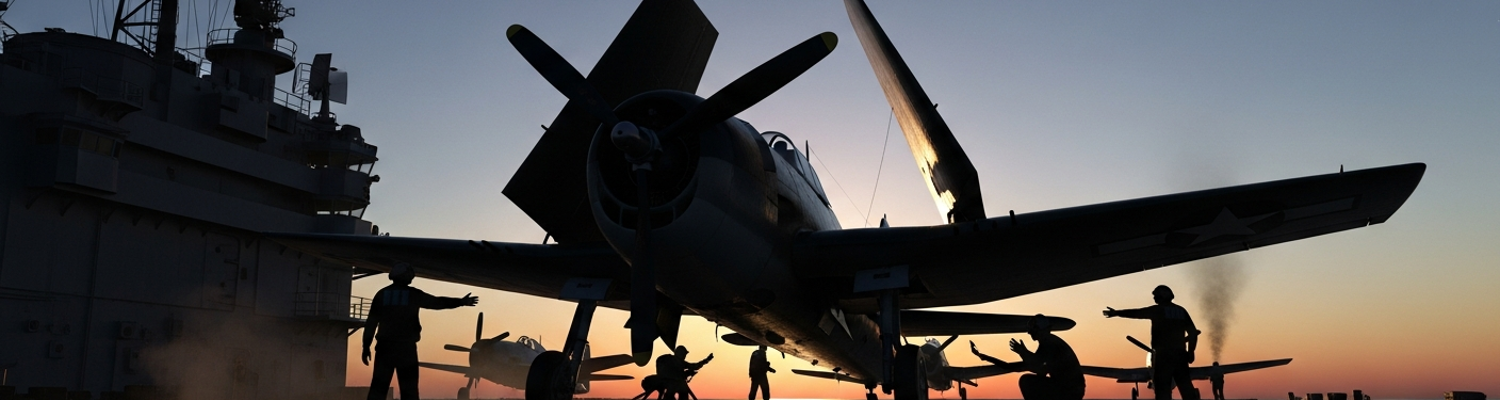

The directive for Operation Flintlock set an unforgiving pace. The invasion of Kwajalein Atoll was scheduled for the last day of January 1944. Planners had perilously little time to gather the intelligence necessary for an amphibious assault against a presumably fortified objective. Kwajalein was not just another island. It was the world's largest coral atoll, a sprawling complex of 97 islets surrounding a massive lagoon. Its position in the center of the Marshall Islands made it an essential administrative hub and naval anchorage for the Japanese. American war plans dating back to the 1920s identified the Marshalls as a key stepping stone in any trans-Pacific campaign. Kwajalein was the linchpin of this outer defensive ring. Taking it was a prerequisite for advancing on the Marianas and the Japanese home islands. The atoll’s airfields on Kwajalein Island and the paired islets of Roi-Namur represented a direct threat to American operational security. They were unsinkable aircraft carriers that could project Japanese power across the Central Pacific. Neutralizing them was a primary objective.
The maps were dangerously blank.
A close review of operational logs indicates that what little intelligence existed prior to late January was insufficient for the scale of the planned invasion. The fighting at Tarawa just months earlier, where inadequate knowledge of beach defenses and hydrography led to high casualties, weighed heavily on the command staff. For the V Amphibious Corps, composed of the Army’s 7th Infantry Division and the 4th Marine Division, to avoid a similar fate, they needed precise, current imagery. This imperative fell to a handful of naval aviators flying specially modified Grumman F6F Hellcats. Designated F6F-P, these fighters were retrofitted with camera equipment, turning them into high-speed reconnaissance platforms. The modification involved fitting a bulky, 300-pound camera into the rear fuselage. This altered the aircraft’s center of gravity and made takeoffs, particularly without catapult assistance, more difficult. The pilot had to aim the entire aircraft, aligning the port wingtip with the target area to capture the needed oblique shots of beach obstacles, gun emplacements, and troop concentrations. These were high-risk, low-level flights directly over defended enemy territory. Slower aircraft would not survive. While the F6F-P retained its six .50-caliber machine guns for self-defense, the mission was intelligence, not combat.
The task of securing this imagery fell to Task Force 58, a newly formed and powerful fast carrier force that sortied from Pearl Harbor on January 22, 1944. A key component of this fleet was the veteran carrier USS Enterprise (CV-6), assigned to Task Group 58.1. Beginning on January 29, the Enterprise and other carriers launched a series of massive air strikes to soften up the Marshall Islands and establish air superiority ahead of the landings. Carrier Air Group 10 (CVG-10) operated from the Enterprise's deck during this period. Its fighter squadrons, flying the F6F Hellcat, swept the skies. Within days, these initial patrols and strikes effectively eliminated Japanese air power over the atoll. The last enemy fighter seen in the air over Kwajalein was shot down on January 29. This aerial dominance created the narrow window required for the F6F-P reconnaissance missions. The dependence was absolute. The entire multi-division amphibious force, numbering over 40,000 troops, relied on the film captured by these few naval pilots and processed aboard carriers just hours before the assault was scheduled to commence. The strikes by Task Force 58 involved over 6,200 sorties, providing cover and direct support, but it was the specific intelligence from the photo-reconnaissance flights that would make the difference between a calculated assault and a blind gamble.
The technological backbone of the fleet’s air defense, the SK air-search radar, presented a paradox of power and vulnerability. From its large, 15-by-16-foot antenna spinning high atop a carrier’s island, the SK system could detect medium bombers at a nominal range of 100 nautical miles. This gave Combat Information Center (CIC) personnel and fighter directors the appearance of a comprehensive shield. Archival evidence shows the system was subject to operational deficiencies. The long wavelength at which the SK operated was highly susceptible to the Lloyd’s mirror effect, where signals reflecting off the sea surface created zones of self-interference. These zones manifested as altitude-based blind spots, or nulls, into which an approaching aircraft could disappear for miles, only to reappear suddenly much closer to the fleet. The system also lacked any direct elevation-finding capability. Operators could only crudely estimate an aircraft’s altitude, making it difficult to position the Combat Air Patrol (CAP) effectively for an interception. Low-flying Japanese aircraft could exploit these known physics, flying under the effective radar lobes and evading detection until they were well within striking distance.
On February 12, 1944, days after Kwajalein Atoll had been declared secure, this vulnerability was exposed. A formation of Mitsubishi G4M "Betty" bombers, likely flying from bases that remained operational beyond the immediate search area, approached the anchorage. Flying low to the water, the Japanese crews skillfully used the exact weaknesses of the American radar net to remain undetected for the majority of their inbound flight. The sudden appearance of enemy interceptors over a supposedly pacified area sent a shockwave through the command structure. The CAP, which had been flying routine patrols under the assumption of air supremacy, was caught off-guard. Intercepts that planners desired to occur at least 20 nautical miles out were instead happening just miles from the carriers. The ensuing chaotic dogfights over the lagoon, though ultimately successful in repelling the raid, shattered the confidence that had been building since the initial invasion. The sky over a secured atoll was hostile again.
This single, unexpected incursion had a cascading effect on American operational planning, critically disrupting the long-range photo-reconnaissance schedule. Planners had intended to use the newly secured Kwajalein as a springboard for ambitious reconnaissance flights deeper into the Marshall Islands and toward the major Japanese bastion at Truk. These missions were the exclusive domain of the specially modified F6F-P Hellcats, high-value assets tasked with gathering the imagery needed for future invasions. A review of operational logs (TF 58 AAR, 14 FEB 44) indicates that the February 12th attack forced an immediate re-evaluation of risk. Sending the limited number of specialized photo-reconnaissance aircraft on long, unescorted missions into airspace that was now proven to be contested was deemed an unacceptable gamble. The very real possibility that Japanese interceptors could stage from bypassed islands and ambush the reconnaissance flights led to postponements and cancellations. This left strategic planners blind, delaying the timeline for follow-on operations like the assault on Eniwetok and creating friction between field commanders, who were facing the direct threat, and the high command, who needed the intelligence to maintain the offensive’s momentum.
The psychological burden on the naval aviators of Task Force 58 was becoming dangerously heavy by mid-February 1944. A close review of operational logs concerning Fighting Squadron 10 (VF-10), the "Grim Reapers," attached to USS Enterprise (CV-6), reveals a unit stretched to its breaking point. Following the intense operations to secure Kwajalein, the task force had shifted its attention to the capture of Eniwetok Atoll, beginning on February 17th. For the Hellcat pilots of VF-10, this meant a seemingly endless cycle of Combat Air Patrol missions. These were not brief sorties. Pilots could spend four to five hours aloft, circling in the oppressive heat and humidity of the Central Pacific, their eyes constantly scanning the empty horizon and the disorienting glare of the sun on the water. The cockpit of an F6F Hellcat was a cramped, noisy, and physically demanding workspace. Hours spent in this environment induced a unique and corrosive form of exhaustion.
The strain was compounded by the nature of the enemy. Japanese Mitsubishi G4M "Betty" bombers, operating from bypassed islands, remained a persistent threat. These land-based naval bombers were designed with extreme range as a primary characteristic, often at the expense of crew protection and self-sealing fuel tanks. This design choice made them notoriously vulnerable to catching fire. Yet, their ability to appear unexpectedly, often flying low to the water to evade radar, meant that CAP pilots could never relax their guard. The agonizingly long patrol shifts over the waters near Eniwetok created a state of hyper-vigilance that was impossible to maintain. Mental fatigue led to lapses in concentration, and the unending stress degraded a pilot’s ability to react with the split-second precision required for aerial combat. The "Grim Reapers," a squadron with a distinguished combat record from the Guadalcanal and Santa Cruz campaigns, were being worn down by the sheer monotony and tension of their daily duties.
The primary tool for distinguishing friend from foe in the air was the AN/APX-1 Identification Friend or Foe (IFF) transponder system installed in the Hellcats. When a ship’s radar painted an aircraft, the IFF unit was supposed to automatically transmit back a coded signal, identifying the plane as friendly. The system, however, was notoriously unreliable. Subject to the vibrations, G-forces, and harsh environmental conditions of carrier operations, the vacuum-tube electronics of the AN/APX-1 frequently failed. A pilot might take off with a perfectly functioning unit only to have it fail hours into a long patrol, rendering him electronically invisible to the fleet’s fighter directors. For the Combat Information Center (CIC) crews aboard the carriers, a radar contact that failed to respond to an IFF challenge was, by default, classified as a bogey. An unidentified, and therefore potentially hostile, aircraft.
This created a perilous dilemma. A friendly pilot with a broken IFF returning to the carrier group could easily be mistaken for an inbound "Betty" bomber. The protocol was to vector the CAP to intercept any and all bogeys. This forced exhausted American pilots to fly out and visually identify contacts that were, more often than not, their own squadron mates. It was a frustrating and fuel-consuming exercise that further frayed the nerves of the aviators and the fighter directors in the CIC. More dangerously, it created scenarios ripe for friendly fire incidents. In the chaos of a potential raid, with adrenaline running high and target identification dependent on a fleeting visual, the risk of a pilot making a fatal mistake was ever-present. The constant threat of Japanese bombers, combined with the unreliability of their own identification equipment, placed the pilots of VF-10 in a state of constant jeopardy, where the greatest danger was not always from the enemy, but from the fog of war generated by their own technology.
The command structure of the U.S. Fifth Fleet in February 1944 was a study in contrasts, pitting two fundamentally different naval philosophies against each other in the persons of Admiral Raymond Spruance and Rear Admiral Marc "Pete" Mitscher. Spruance, the overall commander of Fifth Fleet, was a surface warfare officer, a cerebral and famously cautious planner whose every decision was weighted by the responsibility of preserving the fleet’s capital ships. Subordinate to him was Mitscher, the fiery aviator who commanded the fast carriers of Task Force 58. A pioneer of naval aviation, Mitscher viewed his carriers not as assets to be protected but as offensive weapons, and his air groups as the mailed fist of the fleet. This philosophical divide was amplified by Spruance’s intelligence staff, under Chief of Staff Captain Carl Moore, which held a deeply conservative view of Japanese capabilities. Moore’s staff, still processing the shock of the unexpected G4M "Betty" bomber raid over the supposedly secure Kwajalein lagoon on February 12, consistently presented worst-case intelligence estimates that emphasized the lingering threat from bypassed Japanese air bases.
This friction manifested as a direct, operationally critical dispute over the allocation of fighter aircraft. In the wake of the Kwajalein raid, Spruance and his staff demanded a massive increase in the number of F6F Hellcats assigned to defensive Combat Air Patrol duties. A review of TF 58’s operational logs shows that directives from Fifth Fleet command began mandating that a high percentage of Mitscher’s fighter strength be kept circling the task force at all times. This was a direct reaction to the known weaknesses in shipboard radar and the proven ability of low-flying Japanese bombers to penetrate the defensive screen. From Spruance’s perspective on the bridge of his flagship, this was a logical and necessary precaution. To Mitscher and his air operations staff, however, it was a crippling over-commitment of their most flexible asset.
The timing could not have been worse. The primary strategic objective for TF 58 in mid-February was Operation Hailstone, a massive series of air strikes against the major Japanese naval bastion at Truk Atoll, scheduled to begin on February 17. Success depended entirely on detailed, last-minute photographic intelligence. These reconnaissance missions were flown by a small number of specialized F6F-P photo planes that had to fly deep into hostile airspace. Mitscher’s planners intended to use a significant portion of their Hellcat squadrons as escorts, forming powerful fighter sweeps to clear the skies ahead of both the vulnerable reconnaissance flights and the subsequent bomber strikes. The Fifth Fleet’s CAP mandate made this impossible. With dozens of Hellcats committed to flying defensive circles, the number of fighters available for offensive duties was drastically reduced. Mitscher’s staff argued that a passive CAP was a wasteful and ineffective use of airpower. They contended that the best defense was a strong offense, using their fighters to proactively hunt down and destroy Japanese airpower at its source. Spruance, backed by Moore’s intelligence briefs, refused to accept the risk, forcing Mitscher to launch the vital Truk reconnaissance missions with dangerously thin escorts.
The strategic imperative driving American operations in the Marshall Islands in early 1944 was absolute: acquire detailed photographic intelligence of Kwajalein Atoll. After the losses at Tarawa, where marines had been forced to assault heavily defended beaches with inadequate hydrographic data, planners for Operation Flintlock refused to proceed blindly. A close review of operational logs shows the entire invasion, involving over 40,000 troops of the V Amphibious Corps, hinged on imagery that could only be gathered by a handful of specialized F6F-P photo-reconnaissance aircraft. These planes, stripped of armor and laden with heavy camera gear, needed the skies cleared to perform their low-level runs over the target islets. This responsibility fell to Rear Admiral Marc "Pete" Mitscher’s Task Force 58, which launched massive fighter sweeps beginning on January 29th to annihilate Japanese airpower over the atoll. The initial strikes were brutally effective, but they served a dual purpose. They were not just pre-invasion softening-up. They were a campaign to create a temporary, localized bubble of air superiority within which the priceless, data-gathering F6F-P flights could operate.
That price was paid directly by the pilots and airframes of the fleet's fighter squadrons. A Grumman F6F Hellcat was a robust machine, built around the powerful 2,000-horsepower Pratt & Whitney R-2800 Double Wasp engine, but it was not indestructible. Constant combat air patrols, with pilots spending four to five hours aloft in the physically draining heat and humidity of the Central Pacific, pushed both men and machines to their limits. Archival evidence from carrier air groups shows a steady rate of attrition not just from combat, but from operational wear. Engines required constant maintenance from overworked aviation machinist's mates in the humid hangar decks. The stress of repeated carrier takeoffs and landings took a toll on landing gear and airframes. Every F6F Hellcat assigned to a defensive CAP mission, circling endlessly over the fleet, was an aircraft unavailable for escorting reconnaissance flights or for conducting offensive sweeps against other Japanese-held islands. This created a direct tactical cost. For every hour of perceived safety provided by a CAP, an hour of offensive or intelligence-gathering potential was lost. The small number of specialized F6F-P aircraft meant that their availability was the primary bottleneck for the entire intelligence effort, and they could not fly without fighter protection.
The tension between the strategic need for intelligence and the tactical cost of acquiring it was inflamed by a deep philosophical divide in the American command structure. It was a conflict between the surface warfare officer and the aviator. The overall commander of the Fifth Fleet, Admiral Raymond Spruance, was a cautious battleship admiral obsessed with the preservation of his capital ships. His subordinate, Rear Admiral Mitscher, commander of the fast carriers of Task Force 58, was an aggressive aviation pioneer who viewed his carriers as offensive weapons. This friction became an open dispute following the unexpected Japanese G4M "Betty" bomber raid over Kwajalein lagoon on February 12. Spruance, influenced by his conservative intelligence staff, reacted by demanding a large increase in the number of Hellcats assigned to defensive CAP. For Mitscher, this was a disaster. His primary upcoming mission was Operation Hailstone, a massive strike against the key Japanese naval base at Truk, and its success depended on photo-reconnaissance missions that required heavy fighter escort. Spruance's directive stripped Mitscher of the very fighters he needed for these offensive escorts. Mitscher’s staff argued that a passive, defensive CAP was a wasteful use of airpower and that the best defense was to proactively destroy the enemy’s ability to attack. Spruance refused to risk his carriers. This forced Mitscher to launch the critical reconnaissance flights toward Truk with dangerously thin fighter cover, placing the entire operation at risk.