
Dakota Column Departure and Gumbo Marsh Navigation
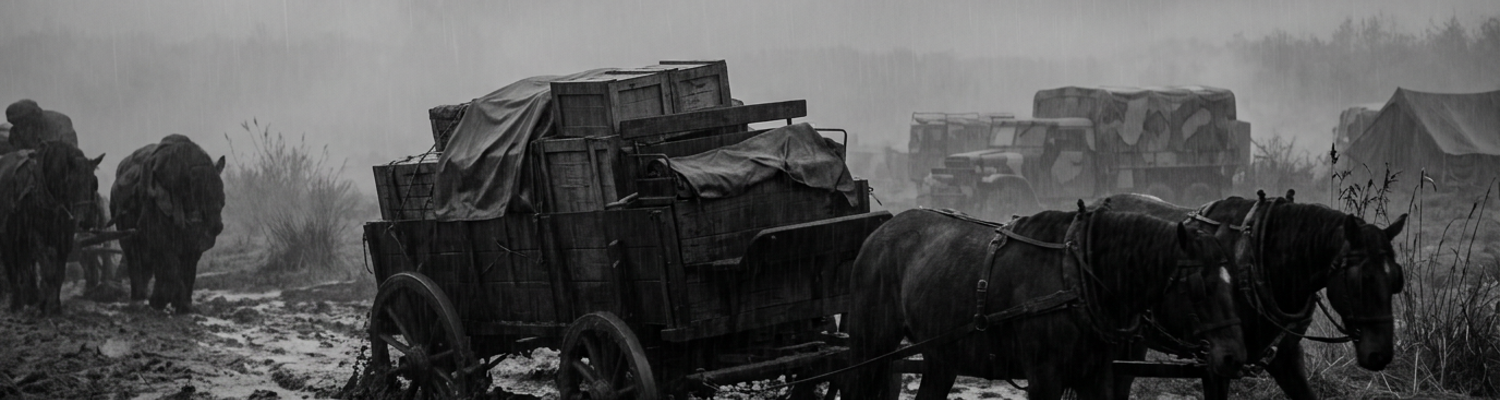
Army field manuals guaranteed a standardized six-mule supply wagon moving across native prairie could sustain fifteen miles of travel each day. Saturated soil along the Missouri River plateau exposed those specifications as pure theory within five miles of the post gates. Brigadier General Alfred Terry rode out from Fort Abraham Lincoln at 0500 hours on May 17, 1876. He led the Dakota Column west toward the Heart River into an unbroken ceiling of low cloud cover.
A cold, driving downpour.
Behind his cavalry escort stretched an expeditionary force. This element consisted of all twelve companies of the 7th Cavalry under Lieutenant Colonel George Armstrong Custer. Two companies of the 6th Infantry and one company of the 17th Infantry followed. A battery of four Gatling guns manned by the 20th Infantry brought up the rear alongside forty Arikara scouts. Sustaining this combat element required 114 government six-mule wagons and thirty-five civilian contract vehicles. A walking beef herd of several hundred cattle trailed the column. Spring rain battered the column across open benchland. Archival evidence shows trouble escalated the moment the train descended from the prairie bluffs into the Heart River drainage basin.
The topsoil throughout this corridor consists largely of bentonitic gumbo.
This clay derives from weathered volcanic ash layers. It swells rapidly upon contact with moisture. Bentonite forms a hard crust when dry. Consecutive days of rain break the mineral matrix down into a greasy paste with zero load-bearing capacity. Each passage of an iron-shod hooved animal liquefied the ground further. Heavy iron-tired wheels did the same. Clay adhered to the running gear. It accumulated on oak spokes and wagon beds until wheel diameters doubled in thickness. Scraping tools failed to keep the clearances open. The accumulated clay bound against the wagon sides. It jammed tightly behind the brake shoes. Rotating parts froze into rigid sledges. Mules strained against their leather breast straps.
Harness traces snapped under the drag.
A close review of operational logs indicates Terry's advance element achieved barely twelve miles before the entire transport structure locked up. Contract wagons laden with hardtack sank to their axletrees in the drainage bottoms. Infantrymen armed with Springfield Model 1873 rifles spent hours working as road gangs. They cut willow brush along the watercourses to throw beneath the wheels. Pushing thirty-man infantry details onto individual hubs failed to budge submerged running gear out of the suction. Teamsters double-teamed their spans. They hitched twelve mules to individual wagons. This frequently tore the wooden tongue assemblies out of the front gear without shifting the beds. Lieutenant Colonel Custer pushed his mounted units ahead to establish dry camp coordinates.
This separated combat power from the supplies required to sustain it.
General Terry found himself stranded in an expanding quagmire with artillery pieces and three days of soaked forage. The entire expedition was paralyzed less than two days into an operational campaign planned for hundreds of miles. Company officers noted the roadbed was dissolving faster than engineers could dig drain trenches. Water ran inches deep over the sunken wheel tracks. Commanders recognized the original march route along the low ground was impassable. Infantry companies from the 6th and 17th regiments were ordered into the creek margins to fell cottonwood timber for primitive corduroy tracks. They attempted to float five-ton wagons across the saturated flats before the remaining supply trains disintegrated. Every hour spent levering wagons out of gumbo mud consumed field rations. No westward distance toward the Little Missouri divide was gained. Terry faced a choice between abandoning heavy transport entirely or burning operational days building timber platforms over the bottomlands. The department commander committed his engineering details directly to the timber. He shifted the immediate operational objective from locating native hostiles to laying felled timber across eighty yards of black mud.
Green-Cottonwood Corduroy Construction at the Heart River
Archival evidence shows First Lieutenant Edward Maguire took personal charge of road repairs. He served as Chief Engineer for the Department of Dakota. The column stalled along the Heart River bottomlands on May 18. Maguire commandeered working parties from Companies C and I of the 6th Infantry. He issued heavy felling axes and two-man crosscut saws drawn from the departmental tool wagons. Men moved into the river loops bordering the swollen current to fell standing Plains cottonwood groves.
Freshly felled cottonwood carried punishing green weight.
The timber averaged over forty-five pounds per cubic foot due to unseasoned spring sap. Infantrymen hacked into the wet wood. Their axe bits bound deep in the pulpy grain rather than throwing clean chips. Felling details cut through trunks measuring twelve to twenty inches in diameter. They rapidly lopped off lateral branches with hand hatchets to leave rough twelve-foot logs. Working in a freezing drizzle, soldiers secured drag ropes to the logs. They dragged the timber out of the bottomland undergrowth toward the sunken wagon ruts. Sap sprayed across sodden wool uniforms. Standard military engineering doctrine prescribed laying longitudinal foundation timbers called stringers along the wheel ruts before anchoring transverse cross-ties over them. Lieutenant Maguire modified the field layout to save time. He directed the 6th Infantry detachment to drive stout cottonwood stakes into the gumbo with wooden mauls.
This held the transverse logs directly against the roadbed.
Axle grease and river silt fouled the hand tools. Green cottonwood proved structurally defective under concentrated wagon traffic. The wet wood was soft and completely unseasoned. Loaded government wagons rolled onto the improvised corduroy. Iron tires measuring three inches across applied hundreds of pounds of pressure per square inch. This crushed the green bark and pulped the sapwood flat. Heavy iron tires drove the green timber deeper into the quagmire. When examining the historical record of the crossing, the physical burden of stabilizing this roadbed fell upon the enlisted Arikara and Dakota Indian Scouts. Department headquarters ordered forty enlisted Arikara scouts alongside Dakota auxiliaries down into the slough. This pulled them off screening missions on the bluffs.
These native auxiliaries stepped down into the flooded creek channels.
They stripped off heavy outerwear to wade waist-deep into the liquid bentonite mud where infantrymen could not stand. Scouts caught the heavy green trunks as infantry details rolled them down the slippery banks. Auxiliary parties aligned the timber into transverse rows across the roadbed. They used their bare hands and moccasined feet beneath the water to jam the balks flush against one another. Saturated bentonite clay surged between the logs as mules were driven onto the track. Men stood shoulder-deep in forty-degree runoff. They leaned their body weight against the floating cottonwood logs to keep the causeway from breaking apart under the current. Handholds slipped on stripped bark as the scouts held the transverse balks in place beneath the revolving hubs. Cold river water closed over the bottom timber run.
Night Crossings and Catastrophic Stringer Failures
A close review of operational logs indicates General Terry refused to halt the supply train when twilight faded along the Heart River bottomlands on May 18. Camp sites chosen by the cavalry advance lay on the western terrace. These were miles ahead of the stalled infantry and quartermaster trains. A sharp temperature drop accompanied the darkness. This condensed river moisture into a heavy prairie fog. Bismarck Tribune correspondent Mark Kellogg rode alongside the civilian teamsters. Contract wagons edged blindly toward the newly built timber causeway.
The civilian train consisted of privately owned freight wagons.
These vehicles carried private stores, extra rations, and field press materials. Many vehicles were loaded well beyond the standard army cargo allowance of three thousand pounds. Civilian wagon masters refused to bivouac on the saturated eastern flats. They whipped six-mule spans forward into the damp blackness to reach the security of the cavalry perimeter. Visibility along the riverbank dropped to zero. Archival evidence shows Kellogg documented mounting chaos. Civilian teamsters forced their blinded draft animals directly onto the unlit corduroy ramp. Drivers could not distinguish the muddy shoreline from the river channel. They relied entirely on voice shouts from the infantry guides stationed along the logs.
Unseasoned cottonwood logs offered no purchase for iron horseshoes or mule hooves.
The timber was already slick with river silt and liquefied bentonite clay. Animals lost footing and plunged into the frigid shallows. They dragged wagons sideways across the unrailed edges of the timber track. Teamsters lashed their reins. They forced skidding lead mules straight ahead into the black fog. Wagon wheels slid off the timber runners into the river sludge. Private wagons jammed against one another on the eastern approach. Their wooden hubs locked in the dark. Drivers shouted and used rifle stocks to beat exhausted draft animals forward. Kellogg recorded the civilian transport line pushing blind into a rapidly degrading timber platform.
This structure had never been tested under nighttime traffic.
Wagon tongues splintered against the wet riverbank. When examining the historical record of the crossing, catastrophic structural failure occurred around 2200 hours. Heavy ordnance wagons from the departmental reserve entered the bridge approach. These military escort wagons carried tens of thousands of copper-cased .45-70 Government rifle cartridges. Heavy artillery chests for the 20th Infantry Gatling guns pushed gross vehicle weights above four thousand five hundred pounds. Lieutenant Maguire designed the road with all longitudinal loads on unseasoned green-cottonwood stringers. These spanned a deep mud culvert near the river edge. Green plains cottonwood has exceptionally low transverse fiber strength. It possesses high internal moisture that prevents load distribution under sudden dynamic stress. The narrow iron tires of the first heavily laden ordnance wagon rolled over the center span.
The structural limit of the saturated timber was instantly exceeded.
Two primary cottonwood stringers snapped cleanly across their grain with violent cracks. This dropped the center roadway two feet into the creek bed. The entire timber superstructure caved inward. The ammunition wagon overturned directly into the swollen watercourse. Broken iron tires and splintered logs sank into the black clay. The collapse severed the line of march. The ordnance wagon rested on its side in four feet of water. Crates of paper-wrapped small-arms ammunition broke open and soaked in the mud. Teamsters struggled to cut the drowning wheel mules from their leather traces with pocket knives. They worked frantically before the animals dragged the running gear deeper into the riverbed. No follow-on supply transport could advance over the broken stringers. Over seventy loaded wagons were left stranded in the fog on the eastern approach. Company officers from the 6th Infantry rushed to the culvert with lanterns. They found the corduroy platform completely dismantled by the structural break. Department staff halted all westward movement across the Heart River. The expedition was split into two isolated halves.
Heavy Ordnance Train Immobilization and Column Splitting
One hundred fourteen loaded supply wagons and four heavy Gatling guns were pinned motionless across the Heart River flood plain. A close review of operational logs indicates complete loss of forward mobility by dawn on May 19. Lieutenant William H. Low of the 20th Infantry commanded the primary artillery asset. This included two .50-caliber and two 1-inch model Gatling guns mounted on standard wooden field carriages. Each artillery piece weighed over twelve hundred pounds. They rested on narrow carriage wheels that cut into the inundated silt like iron blades. Axle skeins dragged through saturated silt until gun carriages became direct plows. They pushed walls of liquefied earth ahead of their axle trees.
Behind the artillery battery sat 114 Quartermaster-standard six-mule wagons.
Each was weighed down by two to three thousand pounds of hard bread, salt pork, cavalry horse oats, and Model 1873 carbine cartridges. The low ground between the timber approach and the bluffs had filled with standing river runoff during the collapse of the corduroy causeway. Wheels sank past their wooden hubs. Iron hub bands struck buried stones. This bent iron axles and splintered oak felloes as teams tried to heave forward. Every revolution of a wagon wheel pushed iron hubs deeper into black mud. When examining the historical record of the 20th Infantry battery, Lieutenant Low found the mechanical geometry of the Gatling gun limbers made self-extraction impossible. The front limber chest carried thousands of rounds of heavy .50-70 ammunition. This drove down the front axle while the trail of the gun carriage rooted into the alluvial gumbo.
Six-mule draft teams hitched to the gun limbers lacked the track width to pull outward.
They could not maneuver without stepping into the waist-deep trenches carved by the heavy carriage wheels. Drivers lashed their spans with raw leather team whips. The terrified animals lost footing in the clay. They thrashed until their harness collar pads choked off their wind. In the Quartermaster lines, civilian and military drivers attempted to hitch eight, ten, and twelve mules to single heavy freight wagons. The extreme pulling angles snapped hickory double-trees. Kingbolts sheared clean through the front bolsters. Wagon bodies were left submerged while teams bolted into the willows. The Dakota Column was physically severed into two isolated echelons. Archival evidence shows Brigadier General Alfred Terry was forced to halt the campaign schedule. He fractured his command hierarchy to resolve the disaster.
Lieutenant Colonel George Armstrong Custer and nine companies of the 7th Cavalry had already pushed nearly four miles west of the river.
They bivouacked high on the dry prairie terraces. Terry was pinned on the eastern margins with the infantry, artillery, and disabled baggage trains. The cavalry had stripped itself of heavy extraction gear. Terry could not call them back across the broken river crossing without subjecting their mounts to the same bottomland mud that had trapped the infantry. The general ordered Captain John Byrne of the 6th Infantry to detach Company C and Company I into permanent salvage parties. He stripped them of perimeter guard duties to dig out buried ordnance boxes by hand. Communication between the forward cavalry screen and departmental headquarters dwindled to couriers swimming horses across the swollen current. Forward movement toward the Yellowstone River halted. Departmental officers managed extraction mechanics on a three-hundred-yard stretch of creek bottom.
The mechanical rescue extractions destroyed the physical stamina of the draft stock.
Quartermaster teamsters rigged heavy block-and-tackle assemblies to cottonwood trunks on dry ground. They ran inch-thick hemp snatch lines out to individual submerged wagons. Mules were driven in lunging double-teams along the slippery banks to yard the vehicles out of the mire one at a time. The continuous strain against frozen harness traces caused widespread shoulder sweeney. Torn suspensory ligaments and deep collar sores appeared across hundreds of mules. Forage sacks inside the wagon beds had split. Grain supplies were left saturated and fermenting in stagnant floodwater. Deprived of dry feed, the exhausted mules ate wet cottonwood bark and standing slough grass. This caused severe colic throughout the Quartermaster corrals. Twelve draft mules died in their traces between midday and dusk on May 19. Their carcasses were dragged into the brush to clear space for subsequent extraction lines. Extraction crews took twenty-four hours to drag eighteen wagons across sixty yards of mud.
Scout Exhaustion and Bureaucratic Property Loss Documentation
Archival evidence shows Second Lieutenant Charles Varnum commanded a detachment of thirty-nine Arikara scouts. These men endured punishing bodily exposure throughout the salvage operations along the Heart River bottomlands on May 19. Regular infantry details rotated off the cutbanks in organized shifts. Native auxiliaries remained stationed directly in the forty-degree current for over ten consecutive hours. Men stripped down to leggings and shirts. They plunged their arms shoulder-deep into liquefied bentonite clay to clear debris from submerged axles. Cold river water swept over chest-high mud flats as winds gusted across the open prairie bluffs. Saturated gumbo coated bare skin.
It dried into stiff cakes during brief pauses before dissolving again in freezing river pools.
Severe hypothermia took hold among several scouts. This included Young Hawk and Strikes Two. Their muscular tremors left them unable to grip hemp salvage lines or haul timber balks out of the muck. Private Indian mounts broke down rapidly in the submerged creek beds. Federal enlistment terms required each native scout to furnish his own horse in exchange for a daily allowance of forty cents. Government draft spans gave out in the mud. Field officers ordered these personal hunting ponies hitched directly to wagon chains. They pulled four-ton cargo beds out of the slough. Native ponies averaged seven to eight hundred pounds. They lacked the skeletal mass to overcome the physical suction of deep bentonite silt.
Hooves sank twelve to eighteen inches into the gumbo.
The animals strained under heavy leather traces designed for draft mules. They twisted sideways in the mud until cannon bones fractured and shoulder ligaments tore away from joints. Seven private mounts died of acute cardiovascular exhaustion or suffocation after collapsing headfirst into waterfilled ruts. Scouts shot three additional crippled ponies on the riverbank using Model 1873 carbines. They left their carcasses unskinned in the bottomland brush. Expedition commanders provided no financial compensation for the lost livestock before the column advanced. A close review of operational logs indicates First Lieutenant Henry J. Nowlan established an open-air clerical post on a supply crate beside the western approach road.
He served as Acting Assistant Quartermaster for the Dakota Column.
Nowlan operated with departmental Form No. 2 property returns and portable inkwells sheltered beneath rubber ponchos. He logged mechanical breakdowns as infantry working parties dragged equipment out of the river channel. Bureaucratic regulations required precise accounting for every damaged item before replacement gear could be released from depot reserves. Nowlan recorded eighty-four snapped wagon tongues. His ledger pages also listed thirty-six fractured iron axle skeins and twelve sheared kingbolts recovered from the mud approach. He formally condemned seventy-two crates of caliber .45-70 rifle ammunition. Paper cartridge boxes dissolved in four feet of standing river water. This rendered forty-three thousand lead rounds unusable due to dampened powder charges.
Dead draft stock required separate formal write-offs to protect officers from personal financial liability.
Nowlan and his clerks registered eighteen government draft mules dead or permanently disabled. Officers entered each animal into official departmental loss ledgers. They cataloged brand marks, assigned harness numbers, and estimated values that averaged one hundred ten dollars per mule. Assistant quartermaster clerks conducted on-site inspections of every carcass abandoned in the cottonwood loops. They verified causes of death that included broken pelvises, torn stifle joints, and cold-water drowning. Nowlan recorded three thousand two hundred pounds of hard bread spoiled into fermenting mush inside sunken wagon bodies. Twenty-four McClellan saddles and twenty-six harness sets were slashed open with knives to rescue trapped animals. The property return for May 19 closed with a total recorded loss of four thousand six hundred dollars in federal materiel.
Long-Term Pension Rejections for Auxiliary Indian Scouts
When examining the historical record of post-war military administration, the War Department systematically dismantled the combat status of Indigenous auxiliaries once active field operations concluded. Section 6 of the Act of July 28, 1866, authorized the enlistment of native scouts for periods between three and six months. It granted them the pay and rations of regular cavalry troopers. Adjudicators inside the Pension Bureau of the Department of the Interior interpreted this statute through an exclusionary administrative lens. Legal decisions issued throughout the 1880s and 1890s categorized these men as temporary irregular auxiliaries or casual contract labor rather than regular enlisted veterans of the United States Army. Regular soldiers secured disability benefits through the General Law Pension Act of July 14, 1862.
This act mandated formal enlistment papers, official company muster-out rolls, and regular discharge certificates.
Department of Dakota officers had maintained none of these administrative instruments for the scouts attached to the Dakota Column. Field commanders entered scout payments onto irregular civilian vouchers or miscellaneous quartermaster detachment ledgers. Inconsistent phonetic transcriptions of Arikara, Dakota, and Lakota names on these loose records allowed Washington pension examiners to argue that service records failed to prove claimant identity. Federal auditors treated frontline scout service as casual civilian hire. Archival evidence shows the Bureau of Pensions built an insurmountable procedural barrier against native disability claims arising from the 1876 expedition. Scouts suffered severe bodily trauma during the Heart River operations.
This included lumbar injuries from hoisting waterlogged supply wagons and chronic articular rheumatism from wading through freezing bentonitic mud.
They faced immediate evidentiary rejection. Interior Department guidelines required every invalid claimant to submit sworn affidavits from commissioned regimental surgeons. These affidavits had to establish that the physical ailment originated directly in the line of military duty. Army surgeons assigned to General Terry's expedition maintained field registers exclusively for regular white personnel of the 7th Cavalry and the infantry companies. Contract medical personnel never entered native scouts into hospital blotters or garrison sick call logs at Fort Abraham Lincoln. Post surgeons ignored the long-term pulmonary conditions and joint inflammation suffered by native auxiliaries after the river operations.
Without contemporaneous clinical case sheets signed by a commissioned medical officer, the Special Examination Division dismissed severe bodily impairment as pre-existing native infirmity or post-discharge decrepitude.
The Adjutant General's Office retained zero clinical case files for auxiliary detachments. A close review of operational logs indicates this systemic administrative wall culminated in the rejection of pension application SO-19124. The Hunkpapa scout Blue Thunder filed this claim. He served the Department of Dakota across multiple campaigns. He carried tactical dispatches through hostile territory between Fort Rice and Fort Abraham Lincoln before managing river crossings along the Heart River. Prolonged exposure to sub-freezing water and heavy physical labor ruined his physical health. It left him incapable of self-support in old age. He filed Survivor Original application SO-19124 under federal invalid statutes.
He sought the basic monthly stipend awarded to disabled soldiers.
Pension Bureau examiners forwarded the claim to the War Department for official service verification. The Adjutant General's Office searched regular army archives. They reported no formal enlistment contract or standard muster-out certificate existed under his name. Bureau officials ruled Blue Thunder possessed the legal standing of an unverified auxiliary laborer rather than an enlisted regular soldier. The Department of the Interior formally rejected claim SO-19124. They entered a final closure on the jacket without granting a monthly pension, medical compensation, or back pay for his service along the Heart River trail.