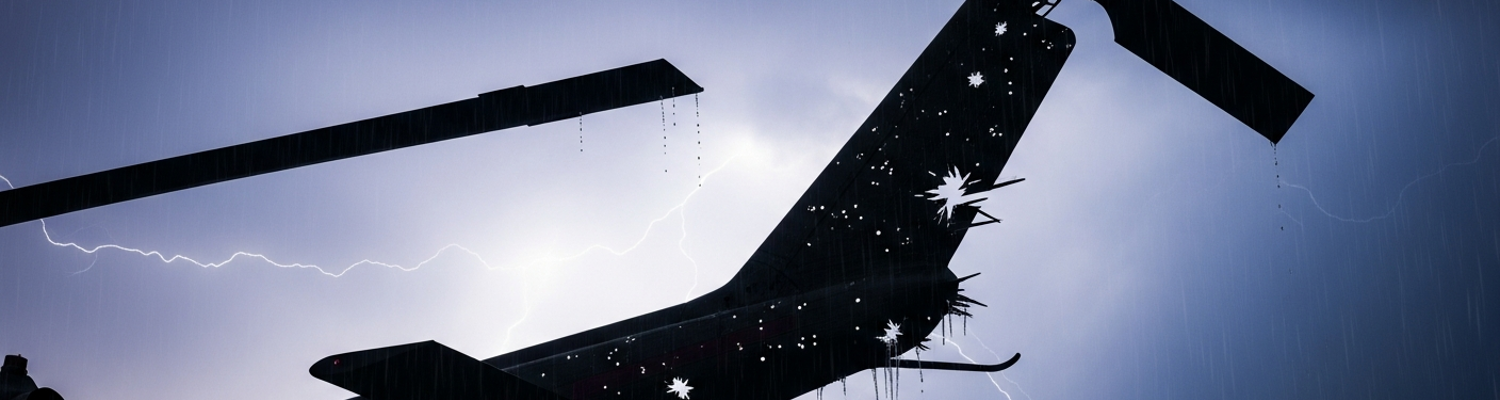

Sleep had become a rumor.
For the men of the 101st Airborne and 1st Cavalry Divisions, it was a commodity more precious than dry socks. Hunger was a constant, gnawing presence, barely held at bay by cold C-rations. Their feet, perpetually damp, were shredded masses of raw flesh before the first shot was fired. This physical and mental exhaustion was the baseline condition for every soldier tasked with entering the A Shau Valley in the spring of 1968, a place the North Vietnamese Army considered their private real estate.
A review of operational logs (NARA Record Group 472) reveals the strategic desperation of the moment. The massive Tet Offensive, though a tactical disaster for the attacking Viet Cong and People’s Army of Vietnam (PAVN), had shattered any illusion of imminent victory for American forces. Within the I Corps Tactical Zone, the northernmost military region of South Vietnam, US forces were stretched thin. The PAVN objective was clear: seize large portions of the northern provinces, interdict allied movement, and maintain their supply artery, the Ho Chi Minh Trail. A key branch of this trail ran directly through the A Shau, a 25-mile-long gash in the earth flanked by mountains soaring to 5,000 feet. Since overrunning a Special Forces camp there in 1966, the PAVN had transformed the valley into a fortress, a massive staging area for attacks. In response, Military Assistance Command, Vietnam (MACV) ordered major airmobile operations, principally Operation Delaware in April, to disrupt this logistical hub. The 1st Cavalry Division and the 101st Airborne were thrown into the fight.
The valley had an exceptionally high rate of helicopter losses. Getting into the A Shau depended entirely on the UH-1 Huey, but the environment was uniquely hostile. Archival evidence shows that during major operations like Delaware, helicopter attrition could be catastrophic. The operational loss rate frequently exceeded ten percent due to a combination of factors. Oppressive monsoon weather, with low cloud ceilings and sudden storms, grounded flights and created treacherous flying conditions. When they could fly, pilots faced a dense anti-aircraft network. The PAVN had fortified the high ground with an array of weapons, including rapid-firing twin-barreled 23mm cannons, heavy 12.7mm DShK machine guns, and even radar-guided 37mm cannons. The mechanical strain was also intense. High altitudes and hot, humid air degraded engine performance, while constant moisture led to corrosion. A catastrophic failure of the tail rotor driveshaft or main rotor linkage, often preceded by a distinct shrieking sound, could occur in minutes. In Operation Delaware alone, the list of destroyed aircraft included nearly two dozen Hueys, two heavy-lift CH-47 Chinooks, and a massive CH-54 Skycrane.
To pierce this curtain of steel and weather, planners relied on covert reconnaissance. Before the main air assault, small, six-man Long-Range Reconnaissance Patrol (LRRP) teams were inserted deep into the valley. Drawn from units like Company E, 52nd Infantry and F Company, 58th Infantry, these soldiers were volunteers tasked with the highest-risk missions. Their job was to remain undetected, scouting enemy positions and identifying potential landing zones. A component of Operation Delaware involved a 30-man LRRP platoon from Company E, 52nd Infantry, tasked with rappelling onto a 4,878-foot peak dubbed Signal Hill. Their mission was to establish a radio relay site so brigades fighting in the valley could communicate with their firebases and approaching aircraft.
Operational logs for Operation Delaware in April 1968 reveal the risks of inserting reconnaissance teams into the northern A Shau. This region, a nexus of the Ho Chi Minh Trail, contained the North Vietnamese Army’s Base Area 611, a primary staging ground. The terrain itself was a defensive weapon. Steep, jungle-choked mountains funneled aircraft into predictable flight paths. The North Vietnamese exploited this topography, emplacing a dense anti-aircraft network. Intelligence indicated the presence of 12.7mm heavy machine guns, 23mm cannons, and radar-guided 37mm cannons, all positioned to create overlapping fields of fire. Inserting a six-man LRRP team from a unit like Company E, 52nd Infantry, into this environment was a calculated gamble. Their mission depended on stealth, but the act of insertion was a loud announcement of their presence.
The operational plan for Delaware was predicated on weather intelligence, based on old French colonial records, that identified April as the month with the clearest flying conditions. This prediction proved disastrously wrong. The A Shau Valley possessed a microclimate where weather could shift from clear skies to zero visibility in minutes. The primary aircraft for these insertions, the UH-1 Huey, was flown almost exclusively under Visual Flight Rules (VFR). Pilots needed to see the ground to navigate safely. As moist air was pushed up the steep valley walls, it cooled and condensed with shocking speed, forming a thick layer of fog that completely obscured the landscape. A flight of helicopters could depart Camp Evans in clear weather, fly over a solid undercast, and then be forced to hunt for a small break in the clouds to make a terrifyingly sharp spiral descent. This atmospheric blindness was a tactical advantage for the PAVN, who timed their movements to coincide with these weather patterns, knowing American air mobility would be crippled. For a Huey pilot, entering a cloud bank in the A Shau meant flying blind in a canyon, with mountain peaks hidden on all sides.
The sudden onset of this weather during an insertion created the ultimate tactical crisis. A small, six-man reconnaissance team was left alone and exposed. The standard procedure for a LRRP insertion was a high-speed, low-level approach, with the team jumping from the helicopter’s skids as it hovered for mere seconds. The transport helicopters and their accompanying gunships would then immediately depart. But when the cloud ceiling dropped, this sequence was broken. The helicopters, having deposited the team, would be forced to climb sharply to escape the closing trap, instantly severing the team’s only link to support. On the ground, the LRRPs were left in an eerie silence, broken only by the fading sound of rotors disappearing into a white void. Their mission of covert observation was replaced by the single objective of survival.
Operational logs from April 1968 reveal the central role of the radio-telephone operator, or RTO. For a man like Specialist Dale Evans, assigned to the 1st Brigade of the 101st Airborne Division, his function was to serve as the single electronic link between his small infantry company and a vast network of support. His instrument was the AN/PRC-25 radio, a 23.5-pound assembly of metal, circuits, and battery. The PRC-25 was a rugged, line-of-sight FM transceiver, operating on the 30 to 75.95 MHz frequency band with 920 possible channels. Evans constantly managed frequencies, switching between his company net, the battalion command net, and coordinating directly with artillery firebases or aircraft. The equipment was physically demanding, consisting of the transceiver and a battery compartment, mounted on an ST-138 carrying harness. Its effectiveness was dictated by its antenna; a flexible three-foot tape antenna was standard, but in the severe terrain of the A Shau, only the larger AT-271A whip antenna, a 10-foot collapsible pole, could reliably achieve the required range. North Vietnamese Army doctrine specifically prioritized killing RTOs, making the tall, swaying whip antenna a magnet for enemy fire.
He was pinned down, face in the mud.
The tactical situation had disintegrated. A patrol by Evans's company, part of the 1st Battalion, 327th Infantry, had made contact with a well-concealed PAVN element near Firebase Veghel. The initial burst of fire was overwhelming, a coordinated attack from multiple bunkers. The high-velocity crack of AK-47 rounds mixed with the deeper, hammering report of a 12.7mm heavy machine gun that tore through tree trunks. Survival dictated staying flat, but his mission demanded the opposite. To establish a clear signal, he needed to raise his head, sit up, and deploy the 10-foot whip antenna, an act that would have made him the most visible target. Leaving the shorter antenna on the radio would limit his transmission range, insufficient to clear the surrounding terrain and reach the battalion command post. The weight of the PRC-25 pressed him into the wet ground.
Then the sky broke open. The A Shau Valley’s microclimate asserted its dominance. What had been a humid, overcast afternoon transformed in minutes into a torrential tropical storm. A wall of rain descended, turning the battlefield into a quagmire and reducing visibility to just a few feet. The roar of the downpour was deafening, drowning out gunfire and shouted commands. For Specialist Evans, the storm represented a catastrophic system failure. The AN/PRC-25, while water-resistant, was not impervious to this level of saturation. Its H-189 handset was notoriously vulnerable to moisture. RTOs developed field-expedient methods like stretching the battery’s plastic wrapping over the handset, but this offered little protection against a monsoon. More critically, the storm created a wall of atmospheric noise, turning any potential radio signal into indecipherable static. The very air had become an enemy.
Evans’s world shrank to the torrent of water and the overwhelming hiss of white noise from his AN/PRC-25. For forty-five minutes, the battle for survival became a battle for a clear signal. The monsoon had rendered the air itself a barrier. Historical logs from the A Shau consistently cite the vulnerability of radio equipment to extreme moisture. The handset of the PRC-25, in particular, was susceptible to water damage. Evans would have been attempting to shield the connection points, perhaps using the plastic bag his battery came in, but against a tropical downpour, such measures were futile. He worked through his sequence of frequencies, desperately trying to raise the battalion net for the 1st of the 327th Infantry, or the artillery fire direction center at Firebase Veghel. Each attempt was a gamble. A momentary break in the static might allow a few words to get through, a clipped grid coordinate, a call for Dustoff for the mounting casualties, before the signal was swallowed again.
A partial transmission made it through. A medevac helicopter, a UH-1H Huey from the 101st Aviation Battalion, was dispatched. The same weather system that crippled ground communications created an impenetrable wall of fog for air assets. The pilots, flying under VFR, were now faced with a solid white expanse that hid the mountains. They were flying blind. Operational reports from Operation Delaware repeatedly mention the weather as a primary cause for aborted missions. The pilots would have descended to the last safe altitude, circling, hunting for any tear in the cloud layer. On the ground, Evans and the infantrymen could hear the faint sound of rotors, a promise that repeatedly faded away. The Huey pilot would attempt a spiraling descent, guided only by the RTO’s frantic voice, into a landing zone he could not see. Each attempt was a high-stakes gamble against Controlled Flight Into Terrain (CFIT). After multiple aborted approaches, with fuel running low, the pilot made the call. The mission was a no-go. The sound of the rotors disappeared for good.
The physics of the environment delivered the final blow. Helicopter operations in triple-canopy jungle reveal the phenomenon of localized white-outs caused by rotor wash. The downward thrust from a Huey’s main rotor acted on the saturated jungle. As the helicopter descended, its rotor wash would kick up a blinding, swirling vortex of water, mud, and shredded vegetation. This self-generated storm would completely obscure the pilot’s vision at the most critical phase of flight. The pilot, needing a clear visual reference to the ground, would be instantly enveloped in a disorienting white-out of his own making. The turbulence also risked destabilizing the aircraft. The medevac was scrubbed.
After-action reports from the 101st Aviation Battalion and paraphrased radio transcripts pinpoint the operational pivot to the five minutes between 14:32 and 14:37 hours. This was the window during which the fate of the wounded was sealed by a combination of mechanical limitations, weather, and physics. The sequence began with the arrival of the lead medevac helicopter, a UH-1H Huey with the universal callsign Dust Off.
The aircraft was already a casualty. Analysis of common combat damage to UH-1s in the A Shau reveals the likely state of the arriving helicopter. North Vietnamese air defenses were robust. The lead Dust Off Huey had likely taken hits on a previous sortie. A single 12.7mm round to the tail boom could cause significant issues. Such a hit might sever non-essential hydraulic lines or induce a high-frequency vibration from a damaged tail rotor driveshaft. The pilot, a Warrant Officer, would be fighting an aircraft that no longer responded with precision. The control inputs would feel sluggish, and a persistent shudder would travel through the airframe. Every maneuver was a negotiation with a damaged system, a condition made worse by the high altitude and humid air that already degraded performance.
The descent began at 14:34 hours. It was an exercise in desperation. The pilot, unable to see the ground, was flying entirely on the guidance of Specialist Evans’s voice, a voice breaking through a wall of static from a rain-soaked PRC-25. The Huey descended in a tight spiral. As the aircraft dropped below the cloud deck, the pilot was confronted with a second layer of blindness. The torrential rain, combined with the Huey’s own rotor wash, created a localized, disorienting vortex. This self-induced white-out is a documented phenomenon, instantly obscuring all visual references. The pilot's world reduced to the green glow of his instruments and the increasingly frantic instructions from the ground.
By 14:36, the pilot was wrestling with the damaged controls inside a swirling sphere of his own making. The compromised tail boom integrity would make the aircraft harder to control in the turbulent air. The pilot had to maintain a steady hover to allow the wounded to be loaded, nearly impossible when blind and fighting a damaged machine. Any attempt to touch down on the uneven jungle floor risked a dynamic rollover. At 14:37, the pilot made the only possible decision. The nose of the Huey pitched up, and the aircraft, shuddering, climbed aggressively back into the white void. The medevac was aborted.
Aviation logs from the A Shau campaign reveal the standard approach to a landing zone was a high-speed, sharp-descending spiral to minimize exposure time. For the crew of a UH-1 Huey, the experience was a multi-sensory assault. The high-velocity crack of AK-47 fire passing nearby was unsettling. The sound that signaled true danger was the percussive, heavy thud of 12.7mm rounds impacting the helicopter’s thin aluminum skin. These heavy machine gun rounds were designed to tear through the airframe. The impact was not a metallic ping but a deep blow felt through the floor plates, a physical shock that traveled through the entire structure. Pilots would feel the helicopter shudder with each hit. A hit to the engine, main rotor, or tail boom could be catastrophic. The door gunners, leaning out from their M60 machine guns, would be frantically trying to locate the source of the fire, their tracers lashing into the jungle.
From the radio operator’s perspective, the tactical radio net would break down under pressure. A technical analysis of the single-channel, push-to-talk system shows its primary weakness in a crisis: it could be easily overwhelmed. The RTO would hear the company commander attempting to give orders, his voice cut short by a burst of static as another soldier keyed his own handset in panic. This would be followed by the raw sound of combat. Over the airwaves came strained reports of enemy positions, often drowned out by nearby automatic weapons fire. Then came the screams. The first indication of casualties was never a formal report but the agonized cry of a wounded man, accidentally broadcast across the company net. The radio operator’s job became one of filtering signal from noise, trying to decipher a usable grid coordinate from a terrified voice while the physical impacts of incoming rounds rocked the aircraft.
The beleaguered patrol on the ground was already in a fight for its life. The intensity of the ground fire indicated the landing zone was a trap. NVA doctrine often involved observing American reconnaissance patterns, identifying likely landing zones, and preparing fields of fire. Once the first element was on the ground, they became bait. The NVA force, likely a full platoon or company operating from pre-sited bunkers, would pin the small American patrol down. Cut off and with helicopters unable to land reinforcements, the patrol’s mission instantly changed from reconnaissance to survival. Their limited ammunition supply was intended for breaking contact, not for a sustained firefight.
After-action reports from Operation Delaware identify the moment communication broke down as the definitive turning point for the patrol from the 1st Battalion, 327th Infantry. For Specialist Dale Evans, the fight against the PAVN had been superseded by a technical battle against his own equipment. The AN/PRC-25 radio was failing. The handset was notoriously susceptible to moisture. Evans was receiving a response from the battalion command post, but it was an incoherent mix of voice and atmospheric noise. The transmission was garbled, a series of clipped syllables breaking through static. The signal was breaking up. This fragmentation could have resulted from multiple points of failure: water compromising the handset’s internal connections, a weakened battery, or a damaged whip antenna.
The reply was worse than total silence. The fragmented transmission plunged the patrol’s leadership into tactical paralysis. The broken phrases reaching Evans’s headset created profound uncertainty. Had battalion acknowledged the coordinates for the fire mission, or were they asking for a repeat? Did the broken words signify a medevac was being prepared, or that it was impossible? For the company commander lying in the mud near Evans, every decision now carried an exponential risk. To reposition his men in anticipation of artillery that might never come could expose them to NVA machine guns. To hold their ground, assuming help was on the way, could mean being overrun if the message was actually a denial of support. The patrol was caught. They could not receive clear orders without a functioning radio, and they could not secure a position to fix the radio without clear orders.
This communication failure was the pivot on which the engagement turned. Prior to the broken transmission, the situation was dire but followed a recognizable crisis pattern. The inability to clearly communicate with battalion command or the artillery batteries at Firebase Veghel nullified these options. Without a confirmed, understood grid coordinate, fire direction centers would not risk firing a danger close mission for fear of hitting friendly troops. The garbled message meant the cannons remained silent. It meant the medevac helicopters, already contending with zero-visibility weather, now had no reliable guide on the ground. For the men of the 1/327th, the indecipherable static from Evans’s radio was the sound of their isolation becoming absolute.
There was no procedure for a situation where equipment was simultaneously partially functional and completely useless. Specialist Evans was in this exact position. The garbled whispers in his H-189 handset confirmed the battalion command post was trying to respond, but the message was unintelligible. The company commander could not act on instructions he could not understand. The decision-making process had collapsed. The responsibility fell not to the officer, but to the enlisted specialist fighting a technical war with his own gear. His choice was immediate and binary: continue to trust the failing handset, or take an action that would either restore communication or destroy the radio entirely.
The decision was forced by the physical nature of the failure. Evans, having spent hundreds of hours with the AN/PRC-25, made a judgment based on experience. A technical analysis of the H-189 handset shows its push-to-talk switch and coiled cord were common points of failure when saturated. The intermittent signal suggested a short circuit in the handset itself, not the main transceiver. Waiting was not an option. In a single, deliberate motion, Evans ripped the U-229 connector of the handset cable from its socket, exposing the five sensitive pins of the audio jack to the rain. He then unsheathed his K-Bar knife. His next action was one of pure, battlefield-expedient engineering. Ignoring the microphone and earpiece, he used the tip of his knife to try and short the pins for the push-to-talk (PTT) and microphone audio directly within the female socket. He was attempting to manually complete the circuit, to force the radio to transmit a constant carrier wave into which he could shout.
It was an irreversible act. If his knife slipped and bridged the wrong pins, specifically the one carrying power, he would send a direct short into the radio’s core circuitry. This would burn it out from the inside.
The outcome hinged entirely on this action. The patrol’s existence depended on whether Specialist Evans’s knife blade, slick with rain and held by a trembling hand, could correctly bridge two specific metallic points, each separated by millimeters, inside a dark socket in a firefight. For a moment, there was a sharp crackle of static, louder than before, followed by a faint, acrid smell of ozone. Then, silence. The constant, background hiss of the open channel was gone. Evans frantically tried again, scraping the knife tip inside the connector. No response. He had failed. The short circuit had been catastrophic. The AN/PRC-25 was dead.
The implications were immediate. The silence from the radio was confirmation that artillery would not be coming and no helicopters would be guided in. The company commander, seeing the dead radio and the look on Evans's face, was released from his tactical paralysis. The option of waiting for support was gone, erased by a wisp of smoke from a burnt-out circuit board. A new, more primal calculus took hold. The mission was no longer reconnaissance or holding ground; it was survival. The only path forward was to break contact and attempt a physical escape through the jungle, carrying their wounded. Evans’s decision, intended to save the patrol by calling in fire, had instead doomed any hope of reinforcement, while simultaneously forcing the one decision that offered any chance of survival.