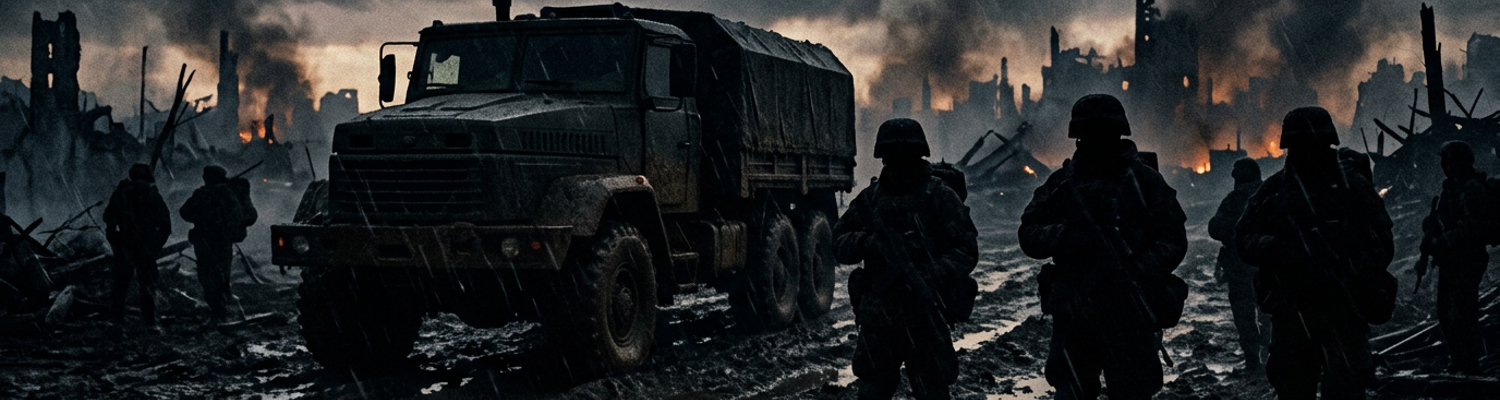

Operation Nordwind Detainee Collection Points
At 2345 hours on December 31, 1944, the copper landlines connecting the forward command posts of the US Seventh Army in the Low Vosges to rear echelons in Saverne went dead. German artillery shells severed the primary communication grid across a twenty-mile front. Frontline infantrymen and their supporting detachments were instantly isolated in the dark. The SCR-300 backpack radios failed to penetrate the dense granite valleys. Enlisted men faced the incoming offensive blind.
Command elements of the VI Corps ordered the rapid deployment of the 204th Military Police Company.
They attached sections of the 45th Quartermaster Company directly into the high elevation passes of the Vosges Mountains. These support troops received orders to manage the anticipated influx of detainees. Pushing administrative personnel into extreme front-line combat conditions occurred without heavy weapons or armored support. Quartermaster personnel drove convoys of GMC CCKW 2.5-ton trucks up the icy switchbacks near Wingen-sur-Moder at coordinates 48°55′N 7°22′E. Mechanical failures plagued the convoy immediately.
Water pumps froze solid inside the truck engine blocks.
Standard non-directional tread tires on the transport vehicles lacked the necessary traction to grip the steep macadam roads. Drivers wrapped heavy iron tow chains around the rubber tires to prevent sliding backward over the mountain ledges. The canvas cabs of the transport trucks offered zero insulation against the sub-zero wind chill. Drivers steered with numb hands. Combat logs from the 45th Quartermaster Company detail how enlisted men abandoned twelve separate vehicles in a single night. The brake lines snapped from the extreme cold.
Supply clerks were handed M1 Garand rifles and ordered to establish defensive perimeters.
A close review of operational logs indicates that the designated temporary POW collection points were nothing more than open fields cordoned off by triple-strand concertina wire. Enlisted men constructed these holding areas near the village of Lemberg while enduring continuous freezing rain and heavy sleet. Falling moisture saturated the clay-heavy topsoil. The holding pens turned into pits of deep mud that reached the shins of guards and prisoners alike. Handling the barbed wire without heavy leather gloves tore the skin from the hands of the troops. The open wounds quickly became packed with the filthy soil. Military Police personnel struggled to drive steel pickets into the freezing ground. They relied on the flat sides of axes to force the metal stakes through the ice layer.
Once the ground thawed slightly during the midday hours, the structural integrity of the fencing collapsed.
The mud failed to hold the heavy steel posts upright. Quartermaster troops attempted to erect M-1934 pyramidal canvas tents to provide basic shelter for the triage stations. Accumulating sleet piled onto the untreated canvas roofs. The wooden center poles snapped under the weight of the ice. Guards patrolled the exterior perimeters while sinking up to their knees in the freezing slush.
The physical toll on the US personnel managing these open-air enclosures was severe.
Men assigned to the 204th Military Police Company stood stationary guard shifts for up to twelve hours in the freezing rain without standard-issue M-1943 winter field jackets. Their leather combat boots absorbed the freezing mud. This led directly to high rates of trench foot and frostbite among the guard detachments. The localized suction effect of the mud frequently ripped rubber overshoes directly off the feet of the walking patrols. Medics recorded instances where the wet wool socks of the enlisted men froze directly to the skin of their toes. These holding areas lacked any functional heating elements. Guards and detainees huddled in the exposed mud as the sleet continued to fall. Quartermaster records from January 6 note that the daily rations delivered to the collection points consisted entirely of frozen C-rations. The damp wood in the area refused to ignite. The rations could not be heated.
War Department Standard Operating Procedures
Archival evidence shows that by 0600 hours on January 3, 1945, the influx of captured German personnel from the 6th SS Mountain Division completely overwhelmed the administrative capacity of the 204th Military Police Company. Under direct orders from the VI Corps Provost Marshal, enlisted supply clerks from the attached 45th Quartermaster Company were forced into frontline processing roles. They had to enforce War Department Basic Field Manual FM 27-10. This specific doctrine required the strict itemized requisition and cataloging of all surrendered enemy baggage to prevent battlefield looting. Quartermaster personnel established makeshift processing stations using folding wooden field tables. They set these up directly on the frozen clay near the Wingen-sur-Moder railhead. At the collection points, captured German infantrymen dumped their canvas Brotbeutel haversacks and leather rucksacks directly into the slush.
Enlisted clerks then physically sorted through the icy contents.
They were explicitly instructed to process this surrendered German baggage using War Department paper ledgers. The standardized Form 31-1 Property Accounting Ledgers were mandatory. Every personal item extracted from the enemy required a distinct line entry in the designated column. Clerks tallied straight razors, loose Reichsmarks, brass compasses, wool field caps, and personal letters. Maintaining tactile dexterity required the clerks to remove their heavy wool gloves. Bare skin exposed to the sub-zero wind chill quickly lost all basic motor function.
The physical mechanics of holding a writing implement failed entirely as the ambient temperature dropped to five degrees Fahrenheit.
Clerks struggled to grip standard-issue fountain pens with numb fingers. They frequently dropped them into the deep mud surrounding the processing tables. The chain of custody demanded by rear-echelon headquarters required commanding officers to countersign every page of the property registers before the baggage could be loaded onto transport vehicles. Men stood entirely exposed to the elements while waiting for officers to verify the counts of confiscated watches and currency. The doctrine demanded strict bureaucratic precision in an environment lacking basic shelter.
The physical materials used for record-keeping broke down entirely during the first forty-eight hours of the German offensive.
Waterlogged forms and freezing temperatures rapidly degraded the administrative paper trails across the entire VI Corps sector. The standardized pulp paper utilized for the Form 31-1 ledgers absorbed the continuous freezing rain falling across the Low Vosges mountains. Once saturated, the individual pages swelled and lost all structural integrity. Enlisted men trying to write on the damp forms with standard-issue Skrip iron-gall ink found that the liquid froze solid inside the internal feed channels of their fountain pens. When clerks attempted to warm the pens against their own skin to thaw the ink, the sudden temperature shifts caused the plastic casings to crack open. Semi-frozen black dye spilled down their hands and uniform sleeves. Pressing the metal nibs harder against the paper simply bent the prongs out of alignment.
Quartermaster troops immediately switched to wooden graphite pencils.
Applying graphite points to the wet ledgers simply tore jagged holes straight through the saturated pages. Men attempted to shield the property registers under their unlined cotton poplin field jackets. The driving sleet penetrated the fabric within minutes. The paper fused to their wet clothing. Disorganized mounds of captured German baggage piled up waist-high at coordinates 48°55′N 7°22′E. Lacking intact paper ledgers to assign individual requisition numbers to specific prisoners, the chain of custody for the surrendered gear completely evaporated. Watches, rings, and leather marching boots lost all administrative connection to their original owners. Command elements from the 45th Quartermaster Company eventually issued field orders to halt the detailed cataloging. This directly violated War Department doctrine. Guards began throwing all confiscated enemy property into the steel beds of GMC CCKW 2.5-ton trucks without any written documentation.
The physical disintegration of the ledgers resulted in thousands of unrecorded items sitting in frozen pools of water at the base of the transport vehicles.
M1 Carbine Failures and Perimeter Security
By January 4, 1945, the small arms issued to the rear-echelon troops guarding the holding pens near Lemberg began failing at highly accelerated rates. Quartermaster clerks and military police from the 204th MP Company were primarily armed with the M1 carbine. This lightweight .30 caliber semi-automatic weapon relied on a short-stroke gas piston system located directly under the barrel. Continual exposure to the freezing rain across the Low Vosges caused moisture to seep into the exposed receiver groups of these rifles. The ambient temperature in the mountain passes hovered at ten degrees Fahrenheit. Water droplets froze solid against the steel operating slides and the internal locking lugs of the rotating bolts.
Standard-issue cleaning materials were severely rationed across the entire VI Corps sector.
Enlisted men lacked adequate supplies of the required light lubricating oil designed for winter combat operations. They resorted to applying heavy motor grease salvaged from the axles of disabled GMC CCKW transport trucks. The sub-zero wind chill instantly turned the motor grease into a hardened friction paste inside the weapon housings. When guards attempted to chamber a round, the rusted and grease-choked operating slides refused to cycle backward. The internal extractor claws failed to grip the brass casings of the .30 caliber cartridges. If a soldier managed to force the bolt closed and fire a single shot, the frozen gas piston lacked the necessary kinetic force to eject the spent casing.
The weapon jammed immediately.
Men stood on the perimeter of the holding areas at coordinates 48°59′N 7°22′E holding completely useless rifles. They frantically struck the wooden stocks of their carbines against the frozen mud in desperate attempts to dislodge the jammed bolts. Unarmed German detainees from the 6th SS Mountain Division watched these mechanical failures unfold from just a few yards away. The physical barrier separating the prisoners from the vulnerable supply clerks consisted entirely of hastily unspooled concertina wire. The 204th Military Police Company faced an overwhelming tactical imbalance as the daily influx of captured enemy combatants pushed the open-air enclosures past maximum physical capacity.
Military Police commanders initially calculated a required guard-to-prisoner ratio of one to ten to maintain baseline security.
By January 6, that ratio had degraded to one armed American for every fifty German detainees. The physical dimensions of the primary holding pen outside Lemberg measured roughly two hundred feet by three hundred feet. Over one thousand freezing enemy soldiers were packed into this confined space without overhead cover. The sheer mass of human bodies generated concentrated pockets of heat that melted the top layer of ice. The enclosure turned into a deep pit of liquid clay. Detainees desperate to escape the freezing mud began pushing aggressively outward against the perimeter fencing. The wooden stakes supporting the barbed wire leaned precariously under the combined weight of hundreds of men pressing against the steel barbs.
Guard personnel lost all ability to conduct interior patrols through the dense crowd of hostile infantrymen.
Enlisted guards sinking up to their calves in the freezing slush were forced to walk the exterior perimeter continuously just to maintain blood circulation in their extremities. The driving sleet severely limited visibility. The line of sight was cut down to less than fifteen feet along the wire line. Sentries operating without functional M1 carbines had to rely entirely on fixed M2 .50 caliber machine guns positioned at the four corners of the holding pen. The heavy steel tripods of these crew-served weapons began sinking unevenly into the thawing mud. This threw off the elevation mechanisms and rendered the firing arcs dangerously unpredictable. German prisoners recognized the deteriorating state of the American defenses. They began actively testing the weak points in the wire during the darkest hours of the night shift.
At 0200 hours on January 7, a section of the eastern perimeter collapsed completely when the saturated topsoil gave way.
Thirty yards of triple-strand concertina wire sank flat into the mud.
French Forces of the Interior Augmentation
The total breakdown of perimeter security at the Lemberg holding pens forced the US VI Corps to implement emergency augmentation protocols. Command elements of the 204th Military Police Company officially deputized sixty-five local combatants from the French Forces of the Interior to guard the eastern wire line at coordinates 48°59′N 7°22′E. These partisan fighters arrived at the triage stations carrying surplus MAS-36 bolt-action rifles. The short 7.5mm carbines lacked optical sights and were highly prone to jamming in the freezing rain. Local resistance commanders had equipped their men with thin civilian corduroy trousers and unlined canvas work jackets. These garments offered zero thermal protection against the driving sleet.
The ambient temperature at the Lemberg elevation sat firmly at four degrees Fahrenheit.
Frostbite began setting into the unprotected extremities of the newly armed French sentries within twenty minutes of their deployment. The freezing partisans immediately initiated unsanctioned confiscations of winter gear from the captured infantrymen of the 6th SS Mountain Division. FFI fighters bypassed the official triage tables entirely. They entered the muddy holding pens and forced German detainees to strip off their heavy Tuchmantel wool overcoats at gunpoint. The heavy Tuchmantel coats were constructed from dense water-resistant wool blends designed specifically for high-altitude winter combat. This made them prized items in the sub-zero Vosges passes.
The partisans then demanded the leather Marschstiefel marching boots directly off the feet of the prisoners.
Extracting the footwear required the French combatants to physically kick the frozen calves of the detainees to loosen the stiffened leather shafts. Sleet had frozen the cotton bootlaces into solid knots of ice. The partisans sliced through the eyelets with fixed bayonets. The steel blades often cut directly into the skin of the detainees. Localized bleeding washed away in the freezing rain. Stripped of their primary thermal layers, the surrendered German soldiers were left standing in the shin-deep liquid clay wearing only their thin cotton drill uniforms and wool socks.
The wet wool froze directly to the mud within seconds.
Enlisted supply clerks from the 45th Quartermaster Company witnessed these unregulated seizures and attempted to enforce War Department Basic Field Manual FM 27-10. Doctrine dictated that any requisition of enemy personal equipment required the immediate issuance of a standardized War Department requisition receipt to the affected prisoner. This paperwork was designed to prevent unstructured looting and maintain a strict chain of custody for all seized war material. US personnel rushed into the freezing rain carrying stacks of blank Form 31-1 Property Accounting Ledgers and wooden graphite pencils. They physically positioned themselves between the FFI fighters and the barefoot German detainees to demand proper cataloging of the stolen Tuchmantel coats.
The American clerks instructed the partisans in fractured French to halt the confiscations.
They needed a commanding officer to sign the corresponding paperwork and issue the carbon-copy receipts to the dispossessed prisoners. The FFI personnel ignored the American quartermasters completely. Historical records from the 204th Military Police Company detail the complete administrative collapse that followed. Partisan fighters flatly refused to wait for the US clerks to fill out the designated line entries on the soggy pulp paper forms. The language barrier exacerbated the tension. The French fighters pretended not to understand the shouted commands of the enlisted American supply clerks. They slung their MAS-36 rifles over their newly acquired German wool overcoats. They tightened the heavy leather belts around their waists and walked directly back to their guard posts along the concertina wire.
American military police threatened to physically disarm the French combatants for violating the chain of custody.
The partisans simply turned the barrels of their rifles toward the chests of the quartermaster clerks. Captured German officers observed the breakdown in discipline. They began shouting demands for their mandated requisition receipts according to the Geneva Conventions. The US personnel had zero intact forms to distribute because the driving sleet had turned the remaining paper ledgers into useless gray paste inside their field jackets. Barefoot prisoners sank deeper into the freezing water pooling at the center of the Lemberg enclosure. The deputized guards stood on the perimeter wearing the confiscated leather marching boots.
Breakdown of Joint Custody Doctrine
The integration of local French Forces of the Interior with the 45th Quartermaster Company triggered immediate operational failures at the Wingen-sur-Moder railhead. US military doctrine required strict adherence to War Department Basic Field Manual FM 27-10 during the processing of captured enemy combatants. Enlisted supply clerks were specifically ordered to intercept surrendered German infantrymen and catalog every piece of confiscated personal equipment using standardized paper ledgers. Deputized French partisans patrolling the same concertina wire perimeters operated under entirely different tactical assumptions. These irregular fighters lacked basic winter combat uniforms and immediately targeted the incoming prisoners of the 6th SS Mountain Division for thermal resupply.
American quartermasters attempted to establish orderly triage lines to inventory captured leather marching boots and wool field caps.
The FFI combatants physically bypassed the wooden processing tables. Partisans carrying MAS-36 carbines walked directly up to the unsecured German detainees and began stripping them of their winter gear by force. American military police possessed zero jurisdiction to arrest the allied militia members. A direct physical confrontation over administrative procedure erupted at coordinates 48°55′N 7°22′E. Quartermaster personnel tried to block the partisans by holding up waterlogged Form 31-1 Property Accounting Ledgers. The US clerks shouted instructions demanding that the French fighters halt their confiscations until a commanding officer could authorize the transfer of enemy material.
FFI personnel responded by aiming the iron sights of their rifles at the chests of the American supply clerks.
Partisans shoved the unarmed quartermasters backward into the freezing liquid clay. French fighters then ripped the heavy canvas Brotbeutel haversacks off the shoulders of the German prisoners. This bypassed the mandatory itemized requisition process completely. US clerks watched helplessly as the irregular troops dug through the captured bags. They extracted straight razors, brass compasses, and loose Reichsmarks before throwing the empty canvas sacks into the slush. The driving sleet washed away the ink from the few ledgers the Americans managed to keep dry.
The mandated chain of custody broke down completely during these physical altercations.
This unchecked confiscation process rapidly generated a complete loss of accountability for all enemy materiel seized along the Vosges front. Quartermaster doctrine dictated that every confiscated watch, ring, and currency note required a specific line entry matching the serial number of the corresponding prisoner. By the second week of January, the high volume of undocumented seizures overwhelmed the surviving administrative infrastructure. Discarded German property piled up in disorganized mounds at the base of the holding pens. American guards from the 204th Military Police Company stopped attempting to match captured equipment to individual prisoners. Enlisted personnel began using flat-nosed shovels to scoop up piles of surrendered binoculars, combat knives, and personal letters directly from the mud.
They threw these unrecorded items blindly into the steel beds of idling GMC CCKW 2.5-ton transport trucks.
The mud-coated optical lenses and rusted steel blades clattered against the metal flooring without any attached requisition tags. Thousands of confiscated items lost all administrative connection to their original owners. The physical disintegration of the property registers guaranteed that none of the seized war material could be tracked back to the VI Corps sector. Transport drivers hauled truckloads of undocumented German gear down the icy switchbacks toward the rear-echelon headquarters in Saverne. Freezing rain filled the open truck beds during the descent. The uncatalogued compasses and leather belts were submerged in pools of freezing water. Supply officers at the rear depots received these shipments without any accompanying paperwork to verify the contents. Clerks at the destination railheads found the truck beds packed with frozen blocks of ice containing completely unidentified enemy property. Men used steel crowbars to chip the undocumented watches and frozen currency out of the transport vehicles.