
State Militia Fraternization and Federal Artillery Mobilization
Artillerymen at the Washington Arsenal received an urgent ninety minute deadline to draw field equipment, secure five days of field rations, and crate thousands of rounds of small arms ammunition for an unexpected rail expedition into West Virginia. Mechanics and ordnance sergeants worked under flickering gas lamps to pry open wooden crates, pulling hundreds of Model 1873 Springfield rifles from armory racks instead of their customary field guns and caissons. Soldiers shoved paper wrapped cartridges and grease tins into canvas haversacks while teamsters hurried across cobblestone paths to load heavy baggage wagons bound for the Baltimore and Ohio depot. This frantic mobilization answered an immediate breakdown of civil authority in the Shenandoah Valley, where West Virginia Governor Henry M. Mathews formally requested federal military intervention after the Berkeley County Light Infantry fraternized with striking Baltimore and Ohio Railroad workers in Martinsburg. Local militiamen had openly defied their commanders, stacking their weapons near the roundhouse, refusing to clear the tracks, and sharing tobacco with striking train crews who had halted all freight transit through the hub. Governor Mathews sent desperate telegraph messages directly to the executive mansion in Washington, warning that state authorities had completely lost physical control over the railway line and could no longer protect national commerce.
Commerce protection required immediate federal action, prompting President Rutherford B. Hayes to convene an emergency morning cabinet meeting in the White House to examine the urgent dispatches arriving from the governor. Cabinet secretaries recognized that the paralysis of the Baltimore and Ohio Railroad threatened to starve eastern cities of coal and trigger sympathetic labor revolts along every major trunk line across the nation. President Hayes issued an executive proclamation invoking statutory powers under Title 69 of the Revised Statutes to disperse domestic assemblies. War Department clerks copied the formal proclamation onto official telegraph slips, designating the railway strike as an unlawful domestic insurrection and ordering all protesting crowds to disband within twenty four hours. This political decision shifted the full authority of the federal executive behind corporate railroad operations, bypassing the traditional barrier that kept peacetime regulars out of municipal labor disputes. Telegraph operators transmitted physical mobilization directives directly to army installations guarding the Chesapeake corridor.
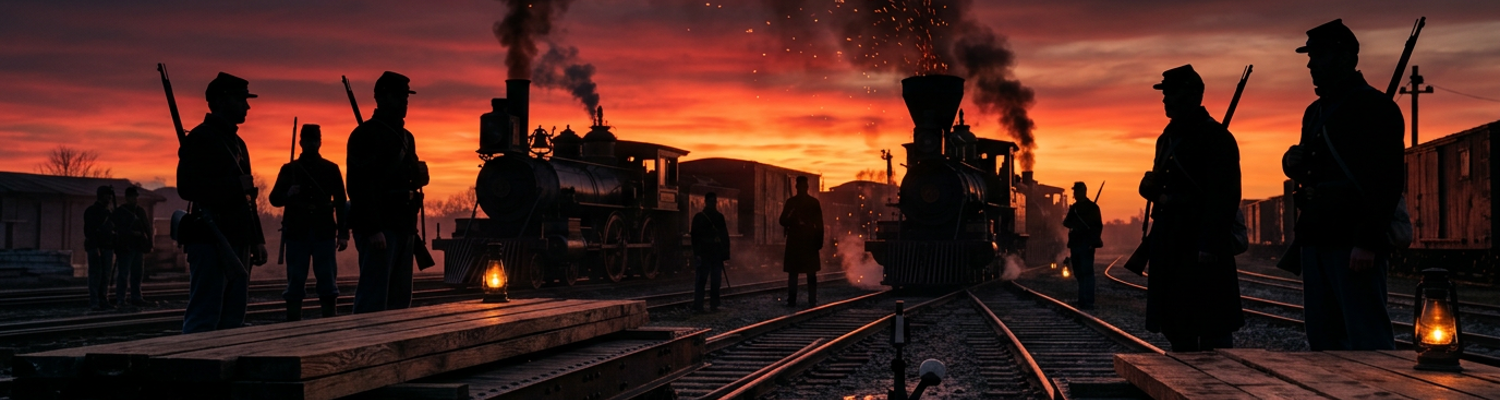
Commanders at Fort McHenry and the Washington Arsenal guarding the Chesapeake corridor assembled their batteries on the parade grounds within two hours of receiving these directives. Regular soldiers from the 2nd and 3rd U.S. Artillery deployed from their coastal fortifications equipped with rifles to operate as provisional infantry along the rail corridor. Gun crews unfamiliar with foot tactics adjusted cartridge boxes on their waistbelts, inspected the breech blocks of their unfamiliar shoulder arms, and marched directly toward waiting tracks. Rail superintendents cleared commercial traffic from the Baltimore and Ohio lines, backing steam locomotives and wooden passenger coaches into the stations to serve as armed transports. Officers loaded their companies into the railcars alongside crates of hardtack and ammunition, posting armed guards at every platform door to secure the train against sabotage. Sentry details leveled their rifles through open boxcar doors as the lead engine rolled onto the Martinsburg platform to confront the crowd.
Hancock Tactical Operations and Armored Rail Deployments
Strikers in the crowd stepped back from the Martinsburg depot tracks as the steam locomotive hissed to a halt, yet the confrontation immediately triggered sympathy strikes across the eastern seaboard and midwestern rail networks. Major General Winfield Scott Hancock established command of the Division of the Atlantic to oversee federal rail transport logistics across strike affected urban centers, setting up operational hubs to restore interstate traffic. Telegraph dispatches flooded Hancock headquarters with urgent reports that local authorities in Maryland and Pennsylvania had lost physical control over major junctions, threatening to cut the national capital off from food and fuel. Cabinet officials in Washington viewed this sudden breakdown as an existential threat to federal authority, pressing Hancock to bypass unreliable state governors and deploy regular troops directly into the most volatile transport corridors. Hancock coordinated directly with rail superintendents and federal marshals, drafting emergency operational timetables that prioritized moving armed garrisons into Baltimore, Philadelphia, and Pittsburgh before organized crowds could dismantle key switching yards.
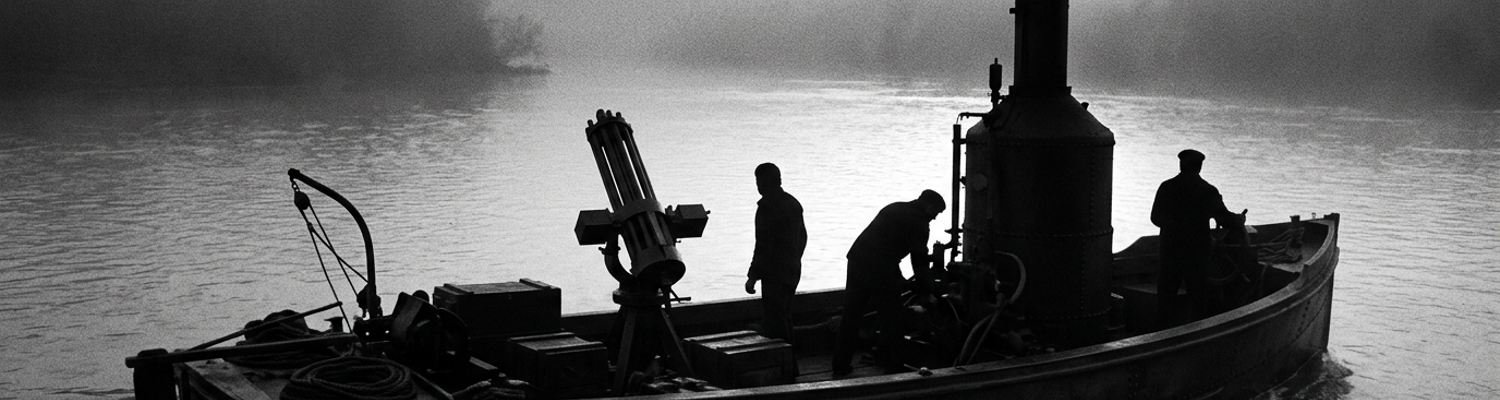
Mechanics assigned to switching yards bolted thick oak planks and iron plates along the open sides of rail flatcars to shield crews from rocks and sniper fire. Federal regulars fitted these reinforced flatcars with Gatling guns to serve as improvised armored trains capable of breaking through hostile blockades in Baltimore and Pittsburgh. Artillerymen mounted the hand cranked multi barrel guns on heavy swivel bases behind barricades of stacked railroad ties and sandbags, positioning each weapon to cover a wide arc down the tracks. Engineers coupled these armored platforms ahead of the steam engines, pushing the improvised fortresses directly into congested depots where angry mobs had derailed freight cars and torn up switches. The imposing mechanical profile of these armored convoys intimidated crowd members without firing a single burst, allowing federal work parties to replace sabotaged tracks and move supply trains through the yards.
Track repair crews working through the yards cleared the main lines toward western Pennsylvania, where the state militia had completely lost control of the population. Pennsylvania state militiamen had previously opened fire with rifles and Gatling guns into an agitated assembly of citizens near the Twenty Eighth Street crossing, killing twenty civilians before retreating in disarray into the railroad roundhouse. Regular Army commanders enforced strict fire discipline to prevent the widespread civilian casualties caused by panicking state militia units at the Pittsburgh rail yards. Soldiers from the 1st and 3rd U.S. Artillery and the 22nd Infantry marched into the smoldering yard ruins with loaded rifles held at the carry, keeping their fingers off triggers even when crowd members hurled insults and debris. Officers paraded their companies in tight, silent formations, methodically clearing platforms with steady lines of bayonets rather than panicked volleys, which convinced the exhausted townspeople to withdraw from the burned tracks.
Railroad tracks burned by rioters and derailed engines dominated the daily telegraph logs that President Hayes and his cabinet ministers studied to assess how the federal intervention had altered the balance between state and national power. Reports demonstrating that professional regulars restored order without firing a single shot led governors across the northern states to abandon reliance on their local militias and petition Washington for permanent federal garrisons. Congressional leaders debated the growing reliance on the regular army for domestic policing, recognizing that the railroad strikes had created a nationalized economy that state governments could no longer protect on their own. Secretary of War George W. McCrary used the crisis to urge an expansion of the permanent military establishment, arguing that disciplined federal troops possessed the professional restraint required to protect commerce during widespread civil unrest. War Department clerks transmitted executive instructions back to Hancock, ordering his division to maintain armed patrols along the entire rail corridor until corporate managers fully restored commercial timetables.
Federal Force Escalation Across Rail Trunk Lines
Timetables for commercial freight required secure routes, so President Hayes and his cabinet authorized federal commanders to safeguard postal rail routes and interstate commerce without waiting for individual state legislative requests. Attorney General Charles Devens advised the cabinet that any obstruction of a mail car violated federal law, giving the executive branch independent legal authority to protect track systems across state borders. Cabinet secretaries adopted this policy because striking switchmen had uncoupled mail cars and left them stranded on sidings from Maryland to Indiana. Governors who hesitated to summon troops or faced deadlocked state assemblies no longer held a veto over army movements within their borders. Hancock immediately applied this executive mandate by sending armed detachments into municipal rail junctions, declaring that any interference with scheduled trains constituted a direct crime against the national government. Federal marshals served warrants alongside armed squads of regular infantry, establishing direct federal control over terminals that state authorities had abandoned.
Terminals abandoned by local police quickly filled with army engineering and logistics detachments assigned to clear damaged rolling stock and repair severed telegraph lines along the Pennsylvania and Baltimore and Ohio railroad networks. Soldiers and civilian mechanics used heavy block and tackle gear, steam powered wrecking derricks, and timber jacks to pry mangled freight cars and overturned coal tenders off the iron rails. Signal Corps work details climbed wooden poles with copper wire and climbing irons, splicing lines that strikers had cut with shears to isolate major eastern depots. Maintenance crews labored under regular army rifle guards to rebuild burned wooden culverts, replace bent rail sections, and clear clogged water towers across western Maryland and central Pennsylvania. Locomotive drivers escorted by armed soldiers test ran heavy steam engines through freshly cleared switching yards to verify that track switches and signal towers operated without mechanical sabotage. Work parties hauled tons of charred debris away from roundhouse turntables, restoring unbroken telegraph and rail connections between Washington, Baltimore, and Pittsburgh.
Pittsburgh telegraph operators immediately transmitted urgent dispatches from western governors, reporting that widespread strikes had paralyzed the critical rail hubs of the Mississippi Valley. Lieutenant General Philip Sheridan recognized that his few available garrison companies could not hold these sprawling rail centers against thousands of protesting factory hands and switchmen. The War Department recalled regular infantry and cavalry regiments from active frontier service against Indigenous nations to garrison midwestern railyards in Chicago and St. Louis. Soldiers from the 9th and 22nd Infantry and the 5th Cavalry packed canvas tents and field gear at remote outposts in the Dakota and Wyoming territories, boarding emergency trains bound for the industrial cities. Frontier troopers accustomed to open plains warfare traded their saddle gear for urban guard duty, stacking carbines along commercial freight platforms and setting up armed bivouacs beside locomotive roundhouses.
Locomotive roundhouses became fortified strongpoints as rifle squads and cavalry details methodically cleared the tracks leading into the Chicago and St. Louis railyards, allowing railroad engineers to couple locomotives to idle boxcars. Cavalry detachments trotted down city streets with drawn sabers to disperse crowds blocking the Halsted Street viaduct and East St. Louis switching yards, securing every junction for incoming freight traffic. Railroad managers quickly restored commercial timetables under the direct protection of these frontier veterans, running food supplies, industrial fuel, and mail cars through former strike centers without encountering organized resistance. War Department commanders established continuous operational patrols along the trunk lines connecting the Midwest to the Atlantic coast, solidifying federal military custody over the private rail network.
Political Backlash Against Domestic Military Policing
Railroad networks guarded by federal sentries immediately triggered fierce political resistance inside the United States Capitol. Southern Democratic lawmakers in Congress leveraged the industrial deployments to condemn federal executive overreach and the militarization of civilian law enforcement. Representatives argued on the House floor that President Hayes had exceeded his constitutional mandate by turning regular army units into armed municipal police forces without waiting for formal state legislative invitations. Lawmakers examined daily telegraph logs from Hancock and Sheridan, asserting that regular rifle companies had effectively bypassed local sheriffs, dispersed public assemblies, and placed sovereign communities under martial conditions. Southern politicians built alliances with skeptical northern representatives, warning that executive reliance on armed regular soldiers to manage economic strikes placed federal bayonets at the center of all civil disputes.
Disputes managed by armed regulars directly reminded southern lawmakers of the contentious military occupation of southern states during Reconstruction that had ended earlier that year. Southern members pointed out that federal garrisons had spent the previous twelve years policing polling places, guarding statehouses, and enforcing federal decrees across former Confederate territory until the final troop withdrawals in the spring of 1877. Southern representatives warned northern industrial states that identical military interventions would now take root in northern rail centers like Pittsburgh, Baltimore, and Chicago if Congress failed to act. Northern labor sympathizers joined this southern coalition, acknowledging that the sudden arrival of frontier combat regiments to clear city viaducts mirrored the reconstruction policies they had previously defended. Congressional leaders channeled this shared political outrage into formal legislative investigations, demanding that the War Department disclose all operational communications exchanged between military commanders and corporate rail executives.
Executives managing corporate rail lines faced intense scrutiny as critics charged that regular troops had been degraded into private strike breaking proxies for railroad corporations under the guise of the common law posse comitatus doctrine. Rail magnates had bypassed state governors by convincing federal marshals and local sheriffs to deputize regular army detachments as civil posses to enforce federal court injunctions. Corporate managers wrote out logistical travel vouchers and provided private railcars for these army units, effectively directing federal infantrymen to protect company trains, switch lines, and coal docks from striking workers. Critics presented evidence showing that regular artillerymen had stood guard over private roundhouses while company strikebreakers moved freight cars, making federal soldiers look like salaried corporate guards. House committee members seized these reports to demonstrate that common law posse powers had transformed regular army infantrymen into armed guards for corporate railroad managers.
Advocates for American labor watched closely as congressmen drafted sweeping statutory restrictions to prohibit federal troops from executing civil laws or assisting civilian peace officers without an explicit act of Congress. Southern and northern Democrats attached these mandatory restrictions directly to the annual army appropriations bill, threatening to defund the War Department if President Hayes refused to accept the measure. Lawmakers added criminal penalties to the legislative draft, mandating fines and imprisonment for any army officer who deployed regular troops to enforce civilian statutes. General William Tecumseh Sherman reviewed the pending legislation at army headquarters, warning cabinet members that these restrictions would permanently end the practice of using federal garrisons to police railroad strikes. War Department clerks issued preliminary operational notices to departmental commanders across the country, instructing field officers to prepare for the immediate withdrawal of soldiers from municipal police actions.
Statutory Restraint and the Posse Comitatus Act
Operations involving municipal police ceased as couriers delivered these urgent administrative notices directly to command posts along the rail corridors while lawmakers inside the Capitol drafted sweeping statutory restrictions on the executive branch. Representative J. Proctor Knott introduced an amendment to the Army Appropriations Act barring the willful domestic use of the military to execute civil law without statutory authorization. Knott designed the statutory language to break the long standing custom of allowing federal marshals, municipal magistrates, and railroad sheriffs to commandeer regular army units as armed posses. Conservative southern congressmen and northern reformers united behind the amendment, insisting that armed soldiers had no legal place resolving commercial wage disputes or patrolling civilian railyards. Congressional clerks recorded intense debate across multiple committee sessions as War Department advocates attempted to preserve emergency policing powers for the president. Lawmakers rejected these executive appeals and voted to attach the restrictive clause directly to the annual military budget, forcing the White House to either accept the statutory prohibition or halt all pay and rations for the standing army.
Regiments left unfunded faced immediate supply shortages, prompting President Rutherford B. Hayes to sign the contested spending bill at his executive desk to ensure that federal garrisons received their delayed payroll and operational supplies. Enactment of the Posse Comitatus Act on June 18, 1878 established criminal penalties for unauthorized domestic troop deployments, legally isolating the Regular Army from municipal policing. Officers who ordered federal riflemen into civilian streets without explicit constitutional or congressional authorization now faced personal felony charges, including fines reaching ten thousand dollars and up to two years of confinement in a federal penitentiary. Adjutant generals in Washington printed the full text of the criminal statute in general orders and distributed them by mail to every regiment across the continental departments. Company commanders in strike scarred cities immediately ceased joint patrols with federal marshals, locked their remaining ammunition boxes, and posted perimeter sentries solely around federal arsenals and supply depots.
Depots and federal arsenals remained secure while governors across the industrialized northern states suddenly found themselves stripped of the professional federal troops that had reopened their blocked railyards only months earlier. The legislative restriction accelerated the modern reform and professionalization of the state run National Guard as the primary domestic strike response apparatus. State legislatures quickly passed reorganization statutes that dissolved untrustworthy local volunteer units whose members had fraternized with striking rail crews in Martinsburg and Pittsburgh. Civic committees and corporate executives raised millions of private dollars to help state governments construct massive brick armories in downtown transit hubs. Construction crews laid thick stone foundations, mounted rifle slits above heavy iron gates, and built secure basement vaults to store thousands of rifles and Gatling guns away from industrial crowds.
Crowds of industrial workers could no longer easily overwhelm state forces as quartermasters stocked these fortified facilities with standardized forty five caliber Springfield rifles, leather cartridge boxes, and canvas field gear identical to regular army equipment. State adjutants hired seasoned Civil War combat veterans to drill National Guard regiments in rapid urban mobilization, bayonet charges, and massed rifle volleys under riot conditions. Regimental commanders drew up operational route maps and rail timetables that allowed state troops to concentrate at freight yards and factory gates within three hours of an alert. State authorities conducted statewide summer encampments where militiamen practiced clearing barricaded streets and riding armed escort details atop locomotives. Guard companies demonstrated their new operational capability by deploying armed picket lines across rail switchboards during the next wave of industrial disputes, permanently replacing federal regulars as the primary armed force deployed to control domestic labor strikes.