
Surgeons and the Medical Triage Surge
Canvas litters lay stacked along the concrete walkways of Naval Hospital Pearl Harbor on the low coral spit of Hospital Point. Hospital corpsmen inspected canvas stretchers, wooden splints, and rolls of dry cotton gauze while the harbor waters remained still in the early morning light. Mechanics and maintenance crews checked the hospital emergency generators, water pumps, and steam sterilizers to ensure the physical plant was ready for any routine fleet medical transfer. Dive bombers and torpedo planes swept in low over the shoreline at 0755, detonating fuel tanks and setting warship superstructures ablaze. Shockwaves shook the main building, blowing out glass windowpanes and showering the wards with plaster dust as dark smoke drifted across the channel. Naval Hospital Pearl Harbor received over 900 casualties within the first two hours of the attack, forcing staff to convert mess halls and exterior lanais into burn wards.
Corpsmen carried hundreds of screaming men onto the converted lanais, placing stretchers edge to edge until the concrete walkways disappeared under blankets and scorched skin. Surgeons worked without pause at eight improvised operating stations, cutting away oil soaked uniforms to inspect blast wounds, open fractures, and flesh stripped to raw bone. Surgical units exhausted sterile supplies and blood plasma reserves, relying on improvised topical tannic acid applications for severe flash burns. Pharmacists mixed the tannic acid powder into five percent solutions, filling spray bottles and basins so medical staff could paint the chemical directly over exposed muscle and dermis. The drying acid formed an artificial dark crust over the burns, sealing in body fluids and creating a barrier against infection without requiring sterile gauze wraps. Nurses substituted unsterile bedsheets and boiled pillowcases for scarce bandages, wrapping limbs while doctors administered small doses of morphine from dwindling glass ampoules.
Ampoules of morphine and sterile dressings completely ran out as motor convoys fought to deliver more critically wounded sailors from the water edge. Strafing attacks along Hospital Point and blocked perimeter access routes severely impeded incoming casualty transport ambulances. Fighter aircraft circled low over the hospital peninsula, raking the open roadway with machine guns and shattering vehicle windscreens. Exploding ordnance and downed power lines toppled telephone poles across the asphalt, trapping civilian sedans, Navy trucks, and ambulances in a smoking traffic jam. Drivers swerved off the paved roads, driving heavy Packard and International ambulances through soft dirt embankments and drainage ditches to bypass the burning blockages. Shrapnel punctured radiators and flattened tires, leaving several transport vehicles immobilized only yards from the hospital gate while corpsmen ran through rifle fire to carry patients in on foot.
Stretcher bearers hauled the newly arrived men directly to outdoor wash stations and garden hose lines to flush corrosive bunker oil from eyes and open wounds. Maintenance crews rigged temporary water lines from storage cisterns when ruptured water mains dropped city water pressure across the peninsula. Volunteers rigged automobile headlights to spare storage batteries to illuminate the lanais as thick black smoke from Battleship Row blotted out the daylight. Surgeons reset compound fractures with scrap lumber and wire, working through the afternoon without electrical lighting or mechanical suction units. Hospital administrators cleared two nearby naval barracks and a dispensary warehouse to absorb the overflow, stationing armed sentries along the perimeter fence to direct incoming casualty trucks into improvised decontamination bays. Medical officers prioritized surgical cases by flashlight, sending the stabilized burn patients to empty barracks cots while moving the most critical blast trauma victims onto the surviving operating tables.
Headquarters Staff and Administrative Delays
Surgeons treated blast trauma that traced directly back across the harbor channel to the administrative paralysis gripping Fourteenth Naval District Headquarters inside Building 1. District Commandant Rear Admiral Claude C Bloch and his staff operated under peacetime weekend communication protocols that mandated multi step cipher verifications. Junior duty officers stood watch in quiet offices on that Sunday morning, handling incoming fleet communications with standard peacetime administrative pacing rather than combat speed. Clerical staff sorted dispatches according to administrative priority tiers established for routine harbor management, treating operational contact reports with the same procedural caution as administrative supply manifests. Every incoming message from offshore patrol vessels had to pass through a rigid clerical gauntlet of log books, manual code translation, and cross checking against official cryptographic registers. Watch officers refused to bypass this cumbersome paperwork routine even when coastal patrol craft broadcast emergency contacts from the harbor approaches.
Radio operators aboard coastal patrol craft broadcast an urgent contact report from the destroyer USS Ward at 0653 stating that deck guns and depth charges had just engaged an unidentified submarine one mile outside the Pearl Harbor entrance channel. District communications watch officers withheld Lieutenant Commander William W Outerbridge and his offshore contact report for more than 45 minutes pending telephone verification. Duty personnel suspected the transmission was either a mistake, an accidental attack on a submerged reef, or an unverified practice exercise. Communications watchstanders picked up hand cranked desk telephones to dial distant shore stations and coastal observation towers, demanding voice confirmation instead of routing the tactical warning directly to command leadership. Telephones rang unanswered or met busy switchboard circuits across Oahu as vital minutes slipped away, keeping the hostile contact report pinned under clipboards in the district communications office. Watch officers finally drafted a delayed dispatch for the district chief of staff only after phone lines cleared and harbor defense staff confirmed that Outerbridge had indeed fired live rounds into the water.
Staff officers inside Building 1 spent additional time debating the validity of the depth charge report instead of alerting fleet units moored across the harbor basin. District Commandant Bloch received word of the engagement through disjointed phone calls after 0715, yet his aides continued to seek further verification from naval patrol craft before ordering a general harbor alert. Couriers and telephone operators never triggered the harbor sirens, allowing naval crews across Oahu to eat breakfast and prepare for morning church services in complete ignorance. Pacific Fleet headquarters under Admiral Husband E Kimmel received no verified briefing on the submarine attack until air assault detonations began at 0755. Kimmel walked onto his front lawn at Makalapa, watching dive bombers drop low over Ford Island and release their aerial torpedoes against the moored battleships without any prior warning. Anti aircraft gun crews across Battleship Row remained locked out of their ready ammunition lockers, frantically cutting open heavy iron padlocks with axes and fire tools as bombs struck the unready warships.
Destroyer USS Ward and Engagement Verification
Destroyer USS Ward had generated that stalled warning miles away on the ocean swells after confronting an intruder trying to breach the harbor defenses. Lookouts on the Ward spotted the target towing vessel Antares approaching the restricted channel entrance with a heavy steel barge in tow. Crewmen on the bridge of the Antares observed a dark object in the water between their ship and the barge, prompting signalmen on both vessels to exchange blinker light messages to verify the sighting. Visual signal confirmations with the target towing vessel Antares delayed the initial radio broadcast by crucial minutes as signalmen worked their shutter lamps across the rolling swells. Outerbridge held back an immediate radio alert while his signal bridge confirmed the target position, choosing to verify the contact through direct visual identification before transmitting to shore. Signal shutters clattered back and forth across the water, consuming precious morning minutes while the destroyer swung into attack position.
Gun crews aboard the destroyer sprinted to their battle stations as Outerbridge rang up full speed to intercept the submerged target. USS Ward fired on and depth charged an unidentified Japanese Type A midget submarine at 0645 near the Pearl Harbor defensive sea area entrance. Number one four inch deck gun barked first, sending an explosive shell harmlessly over the small conning tower as the warship closed the range. Number three gun on the starboard galley deck fired next at point blank range of roughly one hundred yards, punching a clean hole through the base of the submarine conning tower. Ward charged directly over the sinking craft to drop four depth charges off the stern racks, churning the ocean into towering geysers of white water and thick black oil. Outerbridge watched the submarine heel over and slide beneath the surface, leaving a wide oil slick spreading across the outer channel entrance.
Oil bubbled across the destroyer wake while Outerbridge stepped into the pilothouse to compose an urgent contact message for shore headquarters. Outerbridge instructed his radio operator to encrypt the message using the standard naval cipher machine to comply with strict peacetime transmission security rules. Radiomen tuned their transmitters to the local naval district channel, only to find the airwaves clogged with routine logistical traffic, administrative queries, and weather broadcasts. Peacetime fleet regulations forced the destroyer operator to wait for an open transmission interval rather than breaking radio silence with an overriding combat priority signal. Outerbridge paced the bridge wing as the minutes ticked away while his crew struggled to push the encrypted contact report through the crowded radio spectrum.
Radiomen aboard the Ward finally forced their transmission onto the air at 0653, tapping out the encrypted Morse code characters to the naval radio station at Bishop Point. Operators at Bishop Point copied the coded text letter by letter, but the local station lacked the authority to act on tactical alerts without routing the dispatch through district headquarters at Building 1. Shore operators readied their teletype and landline connections to relay the incoming contact report, but procedural checks at the receiving station added another layer of delay to the delivery sequence. Coded dispatches from the outer patrol line piled up on receiver clipboards while shore technicians verified signal origins and call signs against administrative station rosters. Messengers eventually gathered the encoded transcripts from the Bishop Point teletype receiver, walking the physical paper copies toward the decoding room inside Building 1 just as Japanese strike formations approached the coast.
Steel Nets and Anti Submarine Gate Coordination
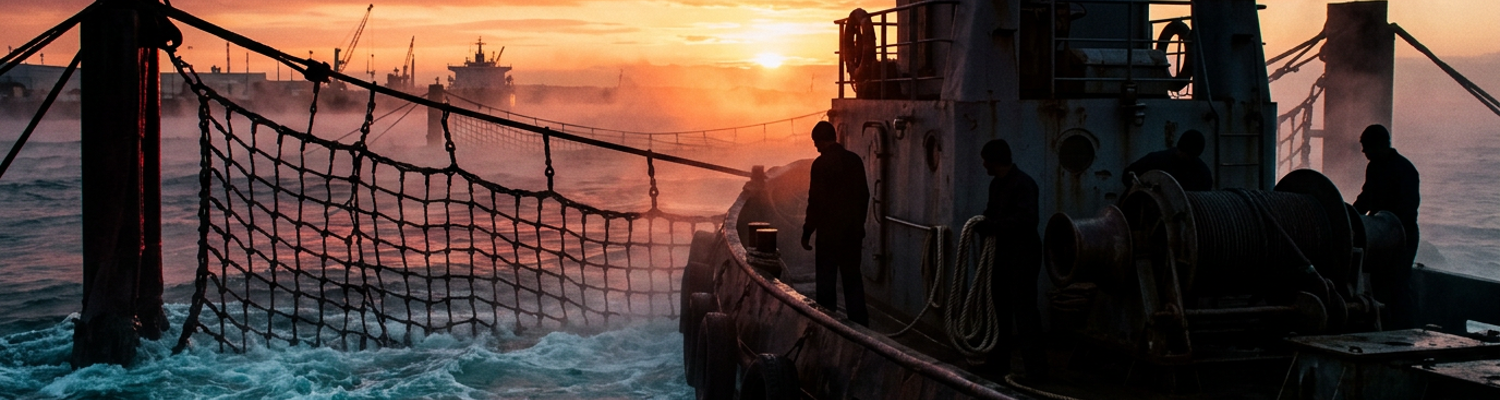
Paper transcripts moved through the corridors of Building 1 while the physical barrier protecting the harbor entrance sat completely unmanned and open to the sea. Winch crews on the harbor gate tender had swung back the heavy mesh barrier hours earlier, leaving the main shipping channel exposed to underwater intrusion. The harbor anti submarine gate between Keahi Point and Fort Kamehameha was opened at 0458 for auxiliary minesweepers and remained open for inbound traffic. Mine vessels USS Condor and USS Crossbill swept through the gap to clear the inner lochs of potential hazards, but gate operators never secured the steel cables behind them. Harbor duty officers expected additional surface arrivals throughout the early morning, choosing to leave the channel clear rather than cycle the motorized winches back and forth across the channel mouth. Steel hawsers remained slack on the winding drums while the tenders rode the morning swell, abandoning the primary physical defense of the Pacific Fleet before sunrise.
Gate tender personnel left the harbor baffle net open for over two hours, creating an unmonitored passage into the main ship channel. Heavy interlocking steel rings hung motionless in the murky tidal current alongside the gate vessel, leaving a gap wide enough for any shallow draft craft to slip past without disturbing the indicator floats. Watchstanders aboard the gate tender logged the scheduled approach of the target towing ship Antares and its supply barge, assuming that standard harbor traffic rules provided sufficient security. Deckhands on the stationary tender turned their attention to routine morning housekeeping chores instead of monitoring the dark water churning between Keahi Point and the entrance buoys. Outgoing tides pulled surface flotsam and muddy runoff through the wide gap, masking the silhouette of any low profile conning tower creeping inward along the dredged bottom trench.
Patrol boats cruising outside the channel mouth failed to notice these movements because inshore patrol craft stationed outside the entrance lacked operational hydrophone equipment to detect submerged penetrations of the open net barrier. Converted wooden fishing vessels and yard tugs assigned to the local defense forces carried no underwater listening gear, forcing lookouts to scan the rolling ocean swells with handheld binoculars. Acoustic listening gear remained locked inside Pearl Harbor Navy Yard supply warehouses, leaving district patrol crews completely blind to underwater targets running beneath the surface chop. Coxswains held their craft on steady compass headings across the defensive sea area, unable to hear the hum of electric drive motors spinning dual contra rotating propellers in the deep channel. Watchstanders on the surface reported calm sea conditions and clear visibility to shore stations, completely unaware that an enemy midget submarine was gliding through the gate opening beneath their keels.
Submarine ballast tanks took on seawater as the Japanese Type A craft trimmed down to run silent along the bottom of the main ship channel. Electric motors hummed at low revolutions to conserve battery power, carrying the two man intruder directly beneath the unlatched net cables and past the silent shore batteries at Fort Kamehameha. Silt stirred up by the craft settled back onto the coral bottom without triggering any harbor alarms, visual signal flares, or coastal defense gun crews. Channel markers guided the hostile vessel past the oil docks at Kuahua and toward the deep anchorage off Ford Island, where the battleships of the Pacific Fleet lay moored in tight pairs. Torpedo technicians inside the submerged hull primed their firing circuits in the quiet inner harbor, completing the undetected penetration while district commanders still debated the contact report miles away at sea.
Patrol Aircraft and Opana Radar Disconnect
Aviation mechanics at Naval Air Station Kaneohe and Ford Island serviced twin engine patrol bombers that might have spotted the carrier strike group launching those intruding submarines hours before sunrise. Patrol Wing Two possessed insufficient operational PBY Catalina flying boats to maintain full sector searches, leaving the northern approaches completely unpatrolled. Rear Admiral Patrick Bellinger had calculated that covering the entire perimeter around Oahu out to an effective scouting radius of eight hundred miles required hundreds of aircraft, yet the wing had only several dozen functional airframes available. Ground crews struggled with chronic parts shortages, keeping many PBYs grounded in hangars for routine maintenance, engine overhauls, and training duties. Search plans prioritized western and southern convoy lanes toward Midway and Johnston Island, which drained the few available long range aircraft away from the open waters of the North Pacific. Flight ramps along the shoreline stood quiet with parked Catalinas moored to concrete aprons, leaving six fleet aircraft carriers slicing through heavy northern ocean swells without a single American patrol plane overhead.
Radar pulses sent into that unmonitored northern sky finally registered the missing aerial strike force as it crossed over the horizon. Privates Joseph L Lockard and George E Elliott operated the Army Aircraft Warning Service mobile SCR 270 radar at Opana Point on the northern tip of Oahu, scanning the coastal air space from an antenna mounted on a heavy truck trailer. The Army Aircraft Warning Service mobile SCR 270 radar at Opana Point detected incoming aircraft at 0702 without a direct tactical link to naval district command. Lockard observed a massive signal spike rise along the trace on his cathode ray oscilloscope screen, indicating an extraordinarily large formation of aircraft roughly one hundred and thirty miles north of Oahu. Elliott verified the equipment calibration, confirming that the electrical echoes were real targets rather than electronic equipment glitches or false coastal reflections. Opana crewmen possessed only a single commercial telephone landline to reach their own regional filter station, leaving them with no radio equipment, teletype apparatus, or operational authority to alert Fourteenth Naval District watch officers across the island.
Switchboard operators at the Fort Shafter Information Center plugged the telephone line from Opana Point into the central plotting room table where duty personnel tracked coastal air contacts. Inter service liaison staff at the Fort Shafter Information Center dismissed the incoming radar tracks as inbound mainland bombers without cross checking naval district logs. First Lieutenant Kermit Tyler sat alone at the central operations desk as the temporary pursuit officer on watch, evaluating the radar coordinates without access to official flight manifests or naval district ship movements. Tyler remembered that an all night civilian radio broadcast had played music to guide a flight of twelve unarmed Army Flying Fortress bombers arriving from California, leading him to conclude that the large blip represented friendly American reinforcement aircraft. Liaison officers never called Fourteenth Naval District headquarters or Pacific Fleet communications to verify whether naval surface ships, carrier scout squadrons, or incoming transport planes matched the radar coordinates. Tyler told the Opana operators to shut down their radar tracking and secure their station for morning breakfast, allowing the Japanese strike formation to fly south toward the defensive perimeter without a single defensive fighter squadron scrambling to meet them.
Sea Frontier Command and Administrative Restructuring
Bombers tore through the morning sky minutes later, pulverizing the unready fleet at anchor and exposing the fatal administrative flaws that had paralyzed the island defense. Chief of Naval Operations Admiral Ernest J King eliminated fragmented local naval defense structures by subordinating the Fourteenth Naval District to the newly formed Hawaiian Sea Frontier. King stripped the Fourteenth Naval District of its semi independent peacetime autonomy, placing all harbor defense craft, coastal patrol vessels, and offshore security nets under one operational sea frontier commander. Watchstanders inside Building 1 no longer operated under multi step cryptographic rules that delayed action, because the reorganization dissolved the bureaucratic barrier separating administrative clerical desks from combat operations. Officers at the restructured command headquarters established a permanent joint plotting room to dispatch incoming enemy contact alerts straight to offshore destroyers and patrol craft without clerical delays.
Radar stations and coastal air units underwent an immediate tactical overhaul to eliminate the dangerous disconnect between the separate branches. Subsequent operational doctrine mandated real time radar data sharing and unified coastal patrol command between the Navy and the Army Air Forces. Army radar crews operating SCR 270 sets wired their equipment directly into a unified Aircraft Information Center at Fort Shafter, where naval watch officers stood alongside Army flight controllers. Technicians plotted incoming aircraft tracks on a shared glass display board using flight rosters from both services, eliminating the uncoordinated assumptions that had blinded the island. Patrol squadrons operated under a combined patrol wing authority, ensuring that Army bombers and Navy PBY Catalinas flew coordinated search patterns across the northern approaches to prevent another surprise carrier strike.
Harbor waters beneath the new patrol screen became the staging area for the largest ship recovery operation in American naval history. Captain Homer N Wallin took command of a centralized fleet salvage and repair organization, combining shipyard resources with private salvage contractors. Wallin cut through traditional naval procurement rules to mobilize civilian commercial divers from the Pacific Bridge Company and heavy equipment operators from private construction firms. Civilian salvage masters collaborated with Navy Yard architects to design customized structural patches and wooden cofferdams shaped to the blasted curves of damaged hulls. Shop machinists fabricated immense steel reinforcement plates inside Navy Yard industrial bays while commercial riggers positioned heavy floating crane barges alongside the sunken hulls of USS Nevada, USS California, and USS West Virginia.
Divers dropped through the oily harbor surface to bolt heavy timber patches and rubber sealed cofferdams directly over the jagged torpedo breaches. Salvage crews connected high capacity centrifugal pumps to temporary electrical lines, drawing hundreds of thousands of gallons of foul seawater out of flooded boiler rooms and ammunition magazines. Hull engineers monitored weight distribution and trim by the minute, counter flooding opposite compartments to right overturned superstructures without snapping the weakened keel plates. Yard tugs eased the refloated warships into drydock as each vessel broke free from the suction of the coral mud. Shipfitters and welders cut away ruined armor plate, installed modern electrical switchboards, and patched structural ribs around the clock to return the resurrected battle fleet to active Pacific service.