
Cavalry Bureau Logistics and Giesboro Depot Architecture
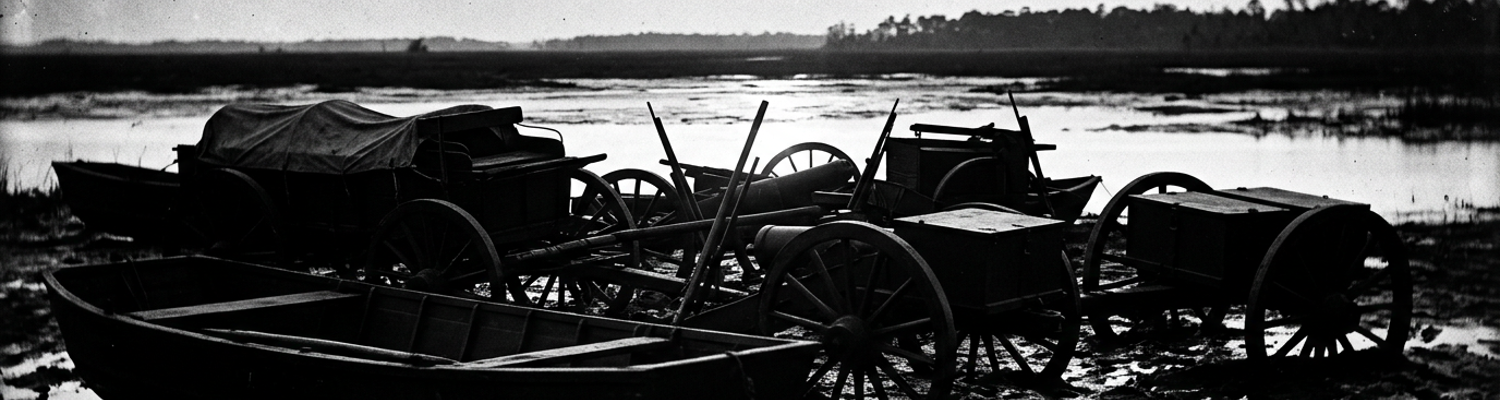
Quartermasters struggled to gather, feed, and transport the massive herds of horses needed to mount Union cavalry divisions for the spring campaign in Virginia. An average cavalry regiment of twelve hundred men required nearly fourteen hundred horses, with each animal needing fourteen pounds of hay and twelve pounds of oats every single day to stay alive under fifty pounds of rider and combat gear. Moving these vast quantities of grain and livestock clogged river wharves, occupied hundreds of freight railcars, and drained logistical bases across the eastern theater. The Quartermaster General Department and Cavalry Bureau standardized depot architecture at Giesboro Point using ventilated stables in early 1864 to manage this massive logistical burden. Construction crews built long wooden barns and broad holding corrals on the eastern bank of the Potomac River, fitting every structure with high roofs, open slatted sides, and elevated pine floorboards to keep animals out of filthy mud.
Mud and standing water bred diseases that veterinary officers now had their first real opportunity to halt before horses shipped out to field units. Systematic ventilation and quarantine pens targeted rampant outbreaks of glanders and strangles, which had previously incapacitated over 150 Union mounts per day. Glanders attacked the respiratory tracts of horses with contagious ulcers, forcing depot inspectors to execute diseased animals immediately and burn their carcasses in deep lime pits to protect healthy stock. Strangles inflamed throat glands with painful abscesses, choking mounts until they could neither swallow grain nor breathe without whistling gasps. Veterinarians isolated suspicious cases behind separate fence lines and washed down feed troughs with chemical disinfectants, working twelve hours a day to stem horse losses.
Horse losses continued to outpace supply because frontline combat regiments wore out cavalry mounts faster than northern farms could deliver replacements. Frontline Cavalry Corps units entered the spring Overland Campaign with fragile equine health and razor thin mount reserves despite the infrastructure overhauls at Giesboro Point. Civilian contractors purchased raw, unconditioned farm horses across northern states and hurried them directly into military corrals without building up their endurance. Troops in the field received horses that lacked muscular development, while depot supervisors found themselves with fewer than five hundred serviceable spare mounts in reserve yards across Virginia. Quartermaster officers warned field commanders that any prolonged march through enemy territory would rapidly destroy these green, unhardened animals.
Troopers loaded heavy equipment onto unhardened animals in early May, strapping carbines, iron horseshoes, canvas shelters, and dry rations onto their hollow backs. Major General Philip Sheridan drove three entire divisions deep into the Virginia Wilderness, where choking dust, muddy river crossings, and intense heat burned through the remaining physical stamina of the herd. Blacksmiths quickly exhausted their supplies of coal and iron nails, leaving hundreds of horses limping barefoot over flint roads and jagged gravel. Supply wagons fell behind the fighting columns, forcing commanders to cut equine grain rations down to scattered handfuls of corn leaves and wild brush. Dismounted troopers abandoned collapsed mounts beside the road and marched forward on foot, stripping off saddles and bridles to leave dying horses behind in the woods.
Telegraph Severance and Corps Communications Blackout
Woods and roadside ditches filled with stripped leather gear as walking troopers rejoined their regiments, presenting Major General Philip Sheridan with hundreds of unmounted men before his new raid even started. Sheridan reorganized his remaining mounted troopers into two divisions under Brigadier Generals Alfred Torbert and David McMurtrie Gregg, while sending dismounted men and worn out horses back toward the water depots on the Pamunkey River. Major General Philip Sheridan severed field telegraph connections with Lieutenant General Ulysses S. Grant upon departing Newcastle on June 7, 1864, cutting the insulated copper cable that anchored his cavalry to army headquarters. Telegraph operators stopped unspooling wire reels from their specialty wagons, disconnected their portable chemical batteries, and packed the glass acid jars that powered the regional network. Signal officers left the cut wire grounded in the dirt, stripping Sheridan of his only real time mechanical link to general headquarters at Cold Harbor. Sheridan carried orders to destroy the Virginia Central Railroad and unite with Major General David Hunter near Charlottesville, yet he rode away from Newcastle completely dependent on whatever information his advance patrols could gather by force.
Commanders relied on force to gather intelligence as Sheridan launched two cavalry divisions westward toward Charlottesville without dispatch courier links, forcing officers to maneuver blindly through central Virginia. Regimental colonels could not establish horse relay stations across hostile territory because partisan rangers and armed civilians hunted down isolated Union messengers along every back road. Torbert and Gregg marched their separate brigades down narrow parallel corridors toward the Virginia Central Railroad, unable to check the progress of each other or report unexpected road hazards. Thick dust clouds rose thirty feet above the plodding columns, choking horses and obscuring visual landmarks from the advance riders. Division scouts rarely ranged more than three miles ahead of the main body, forcing brigade commanders to halt at unmarked country intersections and guess the direction of Confederate forces. Subordinate officers guided over eight thousand troopers entirely by compass bearings and outdated local maps that mislabeled creeks, crossroads, and farm lanes.
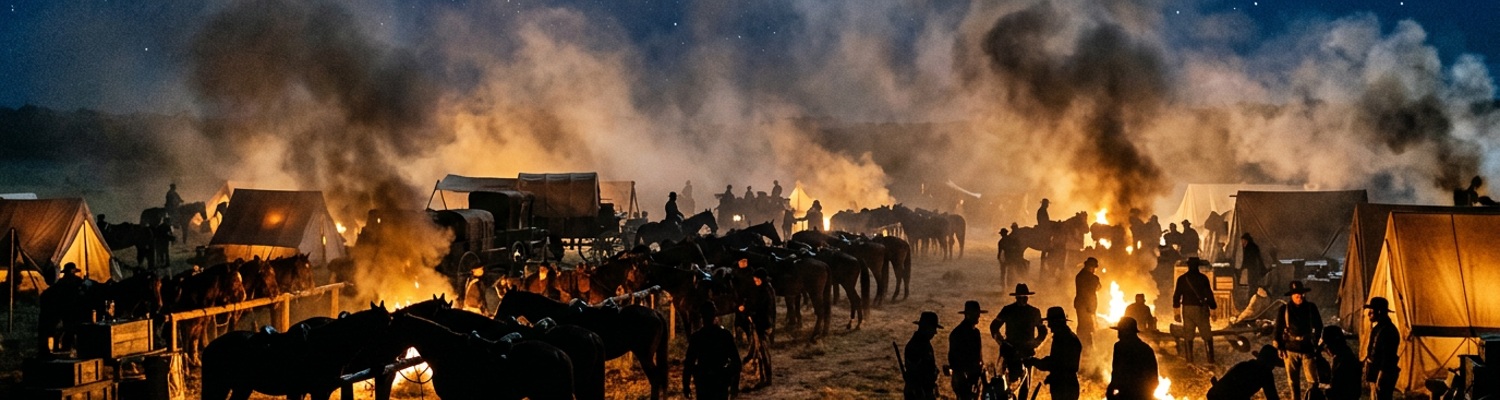
Trees and dense pine woods blocked the visual sightlines required for wig wag flags or nighttime torch beacons between the separated marching columns. Signal flags stayed packed inside canvas rolls because operating without signal corps redundancy isolated tactical units from strategic updates regarding Confederate corps positions. Grant received solid intelligence at Cold Harbor that Confederate cavalry divisions under Major Generals Wade Hampton and Fitzhugh Lee were riding rapidly westward along parallel interior roads to cut Sheridan off, but no courier or wire existed to transmit the warning. Lieutenant General Jubal Early also began preparing an entire Confederate infantry corps to march west toward the Shenandoah Valley, completely hidden from the knowledge of Sheridan. Lead troopers under Torbert halted and loosened their saddle girths along the North Anna River on the evening of June 10, unaware that Hampton and his horsemen were already pitching camp five miles west around Trevilian Station. Union pickets stacked carbines and built small cook fires in the dark, while two full divisions of Southern horsemen took up defensive positions directly across their line of march, watching the glow of Union cook fires.
Forage Depletion and Equine Caloric Deficits in Transit
Embers from those cook fires illuminated gaunt cavalry mounts chewing on wooden wagon tongues and harness leather instead of grain. Cavalry troopers carried strictly limited grain rations, exhausting portable horse feed within the first few days of hard marching in suffocating summer heat. Major General Philip Sheridan had restricted supply trains to keep his raiding column moving rapidly, limiting each horse to a meager three day reserve of oats in canvas bags. Working horses burned through these small rations while hauling heavy equipment and troopers under the blazing June sun, rapidly plunging thousands of mounts into acute physical depletion. Foraging parties swept through nearby plantations to find corn and clover, but previous military raids and local farm confiscations had already stripped central Virginia bare of grain. Troopers fed their horses fibrous brush, coarse swamp weeds, and dried leaves that irritated the stomachs of the animals and failed to deliver the nutritional energy required for military operations.
Digestion of this poor forage required massive quantities of fresh water, but nearby streams offered no relief. Water had vanished from the countryside because a prolonged regional drought dried natural creeks and streams across Louisa County, depriving thousands of working mounts of adequate hydration. Cavalry horses required between fifteen and twenty gallons of fresh water each day to survive hard work and regulate their core temperatures during summer marches. Troopers led their exhausted mounts to muddy ditches and baking clay gullies, where desperate animals fought each other for murky puddles and churned the remaining liquid into thick silt. Dehydration rapidly thickened the blood of the horses, causing severe heat exhaustion, colic, and painful intestinal impactions among hundreds of animals. Staggering horses collapsed in their harness along dusty roadways, forcing riders to strip away heavy saddles and abandon their mounts where they fell in the dirt.
Dirt and hardened clay wore away unprotected hoof walls once thin iron shoes tore loose from dry, split hooves. Iron horseshoes broke off and twisted on the sun baked roads as continuous road friction and marching across arid terrain caused widespread shoeing breakdowns and hoof damage before major combat commenced. Regimental blacksmiths ran out of nails, coal, and replacement iron shoes, making it impossible to repair the hooves of hundreds of limping mounts during brief road halts. Barefoot horses developed deep quarter cracks, stone bruises, and open foot sores that forced them to hobble forward in agony under their armed riders. Brigade commanders reported that scores of dismounted cavalrymen were falling behind the column on foot because their crippled horses could no longer keep pace with the advance.
Brigadier General Alfred Torbert halted the advance near the North Anna River to inspect the damaged ranks and tally operational mounts before nightfall. Inspecting officers found that hundreds of horses were completely unfit for active combat duty due to hollow flanks, cracked hooves, and extreme exhaustion. Torbert ordered his captains to reorganize these unmounted and crippled troopers into dismounted skirmish companies, sending their ruined mounts to the rear wagons. Captains pooled the few remaining handfuls of dry grain to sustain the strongest horses assigned to advance scout patrols and courier duties. Quartermasters herded over six hundred foundered and lame horses into holding paddocks near the riverbank while front line troopers cleaned their carbines in preparation for the morning assault.
Dismounted Scrub Engagements Along the Railroad
Carbine mechanisms clicked into battery as front line troopers moved out on foot through dense brush toward their morning assault objectives. Union cavalry collided with Wade Hampton and Fitzhugh Lee and their divisions in the dense woods and scrub bordering the Virginia Central Railroad on June 11, 1864. Blackjack oaks, tangled cedar thickets, and thorny greenbrier patches tore at wool uniforms, shredded equipment straps, and broke company formations into scattered, isolated squads. Brigade commanders could not see more than twenty paces through the choked green undergrowth, forcing officers to direct their advancing lines by shouting over snapping branches. Dismounted cavalrymen stumbled through dry gullies and swampy bottomland, gripping hot metal barrels and watching for muzzle flashes in the heavy forest shadows. Confederate dismounted troopers crouched behind fallen logs and low earth hummocks, waiting until the Federal skirmishers pressed within short range before pulling their triggers.
Triggers snapped and rifle volleys shattered the morning stillness as Confederate defenders opened a continuous barrage from concealed positions in the thickets. Blinding muzzle flashes and dense clouds of black powder smoke and dust severely obscured sightlines during dismounted firefights. Hot sulfur smoke trapped beneath the dense woodland canopy stung the eyes of kneeling troopers and blanketed the undergrowth in a heavy gray haze that concealed enemy positions only yards away. Union soldiers pumped seven shot repeating carbines from the ground, thumbing copper cartridges into buttstock tubes while lying flat on damp pine needles and baking dirt. High velocity lead bullets clipped oak branches overhead, showering sharp wood splinters and shredded leaves onto men firing blindly into the brush. Overshot rounds whistled through the timber toward small clearings fifty yards to the rear, striking the staging areas where regiments had left their living transportation.
Horses serving as living transportation became prime targets as bullets tore into the crowded horse parks where small details held the reins of four animals each amidst the falling limbs. Designated horse holders struggled under heavy fire to protect rearing, panicked mounts tied in exposed woodland clearings behind the skirmish lines. Terrified horses lunged against bridle bits, kicked wildly at adjoining pack gear, and dragged troopers across the ground as lead balls hummed through the branches. Wounded animals collapsed in tangled heaps of leather straps, pinning neighboring horses and tearing iron picket pins out of the dry forest soil. Screaming mounts broke free of shattered leather headstalls, stampeding through the tangled underbrush directly into the backs of their own dismounted skirmish lines. Stray animals trampled spare ammunition packs and overturned water canteens, depriving front line companies of vital combat supplies while the firefight intensified.
Troopers ignored the escalating firefight to press their shoulders against oak trunks, maintaining continuous fire against Confederate positions along the rail corridor. Iron rails, stacked cedar ties, and shallow drainage ditches offered minimal cover against the crossfire sweeping through the trees from hidden rifle pits. Regimental officers exhausted their canvas cartridge boxes within two hours of fighting, sending couriers crawling through the scrub to drag wooden ammunition crates forward by hand. Wounded cavalrymen dragged themselves into dry creek beds to escape the whistling bullets, leaving their emptied carbines behind in the dirt. Field surgeons set up primitive dressing stations behind scrub ridges, where stretcher bearers deposited bleeding casualties beside dead horses. Brigadier General Alfred Torbert committed his reserve regiments into the escalating firefight, ordering dismounted troopers to push forward through the contested brush toward the train depot.
Carbine Ammunition Depletion and Defensive Stalemate
Depot grounds fell to Torbert and his reserve regiments by nightfall, clearing the tracks only to find Wade Hampton constructing formidable earthworks a mile to the west. Hampton and his Confederate cavalry entrenched in an L shaped defensive position across the Gordonsville Road, repelling seven dismounted Union attacks over the course of June 12. Southern troopers felled oak logs, stacked cedar fence rails, and packed dry red clay into high breastworks that covered both the highway and the railbed, creating overlapping fields of fire across open cornfields. Federal brigades deployed on foot and charged through the clearing, crawling through briar ditches and brush as enemy volleys tore into their front and exposed flanks. Confederate riflemen held their fire behind the wooden revetments until the blue lines pressed within sixty paces, then unleashed deadly crossfires that drove each assault back with heavy casualties.
Casualties mounted as Union troopers answered this intense rifle fire by kneeling in the dirt and working their lever action weapons as fast as their hands could cycle. Rapid fire from Spencer repeating carbines rapidly drained carried metallic cartridge stores during prolonged assaults on June 12. Men slipped seven round loading tubes into their buttstocks, pumped the trigger guard levers, and fired dozens of rounds per minute into the Confederate barricades, filling the air with heavy sulfur smoke. Each cavalryman carried only forty or fifty copper cartridges in his leather box and cloth pockets, a reserve designed for brief skirmishes rather than hours of static siege warfare. Empty copper casings piled around the knees of crouching soldiers within the first two hours of fighting, leaving entire companies searching through the haversacks of dead comrades to find remaining bullets. Regimental officers shouted for extra ammunition details as hammer strikes began falling on empty chambers across the pinned skirmish line.
Runners dashed from the skirmish line back toward the brigade wagon parks to haul fresh wooden crates to the front lines, but they encountered bare floorboards inside the transport wagons. Depleted ordnance supply wagons could not sustain the high consumption rates of the corps across prolonged multi brigade engagements. Sheridan had drastically trimmed his wheeled artillery and ordnance trains before crossing the Pamunkey River to maximize speed, bringing fewer than forty wagons to carry specialized small arms supplies for nearly eight thousand combatants. Multi regiment firefights on two consecutive days consumed hundreds of thousands of rimfire rounds, while damaged supply wagons broke axles on rough forest tracks and failed to bring replacement crates forward. Ordnance sergeants rationed what few boxes remained by breaking them open with hatchets and distributing loose metallic cartridges by the handful to exhausted company commanders.
Commanders received only three or four rounds per man, leaving frontline companies powerless to mount another attack against the Confederate fortifications. Brigadier General Alfred Torbert rode up to survey the smoke filled field, watching his pinned skirmishers lie motionless under continuous Southern fire while their weapons fell silent. Wounded troopers crawled rearward on their bellies through the hot dust, dragging empty carbines behind them as Confederate artillery shells burst among the tree branches above the road. Major General Philip Sheridan realized that his frontal assaults had stalled against the defensive line of Wade Hampton and that his corps possessed neither the ammunition to renew the attack nor the forage to sustain his horses another day. Sheridan issued orders to break off the engagement, instructing division commanders to collect their wounded, withdraw under the cover of darkness, and retreat eastward toward the army depots at White House Landing.
Remount Attrition and Mount Destruction Orders
Teamsters whipped their surviving draught animals to haul overloaded ambulance wagons toward White House Landing, but the beasts collapsed in harness before clearing the staging fields. Severe remount depletion and dry wells forced Sheridan to order the destruction of hundreds of broken down and dying horses on June 12. Louisa County had endured weeks of summer drought, leaving natural watercourses bone dry and reducing homestead cisterns to shallow puddles of stagnant mud. Federal quartermasters dropped wooden buckets into brick farm wells only to pull up dry gravel and red clay, leaving thousands of dehydrated animals without a single gallon of water after two days of intense combat. Troopers watched helplessly as their mounts ran high fevers, shuddered with muscular cramps, and fell onto their sides with swollen tongues and dried, blood crusted nostrils. Regimental officers knew these crippled horses could neither carry a rider nor survive the grueling retreat march back toward the coastal supply depots.
Captains realized they would never reach those supply depots, issuing strict instructions to shoot every animal that could no longer walk under its own power, preventing Confederate cavalry from rehabilitating Union livestock. Soldiers pressed the cold iron muzzles of their service revolvers against the foreheads of mounts that had carried them through the Wilderness and Spotsylvania. Muffled gunshots echoed continuously through the pine woods as execution details moved down the lines of trembling, foundered horses. Piles of dead horses accumulated along the ditches bordering the railroad tracks, stripped of their saddles, leather bridles, and iron horseshoes. Quartermasters stripped these dead mounts of every usable strap, yet the loss of so many animals crippled the ability of the corps to haul its heavy guns and supply trains.
Artillery batteries and supply trains suffered immediately as units abandoned secondary equipment due to heavy draught horse attrition. Battery commanders lacked healthy six horse teams to pull their heavy three inch ordnance rifles, twelve pounder smoothbores, and ammunition caissons across the rutted clay roads. Lieutenants ordered their gunners to chop apart traveling forge wagons with axes, split spare caisson wheels, and smash heavy iron repair tools against roadside boulders. Ordnance sergeants dragged spare wooden battery wagons into clearings and set them on fire, destroying valuable replacement axles, canvas tarpaulins, and harness collars. Teamsters emptied baggage wagons into roadside ditches, heaping wall tents, camp kettles, mess chests, and officer gear into burning piles to lighten the strain on the surviving draught horses. Drivers abandoned these charred wagons on the roadside because dying transport animals could no longer sustain the rapid offensive pace demanded by army headquarters.
Sheridan abandoned the demands of army headquarters and his entire strategic offensive when the loss of his transport and saddle stock paralyzed the corps. Mount starvation and physical collapse eliminated the mobility required to link up with Major General David Hunter and his force in the Shenandoah Valley. Hunter had captured Staunton and awaited cavalry reinforcements to help sever the Virginia Central Railroad at Charlottesville, but Sheridan could no longer push through the Blue Ridge passes. Walking troopers led skin and bone mounts by their bridle leathers, advancing at barely two miles per hour while trying to protect their wounded comrades. Unmounted cavalrymen tossed away their carbine scabbards, picketing pins, and heavy boots in the dusty brush to keep pace with the limping column. Rearguard skirmishers deployed across the narrow woodland roads to exchange carbine fire with pursuing horsemen under Wade Hampton, shielding the broken column as it dragged itself toward the North Anna River crossings.
Agonizing Withdrawal Toward White House Landing
Smoke from carbines still drifted over the North Anna River crossings when Major General Philip Sheridan initiated an eastward night retreat under cover of darkness to avoid open field pursuit by Confederate cavalry. Sheridan knew that if Southern horsemen caught his battered divisions on flat Virginia turnpikes in daylight, Hampton could envelop his flanks and destroy his disorganized regiments piece by piece. Staff officers rode quietly down the woodland tracks, ordering riders to muffle iron saber scabbards with wool blankets and forbidding troopers from lighting pipe tobacco or signaling lanterns. Troopers abandoned blazing campfires along the timberline to deceive enemy scouts into believing the Federal corps remained bivouacked along the railway bed. Cavalrymen turned their mounts around and guided them into the pitch black woods, heading back toward Carpenter Ford along narrow wagon trails ankle deep in suffocating dust.
Dust clouds enveloped the march as the retreating column moved at a crawl, burdened by hundreds of wounded troopers, captured prisoners, and surviving foot sore horses. Springless transport wagons jolted violently over tree roots and dry creek beds, eliciting cries of agony from more than three hundred severely injured men packed into the open beds without straw or bandages. Armed guards marched on both flanks of nearly five hundred Confederate prisoners taken during the rail battles, forcing the captives to plod forward on foot through the intense heat. Unshod cavalry mounts limped behind the transport lines with split hooves and dropped heads, leaving bloody tracks along the baked clay roads. Riders walked alongside these exhausted animals to lighten their burdens, carrying their own saddles and Spencer carbines to prevent the horses from collapsing under dead weight.
Exhaustion and dead weight proved fatal as horses dropped in the road from sunstroke and dehydration when temperatures climbed above ninety degrees each afternoon. Foragers combed abandoned farms for leftover wheat fields and swamp grass, cutting green vegetation with pocket knives to sustain the surviving cavalry stock. Teamsters halted their wagons beside stagnant mud holes to ladle water into canvas nosebags, spooning wet muck into the mouths of feverish draft mules. Rearguard patrols beat back probing attacks from Confederate scouts who harassed the flanks of the march near Dunkirk and Aylett Warehouse. Brigade commanders kept their men moving south toward the Pamunkey River basin, refusing to halt for extended rest until the column reached the security of federal naval gunboats.
Gunboats sounded their steam whistles across the river valley when the cavalry arrived at the Pamunkey River depot at White House Landing on June 21, having sacrificed strategic objectives to preserve surviving mounts. Sheridan had failed to break the Virginia Central Railroad at Charlottesville or join Major General David Hunter in the Shenandoah Valley, but his retreat succeeded in saving thousands of exhausted animals from total destruction. Quartermaster personnel directed the haggard regiments toward sprawling storage yards, where mountains of baled northern hay and whole oats stood stacked along the river wharves. Veterinary surgeons immediately separated hundreds of foundered mounts into hospital corrals, cleaning infected hoof wounds and lancing swollen joints with pocket scalpels. Troopers stripped harnesses from surviving draft horses, led the animals down muddy banks to drink cool river water, and tied them to picket lines under the shade of riverside poplars.