
Flight Deck Preparations and Readiness Exercises
Sailors hauled heavy pneumatic starter carts across the steel flight deck to beat a strict dawn launch deadline as USS Okinawa operated as the primary amphibious aviation platform for the Caribbean Amphibious Ready Group in late September 1966. Flight deck personnel and Marine maintenance crews sprinted between aircraft under glaring floodlights, checking oil reservoirs, fueling tanks, and torquing rotor hub assemblies against a tight operational timeline. Naval inspectors evaluated every mechanical evolution and troop loading drill against strict combat timelines to guarantee that the amphibious assault ship could support sustained combat operations in Southeast Asia. Aviation mechanics tightened down the final cowlings on the aircraft as warning buzzers announced the urgent transition to general flight quarters.
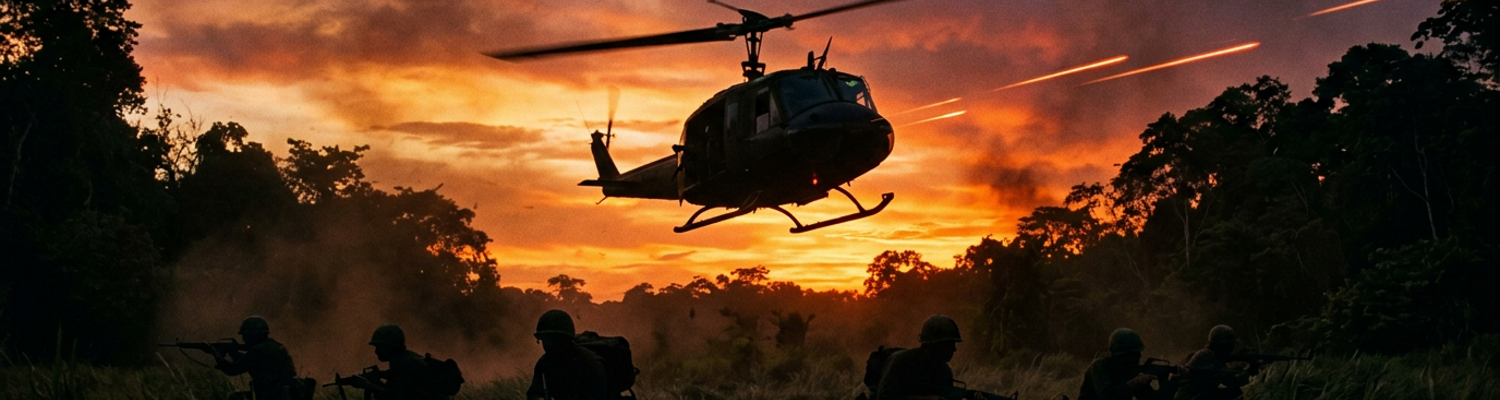
Tractors towed the fully fueled helicopters into designated launch spots along the carrier deck to begin high tempo vertical assault drills off Vieques and Guantanamo Bay. Embarked Marine helicopter squadrons operated UH-34D Seahorse and early CH-46A Sea Knight aircraft during these intensive drills. Flight directors wearing yellow jerseys waved the radial engine UH-34D Seahorses into position first, filling the humid morning air with raw exhaust smoke and the deafening clatter of nine cylinder engines. Deck crews worked under the spinning rotor blades of both types of helicopters, fighting hot engine wash as they unhooked heavy steel tie down chains from deck fittings. The early CH-46A Sea Knights spooled up their twin turbine engines with a piercing whine, testing rotor synchronization gears that had given maintenance crews chronic mechanical headaches during pre flight checks. Flight deck officers signaled each aircraft aloft in rapid succession, launching the formations into heavy sea swells to test pilot endurance under realistic tactical conditions.
Marines strapped into nylon troop seats inside the vibrating cabins braced their boots against the deck plates as the helicopters swept low across the Caribbean toward the target beaches. Pilots flared their aircraft into tight clearings on the rocky hillsides of Vieques, setting wheels and skids into dirt landing zones in front of field evaluators. Combat infantrymen rushed down the aft ramps of the CH-46A Sea Knights and leaped from the narrow side hatches of the UH-34Ds to establish perimeter defenses in the dense brush. Squad leaders checked mechanical stopwatches to ensure every rifleman and mortar tube cleared the rotor arcs within prescribed training limits. Helicopter crews lifted off the second the last Marine hit the dirt, circling back toward USS Okinawa to reload ammunition crates and fuel bladders for the next scheduled assault wave.
Maintainers swarmed the landing spots the moment the helicopters touched down back on the carrier deck, dragging heavy grounding cables and fuel hoses across the baking non skid surface. Aviation machinists worked with bare hands on hot exhaust manifolds to fix minor oil leaks and replace frayed drive belts before the next launch cycle. Supply officers balanced strict spare parts allocations against the rapid wear and tear of continuous operations, knowing every flight hour brought the airframes closer to mandatory maintenance overhauls. Deck crews worked straight through their mess hours to keep the flight deck clear of debris and ensure that every available helicopter remained flight worthy for the ongoing exercises. Squadron commanders pushed the tempo late into the afternoon, ordering ground crews to refuel every helicopter on the hangar deck for another round of night operations.
Sudden Tactical Abort and Storm Warnings
Rubber fueling hoses pressurized across the steel hangar bay deck as aviation fuelers pumped kerosene into the sponsons of parked CH-46A Sea Knights. Maintenance crews checked fuel filter sight glasses under bare overhead bulbs, preparing the airframes for the planned night insertion exercises. Teletype machines in the ship communications center chattered rapidly minutes later, spitting out urgent classified operational message traffic that shattered the flight schedule. Fleet weather advisories on September 28 confirmed that Hurricane Inez had intensified into a Category 5 system with sustained winds exceeding 150 miles per hour. Command directives abruptly cancelled all scheduled live fire and counter insurgency drills across the Puerto Rican and eastern Cuban operating sectors. Messengers tore the red striped urgent dispatches from the printers and ran up steep metal ladderwells to deliver the emergency cancellation orders directly to the bridge and the combat information center.
Bridge officers sounded general quarters to recall all airborne Marine rotary aircraft before outer squall lines closed flight windows. Klaxon horns blared through every interior compartment and flight control station, overriding the roar of ventilation fans and engine blowers with sharp electronic pulses. Air controllers in the carrier air traffic control center grabbed their radio microphones to broadcast emergency abort vectors, contacting every UH-34D and CH-46A crew operating over Vieques and the coastal waters. Marine pilots yanked their collective sticks and throttled up their engines to clear tree lines and rocky beaches, abandoning ground support drills midway through troop pickup runs. Dark squall clouds rolled rapidly over the eastern horizon, dropping heavy sheets of rain that cut horizontal visibility down to less than one nautical mile across the amphibious sector.
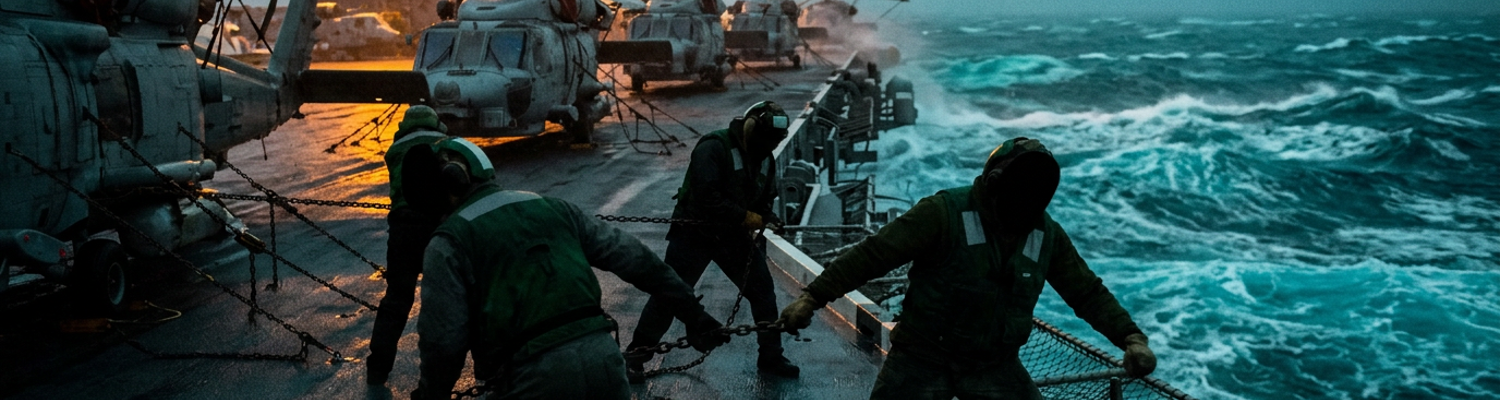
Raindrops slammed against the windshields of the returning helicopters as pilots fought violent wind gusts to align their approaches with the pitching flight deck of USS Okinawa. Flight deck directors in yellow waterproof jackets leaned directly into fifty knot headwinds, waving lighted signal wands to guide the heavy helicopters onto wet landing spots. Tires hit the steel deck with jarring thuds as pilots dropped their collective levers and locked their wheel brakes against the worsening roll of the ship. Handling crews rushed beneath the whipping rotor blades with heavy wooden chocks and spring loaded steel tie down chains, ducking low to avoid rotor head flex caused by sudden wind gusts. Deck hands snapped heavy hooks into the sunken deck cloverleafs and hand cranked tensioning binders until the aircraft were rigidly pinned against the wet metal plating.
Elevators plunged into the hangar bay carrying soaked helicopters one by one, clearing the exposed flight deck before the storm center arrived. Marine maintenance crews unlocked blade folding pins and muscle walked rotor blades back along the helicopter fuselages, wrapping protective canvas covers over exposed engine intakes and pitot tubes. Mechanics stuffed heavy grease rags into turbine exhaust ducts to keep wind driven seawater from flooding delicate compressor stages. Damage control parties inspected fuel shutoff valves, sealed watertight scuttles, and tightened dogged steel hatches across every deck frame from the island superstructure down to the bilges. Heavy seas crashed against the forward sponsons as USS Okinawa turned her bow toward open water, setting full steam to escape the path of the approaching hurricane.
Emergency Flight Deck Tie Down Operations
Saltwater swept across the bow and flooded the forward flight deck as USS Okinawa heaved into the deepening ocean troughs. Solid sheets of spray broke over the catwalks, soaking the flight deck personnel and turning the steel working areas into hazardous torrents. Enlisted plane handlers and aviation boatswain mates used heavy duty steel chains and tie down devices to secure aircraft to cloverleaf deck fittings amid forty knot gusts. Deck crews wrestled with eighteen pound chain assemblies, dragging them by hand across the rolling steel while the ship pitched and heaved in the outer bands of the hurricane. Handlers crawled beneath the fuselages of the helicopters to hook the tensioning clamps into the recessed deck sockets before sudden wind shifts could lift the tires off the surface. Men pumped the mechanical ratchets with both arms until the cables pulled the landing gear struts tight against their rubber shock absorbers, preventing the multi ton airframes from sliding into the island structure.
Shock absorbers creaked under the immense downward load, but the wide rotary assemblies above the cabins remained vulnerable to the rising wind. Deck crews worked across slick surfaces under driving rain to fold rotor blades manually on exposed airframes before air turbulence sheared the mechanical pitch linkages. Handling teams pushed long aluminum steadying poles upward into the blade sockets, fighting crosswinds that threatened to rip the tools out of their grasp. Mechanics balanced on the wet grit of the deck, using mechanical hand tools to release the heavy steel lock pins at the rotor hubs. Four sailors grabbed each trailing blade edge to swing the long structures backward along the tail booms while rain blinded their eyes and wind tore at their plastic safety goggles. Aviation boatswain mates secured the folded blades into padded fuselage brackets with thick canvas cinch straps, eliminating the lift forces that threatened to tip the aircraft onto their sides.
Tractors maneuvered between the secured helicopters to begin moving the most vulnerable airframes toward the deck edge elevators. Elevator operators hurried to lower as many helicopters as possible into the hangar deck before heavy listing rendered external elevators inoperable. Ship rolls increased beyond twelve degrees as the vessel cut across rising swells, causing the open elevator platforms to tilt dangerously over the foaming sea. Hydraulic machinery groaned under the off center loads, spraying fine mists of fluid around the guide tracks as the massive platforms vibrated inside their vertical channels. Deck handling teams waited for the ship to level off between wave crests, then sprinted forward to shove each folded helicopter onto the elevator deck and set the wheel chocks. Operators worked the hydraulic hand valves to drop the platforms below the flight deck edge, racing the clock as the hull pitched deeper with every passing minute.
Crewmen inside the hangar bay grabbed the arriving helicopters the moment the elevator platform leveled with the interior deck grating. Handlers connected extra steel chains to the landing gear and pulled the airframes into tight rows along the reinforced steel bulkheads. Aviation machinists checked each tie down device with torque wrenches, doubling the required chain count on every airframe to counter the severe rolling motion of the hull. Seawater leaked through the elevator side curtains and pooled across the hangar deck, forcing sailors to wade through greasy bilge runoff as they tightened turnbuckles. Deck officers directed the placement of heavy timber shore beams against the wheels of the CH-46A and UH-34D helicopters to build mechanical blockades against sudden shifts in cargo weight. Maintenance crews dogged down the final heavy chain binders, locking the squadron assets into place as the ship drove deeper into the storm zone.
Heavy Weather Maneuvering in Destructive Swells
Steel tie down chains groaned against the deck fittings as Okinawa steered into open water to ride out catastrophic sea swells rather than risk being driven aground in shallower coastal waters. Bridge officers chose the open sea despite thirty foot breakers because the shallow shoals of eastern Cuba provided zero margin for error if wind gusts shoved the flat sided carrier off course. Helmsmen gripped the bronze wheel spokes with both hands, fighting back pressure from the dual rudders as crosscurrents tried to shove the bow broadside into oncoming swells. Enginemen answered bells for flank speed from the main control console, pushing maximum steam into the turbines to generate forward momentum through the churning troughs. Propellers spun deep underwater with heavy shuddering vibrations, driving the hull forward while spray lashed against the glass bridge windows fifty feet above the waterline. Green seawater exploded over the forecastle with every downward plunge, sending thick torrents of water washing aft toward the flight deck and island structure.
Bulkheads groaned throughout the ship as severe ship roll angles compromised internal movement, causing water wash over catwalks and straining hull framing in the Windward Passage. Torrents of ocean water poured through open grating along the deck perimeter, tearing spare equipment boxes off their welded steel brackets and dumping debris into the churning sea. Sailors inside the passageways lost their footing on slick deck surfaces, grabbing overhead steam pipes and wall conduits to keep from sliding down tilting corridors. Mess cooks dropped metal trays and cooking kettles as sudden twenty five degree rolls launched unrestrained cookware across the galley decks. Corpsmen in the sick bay braced themselves against examination tables while bandaging bruises and setting fractures for crewmen thrown into steel stanchions by the violent pitching. Structural steel frames flexed under the twisting torque of opposing waves, snapping rivets along the outer hull plates with sharp metallic cracks.
Flashlights cut through damp passageways as damage control parties conducted roving watches through lower compartments to monitor watertight doors, hatch seals, and bilge water accumulations. Men stepped through ankle deep water in the bottom compartments, shining narrow beams onto rubber gaskets and metal dogs to check for weeping seams or structural deformation. Wrenches clattered against steel handles as sailors tightened dogging mechanisms on heavy blast doors that had shifted during the violent twists of the ship. Repair personnel chalked each hatch frame and checked chalk transfer lines along the knife edges to ensure every seal maintained an airtight and watertight bond. Sounding tapes dropped down brass sounding tubes every fifteen minutes, allowing watchstanders to measure liquid levels in fuel tanks and void spaces adjacent to the outer skin. Chalk tallies on damage control status boards confirmed that several secondary pump rooms showed rising water levels from split deck drains and leaking sea chests.
Pumps across the lower deck flats hummed to life as sailors connected rubber discharge hoses to clear oily water out of flooded bilges. Damage controlmen carried heavy wooden shoring timbers into vibrating engineering spaces, bracing weakened bulkheads against the hydraulic pressure of water trapped in outer voids. Carpenters hammered wooden wedges between crossbeams and steel ribs with eight pound mauls, locking the pine shores in place to prevent bulkheads from buckling inward under successive wave strikes. Boiler technicians tended the roaring oil burners in the firerooms despite heavy rolling, maintaining steam pressure to drive the primary drainage eductors and propulsion turbines. Throttle operators held the ship speed steady into the face of the oncoming gale, keeping the bow pointed into the center of the deep water swells until the hull stabilized against the open ocean.
Night Aircraft Shoring and Hangar Deck Battles
Turbines drove massive vibrations from the laboring propulsion machinery directly into the enclosed hangar deck, where parked helicopters began to rock against their deck moorings. Crewmen placed timber shores and additional lashings around high profile CH-46 airframes threatening to break free on the wet hangar deck. Tandem rotor CH-46 Sea Knights stood tall on their landing gear, creating high centers of gravity that rocked the fuselages sideways with every thirty degree roll. Handling crews hauled heavy wooden beams out of damage control lockers and wedged the thick pine timbers firmly against the forward and aft tires. Aviation boatswain mates ran additional steel wire ropes over the wheel hubs to anchor the gear directly into deck sockets. Sailors hammered oak wedges beneath the wooden shore bases to lock the braces tight against the steel hull ribs and prevent the multi ton airframes from sliding.
Steel tie down chains stretched and snapped under violent lateral loads as the ship rolled heavily into deep sea troughs. Broken metal links whiplashed across the deck, leaving several helicopters partially unsecured and tilting dangerously toward adjacent aircraft. Aviation mechanics and boatswain mates crawled under shifting helicopter fuselages beneath red emergency lanterns to tighten parted gripes. Deck crewmen dragged replacement chains across the sloshing deck plates, ducking low beneath five ton aircraft bodies as hydraulic landing gear shock absorbers hissed and compressed. Men wrestled with heavy mechanical ratchet binders, hooking forged steel claws into deck cloverleafs and cranking the levers with both arms to establish tension. Wrenches clattered against the wet deck as sailors tightened locking nuts on each turnbuckle to stop the chains from backing out under the oscillating strain.
Hoses cracked along the helicopter fuselages from the relentless structural twisting, discharging high pressure fluid directly across the enclosed workspace. Enlisted personnel worked through intense motion sickness while contending with aerosolized fuel and hydraulic mist from leaking aircraft lines. Atomized jet fuel combined with flammable red hydraulic fluid to form a choking haze that stung the eyes of the crews and coated the steel deck in an oily film. Sailors fought persistent nausea and severe dizziness while breathing through wet cotton rags, vomiting into open drainage scuppers before stumbling back to their assigned airframes. Marine plane captains wrapped heavy rubber patches over the fractured lines and tightened screw clamps with screwdrivers to stop volatile sprays from contacting hot electrical junction boxes.
Damage controlmen rigged portable explosion proof exhaust blowers at the hangar bay openings to vent the volatile fuel vapors into the outer storm. Crewmen tore open heavy paper sacks of granular absorbent compound and spread the material across the flooded deck plates to soak up oil slicks and give working sailors traction. Aviation boatswain mates conducted continuous safety walk throughs down each narrow row of pinned aircraft, testing every chain binder and timber brace with heavy pry bars. Handling teams added double gripes to every Sea Knight landing gear strut until thirty six separate chains anchored each heavy helicopter to the ship structure. Watchstanders took up static guard positions beside charged foam fire hoses and fuel shutoff valves, monitoring the secured squadron until the ship cleared the violent outer bands of the hurricane.
Rapid Aircraft Reconfiguration for Humanitarian Airlift
Couriers tapped the shoulders of those weary foam watchstanders to deliver urgent flash tasking orders from the bridge as the ship cleared the storm core. Radio messages from naval headquarters in Puerto Rico reported that Hurricane Inez had smashed ashore across southern Hispaniola and eastern Cuba, leveling entire coastal towns and leaving thousands of isolated survivors without clean water or emergency care. USS Okinawa received immediate tasking orders to pivot from combat assault preparations to emergency humanitarian relief operations across the Caribbean basin. Flight officers and Marine leaders scrambled down steep metal ladderwells to the hangar deck, shouting revised staging instructions over the roar of ship ventilation blowers. Maintenance chiefs checked their pocket watches against an urgent four hour operational deadline, warning work gangs that every combat configured helicopter had to be stripped and converted into an empty cargo transport before the ship reached coastal waters.
Armorers and shipboard ordnance crews swarmed the parked helicopters with speed wrenches and socket sets to strip every piece of combat equipment out of the fuselages. Weapons specialists unbolted fifty caliber and M60 machine guns from cabin door pintle mounts, hauling the heavy weapons and feed chutes across the slick deck toward below deck armories. Aviation ordnancemen climbed onto aluminum ladders to unpin external rocket pods from fuselage hardpoints, disconnecting electrical firing solenoids and taping loose wiring harnesses against bare bulkheads. Sweating mechanics manhandled heavy wooden ammunition boxes of linked machine gun rounds and aerial rockets out of the aircraft interiors, clearing out troop seats and weapons racks to maximize available cargo space. Ordnance handlers stacked the heavy combat munitions onto weapons elevators, sending thousands of pounds of lethal firepower down into the ship armored magazines before humanitarian cargo could be brought aboard.
Deck crews entered the emptied helicopter cabins with spools of nylon webbing and steel cargo hooks to rebuild the bare interiors for humanitarian freight. Riggers laced heavy cargo nets across interior bulkheads and bolted tie down rings into deck tracks so working parties could secure loose relief supplies against rough flight turbulence. Enlisted working parties formed long bucket brigades from deep storage holds up to the hangar deck, passing heavy wooden crates of canned rations from hand to hand across the deck. Aviation handlers stacked five gallon steel jerricans of fresh drinking water along cabin centerlines, wrapping them tight with tension straps to keep the shifting liquid weight from unbalancing the aircraft in flight. Navy medical corpsmen followed closely behind the supply lines, securing crated medical triage packs, plasma bottles, and field dressings into the forward cabin racks so flight crews could treat injured civilians on scene.
Plane captains inspected the packed medical gear and cargo pallets against weight and balance charts to verify that each helicopter remained safe for flight. Crew chiefs pulled cargo nets taut across the loaded supplies, cinching mechanical ratchet straps until the wooden crates and steel water cans formed immovable blocks inside the fuselages. Flight deck officers coordinated with bridge navigators through sound powered telephones, confirming that the ship was closing distance to storm ravaged Haitian and Cuban coastal zones. Yellow shirted aircraft directors signaled elevator operators to raise the first reconfigured CH-46A Sea Knights and UH-34D Seahorses back up to the flight deck under clearing skies. Flight deck crews unhooked the hangar tie downs and pushed the loaded transports toward their launch spots as pilots strapped into cockpits for the opening relief sorties.
Relief Flight Sorties Across Devastated Hispaniola
Turbine engines whined to life across the wet flight deck as Marine aviators engaged their rotor clutches and tested mechanical cyclic controls against thirty knot headwind gusts. Flight deck directors in yellow jerseys tracked the rolling motion of the hull through driving spray, waiting for the bottom of each sea swell before giving the green launch wand signals to the spotted helicopters. Marine aviators launched in marginal weather off the rolling deck to insert relief supplies into isolated coastal sectors of the Dominican Republic and southern Haiti. Pilots wrestled heavy collective levers against fierce ocean updrafts and turbulent crosswinds, clawing for altitude beneath ragged cloud layers that forced aircrews to maintain visual contact with the churning sea just two hundred feet below. Rotary aircraft skimmed low over churning brown coastal waters where swollen rivers dumped tons of mountain mud and uprooted trees directly into the Caribbean, masking natural landmarks and navigational aids. Marine crews scanned the wrecked shoreline through rain streaked cockpit glass, searching for isolated clearings among completely inundated coastal settlements where roads and bridges had vanished beneath flood torrents.
Helicopter crews landed in washed out villages and flooded clearings to deliver food, water, and medical aid while surrounded by desperate local populations. Rotors blasted sheets of muddy spray across shattered palm groves as the heavy aircraft touched down on unstable soil, forcing pilots to keep collective pitch engaged to prevent landing gear tires from sinking into deep river silt. Crew chiefs slid open cargo doors, revealing thousands of pounds of fresh drinking water, canned rations, and boxed antibiotics to crowds of storm survivors who rushed the landing zones. Enlisted crewmen stood in the open doorways with outstretched arms to manage the crowd, guiding villagers away from spinning tail rotors while handing down heavy steel jerricans and cartons of rations into outstretched hands. Local villagers formed human chains through hip deep floodwaters to haul supplies into nearby church ruins and dry mounds before torrential river runoff could sweep the goods away. Marine crew chiefs quickly restowed empty cargo netting to clear cabin floor space as local responders carried forward survivors suffering from severe crush injuries, open fractures, and deep puncture wounds caused by collapsed timber buildings.
Stretcher teams slid the most urgent patients across the wet cabin decking as rotary crews hoisted critically injured civilian casualties back aboard Okinawa for immediate treatment by shipboard medical personnel. Aircraft rescue hoists lowered steel cable harnesses and wire litters into flooded gullies, lifting immobilized patients out of ruined settlements where helicopters could not risk setting their wheels down. Marine pilots pulled maximum engine torque to lift the casualty laden helicopters out of the mud and sped back across thirty miles of turbulent ocean toward the amphibious assault ship. Flight deck handling teams met the returning aircraft the moment their tires touched the surface, ducking beneath whirling rotor blades to unlatch stretchers and rush patients into the island elevators. Navy doctors and hospital corpsmen converted the hangar deck triage station and shipboard surgical suites into trauma wards, administering blood plasma and performing emergency surgeries under battery powered operating lamps. Sickbay attendants carried stabilized patients into below deck recovery wards, clearing the operating tables for the next wave of incoming casualty flights.
Logistical Strain and Command Tasking Transitions
Corpsmen stacked empty plasma cartons outside the surgical wards while shipboard supply personnel rushed through adjoining compartments to handle hundreds of urgent incoming cargo requests. Teleprinters in the ship communication center chattered without pause, printing ribbons of paper across sorting tables as messages arrived from competing command centers. Shipboard supply departments managed conflicting dispatch directives from naval task group commanders and international diplomatic relief coordinators. Task group commanders ordered strict accountability for flight hours and military fuel usage, while diplomatic relief officials sent urgent radio requests demanding that helicopters drop food crates into remote mountain villages outside the original search grid. Supply officers worked beneath flickering overhead fluorescent tubes, crossing out scheduled drop coordinates and rewriting cargo manifests by hand to keep emergency aid moving to isolated towns. Messengers sprinted between the bridge and the supply office to deliver hand scrawled updates on landing zone conditions as fresh radio calls arrived from the mainland. Aviation storekeepers hauled re-routed cargo nets between the elevators and staging areas, sweating heavily as each new radio dispatch completely overturned the flight deck loading plan.
Cargo handlers pushed hand trucks through hollowed out storerooms as relief operations heavily depleted the potable water reserves, aviation gas supplies, and dry provisions prior to completing the mission. Water distilling plants ran continuously at maximum capacity, yet the thousands of five gallon cans sent ashore to parched island communities rapidly dropped the internal fresh water storage to critical minimum levels. Boiler technicians rationed fresh water for the crew, shutting off personal washbasins and mess deck drinking fountains to conserve every gallon of water for the main propulsion boilers and surgical clinics. Sailors washed with damp washcloths and saltwater soap, enduring heavy tropical heat to ensure the distilling units produced enough feed water for the steam propulsion plant. Aviation fuelers dipped wooden measuring sticks into fuel bunker tanks, finding the aviation gasoline and jet fuel levels dropping sharply after hundreds of rotary supply hops across the storm ravaged islands. Flight mechanics scavenged spare gaskets, spark plugs, and hydraulic fluid cans from reserve maintenance lockers, burning through critical inventory originally set aside for future combat deployments. Cook crews in the galley ripped open the last bulk boxes of flour, beans, and canned meat, watching the dry provisions dwindle to just a few days of emergency rations for the ship company and embarked Marines.
Engineers from international aid organizations gradually cleared blocked coastal roads to establish permanent supply corridors on the mainland, relieving the amphibious assault ship of its primary transport role. Harbor docks received commercial cargo vessels bearing bulk relief goods, allowing land based distribution centers to take over regular feeding stations and field hospitals. Okinawa stood down from humanitarian triage to resume operational preparations for its eventual transfer to the Pacific Fleet. Deck crews rolled up medical triage canvas and scrubbed down the hangar bays with salt water and alkaline soap, stripping away the makeshift casualty clinics and temporary aid stations. Aviation mechanics reinstalled heavy weapons pylons, machine gun mounts, and troop seats into the battered UH-34D and CH-46A airframes, checking flight control linkages and replacing worn rotor components. Deck hands stowed empty cargo netting in below deck lockers and loaded pallets of live rifle ammunition back into the ready service magazines. Marine infantry units mustered on the flight deck with full combat packs and rifles, running combat assault drills across the steel plating while the ship steered north toward deep water refueling tracks to replenish its exhausted supplies.