
Operational Architecture of the Tenth Naval District
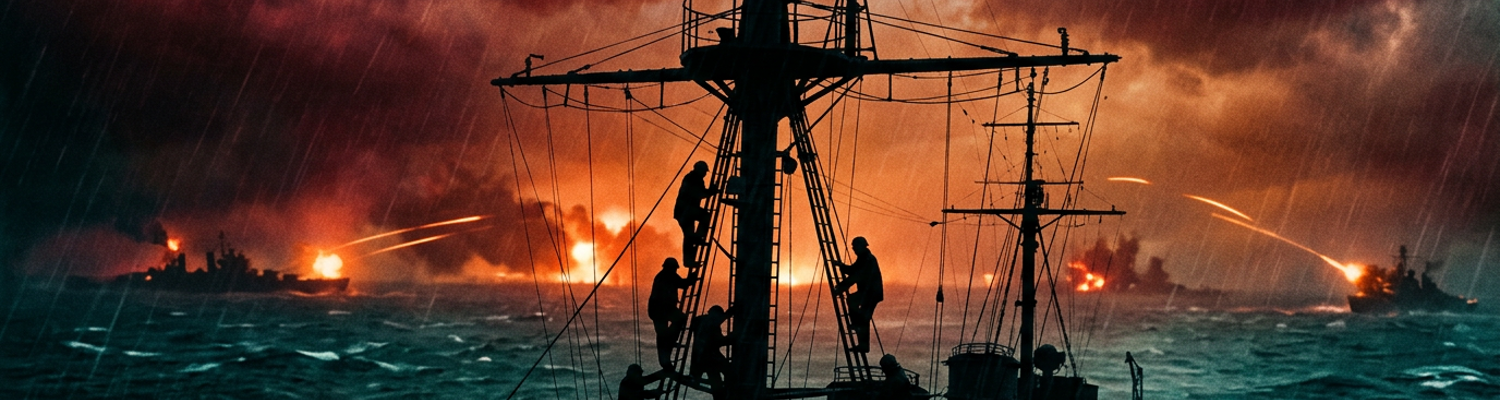
Sparks exploded from the early warning radar cabinet on the bridge when a sudden surge of salt spray flooded the intake vent. The electrical burst blinded the helmsman and the watch officer just as the sonar operator yelled that he had a metallic echo in the water. Down in the pitching sick bay, the ship Pharmacist Mate braced his boots against the steel bulkhead to catch a burned technician. The technician fell backward down the ladder with scorched hands and shattered glass ground into his dungarees. Torrential rain slammed across the deckhouse above, masking the black swells of the Virgin Passage as the vessel pitched thirty degrees into the storm. The Virgin Passage served as a vital choke point for Caribbean merchant shipping and bauxite transport routes entering the Anegada Passage. This geography forced dozens of vulnerable freighters into narrow deep water channels where German submarines waited. Shouts from the bridge demanded an immediate bearing on the acoustic contact while the medical space filled with the sharp smell of burnt insulation and chemical foam.
Foam and salt water sloshed across the sick bay deck plates as the ship took another heavy roll, threatening to overturn the metal sterilizer. Anti submarine coverage relied heavily on wooden hulled 110 foot SC class subchasers and 173 foot PC class patrol craft due to early war fleet destroyer shortages. Frontline fleet destroyers had been pulled away to guard aircraft carriers in the Pacific and troop transports in the North Atlantic. This strategic shift left these thin skinned wooden and light steel craft to fight rough seas and heavy U boats alone. Engine crews wrestled with leaking fuel lines and temperamental diesel generators in bilges that sloshed with oily seawater. These mechanics fought to keep the vessel listening equipment powered while the storm threatened to short out every fragile vacuum tube aboard. Sailors clung to lifeline ropes along the wet deck above to prime the depth charge racks, racing to shield the cargo steamers following strict routing instructions sent out from district command.
Commanders under Vice Admiral John H. Hoover directed Tenth Naval District movements from San Juan, Puerto Rico. Hoover oversaw convoy routing between Puerto Rico and Saint Thomas, balancing the protection of essential ore carriers against an acute deficit of radar equipment, escort hulls, and trained sonar men. Radio operators at his headquarters tracked merchant losses through urgent distress signals, routing unescorted cargo ships away from reported wolfpacks and into local coastal channels guarded only by small patrol craft. Incoming bauxite freighters from South America carried raw aluminum ores essential for aircraft production factories in the United States. Every successful transit through the district passages became vital to the war effort. Teleprinter ribbons and grease pencil status boards at headquarters recorded the Virgin Passage as an active combat sector, sending orders across the airwaves for every available subchaser to intercept contacts along the convoy path.
Alarms triggered general quarters throughout the pitching hull to intercept the convoy path contact as the captain throttled the diesel engines forward. The Pharmacist Mate slapped a sterile compress over the injured technician flash burns and secured the man to the lower bunk with webbed canvas straps before grabbing his emergency kit. Concussion waves from distant underwater explosions rumbled through the sea, vibrating the wooden timbers and rattling glass medicine bottles in their wire wall baskets. Topside lookouts wiped stinging salt spray from their eyes, scanning the black troughs of the waves for the silhouette of a surfaced German conning tower. Deckhands dragged heavy arming wrenches across the wash of seawater on the fantail, setting depth pistols on the stern racks for an immediate manual attack.
Sensor Degradation and Caribbean Environmental Conditions
Steel depth pistols locked into the explosive canisters for the manual attack, but the bridge officers still lacked a clear target bearing. Early shipboard SC surface search radar systems suffered frequent vacuum tube blowouts caused by severe tropical humidity, heat, and sea spray. Trapped air inside the radio compartment climbed past one hundred degrees, baking the sensitive electronic components while ocean spray forced its way past cracked ventilation seals. Glass rectifier tubes shattered when cold saltwater dripped onto the glowing filaments, throwing white sparks across the deck and burning the skin off the technician who tried to shield the chassis. The Pharmacist Mate applied thick burn ointment to the technician hands down in the pitching sick bay, wrapping white gauze over blistering skin while the bridge shouted into the voice tubes for backup radar parts.
Voice tubes whistled sharply from the bridge demanding an immediate listening gear bearing since backup radar parts did not exist. QC sonar performance degraded sharply across the Virgin Passage due to pronounced temperature inversions and shifting salinity layers. Intense tropical sunlight baked the upper ocean into a warm, low density layer that floated directly on top of cold, high salinity currents rushing through the passage from the deep Atlantic basin. Sound pulses fired from the subchaser hull projector struck these sharp underwater boundaries and bent away toward the bottom instead of traveling straight to hit a submarine hull. Sonar operators pressed their headphones tight against their ears, hearing only the hollow rush of current and the crackle of snapping shrimp while the metallic echo vanished into the ocean depths.
Submarines like the German Type IX U boats exploited these ocean depths and tropical rainsqualls to evade detection while stalking convoy lanes. Submarine commanders slipped their long steel hulls beneath the warm surface layers, cutting their electric motors to drift silently inside blind spots where American sonar pings could never penetrate. Torrential cloudbursts hammered the open sea above, masking the sound of churning diesel exhausts when the raiders surfaced to recharge their battery banks in the driving rain. Lookouts on the German bridge towers tracked the dark shapes of loaded bauxite freighters against sudden flashes of lightning, calculating firing angles while remaining invisible to the blind patrol craft. Torpedo crews in the German forward room loaded bronze warheads into the firing tubes, preparing to strike the cargo line before the escorting subchaser could restore its sensors.
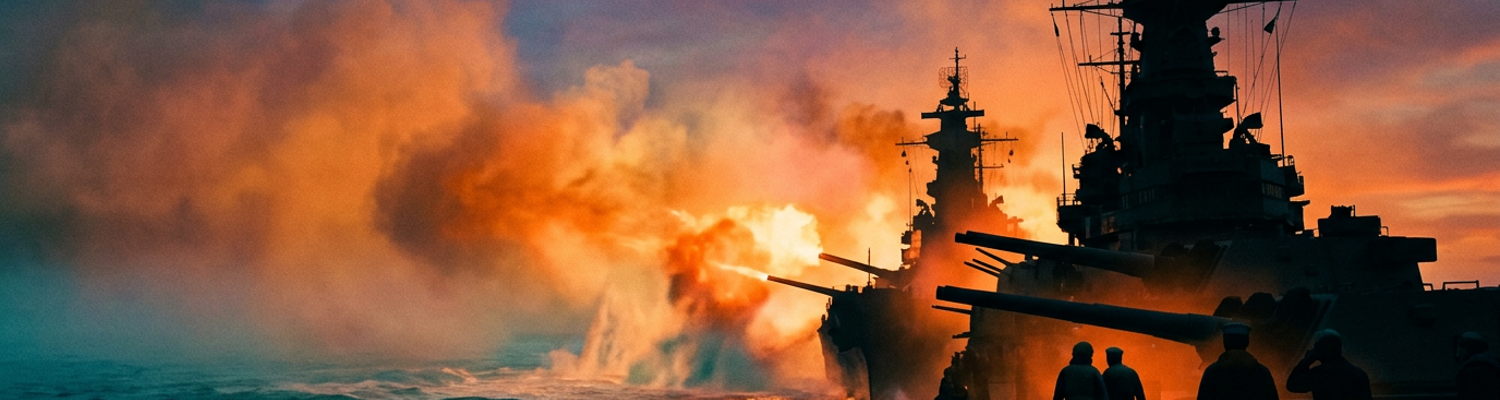
Exhaust poured from the subchaser stack as the captain abandoned sensor restoration attempts and pushed both throttles forward to steer directly into the storm squall. Lookouts on the open flying bridge tied heavy canvas straps around their waists to keep from being thrown overboard by thirty foot swells that swept over the bow. Down in the sick bay, the Pharmacist Mate wedged himself between the examination table and the steel bulkhead to secure a canvas stretcher. He gathered morphine syrettes and wooden splints for casualties that were sure to come from the dark water. Gunners loaded high explosive rounds into the open breech of the forward deck gun while seawater cascaded off their steel helmets into the churning wake. Searchlight operators swung their carbon arc lamps toward the black horizon, clicking the ignition switches to pierce the pouring rain with twenty four inch beams of white light.
Casualty Management in Wooden Subchaser Sick Bays
Searchlights swept across churning whitecaps topside with beams of white light as a massive sea broke over the forecastle, driving gallons of brine down the open hatchway into the forward compartment. Solo Pharmacist Mates managed medical crises in cramped forward compartments lacking dedicated surgical facilities, working alone under dim red battle lamps while the subchaser pitched through the storm. The ship lone corpsman dropped his roll of adhesive tape to catch a drenched lookout who tumbled down the steel companionway ladder after an iron rung broke loose in the driving rain. This crowded berthing space had no operating table, overhead surgical lamps, or running fresh water, forcing the medic to treat head lacerations and deep gashes directly on narrow canvas bunks. Cold seawater dripped continuously through caulked pine deck seams overhead, soaking bandages and medicine bottles stored in open wooden racks along the curved frames. The corpsman braced his back against the anchor chain pipe to remain upright, wiping diesel grime from the lookout bleeding forehead with gauze pads before binding the wound with cotton tape.
Gauze and cotton tape barely covered the sailor torn skin when a salvo of depth charges detonated close beneath the keel. The underwater blasts rattled the ship timbers with violent hydraulic force, sending shockwaves straight through the thin wooden hull. Violent deck pitching and close range depth charge blast waves inflicted concussive shock, internal trauma, and blast lung on patrol crews working near the stern racks and engine spaces. Deckhands carried two unconscious gunners down into the compartment, both coughing frothy blood as shockwaves from three hundred pound TNT charges ruptured their delicate pulmonary air sacs through the water. The Pharmacist Mate cleared thick fluid from their throats with a hand operated rubber suction tube, elevating their shoulders with rolled wool blankets to keep their airways open. Blast waves from the underwater detonations had also ruptured their eardrums, leaving both men disoriented, pale, and shivering from profound circulatory collapse. He grabbed two morphine syrettes from an emergency canvas satchel, broke the glass seals, and drove the needles into their upper thighs to stabilize their dropping blood pressure.
Morphine quieted the injured gunners and stabilized their blood pressure, but the subchaser rolled forty degrees into a breaking wave, snapping the hemp ropes that held a heavy metal toolbox against the engine room partition. Splinter lacerations and blunt force compound fractures resulted from unsecured gear and wooden hull flexing during heavy sea swells. Douglas fir hull planks groaned and twisted under the crushing torque of the ocean rollers, popping heavy iron fasteners and throwing jagged wooden splinters across the bilges into the legs of nearby machinists. The tumbling toolbox struck a motor machinist mate across the lower shin, crushing the bone and driving sharp tibial fragments straight through his dungaree trousers. Two sailors dragged the screaming machinist into the forward space, laying him across the damp linoleum deck while blood pooled around the exposed bone ends. The Pharmacist Mate applied a webbed tourniquet above the man knee, tightened the brass windlass to stop the arterial hemorrhage, and prepared wire splints to immobilize the shattered limb.
Wire splints bent into rigid U shapes to immobilize the shattered limb as the corpsman molded the metal mesh around the sailor broken leg. He secured the padding with strips of clean muslin and sprinkled sulfa powder generously over the open wound to ward off gangrene before wrapping the exposed bone in sterile petroleum gauze. The subchaser bucked violently against another steep wave, sloshing bloody bilge water across the deck plates and throwing the medic against the pipe bunk stanchions. Heavy shuddering from the twin diesel engines signaled that the bridge was making another high speed turn toward the sonar contact, threatening to tear loose the bunks holding the critical casualties. The Pharmacist Mate laced canvas restraining straps across the chests and legs of all four injured men, securing them tightly to the bunk frames so the next violent depth charge drop would not throw them to the deck. He wiped his bloody hands on a dry towel, snatched a spare first aid kit from the wall locker, and scrambled up the forward companionway ladder toward the storm swept deck to answer another urgent shout for medical help.
Nocturnal Combat Stress and Electrical Failures
Seawater cascaded down the open companionway hatch as the Pharmacist Mate answered the shout for medical help and pushed his way onto the weather deck. Three deckhands were pinning a groaning loader against the depth charge roller rack, struggling to keep the man from sliding overboard. The loader had dislocated his left shoulder when an ocean swell threw him against the steel framing, leaving him unable to release the safety fork on a three hundred pound canister. Heavy hands held the injured sailor steady against the wet deckhouse while the corpsman braced his boots on the pitching pine planks and popped the upper arm bone back into its socket with a firm, controlled pull. Before the injured deckhand could stand, another torrential sheet of wind driven rain smashed directly into the wheelhouse and forward superstructure. Water intrusion through forward bulkheads caused catastrophic short circuits across radar indicator consoles during sudden squalls. Saltwater poured through weeping rivet lines and loose cable gaskets, pooling behind the bridge displays until high voltage arcs popped the terminal blocks, killing the glowing green cathode ray sweeps and plunging the command space into total blackness. Thick electrical smoke drifted from the dead chassis into the driving rain, signaling that the vessel had lost its last electronic means of tracking the submarine.
Officers strapped heavy canvas telephone headsets over their rain covers to track the submarine by eye alone after the complete electronic contact loss. Bridge crews shouted rudder orders through breastplate microphones while signalmen leaned out over the spray shields to scan the frothing sea. Acoustic talkers stood drenched along the open bridge wings, passing manual bearings from the forward pelorus compasses down to the engine rooms through waterproof copper wiring that required no shipboard electricity. Strained eyes burned from hours of scouring the pitch black swells for white wake disturbances or dark diesel oil slicks under the relentless pelt of tropical rain. Muscle fatigue and freezing spray degraded the alertness of these exposed sailors, forcing the captain to rotate men every twenty minutes to prevent hypothermia from causing missed sightings. Desperate bridge officers ordered the forward gun crew to illuminate the surface with star shells to locate the U boat before the vessel lost all contact in the rain.
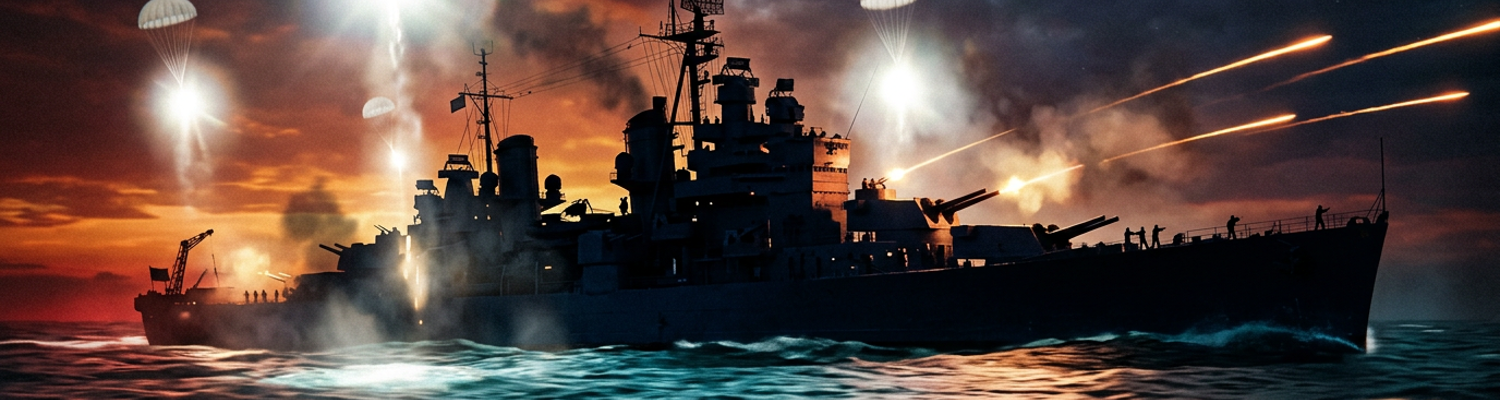
Gunners fired forty millimeter star shells into the heavy cloud base to illuminate the rain, bursting brilliant two million candlepower flares that bathed the surging waves in harsh, dead white radiance for forty seconds at a time. Magnesium parachute flares and deck gun discharges created extreme night blindness cycles that incapacitated exposed watchstanders. The forward deck gun slammed into battery moments later with deafening concussions, throwing orange muzzle flashes that singed the eyebrows of the loaders and burned purple afterimages into the retinas of the visual lookouts. Whenever the flares hissed out in the churning ocean, deep darkness slammed back down over the deck, rendering the lookouts completely blind for several minutes while their eyes struggled to adjust. Blinded bridge personnel stumbled against compass binnacles and lifeline cables, unable to tell wave crests from the horizon while the wooden ship rolled through forty degree troughs. The Pharmacist Mate guided two sightless, disoriented gunners by their elbows toward the companionway, bracing their wet boots against the rolling deck plates as the ship swung hard to port to begin another manual firing pass.
Manual Depth Charge Reconfiguration Under Fire
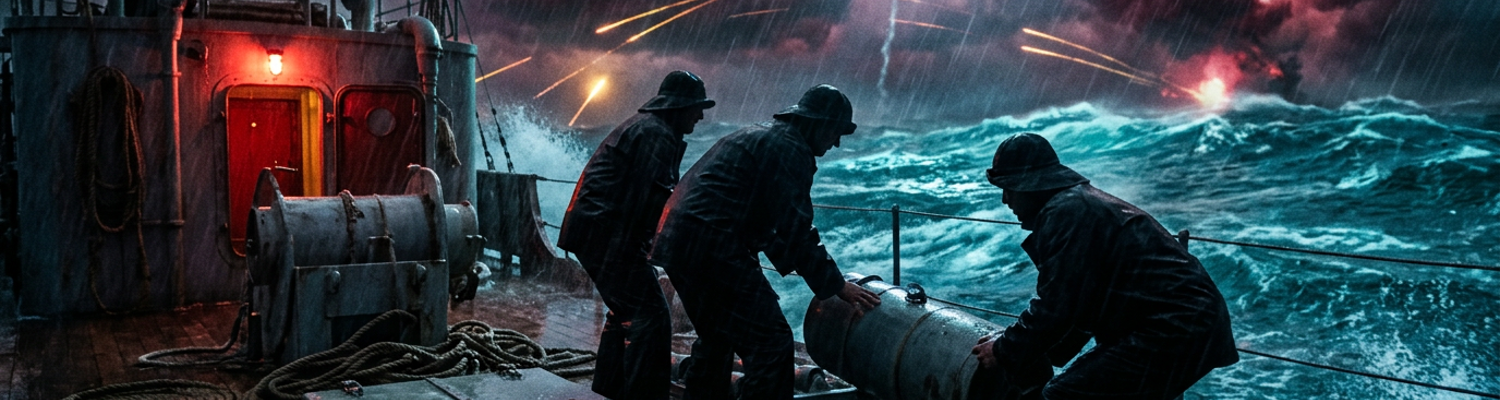
Deckhands cleared the weather deck of nonessential personnel to begin the manual firing pass, allowing the Pharmacist Mate to hand the blinded gunners down into the forward shelter. Iron ladder rungs caught the heels of the sailors, securing them below just as ocean swells broke clean over the stern racks. Deckhands manually reset mechanical depth charge dials under heavy seawater inundation on pitching stern racks, kneeling directly in the churning wash to fit bronze index keys into the recessed dials of the three hundred pound canisters. Freezing sea brine flooded over their shoulders with every downward heave of the subchaser, filling the dial recesses and threatening to rip the arming keys from their numb fingers. Working against the clock without interior lights, the loaders used tactile notches along the perimeter of the pistols to count clicks, dialing the detonation thresholds from one hundred feet down to fifty feet to catch the rising submarine before it slipped beneath the keel. Salt crust and abrasive sand jammed the bronze threads of the depth setting sleeves, forcing the men to hammer the adjustment wrenches with heavy lead mallets to turn the indicators into position. Each violent pitch of the hull lifted the men off their knees, leaving them clinging to the rack stanchions with one arm while their free hands secured the safety cotter pins against the rush of gray water.
Crews leaped across the slick pine planks through the rush of gray water toward the midship weapons mounts the moment the stern racks were pinned and secured. The deckhands adjusted stern K gun and Y gun projector spread patterns without radar fire control input using dead reckoning bearings. Loaders shouted estimated target ranges passed along by voice tube from the bridge pelorus to coordinate the firing angles. Black powder propellant charges slid into the heavy firing chambers of the K guns while loaders wrestled heavy fifty pound arbor spigots into the muzzle barrels, bracing their legs against forty degree rolls. Without working radar scopes to feed automated lead angles or distance markers, the gun captains calculated the spread geometry by hand. These gunners plotted the expected course of the U boat from stopwatch timings and the subchaser compass heading. Gun captains reset the black powder impulse charges on the Y gun projector cradles, angling the dual barrels outward to ensure the charges fell in a wide diamond pattern across the estimated track of the target. Ocean spray soaked the breech mechanisms, forcing the gunners to shield the primer caps with oilcloth covers until the bridge shouted the dead reckoning bearing through the sound powered phones.
Telephones relayed the attack order through the sound powered lines just as klaxon blasts tore through the driving rain to mark the start of the final run. This opened a critical five minute window that required simultaneous casualty evacuation from waterlogged compartments and manual depth charge deployment. Seawater swirled waist deep inside the forward crew space where cracked hull seams let in hundreds of gallons of ocean brine, threatening to drown the immobilized wounded on the lower bunks. The Pharmacist Mate waded through the murky bilge water belowdecks, cutting canvas lacing with his trauma shears to free the injured machinist and hauling him up the steep companionway ladder before the hull rolled under the next swell. Topside deckhands pulled the stretcher through the dripping hatch coaming with hemp lines, passing the groaning sailor across the fantail even as the first depth charge release levers clicked into the drop position. Medical personnel and weapons crews brushed shoulders on the narrow deck passage, with the corpsman applying direct pressure to fresh hemorrhage wounds while loaders shoved heavy explosive canisters into the drop chutes beside them. Straining sailors secured the last injured lookout to the mess table bulkhead just as the captain ordered the depth charge barrage released into the boiling wake.
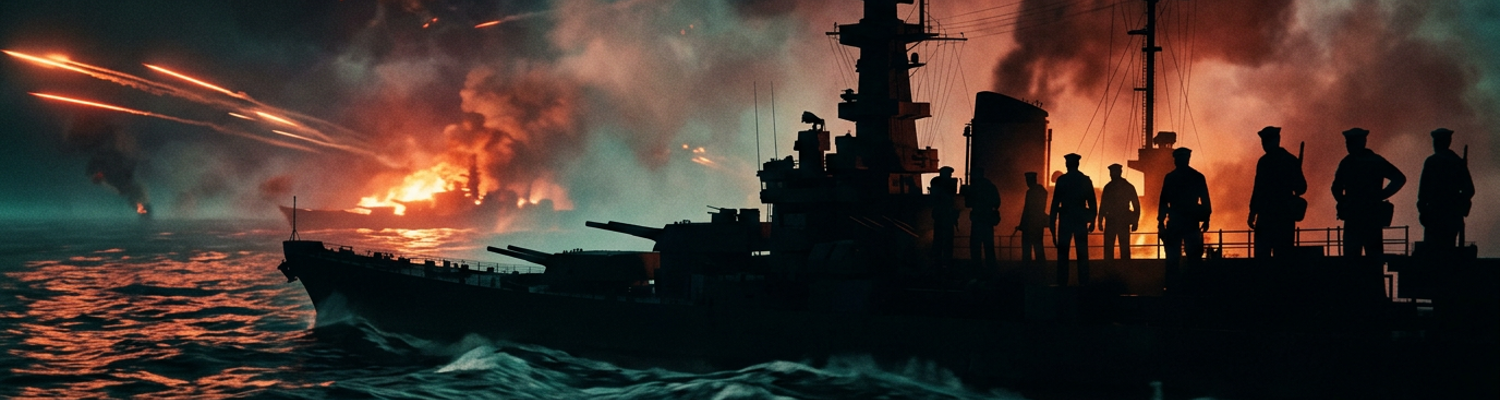
Hooks snapped open along the stern chutes to drop the charges into the boiling wake as deckhands knocked out the mechanical stop pins with iron pry bars. Heavy cylindrical canisters rolled off the fantail into the foaming black water, sinking rapidly toward their preset depths while the K guns fired their propellant charges with loud, muffled roars. Orange flash powder ignited in the projector breeches, hurling two explosive barrels high into the rain slick air on reciprocal arcs that splashed down three hundred feet off the port and starboard beams. Shockwaves erupted thirty seconds later, lifting the wooden stern of the subchaser out of the sea and throwing sheets of pulverized white spray across the entire length of the weather deck. The Pharmacist Mate braced his arms against the bulkheads of the medical space below to shield the splinted limbs of his patients from the violent shudder of the hull, listening for the distinctive metallic crunch of submarine plating tearing apart beneath the sea. Lookout crews leaned far over the bridge spray shields into the dark, scouring the rising plumes of foam for traces of diesel oil and shattered wooden decking to confirm the manual drop had struck the submarine.
Tactical Recovery and Localized Defensive Victory
Oil rose to the surface of the foaming swells, confirming the manual drop had struck the submarine and caused damage beneath the water. Desperate shouts from the forward lifeline interrupted the celebration, revealing that two forward lookouts had been swept overboard into the churning wake during the violent depth charge run. Subchaser deck crews immediately executed a manual recovery of the washed overboard forward lookouts amidst zero visibility squall conditions, leaning flat across the slippery gunwales and casting weighted heaving lines into the dark sea. Spotters on the bridge wing held hand held battery lanterns over the spray shield, catching the reflective tape on the lookouts life jackets whenever the men rose to the crest of a surge. Sailors hauled the waterlogged men up the wooden hull with knotted retrieval nets, wrestling their numb, oil soaked bodies over the sheer strake while thirty foot waves threatened to pitch the entire rescue party into the sea. Wind driven rain slashed across the open deck as deckhands dragged both semiconscious lookouts toward the companionway hatch, shouting for the medical rating to take charge of the drowning victims. Strong hands gripped the men by their sodden canvas life vests and lowered them foot by foot down the iron ladder rungs into the forward compartment.
Litters inside the forward compartment received the shivering, oil soaked lookouts as the Pharmacist Mate cleared vomit and seawater from their airways to restore their breathing. Immediate emergency triage and plasma administration stabilized critical concussive and fracture casualties prior to reaching San Juan, with the corpsman hanging dried plasma bottles from wire ceiling hooks while the wooden hull pitched violently against the heavy swells. Distilled water mixed rapidly with the dried amber flakes inside the rubber stoppered glass vacuum flasks, allowing the corpsman to assemble intravenous delivery lines without contaminating the sterile needles in the spray filled air. Rubber tubing carried the reconstituted amber fluid into the collapsed veins of the concussive loader and the sailors with severe compound fractures, restoring their failing blood pressure before circulatory shock could stop their hearts. Sterile bandages and rigid wooden splints held shattered arm and leg bones immobile against the severe twisting forces of the storm, preventing further internal hemorrhage as seawater continued to slosh across the sick bay deck plates. The Pharmacist Mate monitored the weak radial pulses of all six injured men by the glow of a red battle lantern, noting their steady stabilization as the twin diesels throttled into a sustained cruising rhythm.
Engines vibrated through the wooden hull frames as the twin diesels throttled into a sustained cruising rhythm, allowing the captain to turn the ship back onto the patrol line to shield the merchant convoy. The engagement demonstrated the tactical viability of wooden subchasers maintaining barrier defense despite complete sensor failure, proving that disciplined crews relying on visual dead reckoning and manual weapons delivery could hold the narrow channel against modern submarine attacks. Non magnetic timber construction prevented magnetic mines and torpedo detonators from triggering against the subchaser, while its shallow draft allowed the small warship to operate freely over shallow reef heads where heavier destroyers could not maneuver. Lookouts along the flying bridge reported no further acoustic returns or surface wakes, confirming that the manual depth charge spread had forced the damaged German U boat to break off its pursuit and submerge into deep water outside the Virgin Passage. Helmsmen held the rudder steady along the swept channel toward San Juan harbor, keeping the subchaser positioned between the trailing bauxite freighters and the deep oceanic trenches until relief escorts arrived on station.