
Monsoon Conditions in I Corps Tactical Zone
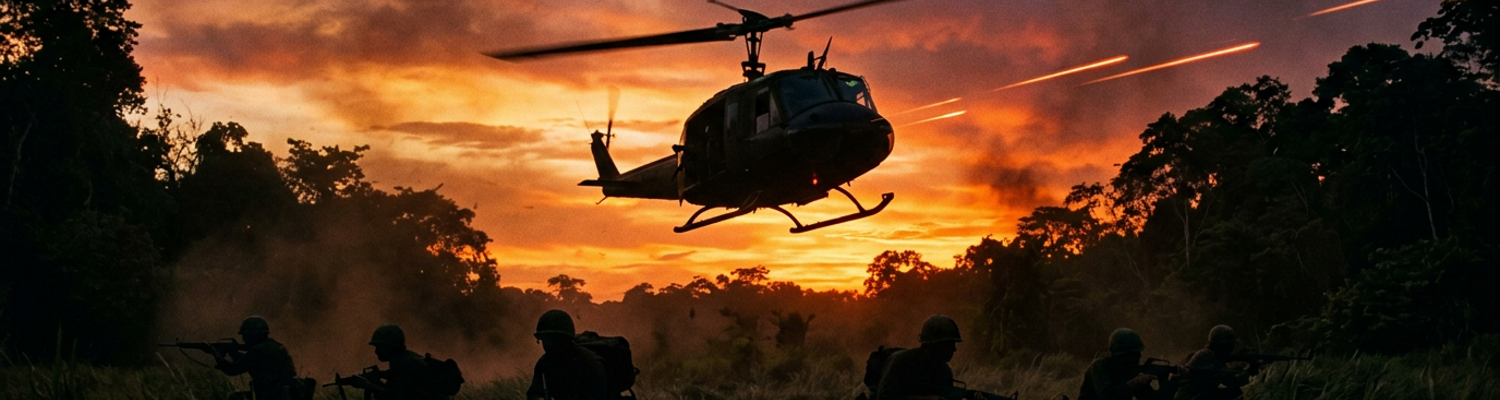
Mechanics scraped grit and muddy water from the rotor hub assemblies of Boeing Vertol CH-46 Sea Knight helicopters as red alert sirens wailed across the flight line at Dong Ha. Crew chiefs used soaked rags to dry moisture from electrical junction boxes, working rapidly under driving rain that penetrated their ponchos and numbed their bare fingers. Persistent northeast monsoon cloud ceilings dropped below two hundred feet across the I Corps Tactical Zone in January 1968, trapping freezing air against the jagged mountain ridges and turning dirt airstrips into deep tracts of thick red clay. Maintenance crews worked sixteen hours a day on saturated flight lines, battling sleep deprivation and wet equipment while medical evacuation crews strapped into their harnesses to answer urgent radio transmissions. Pilots switched on battery power and listened to forward observers describing wounded infantrymen trapped in muddy trenches under heavy mortar fire.
Infantrymen trapped in those trenches lacked overhead protection because the severe storm front neutralized strike aircraft. Torrential rains and dense ground fog grounded conventional close air support and severely degraded tactical visual flight rules across northern Quang Tri Province. This complete loss of fixed wing jet cover forced helicopter pilots of the 1st Marine Aircraft Wing to fly alone into hostile valleys without preparatory bomb strikes. Crews gripped the cyclic sticks with tense hands, fighting violent wind shear that repeatedly threw their aircraft toward hillside trees. Aviators endured intense physical strain as their eyes darted between flickering cockpit instruments and the opaque windshields, knowing that an altimeter error of fifty feet meant instant destruction. Helicopter pilots held their aircraft mere feet above swollen riverbeds, using the dark water below as their only visual reference point to navigate toward the coordinates.
Pilots followed the winding water until red smoke canisters ignited inside the perimeter of the remote infantry outposts. Navy hospital corpsmen slid open the cabin doors and braced against the rushing rotor wash, inhaling the smell of wet mud, burned powder, and decomposing brush. Wounded Marines lay shivering in waterlogged poncho liners on the cabin deck while corpsmen pressed gauze into open chest wounds and attempted to start intravenous fluids with cold, trembling hands. The continuous emergency flights eroded the resilience of flight crews who had flown missions without rest for thirty six hours. Continuous vibration, persistent dampness, and the agonizing screams of dying men left aircrews mentally exhausted and physically spent. Medical personnel wiped blood from their fingers and checked the remaining supplies of plasma as the helicopter lifted back up into the blinding cloud deck.
Instruments on the dashboard vibrated violently as the helicopter climbed through the turbulent fog toward the triage center at Phu Bai. Flight surgeons waiting at the landing pads observed pilots stumbling out of their cockpits with bloodshot eyes, their uniforms soaked in fuel, sweat, and rain. Operational commanders within the III Marine Amphibious Force faced mounting casualty reports while weather stations forecasted zero improvement in the monsoon front over the demilitarized zone. Aviation officers refused to ground the squadrons because dozens of isolated outposts remained surrounded and low on ammunition across the northern sector. Operations officers marked newly reported ambush positions on acetate covered tactical maps and handed the next flight manifests to exhausted crews who immediately returned to their waiting aircraft.
Radar Extractions via AN/TPQ-10 Guidance
Pilots jammed those paper manifests into their kneeboard clips as twin turbine engines spooled up to full power across the darkened parking revetments. Marine helicopter pilots relied on ground directed AN/TPQ-10 radar beacons to execute blind nighttime descent profiles into mountainous jungle terrain. Radar operators inside mobile control vans at base facilities tracked the transponder signals emitted from the helicopters, calculating precise glide slopes down between steep ridge lines. Aircrews surrendered direct control of their flight paths to these voices on the radio, locking their eyes onto gyroscopic artificial horizons while mountain walls loomed unseen only hundreds of feet off their rotor tips. The sheer mental strain of trusting audio headings while flying through turbulent cloud cover caused aviators to clench their teeth until jaw muscles locked in severe pain. Radar controllers watched flickering phosphorescent screens, calling out minute heading adjustments and descent rates in feet per minute to keep the heavily loaded aircraft clear of hidden granite outcroppings.
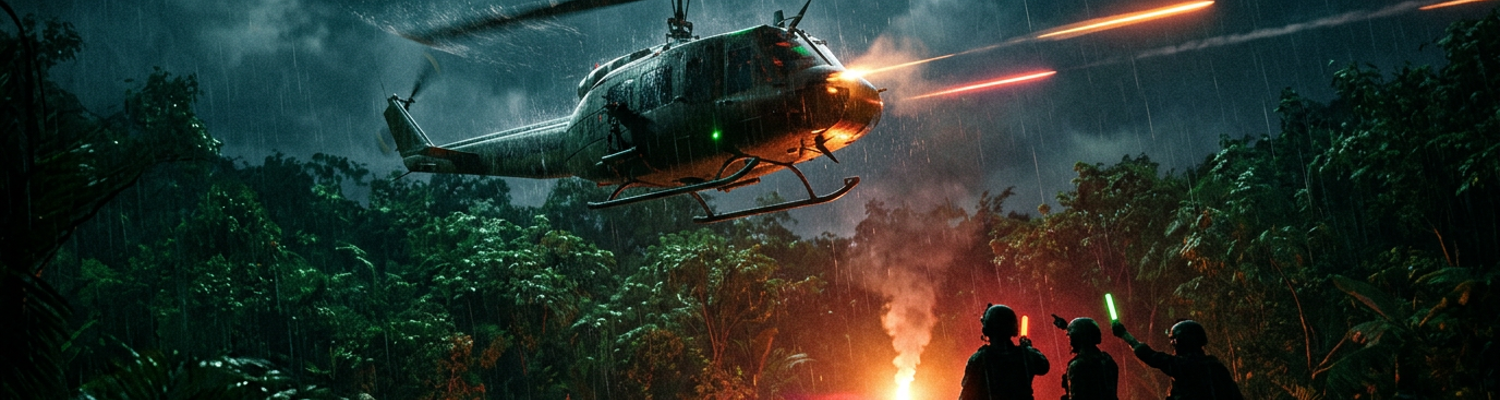
Altimeter needles unwound rapidly on instrument panels as pilots lowered their collective levers and dropped down into pitch black river gorges. CH-46A Sea Knight aircrews operated without external landing lights to evade visual acquisition and tracking by entrenched North Vietnamese Army antiaircraft gunners. North Vietnamese heavy machine gun crews held defensive positions along the commanding ridgelines, waiting to direct concentrated fire into any visible beam cutting through the rain. Pilots kept their instrument panel dials dimmed to faint green glows, forcing their tired eyes to strain against absolute darkness beyond the plexiglass windscreens. That deliberate blackout heightened sensory deprivation inside the cockpit, causing aviators to fight acute spatial disorientation while their inner ears falsely signaled that the aircraft was banking or climbing. Copilots called out airspeed and altitude checks through dry, cracking lips, knowing that flipping on an inspection light would invite immediate bursts of heavy caliber tracers.
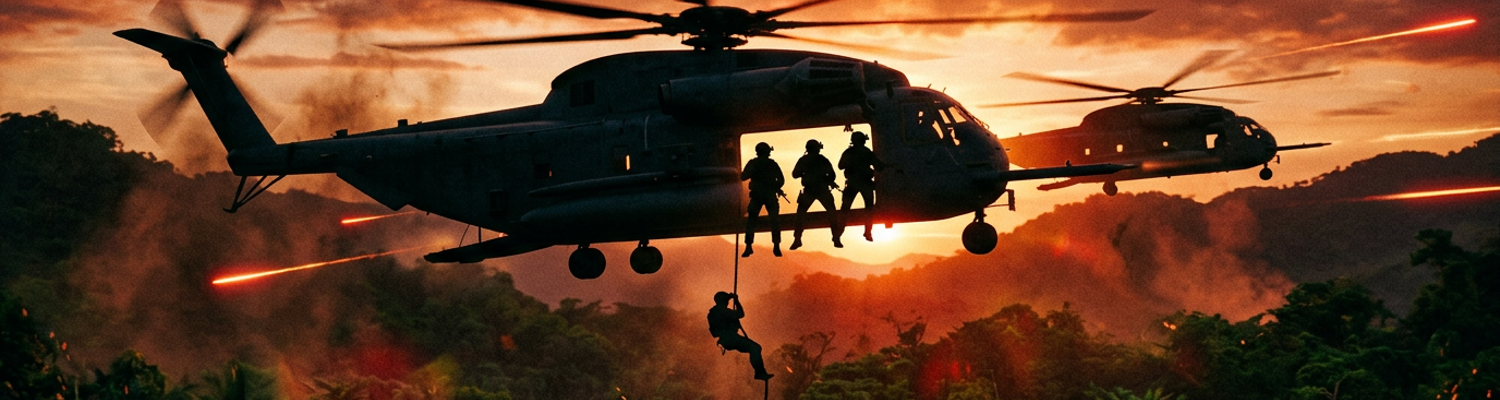
Radio transmissions from the radar shack guided the descending Sea Knights down to the final two hundred feet above the invisible tree canopy. Sweat stung the eyes of pilots who had not slept in two days, yet every muscle remained rigid as they leveled out by instrument reference alone. Crew chiefs leaned out of open cabin doors with safety harnesses pulled tight, searching the dark void below for the faint flicker of a hooded flashlight or the sudden scrape of bamboo against aluminum landing gear. Rotor blades chopped through low hanging fog and wet jungle foliage, sending vibrations straight through the airframe and shaking the control sticks in the pilots cramping fingers. The psychological pressure peaked at this hover stage, where a sudden downdraft or a miscalculated radar coordinate meant striking rotor blades against an unseen hillside. Forward infantrymen dragged litter patients through knee deep mud toward the hovering helicopter, their boots slipping on roots as rotor wash flattened the surrounding elephant grass.
Corpsmen hauled those mud caked stretchers across the wet ramp, stacking wounded Marines three deep onto cabin floor bulkheads. Crew chiefs slammed their hands against the cockpit bulkhead to signal that the cabin was packed to capacity, triggering an immediate upward pull on the collective stick. Engines reached maximum torque as the overloaded aircraft climbed vertically out of the jungle clearing, gaining altitude before hidden gunners could pinpoint the sound of the rotor blades. Pilots switched their communication radios back to the radar controller frequency, requesting immediate departure headings through the solid cloud deck. Radar operators acknowledged the transponder return, steering the climbing Sea Knight out of the valley and directing it toward the coastal hospital tents.
Reconnaissance Patrols and Psychological Attrition
Triage tents at Phu Bai received those arriving casualties while long range patrols from the 3rd Reconnaissance Battalion remained stranded on ridgelines surrounding Khe Sanh and the Demilitarized Zone due to zero visibility fog. Reconnaissance Marines lay shivering under soaked ponchos in shallow scrapes, listening to the thrum of helicopter engines fade into the heavy overcast. Days of unbroken cloud cover had prevented any transport aircraft from delivering fresh rations or dropping emergency supply bundles along the sharp rocky ridges. Water dripped relentlessly from the sodden canopy, soaking through field jackets and reducing body temperatures to the point of uncontrolled shivering. Team leaders wiped mud from their carbine receivers, watching dark silhouettes move through the bamboo downhill.
People's Army of Vietnam regiments maneuvered through the wet bamboo ravines below the ridgelines, establishing mortar positions around the isolated observation posts. Cut off reconnaissance teams rationed medical morphine and conserved failing PRC-25 radio batteries while surrounded by maneuvering enemy infantry. Radio operators kept the power switches turned off for fifty five minutes out of every hour, holding the cold zinc carbon dry cells against their bare skin to warm them enough to transmit a single brief message. Navy corpsmen in the muddy perimeter scrapes measured remaining syrettes of painkiller down to fractions of a cubic centimeter, withholding full doses from shrapnel victims because no resupply flights could penetrate the clouds. Wounded Marines bit down hard on rolled cotton bandages to stifle involuntary groans, knowing that any human sound would draw immediate automatic weapons fire. Team leaders whispered grid coordinates into the rubber handsets, detailing enemy column movements before switching off the power switches.
Radio receivers at Khe Sanh picked up those whispered coordinates, but air controllers had no way to guide relief aircraft through the dense cloud ceiling. Pinned reconnaissance teams endured severe sensory overload and intense panic as constant darkness and silence shattered their ability to distinguish false sounds from actual enemy footsteps. Combat fatigue triggered waking hallucinations among the exhausted riflemen, transforming swaying tree trunks and dripping ferns into hostile assault squads. Sergeants crawled continuously between positions, shaking the shoulders of their men to prevent them from slipping into numb stupors on the muddy ground. Cold rainwater filled the fighting scrapes up to the knees of the trapped Marines, causing feet to swell painfully inside rotting leather combat boots. Patrol leaders crawled between the shallow fighting holes to steady their men, checking rifle chambers with bare fingers in the pitch black.
Riflemen gripped their cold handguards in the dark, bracing for close quarters fighting as enemy probing elements pushed within hand grenade distance of the perimeter. Psychological strain crested when radio operators gave two faint clicks with their switches and signaled that the last battery pack had lost all operational voltage. Cut off Marines drew their combat knives and wrapped electrical tape around grenade pull rings, preparing to defend their foxholes without the hope of an extraction flight. Squad leaders assigned final sectors of fire, pointing rifle muzzles toward the narrow ridgeline trails where approaching footfalls snapped wet bamboo stalks. Point men unclipped safety pins from claymore mine firing handles, anchoring their thumbs against the triggers as footsteps halted just ten feet outside their visual perimeter.
Trauma Surges at Forward Medical Facilities
Shrapnel victims from those perimeter clashes flooded the landing zones as casualty collection points and medical holding companies at Dong Ha, Phu Bai, and Khe Sanh reached severe capacity crises under round the clock medevac arrivals. Flight deck crews unloaded five or six wounded Marines from each incoming helicopter, stacking stretchers on wooden pallets alongside muddy runways because indoor bunker space had completely run out. Stretcher bearers carried litters directly into canvas triage tents where the smells of damp canvas, diesel exhaust, and fresh blood hung thick in the cold air. Tents originally built to shelter thirty patients held more than eighty men, forcing hospital corpsmen to lay severe trauma cases directly on plastic ponchos spread over the dirt ground. Rain dripped through torn canvas seams onto surgical dressing trays while orderlies sorted patients by the severity of their wounds, prioritizing chest wounds and arterial bleeding over broken limbs and concussions.
Navy corpsmen and triage doctors worked continuous multiday shifts managing penetrating blast trauma and shock while forward bases absorbed hostile artillery fire. Surgical teams at Dong Ha and Khe Sanh stood over wooden operating tables for forty eight hours without relief, cutting away shredded combat utilities with heavy shears to reach deep fragmentation wounds. Hostile 122 millimeter rockets and 152 millimeter artillery shells exploded across the defensive perimeters, throwing fine dirt across sterile surgical fields and vibrating surgical instruments in the doctors hands. Medical officers applied metal hemostats to severed blood vessels while listening to the whistle of incoming ordnance, refusing to step away from open abdominal wounds to take cover inside sandbagged revetments. Corpsmen hung clear plastic bags of normal saline and albumin from tent support ropes, pumping fluid into collapsed veins to counter traumatic shock before blood pressure vanished entirely.
Plastic intravenous tubing repeatedly clogged with clotting blood and dirt, forcing technicians to insert fresh large bore needles into femoral veins by flashlight. Surgical teams ran critically low on surgical sponges, sterile gloves, and plasma expanders as persistent transport backlogs delayed cargo flights across the Demilitarized Zone. Exhaustion broke down the emotional defenses of the medical staff, causing experienced corpsmen to weep quietly while wrapping chest wounds or cleaning gray brain tissue from compound skull fractures. Surgeons suffered uncontrollable muscle tremors in their hands from continuous lack of sleep, pausing every few minutes to plunge their rubber gloved fingers into buckets of cold water to restore basic sensation. Shock wards echoed with the delirium of dying young riflemen who called out for water or begged for blankets to stop violent shivering caused by hypothermia and severe blood loss.
Orderlies packed wet gauze against bleeding chest cavities and loaded stabilized patients back onto aluminum stretchers for secondary evacuation toward naval hospital ships offshore. Ground crews pushed those stretchers through thick mud back toward waiting Sea Knight ramps as incoming mortar rounds showered the flight line with red dirt. Crew chiefs grabbed the metal litter handles and slid the wounded into cabin mounting racks while pilots kept engines turning at high idle to prevent turbine flameouts. Air controllers cleared the loaded helicopters for immediate departure into the foggy sky, while doctors in the aid stations wiped bloody scalpels and reached for the next stretcher waiting at the bunker door.
Aircrew Fatigue During Night Medevac Operations
Marine pilots lifted their heavily laden Sea Knights back into the wet darkness, banking away from the artillery perimeters without clearing their heads from the preceding run. Sustained high tempo night instrument sorties through low altitude hostile fire nets induced chronic sensory overload and acute sleep deprivation among aviators. Flying by instrument dials alone under dim red cockpit lighting forced pilots to concentrate continuously on tiny needles while North Vietnamese heavy machine gun tracers flashed through the clouds around the cockpit glass. Constant radar warning tones, engine vibration, and rapid radio chatter battered their hearing for ten to twelve hours at a stretch without relief. Flight crews survived on strong black coffee and amphetamine tablets handed out by squadron medical officers, but chemical stimulants could not stop their eyelids from drooping or prevent spatial disorientation in the churning fog. Copilots repeatedly shook the flight controls to startle lead pilots awake whenever an aircraft began drifting off assigned altitudes toward hidden hillside canopies.
Tree branches and jungle foliage whipped the sponsons and lower fuselage plates during near misses, leaving aircrews in a state of continuous nervous tension. Relentless exposure to mass casualties and unforgiving zero visibility flight risks pushed Marine helicopter crews past the threshold of psychological and physical exhaustion. Cabin crew chiefs and aerial gunners stood in pools of slick blood and aviation kerosene for hours, wrapping emergency pressure bandages on dying riflemen while simultaneously firing side mounted machine guns into darkened jungle clearings. Crewmen swallowed back bile and vomit caused by the stench of burning flesh and opened body cavities inside the unpressurized, overheated cargo holds. Repetitive trauma eroded basic emotional resilience, leaving young crew chiefs staring blankly at cargo compartment bulkheads during return flights, unable to speak over the intercom.
Flight surgeons boarded the returned helicopters at Phu Bai and Dong Ha to pull catatonic crewmen out of their armored seats by their nylon survival vests. Medical officers noted involuntary eye twitches, severe hand tremors, and sudden weeping fits among pilots who had logged dozens of consecutive night instrument runs into hot zones. Aviators sat slouched on wooden crates inside ready room revetments, drinking cold water with shaking hands and staring at floorboards without acknowledging incoming briefing officers. Standard Marine Corps flight hour regulations broke down completely under the demands of the tactical emergency, forcing squadron leaders to send visibly shaken crews back to their aircraft after only fifteen minutes of ground rest. Crew chiefs used garden hoses to wash dark blood, spent brass casings, and torn surgical packaging out the open rear cargo ramps before reloading fresh ammunition cans and stretchers for the next run.
Ammunition cans slammed into cabin tie down brackets as crewmen wiped wet red mud from their eyes and pulled their flight helmets back down over their ears. Pilots buckled four point shoulder harnesses over salt stained flight suits, their minds dulled by seventy two hours of broken sleep and uninterrupted sensory bombardment. Throttle grips rotated forward to flight idle, spinning the tandem rotors through the heavy rainfall while tactical air controllers broadcast fresh coordinates for another overrun infantry company. Sea Knight aircrews lifted off from the fuel revetments into the low cloud ceiling, guiding their vibrating machines back toward the flash of mortar detonations along the demilitarized zone.