
Sudden Foundering in Two Tree Channel
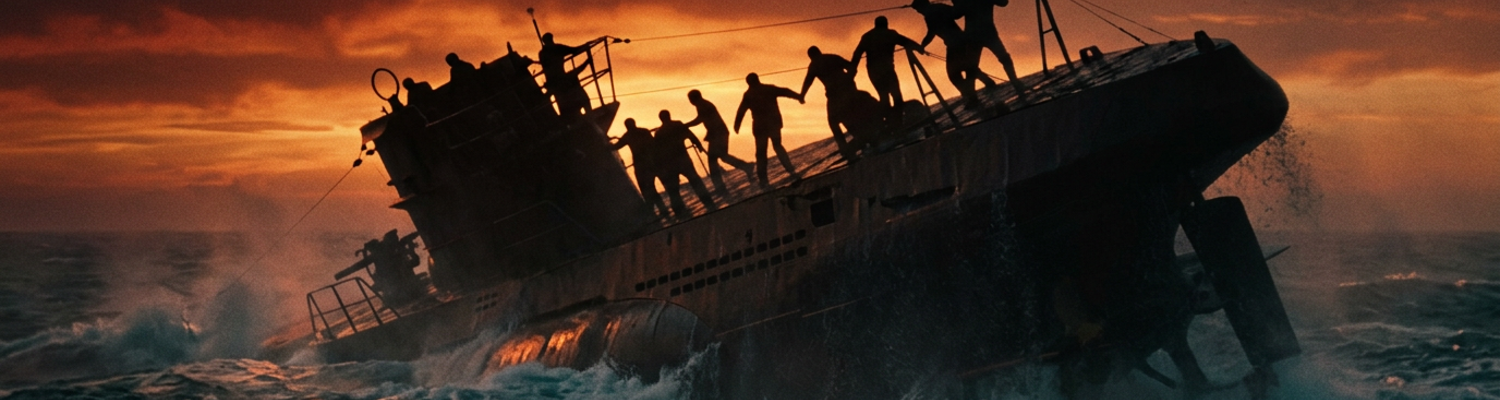
Lookouts stationed on the standby tender watched treacherous rip currents and sharp shoals buffet the decommissioned submarine USS G-2 as she swung at anchor in Two Tree Channel near Niantic Bay on July 30, 1919. Unforgiving tidal streams through this rocky sound pounded against the aging hull plates, testing a boat that naval bureaucracy had stripped of her operational crew and reassigned as a stationary target platform for acoustic detection gear and depth charge trials. Coastal radio operators and deck officers on the nearby tender kept binoculars trained on the submarine, observing six inspection crewmen who walked her narrow iron superstructure to check moorings and bilge levels. Years of deferred postwar maintenance and wartime wear had severely compromised the internal valves of the vessel, leaving her with razor thin buoyancy margins against the churning coastal seas. Standby tender lookouts shouted the alarm when the stern suddenly settled into the chop and the bow pitched steeply into the air.
Saltwater surged through open deck fittings and unsealed exhaust valves the instant the submarine angled backward into the oncoming swell. Gravity tore the six crewmen from their feet inside the dark hull as the deck angle tilted past thirty degrees, throwing men and loose tools violently against the after bulkheads and exposed machinery. Standby tender officers shouted frantic damage control orders across the channel through megaphones, but the powerless target craft possessed no operational ballast pumps to counter the sudden inrush. Rapid saltwater flooding dragged the vessel to the seabed under eighty one feet of water within minutes. Pressurized air blew the main hatch wide as the hull slipped beneath the waves, catapulting three sailors into the foaming suction while trapping three of their shipmates inside the flooded interior.
Motor launches from the tender and the cutter USCG Acushnet raced across the churned water toward the bubbling oil slick to pull the three surfacing survivors from the sound. Rescuers hauled the gagging men over the wooden gunwales, finding them shivering violently, coated in black bunker oil, and bleeding from blunt force impacts suffered during their desperate climb up the escape ladder. Standby corpsmen aboard the cutter immediately began emergency triage on the rolling deck, cutting away freezing clothes, splinting fractures, and wrapping the hypothermic sailors in heavy wool blankets. Medical officers forced warm stimulants into the injured men and pumped sea brine from their lungs while listening to their disjointed reports about the three sailors still sealed within the sunken compartments. Salvage officers on the cutter used these eyewitness accounts to pinpoint where the hull had struck bottom and determine whether any air pockets remained in the forward torpedo room.
Tenders and patrol craft quickly established a perimeter around the coordinates, dropping weighted lead lines to gauge the seabed and secure the disaster site against incoming coastal traffic. Heavy current ripped past the submerged hull on the channel floor, churning mud into the water column and blinding the support vessels that circled above the dying air bubbles. Diving crews aboard the support ships connected high pressure air hoses and staged deep sea copper diving helmets on the deck planks, preparing to send salvage divers into the cold bottom currents. Mechanics checked manifold pressures on the portable salvage compressors, hoping to force air into the ballast tanks and lift the iron hull before the channel tides shifted again. Naval commanders dispatched emergency telegraphs to the submarine base at New London, requesting heavy floating derricks and specialized wreck clearing equipment to begin salvage operations at dawn.
Lifeboat Rescue by USCG Acushnet
Crewmen aboard the cutter USCG Acushnet launched emergency recovery boats to pull three topside survivors from the churning water as naval telegraphers transmitted the urgent requests for heavy salvage gear. Oarsmen dropped their heavy sweeps into the rowlocks and pulled against the swift tidal race sweeping through Two Tree Channel, steering their wooden lifeboats toward the widening sheen of fuel oil and escaping air bubbles that marked the plunge. Lookouts in the bows scanned the turbulent chop and spotted the three swimming crewmen fighting to keep their faces above the waves, their strokes faltering under the weight of waterlogged clothes and severe exhaustion. Rescuers leaned over the wooden gunwales with outstretched hands and brass boat hooks, catching the gasping men by their collars and dragging them upward against the drag of the receding swell. Sailors hauled the three survivors across the oak washboards into the bottom of the craft, laying them between the thwarts while the coxswains turned the boats back toward the rolling steel side of the cutter. Deckhands lining the railing tossed down heaving lines, lowered cargo nets, and rigged heavy canvas hoist slings to lift the battered men up to the main deck.
Canvas slings deposited the shivering men onto the wet timber planks where rescued sailors underwent emergency medical triage for hypothermia and trauma. Corpsmen immediately went to work with heavy shears, cutting away cold, petroleum soaked dungarees to inspect deep purple contusions and torn flesh sustained when the submarine tilted thirty degrees and hurled men into exposed iron machinery. Medics wrapped each sailor in multiple layers of dry wool blankets and applied hot water bottles to their bodies, combating the violent tremors and sudden drop in core body temperature brought on by the cold ocean currents. Stretcher bearers cleaned stinging diesel oil from the eyes of the men, set a splint on a fractured forearm, and pressed sterile gauze pads against deep scalp lacerations to stem persistent bleeding. Pharmacist mates forced warm broth, black coffee, and medicinal stimulants down the throats of the coughing survivors to clear swallowed brine from their lungs and steady their collapsing blood pressure. Physicians checked breathing rates and kept the dazed men talking to prevent them from slipping into unconsciousness, creating a brief window for listening deck officers to collect vital operational information about the disaster.
Officers bent over the stretchers to record the broken statements as eyewitness accounts from survivors confirmed that the stern had filled catastrophically without warning. Survivors stated that no internal alarms had sounded and no escaping high pressure air had warned of failing valves before tons of seawater burst into the after compartments with sudden, crushing weight. Crewmen explained that the massive downward pull had developed so quickly that the three inspection crewmen working in the after spaces had no physical route of escape toward the conning tower ladder. Rescued watchstanders described how the steep deck angle threw their trapped shipmates backward into the dark interior as the sea engulfed the engine room, sealing their fate before anyone could dog down a watertight door or reach a hand pump. Coast Guard officers gathered these initial statements to map the exact orientation of the wreck on the seabed, relaying the tactical details to salvage teams preparing diving gear for the morning operation. Command personnel transcribed the survivor testimony into the ship logbook, establishing the precise timeline of the flooding and verifying that any chance of life aboard the sunken hull had ended within seconds of the plunge.
Claustrophobic Entombment in the Flooding Hull
Seawater sealed off every escape route the moment the stern struck bottom in Two Tree Channel. A six man maintenance and inspection party was caught inside the narrow hull as the boat foundered. Naval mechanics and ratings had entered the decommissioned vessel without breathing gear to check bilges, hull valves, and structural seams across compartments that measured less than thirteen feet in diameter. Gravity hurled the inspection party backward when the hull pitched thirty degrees into the sea, throwing men against exposed copper switchboards, sharp angle irons, and unshielded piping. Unsecured lead batteries, loose cast iron wrenches, and heavy steel deck gratings tore free from their mountings, crashing aft through the corridor and battering the crewmen as they scrambled on hands and knees toward the vertical escape ladder. Cascading water instantly short circuited the primitive electrical distribution boards, blowing out the interior filament bulbs and plunging the narrow iron corridor into total darkness.
Bulkheads vibrated under immense hydrodynamic pressure as the incoming sea surged through the blacked out hull. Violent inrushes of cold brine jammed internal hatch doors, defeating all damage control attempts. Crewmen grabbed for drop bolts and steel dogging levers in the foaming dark, but the high velocity torrent wedged the heavy iron swinging doors crookedly against their bronze frame sills. Flooded bilges disgorged wooden duckboards, empty toolboxes, and greasy cotton waste directly into the openings, wedging tightly between the steel door edges and preventing any watertight seal. Freezing ocean water surged from the floorplates to the overhead within seconds, knocking sailors off their feet and leaving only tiny, suffocating pockets of compressed air along the ceiling rivets. Struggling watchstanders gagged on a stinging mixture of aerosolized brine and floating diesel fuel as the churning tide surged past the internal companionways.
Companionway passages filled completely to the iron overhead, severing all communication between the forward compartments and the after machinery spaces. Three sailors, Arnold Gilmer Henderson, Doyle Kervin, and Sidney Don Uhlik, drowned when cascading seawater sealed the companionways. These three doomed shipmates remained trapped in the after section without escape trunks, submarine rescue lungs, or any mechanical means of pumping out the dead weight of the sea. Trapped sailors hammered desperately against the solid iron hull plating with hand tools until the rising brine filled the final inch of overhead space and snuffed out all remaining air. Internal air pressure rapidly equalized with the ocean depth outside, blowing out gaskets and silencing the frantic metallic tapping from within the drowned vessel. Hydrostatic pressure of nearly forty pounds per square inch held the iron hull firmly against the rocky bottom of the channel, sealing the three dead men inside the flooded stern compartment.
Divers from the naval salvage tugs reached the sunken hull several hours later to assess the physical state of the drowned compartments. Lead weighted copper diving boots clomped along the slimy topside plating as tenders above monitored air hose pressures against the swift tidal race of Two Tree Channel. Deep sea divers peered through brass ringed viewports and found the main conning tower hatch blown wide open, with torn deck gear and tangled mooring wire fouling the access trunk. Heavy iron salvage slings and wire hawsers were lowered from the surface derrick barges to rig lifting bridles around the flooded bow and stern sections. Salvage officers directed the work boats to drive high pressure air hoses into external salvage valves, attempting to pump compressed air into the forward tanks to displace the trapped brine. Naval commanders suspended diving operations as the evening tide accelerated across the channel, securing the hoist cables to surface buoys until heavy lifting cranes could arrive from the New London base.
Simon Lake Hull Design Flaws
Engineers at the New London submarine base unrolled the original construction schematics of the sunken hull to determine lifting points before the derrick barges steamed into the channel. The vessel was constructed by the Lake Torpedo Boat Company with idiosyncratic ballast and piping arrangements that confused naval mechanics throughout her service career. Simon Lake had designed the submarine around an even keel diving philosophy, rejecting the steep dive angles favored by rival builders in favor of large horizontal planes and complex internal plumbing networks. This eccentric layout routed dozens of high pressure flood lines, vent pipes, and equalization tubes through cramped lower deck spaces where sailors could barely squeeze past with pipe wrenches. Cross connected sea chests and non standard auxiliary tanks created dangerous dead spaces where trapped air or hidden water pockets could easily evade standard sounding rods. Yard workers at the submarine base had repeatedly struggled to trace these tangled pipe runs during refits, leaving maintenance logs filled with warnings about the erratic flooding behavior of the vessel.
Bronze valve disks inside those tangled piping runs deteriorated rapidly, creating a mechanical weak link that threatened the boat on every deployment. Submarines built to this design suffered from chronic hull valve seating failures that prevented dependable sealing under sea pressure. Machinists regularly reported that grit, saltwater corrosion, and structural hull flexing distorted the bronze valve faces, stopping them from settling true into their cast iron housings. Handwheel gearing on the kingston flood valves often stripped under heavy manual force, leading watchstanders to believe a line was locked tight when the disk remained propped open by a fraction of an inch. Cold brine seeped steadily through these tiny gaps beneath the floorplates, filling the bottom tanks without triggering any splashing sounds or visual warnings inside the living spaces. Mechanics assigned to the decommissioned platform lacked the overhaul parts needed to remachine the warped valve seats, allowing the hidden leakage to pool continuously inside the after hull.
Seawater pooling in the after compartments swiftly overwhelmed the narrow stability margins of the hull geometry. Longitudinal stability deficiencies made the design unusually vulnerable to uncommanded stern trim while at anchor. Simon Lake had shaped the hull with slab sided buoyancy tanks and a flat superstructure that lacked the reserve buoyancy needed to resist sudden pitch changes when dead weight shifted between compartments. Each gallon of brine that entered the stern shifted the center of gravity rearward, pulling the exhaust manifolds and propeller shaft packings closer to the sea surface. Slack water in partially filled ballast tanks then surged aft in an uncontrollable rush, destroying what little righting arm remained and dragging the stern down faster than any gravity tank could vent. Mooring chains and anchor lines pulled taut against the bow, pivoting the boat downward and forcing the open after hatches beneath the chop.
Technicians on the salvage fleet calculated that pumping compressed air into the compromised piping might rupture the weakened ballast bulkheads instead of lifting the iron hull. Crews aboard the support tugs abandoned their initial plan to blow the tanks and began rigging external wire slings capable of supporting the dead weight of the waterlogged stern. Workmen loaded heavy timber cradles, steam winches, and steel spreader beams onto the derrick barges at New London to prepare for a direct mechanical hoist off the seabed. Divers on the tender prepared extra lead weights for their boots, knowing they would have to slip heavy lifting bridles under the buried hull in strong bottom currents. Riggers secured high tensile steel cables to the surface marker buoys in Two Tree Channel, marking the exact lift points across the sunken submarine before the midnight tide turned.
Postwar Naval Demobilization Shortfalls
Steel cables strained against the marker buoys as salvage officers traced the physical collapse of the boat back to the hollowed out workshops of the New London submarine base. Rapid demobilization following World War I depleted naval repair facilities of veteran submarine technicians within months of the Armistice. Thousands of experienced machinists, pipefitters, and electricians took their discharges to claim high paying jobs in private shipyards, depleting the maintenance crews that understood the complex systems of early submersibles. Inexperienced apprentice ratings and skeleton harbor crews inherited the complex responsibility of servicing non standard designs without proper technical manuals or senior supervision. Supply clerks struggled to source obsolete replacement valves, and machine shops lacked the skilled lathe operators required to mill new bronze valve seats for aging hulls. Shop supervisors routinely cancelled planned overhauls on older submarines, leaving defective piping manifolds and worn hull packings unchecked so remaining yard workers could service active fleet boats.
Submersibles decommissioned during the postwar drawdown were subjected to deferred maintenance and reduced custodial monitoring as base resources shifted away from older hulls. Caretaker details visited USS G-2 only periodically to take sounding measurements of the bilges with wooden dipsticks, rarely opening sea valves or testing the manual bilge pumps under pressure. Mooring lines held the boat against quiet wooden docks where rainwater pooled in her exterior superstructure and saltwater seeped through ungreased propeller shaft packings. Mechanics failed to lubricate the corroded linkages of the kingston flood valves, allowing salt encrustation to lock the internal disks just millimeters above their cast iron seats. Storage batteries inside the dark hull steadily leaked sulfuric acid mist across unpainted steel floorplates, corroding the underlying frame rivets without anyone recording the structural damage in the ship logbook. Base commanders ultimately struck the deteriorating vessel from active service and ordered her towed into Long Island Sound as an inert, floating target for testing acoustic detection gear and depth bombs.
Sailors assigned to inspection watches were placed aboard unmanned test platforms without dedicated surface tethered safety gear. Maintenance ratings stepped down the narrow access hatch without lifelines, safety harnesses, or independent breathing sets. No emergency signal lines linked these maintenance ratings to the standby tender, and no surface air hoses followed them down into the unventilated interior. The six crewmen moved through the narrow compartments to check anchor hawse pipes, read tank level gauges, and inspect dry bilges while the boat rocked in the swift tidal rip. Naval regulations of the era did not require attendant safety boats to remain lashed alongside inactive target hulls during routine inspections, leaving the tender anchored dozens of yards away across open water. Dense diesel fumes and stagnant air lingered in the after machinery spaces, forcing the men to keep the main deck hatches propped open on iron hooks to allow natural air circulation. This open hatch procedure provided vital ventilation for the working party, but it simultaneously eliminated the only barrier against catastrophic surface swamping.
Officers aboard the standby tender monitored the anchored target from a distant bridge wing, relying entirely on binoculars because no telephone cables connected the two vessels. Demobilization cutbacks had eliminated dedicated harbor communications gear, leaving the inspection party inside the submarine unable to radio for assistance when unseen leaks began altering her stern trim. Tidal currents running through Two Tree Channel shoved tons of moving water against the settling stern plates, rapidly pushing the open after hatch closer to the waterline. Lookouts on the tender saw no distress flares or emergency hand signals from the iron deck until the sea crested the coaming and poured directly into the engine room. Deck officers shouted orders to scramble rescue boats only as the bow rose steeply out of the foam and her flooded stern struck the rocky channel floor eighty one feet below.
Ordnance Shock in Depth Charge Testing
Steel hull plates resting on that eighty one foot seabed bore the hidden structural trauma of ordnance tests that began when the Navy decommissioned USS G-2 on April 2, 1919. Ordnance officers at the submarine base wanted practical data on how close an underwater detonation needed to be to shatter an enemy pressure hull. Tugs towed the stripped submersible into Niantic Bay and anchored her over the silt flats, rigging explosive canisters on weighted suspension lines at varying depths around the hull. Surface crews detonated heavy canisters of trinitrotoluene in calibrated stages, throwing huge plumes of spray into the air and shaking the surrounding seabed. Test observers watched the surface after each blast, looking for sudden listings or trails of escaping fuel that would signal immediate catastrophic failure. The submarine remained upright and afloat through the initial rounds of firing, leading experimenters to assume that the riveted iron framing was absorbing the concussions without fatal damage.
Blast pressure from successive underwater detonations exerted severe hydrodynamic shock on aging hull seams, packing glands, and valves. Hydrodynamic concussion waves hammered against the steel skin, flexing the riveted plates and stretching the fastening pins inside their drilled holes. Flax packing inside the stern shaft glands compressed and shredded under the sudden hydrostatic pulses, loosening the mechanical seals that kept sea pressure from penetrating the propeller shafts. Bronze valve disks warped inside their cast iron casings, pulling away from their machined seating rings and permitting steady trickles of brine to seep into the bilge manifolds. Structural stringers and angle irons inside the after compartments groaned under the repeated concussions, shearing rivets and opening tiny seams along the lower hull strakes. Saltwater crept past these displaced seals drop by drop, pooling silently under the deck plates without creating visible disturbances on the surface.
Officers supervising the firing runs failed to detect this hidden flooding because naval experimenters lacked continuous monitoring protocols to gauge cumulative structural trauma between blasts. Crews on the attendant tenders never boarded the target hull between individual detonations to inspect valve manifolds, measure bilge depths, or check frame rivets for hairline fractures. Experimenters treated the decommissioned boat as disposable ordnance property, recording only external displacement and surface trim before signaling the next boat to drop charges. Civilian contractors and naval evaluators possessed no ultrasonic sensors, stress gauges, or remote monitoring lines to calculate the weakening metal fatigue building within the hull framing. Sounding rods were rarely dropped into the lower bilges, leaving the slow accumulation of bilge water entirely unmeasured as successive blasts loosened additional hull fittings. The test protocol merely required that the submarine survive each blast program long enough to provide acoustic data, ignoring the long term structural integrity of her inner pressure hull.
Tugs towed the weakened boat directly from the Niantic Bay blast area into Two Tree Channel without conducting a drydock overhaul or repairing her compromised sea valves. Harbor tugs lashed steel cables to the bow and pulled the compromised vessel through open water, unaware that tons of unrecorded seawater were already sloshing through the after bilges. Stressed hull rivets and warped packing glands continued to work under the strain of coastal currents, steadily widening the tiny gaps created during the detonation trials. Base commanders treated the submarine as a stable anchor platform, never warning the incoming maintenance crew that explosive concussion had wrecked the watertight seals throughout her stern. Mechanics stepped down the iron ladder into a hull that had already suffered terminal structural degradation from high explosives, leaving the six man inspection party completely defenseless when the battered valves gave way.
Salvage Fleet Deficits in Long Island Sound
Officers on the nearby support craft sounded the alarm across the sound, but naval authorities discovered an acute shortage of heavy lift salvage pontoons and crane barges in the local naval district. Postwar demobilization had gutted regional maintenance depots, sending heavy floating cranes and specialized recovery equipment south to distant commercial shipyards. Third Naval District inventory sheets revealed that base personnel in New London possessed only light wooden lighters and standard harbor tugs, none of which had the mechanical horsepower to lift submerged armor plate. Supply officers sent urgent telegraph inquiries to commercial marine outfits in Bridgeport and New York, only to learn that private derrick barges would take days to assemble crews and transit the coastal passages. Mechanics at the submarine base searched storage basins for submersible steel pontoons, but previous budget cutbacks had transferred the heavy recovery gear to distant fleet stations in Virginia.
Tugs dispatched from New London lacked high pressure dewatering gear, and the absence of rapid intervention salvage craft precluded timely recovery of the flooded hull. Standard harbor vessels carried light hemp towing lines and shallow water bilge siphons that could not pump brine from a sunken submarine. Engineers on the surface understood that every passing minute allowed cold sea pressure to compress the remaining internal air pockets, flooding the engine spaces through compromised valve packings. Crews had no sub surface cutting torches or quick latching rescue bells to attempt an immediate penetration into the lower compartments. Base personnel could only secure marker lines to the exposed periscope shears while support boats waited for heavy commercial derricks to arrive from distant ports.
Divers climbed over the tender railings in heavy canvas dresses, but strong tidal currents in Two Tree Channel hindered surface supplied deep sea divers attempting access at eighty one feet. Cold water rushed between the rocky shoals at several knots, dragging the rubber air hoses downstream and bending the men backward against the weighted descent lines. Copper helmets banged against jagged bottom rocks as churning mud and silt completely eliminated visibility around the iron hull. Surface deck crews struggled to feed manual air lines and weighted safety lines without tangling the hoses against the rolling hull of the tender. Divers who reached the seabed found their hands swept away from the steel plates whenever they tried to grip external flood valves or inspect the conning tower hatch. Tender officers were forced to haul the exhausted men back to the surface after brief descents to prevent their air hoses from fouling on the torn superstructure.
Commanders on the tender bridge reviewed the dive reports and ordered all descent attempts suspended until heavy commercial lifting gear could arrive from New York. Deckhands lashed the copper helmets, lead boots, and manual air pumps to the deck bulkheads to secure the equipment against the rising sound swell. Support tugs dropped four heavy kedge anchors around the perimeter of the wreck site, securing steel cables to floating spar buoys that marked the sunken bow and stern. Telegraph operators aboard the tender transmitted a status dispatch to the New London naval base, detailing the zero visibility conditions on the bottom and the complete failure of manual rigging attempts. Watchstanders on the bridge then set stationary anchor watches to track the channel tides, leaving the flooded submarine pinned to the seabed.
Naval Inquiry and Permanent Vessel Striking
Investigators convened a formal naval court of inquiry at the New London submarine base while support craft maintained their anchor watches over the sunken hull in Two Tree Channel. Presiding officers summoned the three surviving inspection crewmen, dockyard mechanics, and deep sea salvage divers to reconstruct the mechanical and operational sequence that led to the sinking. Testifying sailors detailed the sudden downward trim of the stern and the violent rush of cold seawater that trapped their three shipmates below decks before damage control gear could be brought to bear. Board members examined dockyard work manifests and ordnance records, discovering that repeated depth charge shockwaves during the Niantic Bay trials had loosened internal pipe fittings and weakened watertight bulkheads without receiving subsequent drydock inspections. The naval inquiry blamed uncorrected valve failure and demobilization neglect rather than crew negligence. Postwar discharge policies had stripped naval repair basins of experienced machinists, leaving defective sea valves, warped packing glands, and fractured ballast manifolds unchecked aboard a vessel reassigned as an expendable target platform.
Engineers calculated the mechanical effort and financial expense required to lift the flooded submarine once the inquiry established structural valve failure as the cause of the disaster. Technical officers determined that hoisting a four hundred ton hull filled with trapped saltwater from a depth of eighty one feet would demand specialized commercial derrick barges, heavy lifting pontoons, and weeks of hazardous underwater labor in turbulent channel currents. Divers reported that treacherous tidal races continued to sweep across the rocky seabed, threatening to sever surface supplied air hoses and preventing work crews from tunneling heavy wire bridles beneath the embedded keel. Cost estimates submitted by private marine salvage contractors in New York and Boston quickly mounted into tens of thousands of dollars, far exceeding the peacetime scrap value of the battered iron vessel. Naval leadership concluded that the submerged hull was obsolete and prohibitively expensive to refloat. Fleet commanders in Washington endorsed these findings, directing regional salvage units to cease all recovery preparations and leave the steel hull embedded in the channel seabed.
Clerks at the Navy Department officially struck USS G-2 from the Navy List on September 11, 1919, ending the service life of the experimental submersible seven weeks after her plunge into Two Tree Channel. Naval authorities promptly issued operational orders to dismantle the salvage perimeter and recall all military support vessels stationed over the coordinates off Niantic Bay. Crewmen aboard the support tenders hauled in their heavy steel kedge cables, pulled the floating surface spar buoys from the chop, and cleared the navigation lane for civilian maritime traffic. Dockworkers at the New London base uncoupled portable high pressure air compressors, stowed the heavy copper diving helmets, and returned salvage hawsers to equipment storehouses along the Thames River. Harbor tugs cast off their moorings from the channel perimeter and steamed back to their home berths in Groton, leaving the flooded iron hull resting alone beneath eighty one feet of cold moving brine.