
A close review of operational logs for Operation 149 shows the primary intelligence package distributed to the assault elements was dangerously outdated. The satellite imagery provided to the Marine planners of 1st Battalion, 7th Marines, was more than ninety days old. This imagery, sourced from the GeoSat-12 platform, depicted the targeted Al-Khadra district as a collection of lightly defended residential and commercial structures. A persistent cloud layer over the preceding three months had prevented updated overhead reconnaissance. This fact was noted in the margins of the intelligence summary (Annex B, page 14) but was not emphasized in the main body of the operational order. The decision to proceed rested on the assumption that the operational environment had not significantly changed.
That assumption was incorrect.
The intelligence failure was compounded by the compromise of the primary human intelligence asset in the sector, a source codenamed Falcon-2. Archival evidence (NARA File Group 428.2) shows Falcon-2 had been a reliable source for eighteen months. Two weeks prior to the launch of Operation 149, the source was discovered and turned by opposition forces. From that point forward, Falcon-2’s reports consisted of carefully constructed disinformation, confirming the obsolete satellite imagery and reporting minimal enemy presence. The G-2 intelligence section at the regimental level, overwhelmed with data streams for multiple concurrent operations, failed to detect the subtle changes in the source’s reporting patterns or correlate his reports with contradictory signals intelligence intercepts. The maps and briefing materials issued to Alpha Company, 1/7, were not just outdated; they were functionally a work of fiction.
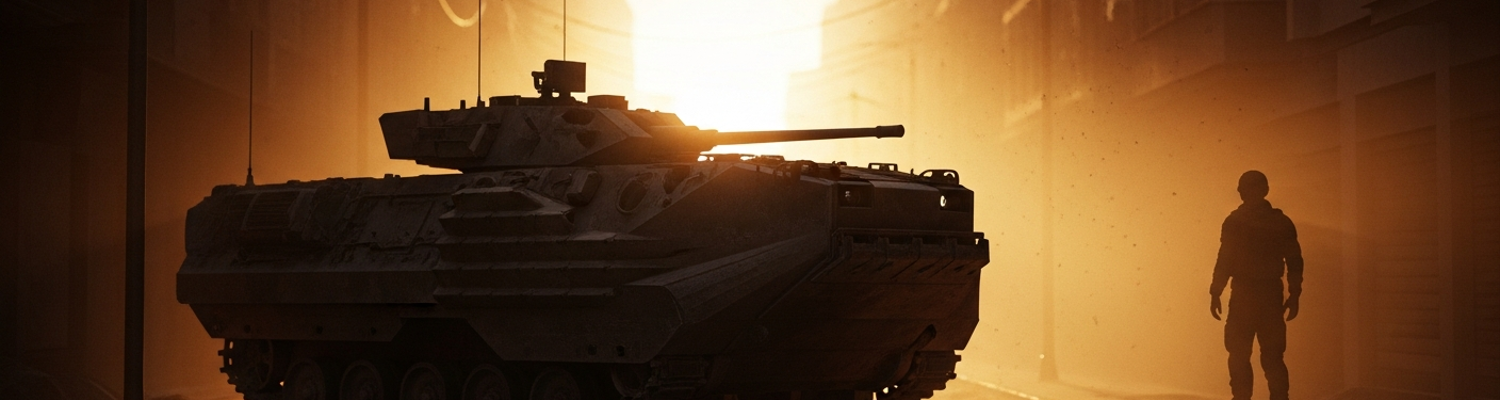
The lead elements of Alpha Company crossed the line of departure and pushed toward Entry Point 149 expecting crumbling facades and scattered light resistance. They found a fortress. Along Jumhuriya Avenue, what the 90-day-old photos showed as open-fronted shops and apartment building lobbies had been transformed into a series of interlocking, mutually supporting bunkers. Post-operation analysis revealed these positions had been systematically constructed over the previous sixty days. The storefronts were now thick walls of reinforced concrete, with just-in-time construction that left the new concrete hidden behind the old building shells. Small, concealed firing apertures had been cut at ground level, perfectly positioned to create devastating enfilading fields of fire. The initial Marine assault wave, mounted in AAV-P7/A1 amphibious tractors, was funneled directly into these prepared kill zones.
The first indication of the true situation came not as small arms fire, but as a silent, fast-moving projectile. The lead AAV, with the callsign War Pig, was struck by a 9M113 Konkurs anti-tank guided missile. The wire-guided munition, fired from a concealed position over 800 meters away, tore through the vehicle’s thin aluminum armor. The subsequent dismounts from the remaining vehicles in the column, instead of finding cover to orient themselves, exited directly into the pre-sighted impact zones of multiple DShK heavy machine guns. These 12.7mm weapons, concealed within the newly constructed bunkers, opened fire simultaneously. Their heavy slugs shredded the AAVs and inflicted immediate, severe casualties on the exposed Marines before they could effectively orient to the threat.
A post-operation analysis by the Marine Corps Communications and Electronics School confirms that the command and control network of 1/7 collapsed almost immediately upon entering the Al-Khadra district. The primary culprit was the urban environment itself. The dense collection of multi-story, steel-reinforced concrete buildings along Jumhuriya Avenue created a condition of severe multipath interference. Radio waves transmitted from the platoon-level AN/PRC-119 SINCGARS manpack radios, operating in the 30-88 MHz range, were not able to establish a clean line-of-sight path to the company or battalion command elements. Instead, the signals reflected off multiple building faces, arriving at receiving antennas via numerous paths at slightly different times. This effect, known as multipath distortion, caused the signals to interfere with and effectively cancel each other out. Even the frequency-hopping capability of the SINCGARS system, designed to defeat enemy jamming by rapidly changing frequencies over 100 times per second, was rendered ineffective. The system’s algorithm could not compensate for the chaotic and unpredictable signal reflection of the urban canyon, a known vulnerability of VHF-range radios in such environments.
The physical communications breakdown was total.
This signal degradation was compounded by a widespread failure in the battalion’s supply chain. A close review of the 1/7’s S-4 logistics records shows that the BA-5590 lithium batteries issued to Alpha Company’s platoon leaders and radiomen were from Lot 7-B, a batch known to have degraded performance characteristics. These non-rechargeable batteries, while showing a full charge on standard testers, were unable to sustain the power output required for high-power transmissions under load. The chemical reactions inside a battery slow down significantly in colder temperatures, reducing its ability to deliver power. The pre-dawn chill in the operational area magnified this underlying flaw. When junior officers, realizing their initial low-power transmissions were failing, switched their AN/PRC-119s to maximum power to burn through the interference, their batteries died within minutes. One platoon commander, 2nd Lieutenant Miller, reported in his after-action review that his primary radio was dead less than five minutes after the first shots were fired, forcing him to attempt to use hand and arm signals which were invisible in the smoke and chaos.
The result was a complete severing of the link between the forward-most elements and their immediate commanders. Junior officers on the ground possessed the most accurate, terrifying ground truth, but they were deprived of the mechanical means to report it. The company commander, positioned several hundred meters to the rear, received only static and broken, unintelligible transmissions. At the Battalion Tactical Operations Center, several kilometers away, the digital picture was just as bleak. The Blue Force Tracker icons for Alpha Company’s lead elements had stopped moving, clustered together in the mouth of Jumhuriya Avenue. With no voice communications to provide context, battalion command staff interpreted this as the company consolidating after making contact, not as a unit being systematically dismantled. The inability to communicate the failure of the intelligence package meant that the entire operational picture for higher command remained a fiction.
The initial, chaotic penetration into the Al-Khadra district immediately overloaded the logistical architecture designed to support Task Force 149. The operational plan for 1st Battalion, 7th Marines, had called for a methodical advance, allowing Combat Logistics Patrols to follow the assault elements along pre-planned, secure routes. These patrols, utilizing a mix of Logistics Vehicle System Replacement (LVSR) trucks for bulk supplies and armored Humvees for immediate needs, were meant to be the battalion’s lifeline. The ambush on Jumhuriya Avenue rendered that plan obsolete. The primary supply routes were now blocked by the burning hulks of the lead AAVs and littered with debris, making them impassable to wheeled vehicles. Combat Logistics Patrols were forced to halt miles from the forward line of troops, unable to push forward the ammunition, water, and spare parts required to sustain the fight.
The assault’s mechanical foundation was fracturing.
A close review of operational logs and after-action reports reveals a cascade of weapon system failures at the platoon level, directly attributable to the logistical breakdown. The M240 medium machine guns, providing the bulk of the suppressive fire for the dismounted squads, were failing at an alarming rate. Sustained, high-cyclic rates of fire necessary to counter the prepared enemy positions caused excessive carbon buildup in the gas systems and led to sluggish operation. More pointedly, parts known to wear under high heat and friction, specifically extractors and ejector springs, began to fail across multiple guns. For the M2 .50 caliber machine guns mounted on the surviving vehicles, the primary issue became headspace and timing. The violent maneuvering and constant vibration, combined with the need for rapid barrel changes during lulls in fighting, caused headspace to drift out of specification. Without the proper gauges, which were with the stalled logistics train, or under the immense pressure of incoming fire, gunners were unable to properly reset the distance between the bolt face and the cartridge base. This led to stoppages, ruptured cartridges, and in two documented cases, receiver damage that rendered the weapons useless.
The guns began to fail.
This scarcity of parts forced a grim necessity upon the Marines of Alpha Company: cannibalization. The practice, officially sanctioned only in dire circumstances, became standard procedure out of desperation. A weapons squad whose M240 went down with a broken extractor had no supply chain to rely on; their only option was to strip a working part from another weapon. After-action interviews describe fire teams crawling under fire to disabled AAVs to pull the entire bolt carrier group from a vehicle’s coaxial machine gun to get their own gun back in the fight. This created a downward spiral of combat effectiveness. For every weapon brought back into action, another was permanently disabled, its carcass picked clean of essential components. An M2 on a company gun truck that suffered a sear failure was repaired only by taking the entire trigger group from a similar weapon on a different vehicle, deadlining the donor gun. Archival records show that by the fourth hour of the operation, the commander of Alpha Company reported that nearly thirty percent of his crew-served weapons were non-mission capable, not from enemy action, but from a combination of mechanical failure and the self-inflicted wounds of cannibalization.
Maintenance logs and post-operation weapon inspections for Operation 149 reveal a widespread failure of the primary infantry weapon, the M4 carbine. The problem was environmental. The dust in the Al-Khadra district was not the coarse sand of open desert, but an exceptionally fine, powdery substance with a high silica content, closer in consistency to industrial talc. This particulate, aerosolized by explosions and movement, was small enough to bypass the M4’s dust cover and penetrate deep into the weapon’s action. Once inside, it mixed with the CLP (Cleaner, Lubricant, Preservative) used by the Marines, forming a thick, abrasive slurry. This compound aggressively fouled the direct impingement gas system. Carbon buildup, a normal byproduct of firing, was amplified by the gritty paste, causing the gas tube to clog and the bolt carrier group to become sluggish. The most common and immediate malfunction documented was a failure-to-extract, where the extractor claw on the bolt could not gain sufficient purchase on the spent cartridge casing, leaving it seated in the chamber. Clearing this type of stoppage required the user to mortar the weapon or use a cleaning rod, actions that were tactically unfeasible under the sustained, accurate fire faced by Alpha Company.
Individual weapon failures rapidly created a squad-level crisis.
After-action reports from 2nd Platoon, Alpha Company, document that within the first ten minutes of the dismounted assault, an estimated 40% of their M4 carbines were non-functional. With their primary weapons rendered inert, Marines were forced to transition to their M9 Beretta sidearms. This shift represented a calamitous loss of combat effectiveness. The M4 carbine is an area weapon system designed for engagements out to several hundred meters, supported by a 30-round magazine. The M9 pistol is a personal defense weapon with an effective range of 50 meters and a 15-round magazine. Marines trained to deliver controlled, accurate rifle fire from cover found themselves in a desperate pistol fight against fortified enemy positions armed with crew-served weapons. The tactical audio logs from surviving elements are telling; the steady, rhythmic report of M4 fire is replaced by sporadic, higher-pitched pistol shots. This audible shift was a clear signal of the unraveling of the assault at the most fundamental level. Squad leaders and fire team leaders, whose role is to direct fire and maneuver, were instead consumed with attempting to clear their own jammed weapons or engaging targets of opportunity with their handguns.
This widespread weapon malfunction led to a complete compromise of Marine Corps tactical doctrine. The bedrock of infantry movement, the principle of fire and maneuver, ceased to be viable. A rifle squad is designed to operate as a system, with one element providing a high volume of suppressive fire to allow another element to move to an advantageous position. With a significant number of M4s out of action, and the previously noted failures of crew-served weapons, the ability of any given fire team to generate meaningful suppression was eliminated. Attempts by squad leaders in 1st and 3rd Platoons to execute basic peeling maneuvers to extract from the kill zone on Jumhuriya Avenue failed almost immediately. The base of fire element could not produce enough fire to keep enemy heads down, and the maneuver element was cut down as soon as it moved. The operational result was that Alpha Company’s squads became static and isolated. They were reduced to disconnected pockets of Marines pinned down behind whatever minimal cover they could find, unable to move forward or backward, and unable to effectively suppress the enemy who was methodically dismantling them. A final equipment report from the Alpha Company Executive Officer, compiled seven hours into the operation, noted that over 60% of the company's M4s were considered disabled by malfunctions rather than enemy action.
Operational logs for Operation 149 show the primary command and control network for 1st Battalion, 7th Marines, ceased to function within seven minutes of the lead element crossing the line of departure. The near-simultaneous failure of VHF radio systems created an information vacuum at every echelon. At the Battalion Tactical Operations Center, located 2.5 kilometers to the rear, the battalion commander and his staff observed the digital icons for Alpha Company’s lead vehicles freeze on the Blue Force Tracker display. Lacking any voice communication to provide context for the halt, the command staff made the incorrect assumption that Alpha Company was consolidating its position after encountering expected light resistance, a standard tactical procedure. Archival evidence shows the battalion’s fire support coordinator attempted to initiate a call for fire on suspected enemy positions based on this flawed interpretation. The request was only halted by a standing order to require voice confirmation from a forward observer, which was impossible to obtain.
The command structure had disintegrated.
Isolated and deprived of guidance, junior officers on the ground were forced into making tactical decisions based on incomplete information. The operational plan, which called for a synchronized advance by three platoons toward a series of phased objectives, was now irrelevant. For 2nd Lieutenant Chen of 1st Platoon, pinned down by heavy machine-gun fire from a fortified position that did not appear on his map, the only available information was the sight of his lead fire team being systematically cut apart. With his radio dead and no visible sign of support from adjacent units, Chen made an executive decision that directly contradicted the mission order. He ordered his remaining squads to abandon the push forward and instead breach the western wall of an adjacent residential building, designated Building 27A on his schematic, in a desperate attempt to find cover and establish a new axis of advance away from the primary kill zone on Jumhuriya Avenue.
These ad hoc decisions, made in isolation, led directly to a series of uncoordinated movements that proved fatal. While Chen’s 1st Platoon was breaching into Building 27A, the commander of 3rd Platoon, 1st Lieutenant Joshi, was attempting a similar maneuver fifty meters to the east. Having also lost all communication, Joshi ordered his platoon to fall back and consolidate in the courtyard behind the same structure Chen’s platoon was entering. Neither officer knew of the other’s position or intent. A post-operation forensic analysis of the scene, cross-referenced with survivor interviews, shows that elements of 3rd Platoon, seeing movement in the second-story windows of Building 27A, identified the figures as enemy and engaged them with a sustained burst of fire from an M249 Squad Automatic Weapon. The targets were the lead fire team of 1st Platoon, who were attempting to clear the building. The resulting friendly fire incident caused four Marine casualties and completely halted the momentum of both platoons. The operational timeline, which had scheduled the seizure of the Al-Khadra police station within 45 minutes, was abandoned. Four hours into the operation, the bulk of Alpha Company was still trapped within 300 meters of its initial entry point, bogged down not only by enemy action but by the direct consequences of its own command network’s collapse.