
Blizzard Conditions Across the Northern Plains
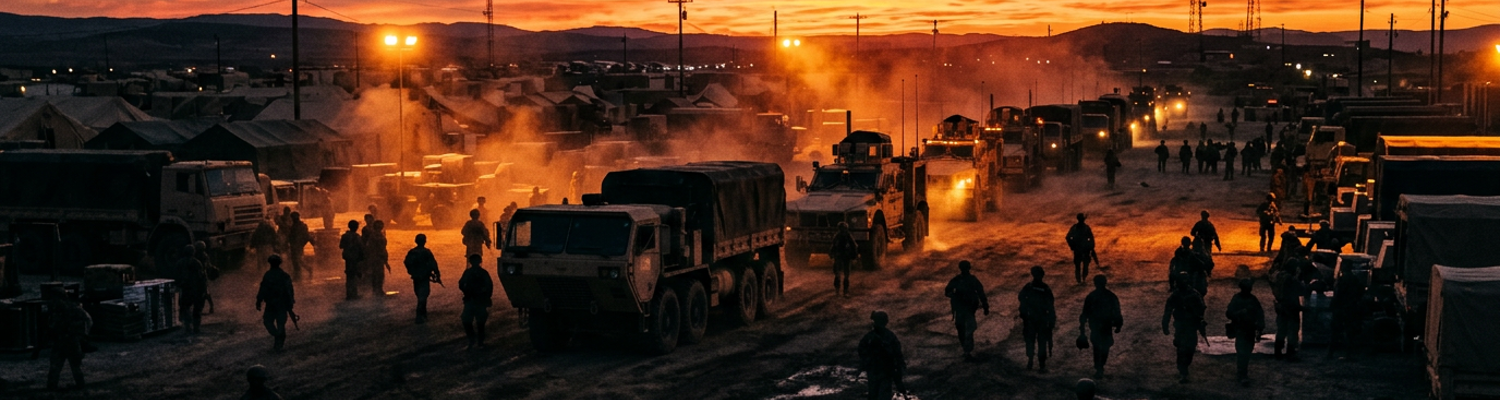
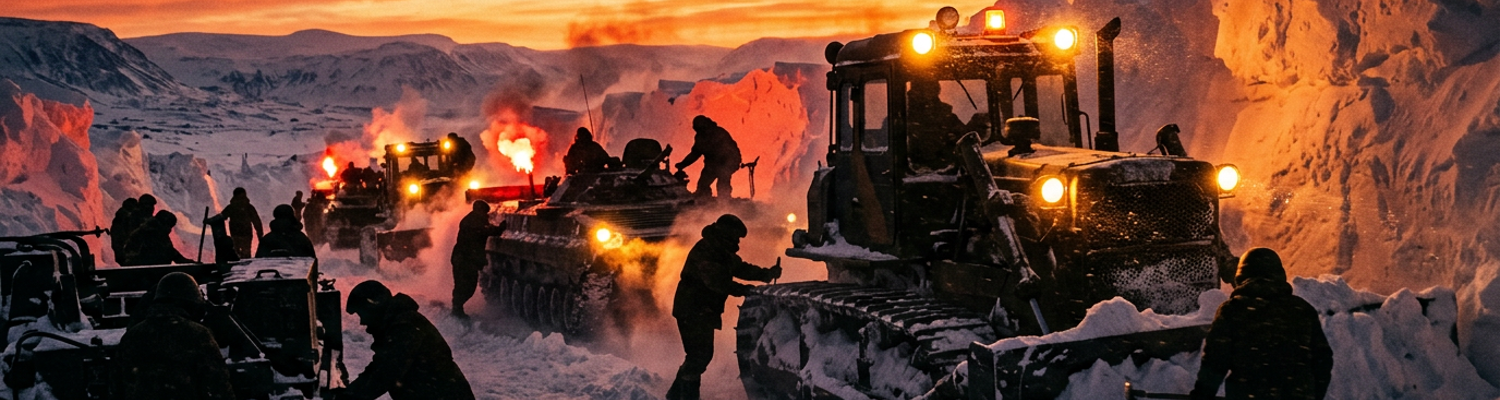
Blizzards produced catastrophic thirty-foot snowdrifts across Nebraska, South Dakota, and Wyoming during January 1949, paralyzing regional infrastructure. Heavy gales drove fine, powdered snow into every mechanical seal, burying telegraph poles, smothering transcontinental railroad tracks, and trapping passenger trains in remote cuts. Engineers and mechanics worked under a strict forty-eight-hour mobilization deadline, rushing to prepare heavy vehicles and support personnel before the roads sealed shut completely. Shop crews ran blowtorches over frozen diesel engines to thin the oil, hoisted heavy v-plows onto industrial crawler-tractors, and bolted steel track extensions in place under the glare of depot floodlights. Supply specialists threw crates of cold-weather rations, canvas tents, and medical packs into two-and-a-half-ton cargo trucks while drivers checked antifreeze mixtures in unheated motor pool bays.
Locomotives stalled in these deep mountain and prairie cuts, stranding hundreds of rail travelers in sub-zero cold and shutting down the main supply corridors between eastern cities and western ranches. Midwinter tribal assemblies and holiday gatherings became isolated as sub-zero blizzards severed communication and overland supply routes. Families who had traveled across counties to visit relatives or participate in post-Christmas ceremonies found themselves trapped inside wooden community halls, schoolhouses, and rural churches that lacked winter heating stoves. Sustained fifty-mile-per-hour winds broke wooden telephone poles, snapped copper lines, and piled dense snow banks across gravel township roads, leaving local sheriffs without any way to send wire messages to state capitals. Ranchers and tribal elders burned fence posts, broken wagons, and kitchen furniture to stay warm as woodpiles disappeared under packed snowdrifts.
Kerosene cans and woodboxes sat empty across the Dakota plains, leaving households with no remaining heat sources as outside temperatures plunged toward thirty below zero. Bureau of Indian Affairs reports cataloged under federal Decimal 072 files recorded severe fuel and food depletion at the Pine Ridge and Rosebud reservations. Field clerks noted that hundreds of Oglala Lakota and Sicangu Lakota families were trapped without flour, beans, or lard, while snowdrifts completely covered the windows and doorways of their log homes. Doctors at reservation clinics could not deliver medicines or reach injured residents across the drifts, and hospital boilers operated on emergency coal reserves that were nearly exhausted. Superintendents wired the regional office that county road crews possessed no machinery capable of cutting through the dense, wind-packed snow banks to bring in food.
Commanders at Fifth Army headquarters received these urgent wire appeals in Chicago, Illinois, and immediately initiated plans for an unprecedented disaster relief operation. Major General Lewis A. Pick recognized that conventional peacetime procedures would result in mass casualties because standard engine-cycling doctrines required operators to shut down crawler-tractors every eight hours for mechanical servicing. Shutting down a diesel tractor in forty-degree-below-zero weather meant the motor oil would congeal into sludge, battery power would drain, and steel tracks would freeze immovable in the ice. Pick made the calculated gamble to disregard established maintenance doctrines entirely, ordering heavy bulldozer crews to run their engines continuously around the clock without stopping. Maintenance mechanics were instructed to change filters, pump grease, and refill fuel tanks while the crawler-tractors kept their blades moving forward into the drifts.
Disaster Force Snowbound Activation
Survey officers dispatched by Fifth Army headquarters located commercial heavy bulldozers, hired civilian operators, and directed the initial wave of tracked vehicles toward the isolated reservations and ranching communities. Officers radioed back reports of buried construction yards, stranded road maintenance garages, and scattered civilian contractor fleets across four states. Reconnaissance reports convinced senior military leaders that the crisis exceeded the capacity of local civil authorities, prompting immediate federal intervention. Fifth Army formally activated Disaster Force Snowbound on January 29, 1949, designating Major General Lewis A. Pick of the Corps of Engineers as commander. Pick converted the regional administrative machinery into an active field command within hours, authorizing field officers to sign emergency commercial leases and hire private bulldozer drivers on the spot.
Procurement officers drafted these emergency contracts directly at rail sidings and highway depots, guaranteeing fuel, replacement parts, and standard army rations to any equipment company that put heavy machinery onto the snow-blocked routes. Mechanics and civilian drivers immediately began coupling heavy v-plows to Caterpillar D7 and D8 crawlers under the supervision of army engineering officers. Pick organized these growing equipment pools by establishing operational command over a disaster area spanning 193,000 square miles across the snowbound northern plains. The operational sector stretched across Nebraska, South Dakota, North Dakota, and Wyoming, where persistent blizzards had piled snow drifts over ranch houses, power lines, and fence tops. Commanders split the massive territory into distinct operational sectors, placing field command posts in cities such as Omaha, Pierre, and Casper to direct local clearing efforts.
Staff officers tacked large topographic maps across the walls of these regional depots, marking isolated ranches, stalled trains, and snowbound reservation settlements with red grease pencils. Radio operators transmitted hourly drift assessments and route priorities over military frequencies to keep field units advancing toward the most critically isolated settlements. Headquarters units integrated military engineers with regional civilian assets to coordinate mass relief across multiple state jurisdictions. Operations officers sat state highway directors, county road supervisors, and private earthmoving contractors beside Army engineering captains at shared briefing tables to eliminate red tape between competing county and state boundaries. This joint command structure combined federal bulldozers, state plows, and commercial tractors into unified mechanized columns directed toward common geographic objectives.
Superintendents supplied detailed knowledge of local terrain to guide these unified columns past buried culverts and drifted cut banks. Military engineers provided bulk fuel shipments, radio communications, and heavy transport trucks to support the massive overland push. Maintenance platoons set up mobile repair trailers along rail junctions and main arterial roads, stockpiling track pins, oil filters, and cutting edges where plowing teams could reach them without pulling back from the clearing fronts. Mechanics immediately implemented the high-risk operational directive by fueling and servicing the crawler-tractors while the heavy diesel engines continued to run at full throttle. Work crews pumped warm lubricating oil through engine blocks and used hand-held grease guns on track rollers amid freezing winds, preventing the iron parts from locking together in the sub-zero temperatures.
Engine Operation and Cold Weather Engineering
Operators kept their steel blades lowered against these compacted snowdrifts, grinding forward day and night to break the overland blockade before rural fuel and food supplies gave out completely. Pick defied conventional military engine-cycling doctrine by directing 673 Caterpillar D8 bulldozers to operate continuously without shutdown, forcing the heavy machines to drive relentlessly into the ice. Standard army operating manuals instructed drivers to idle and inspect engines every eight hours, but shutting down a diesel block in sub-zero prairie gales meant immediate mechanical failure. Motor oil congealed into thick paste within twenty minutes of cutoff, leaving electric starters and auxiliary pony engines completely unable to turn the massive, cold-stiffened pistons. Relief drivers swapped seats on the fly, scrambling over moving steel track guards while the tractors crawled forward so the plow edges never lost their forward bite against the ice crusts.
Exhaust stacks glowed cherry red against the winter night as the machines burned diesel fuel without interruption across Nebraska, Wyoming, and the Dakotas. Mechanics implemented mobile lubrication units and hot-fueling field procedures to service running tractors without stopping tracks, keeping pace with this tremendous fuel consumption. Tanker trucks mounted on bobsleds and half-tracks pulled directly alongside the rumbling bulldozers, extending reinforced rubber hoses to pump hundreds of gallons of warm diesel into fuel tanks while the steel grousers continued to chew into the drifts. Grease teams rode running boards with pneumatic guns, forcing fresh lubricant into track rollers and idler bearings as the sprockets turned under heavy load. Crews drained and replaced contaminated crankcase oil during active plowing by tapping bypass valves, allowing fresh, preheated oil to circulate into the engine blocks without chilling the combustion chambers.
Soldiers performed these dangerous maintenance maneuvers in blinding snow squalls with bare hands wrapped in friction tape to prevent freezing steel tools from tearing their skin away upon contact. Crews maintained 116 M29 Weasels in non-stop operation across minus-thirty-degree conditions to avert cylinder freezing and fuel line waxing while supporting these forward maintenance pushes. These lightweight, amphibious tracked carriers rode on broad rubber bands that floated over deep snow crusts where standard six-ton trucks instantly sank to their axles. Drivers kept the six-cylinder Studebaker engines roaring at high idle whenever scouts halted to take compass bearings or check snow depths, knowing that any stall in the sub-zero wind would cause paraffin crystals to clog the fuel filters within minutes. Heavy canvas tarpaulins covered the engine cowlings to trap radiant manifold heat and shield delicate carburetors from the scouring prairie draft.
Patrols used this continuous mobility to shuttle replacement parts, warm lubricants, and medical aid ahead of the main columns, marking safe corridors through the drifted valleys for the heavy bulldozers to follow. Engineers harnessed the uninterrupted power of these guided bulldozers to carve open supply routes through snow banks that had hardened into dense ice. Operators angled their steel dozer blades to slice away the upper crusts in horizontal tiers, preventing the relentless forward thrust from snapping the hydraulic lift cylinders against the frozen drifts. Exhaust plumes and pulverized snow blackened the clearing corridors as the diesel columns widened the cuts into two-lane paths for civilian supply trucks. Plowing teams tackled mechanical failures directly on the snow without cutting ignition switches, swapping frayed winch cables and drive belts while engines rumbled at full throttle.
Trenching Operations Across Buried Routes
Mechanics hammered red-hot replacement pins into damaged track shoes beside turning sprockets, keeping the machines driving forward until the blades broke through the final drifts around the isolated settlements. Steel dozer blades carved into the frozen snowbanks surrounding these isolated homesteads as engineering units engaged in twenty-three consecutive days of non-stop mechanical trenching through packed, hard-crusted snowdrifts. Sustained arctic gales had compressed the drifts into dense layers that resisted ordinary highway plows, forcing military and civilian operators to smash through the icy crusts using brute horsepower and angled moldboards. Drivers drove their heavy Caterpillar tractors in staggered V-formations, slicing off the upper tiers of snow before lower blades dug down to the gravel roadbeds below. Spillover snow tumbled off the raised blade wings into tall vertical walls that rose well above the exhaust stacks of the machines.
Winds immediately caught this loose, pulverized powder and hurled it straight back into the freshly carved trenches. Operators swapped seats directly on the moving tracks as heavy crawler teams operated in rolling shifts under continuous blizzard winds to prevent reopened roads from drifting shut behind them. Chilled relief drivers pulled themselves up the vibrating steel ladders, took the steering clutches from frostbitten men, and immediately turned back toward the rear of the column to widen the trenches. Follow-up bulldozers equipped with side wings pushed the snow banks farther outward into roadside pastures, creating wide storage space so subsequent storms would not pack the travel lanes solid again. Tracked scout vehicles patrolled between the clearing teams with radio transmitters, warning drivers whenever sudden wind shifts caused towering banks of snow to collapse across previously secured paths.
Headlights pierced the swirling whiteouts all through the night, illuminating narrow lanes where fuel trucks and supply convoys crawled forward behind the rumbling exhaust stacks. Convoys pressed through these illuminated lanes into the most remote sectors of the plains as bulldozer echelons systematically carved open 87,073 miles of buried routes to reconnect trapped ranchers and cut-off reservation communities. Field engineers directed the heavy machines off the main highway arteries and straight into desolate county section roads where snow had buried telephone lines and ranch gates. Operators cleaved through monumental drifts across the Pine Ridge and Rosebud reservations, reaching tribal homes that had burned their last fence posts and kerosene supplies days earlier. Support platoons unloaded flour, cured meat, and coal directly into ranch yards where families stood waving from snow tunnels dug out from their second-story windows.
Herds huddled against drift banks received emergency hay deliveries as the crawler blades cut paths through pasture fences to reach starving livestock. Engineers pushed their bulldozers past these ranch pastures to clear the final blocked arterial corridors connecting county seats to regional railheads. Mobile maintenance squads followed directly behind the lead crawlers, replacing worn cutting edges and welding cracked push frames on site to keep every tractor in the clearing line. Commanders directed their forward units to hold all equipment in the field until commercial truck traffic and school bus routes could operate without military escort. Field mechanics checked oil levels while diesel engines idled at high speed, topping off radiators with heated alcohol mixtures to keep the cooling systems from freezing.
Medical Relief and Aerial Supply Corridors
Teams widened the cuts into full two-way thoroughfares, pushing thousands of tons of compacted ice into drainage ditches before refueling for their next sector assignments. Diesel tractors plowed extensive landing grids across the snow so ground bulldozer echelons linked isolated rural settlements directly with Tenth Air Force aerial supply and airdrop corridors. Pilots flying Douglas C-47 and Fairchild C-82 transport planes navigated along the dark trenches carved into the snowfields by the heavy plows, using the exposed earth as visual guide lines across the blinding white prairie. Drop crews kicked canvas-wrapped supply bundles out of open cargo doors as the aircraft made low passes over the freshly cleared tractor paths. Parachutes blossomed against the grey winter skies, dropping food crates, warm clothing, and dry-cell radio batteries directly into the drift banks flanking the plowed trenches.
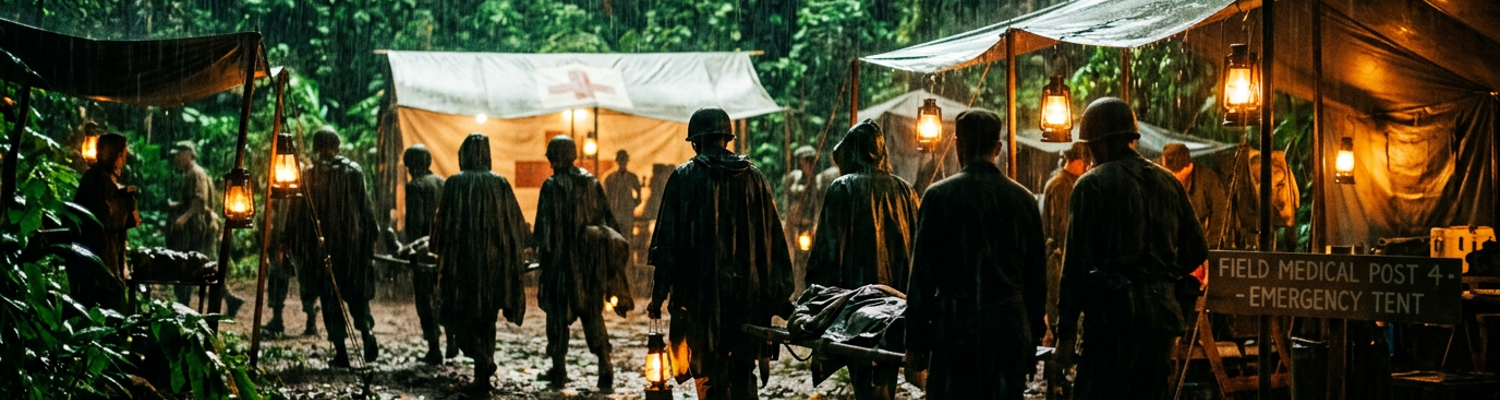
Crews operating tracked Weasels collected the scattered containers from the snow crusts and hauled them to designated distribution points in small towns and remote ranch yards. Support platoons loaded these parachuted crates onto tracked vehicles and hauled the rations directly to families trapped inside snowbound homesteads. Army field medical personnel conducted emergency triage operations for isolated civilian populations suffering from severe hypothermia and frostbite inside these freezing dwellings. Doctors and enlisted medics set up treatment stations in drafty kitchens and schoolhouses, thawing blackened fingers and toes in cool water to prevent flesh damage before bandaging necrotic tissue. Medics carried insulated boxes packed with chemical heating pads to keep glass ampoules of morphine, penicillin, and tetanus antitoxin from freezing into solid ice before injection.
Medics placed the most critically injured civilians on canvas stretchers and loaded them into heated cabins of tracked personnel carriers for transport to emergency airstrips. Flight nurses administered warm saline infusions and wrapped unconscious casualties in wool blankets as transport planes flew them to regional base hospitals. Aircraft returned immediately to the skies with heavy freight as coordinated air-ground supply corridors delivered critical fuel reserves and medical aid to vulnerable tribal settlements before winter stocks failed entirely. Flight crews hauled thousands of gallons of kerosene and heating oil in steel fifty-five-gallon drums, releasing them on cargo parachutes directly onto marked fields across the Pine Ridge and Rosebud reservations. Ground plows met the falling drums at the drop zones, clearing access paths through five-foot drifts so reservation teams could roll the heavy fuel containers toward tribal clinics and residential clusters.
Families had burned their last firewood, floorboards, and fence rails to stay warm, leaving communal buildings entirely dependent on these incoming military oil deliveries. Medical technicians accompanying the fuel convoys restocked reservation dispensaries with insulin, baby formula, and sulfa drugs, replenishing community medical chests that had run completely empty during the month-long siege. Engineers established forward radio stations at these newly provisioned tribal outposts to report remaining medical needs back to Fifth Army headquarters. Radio operators relayed weather alerts and runway conditions to circling cargo planes, coordinating pinpoint parachute drops onto isolated family compounds deep in the reservation backcountry. Maintenance mechanics serviced idling Weasels and light tractors directly at the tribal staging grounds, swapping frozen spark plugs and refilling oil reservoirs while engines ran at fast idle.
Drivers secured tow ropes to wooden freight sledges loaded with heating fuel and penicillin, pulling the emergency provisions over drifted ravines where heavy plows could not safely maneuver. Plowing echelons widened these secondary supply corridors into stable ground routes, securing reliable access for civilian relief trucks before the next arctic front descended over the northern plains. Commanders ordered the heavy crawler-tractors to maintain their relentless forward momentum until every county road and reservation trail stood open to commercial traffic. Steel blades scraped the final layers of packed ice from the prairie highways as the massive diesel engines burned through their twenty-third consecutive day of continuous operation. Fifth Army logisticians recorded the successful clearance of 87,073 miles of snowbound routes, ending the immediate threat of mass starvation and exposure across the frozen western interior.