
Postwar Military Governance Under the High Commissioner
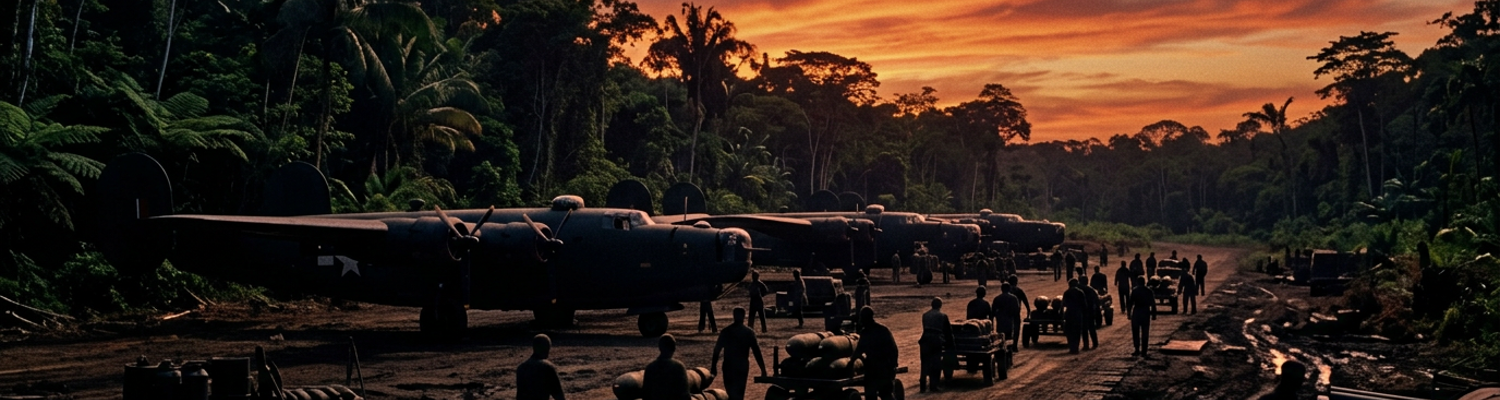
Airmen of the 18th Security Police Squadron jammed loaded magazines into canvas pouches and tested portable radio units against a strict fifteen-minute muster deadline inside the Kadena guard shack. Mechanics rushed along the motor pool bays to top off patrol sedans and torque loose lug nuts before the evening shift swept out toward the Koza access gates. Dispatchers shoved printed patrol rosters into the hands of young drivers who needed to reach their assigned intersections along Highway 24 before off-duty soldiers filled the civilian avenues. Base sentries swung open the heavy steel gates right as the muster whistle sounded, releasing vehicle teams into an island ruled entirely by American military authorities. Command authority over these troops and the local population belonged to the United States Civil Administration of the Ryukyu Islands. Lieutenant General James B. Lampert directed this administrative system as High Commissioner, signing executive orders that dictated the daily operations of local courts, public roads, and civil security forces.
Lampert answered directly to the Secretary of the Army, using his administrative orders to prevent local island courts from trying American personnel. Civil administration officers barred Okinawan judges from hearing criminal charges against American soldiers, sailors, and airmen involved in off-base offenses. Extraterritorial legal immunity routed all traffic accidents, street assaults, and property damage cases involving foreign troops directly into American military courts. Military courts routinely acquitted service members or handed down minor fines for vehicle crashes that killed local pedestrians on village roads. Okinawan court officials and bar associations lodged formal jurisdictional protests, demanding the power to prosecute foreign soldiers under island laws. Lampert and his administrative staff dismissed every legal challenge, ordering military police to seize immediate custody of any American suspect involved in an off-base collision.
Patrolmen enforced these administrative orders by hauling American drivers away from wreck scenes before local civilian police could open an inquiry. Local bystanders collected around collision sites in Koza, watching American patrol cars load up foreign suspects and drive them behind base fences. Okinawan police officers lacked the legal power to detain armed American personnel, leaving local authorities stranded on the road with incomplete reports. Resentment spread through neighborhoods as taxi drivers and shopkeepers watched dozens of off-base traffic deaths go unpunished by military authorities. Crowds gathered near the installation gates to confront passing military sedans, shouting demands for legal accountability and local trials. Sentries at the Kadena boundary pulled their service pistols from leather holsters, shut the iron gates, and radioed the base operations desk for immediate tactical reinforcements.
Soldiers inside the Kadena motor pool loaded armored scout cars and drove them toward Gate 2 to back up the sentries at the fence line. Sergeants distributed steel helmets, gas masks, and hardwood riot batons to quick-reaction squads forming along the perimeter road. Base officers ordered every roving patrol to treat ordinary road accidents near the commercial district as high-risk security threats. Dispatchers broadcasted urgent alerts across base radio channels as civilian vehicles choked the narrow lanes outside the boundary fence. Security teams locked down the gate perimeter, chambered rounds into their rifles, and trained vehicle searchlights onto the Koza intersection.
Traffic Incident Escalation Along Koza Route Twenty-Four
Searchlight beams cut across the asphalt of Route 24 near the Koza entertainment district, illuminating a pre-dawn vehicular collision between an American serviceman and an Okinawan pedestrian. The foreign driver had drifted across the center line outside a packed strip of cabarets, noodle houses, and civilian bars, striking an islander who was walking along the unpaved roadway shoulder. Local taxi operators and bar patrons rushed into the street, dragged the injured pedestrian out of the active lane, and summoned Ryukyuan civilian police officers walking their neighborhood beats nearby. Ryukyuan patrolmen immediately began measuring skid marks on the pavement and questioned the serviceman, but emergency dispatchers at Kadena had already routed two military police patrol cars straight to the crash coordinates. Sirens wailed as the white military sedans skidded to a halt in the middle of Route 24, boxing in the civilian cruisers and scattering the first responders. American military police jumped from their cruisers, shoved past the Ryukyuan officers, and pulled the foreign driver into the back seat of their lead patrol car without waiting for the local accident report.
Bystanders surged against the patrol car doors to prevent the military police from driving away with the suspect. Ryukyuan civilian officers planted their boots in front of the vehicle tires, insisting that the collision remained under island legal authority and demanding custody of the American driver. Military police sergeants shoved the local officers backward onto the pavement, triggering furious shouting matches that drew hundreds of bar patrons, cab drivers, and off-duty workers into the roadway. Fists flew in the pre-dawn darkness as young islanders grappled with armed soldiers, attempting to drag the foreign driver back out through the open rear window. A military policeman swung his hardwood riot baton into the chest of an Okinawan taxi driver, knocking the man flat against the warm asphalt. Island civilians immediately retaliated by tackling the baton-wielding patrolman, kicking the vehicle panels, and slashing the front tires of the lead cruiser to immobilize it.
Crowds of furious residents erupted along the neon-lit sidewalks, answering the violence with a rapid convergence that swelled to several thousand people within minutes. Workers, students, and commercial drivers poured out of neighboring side alleys, converging on Route 24 and forming an unbroken human wall around the trapped patrol cruisers. Additional military police sedans rushed forward from the Kadena perimeter to break the encirclement, but the surging demonstrators swarmed over the hoods, ripped off the radio antennas, and smashed the emergency light bars with wooden clubs. Ryukyuan civilian police officers found themselves completely overwhelmed by the mass of their own neighbors, unable to clear even a narrow corridor through the human barricade. Rocks, glass bottles, and concrete debris rained down upon the trapped American vehicles, shattering side glass and showering the vehicle interiors with sharp fragments. Demonstrators rocked the cars back and forth, chanting demands for an end to military rule while climbing onto the vehicle trunks to wave improvised warning flags.
Patrolmen inside the damaged cruisers ducked below the dashboard levels, desperately shouting into their radio hand microphones for tactical extraction teams from the base. Demonstrators grabbed the wheel wells and rocker panels of the sedans, rhythmically heaving upward until the heavy American sedans tipped completely over onto their roofs. Fuel lines ruptured against the pavement, spilling pungent gasoline across the lanes of Route 24 as the crowd shoved the inverted vehicles into the center of the road. Matches and discarded paper ignited the leaking fuel puddles, sending thick black plumes of smoke rising over the entertainment district toward the Kadena flight line. Security commanders behind the Kadena perimeter heard the panicked radio calls cut to static, realized their road patrols were entirely cut off, and ordered the immediate deployment of armored vehicles toward the outer gate.
The Kadena Air Base Gate Two Perimeter Breach
Drivers inside the deployed armored personnel carriers accelerated toward Gate Two, but arriving crews found the entry checkpoint already collapsing under the weight of thousands of enraged demonstrators. Steel perimeter fences rattled and snapped as civilians pushed past the outer concrete guard posts, bypassing the immobilized traffic along the access highway. Sentry posts emptied as security police officers retreated behind secondary defensive positions along the flight line approach roads. The violent breach of Gate Two at Kadena Air Base escalated rapidly as demonstrators swarmed across the installation boundary, pouring onto military property in waves. Unarmed base guards abandoned their wooden sentry shelters under barrages of thrown asphalt chunks and bottles, fleeing toward the safety of the interior hangars. Protesters swept through the opened vehicle lanes, targeting administrative outposts and seizing perimeter inspection areas within minutes. Base alarm klaxons blared across the runways while arriving security squads struggled to establish a skirmish line against the sudden flood of people moving onto the base grounds.
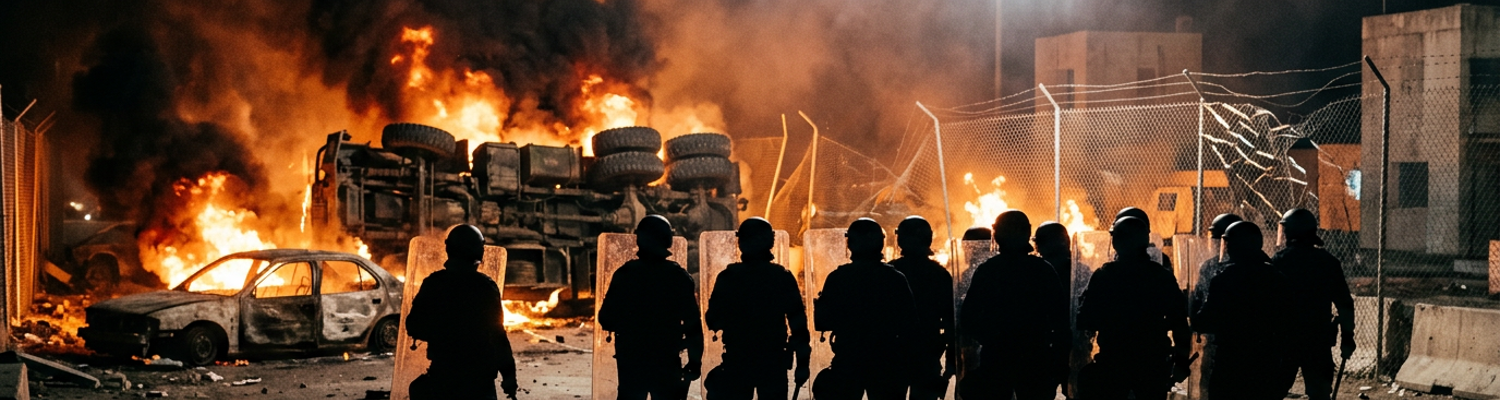
Flames erupted along the access roads just inside and outside the gate as demonstrators began a systematic hunt for American vehicles marked with distinctive yellow military administration license plates. Local residents identified foreign-owned cars by their registration numbers and singled them out for destruction. Groups of twenty to thirty men surrounded sedans, station wagons, and military transport trucks abandoned by fleeing personnel. Islanders rocked the chassis from side to side until the suspension springs bottomed out, then tipped each vehicle onto its roof or side with coordinated shoves. Ripped fuel lines poured streams of gasoline into gutters and road depressions, creating puddles that crowds ignited with rolled newspapers and road flares. Systematic overturning and burning of more than seventy American-registered civilian and military vehicles turned the entire Gate Two corridor into a winding barrier of blazing steel and exploding fuel tanks. Tires burst with loud bangs that sounded like gunfire across the air base, while shattering windshields showered the pavement with tempered glass. Black chemical smoke billowed hundreds of feet into the night air, choking off the gate approach and blinding the drivers of arriving military fire trucks.
Airmen of the 18th Security Police Squadron pushed through the dense smoke wearing rubber gas masks and carrying loaded tear gas grenade launchers. Tactical commanders recognized that losing Gate Two would expose the adjacent aircraft revetments and weapons storage areas to unchecked crowds within minutes. The critical five-minute standoff reached its peak when the lead security squad formed a tight wedge fifty yards inside the shattered boundary line. Demonstrators surged toward this thin barrier of airmen, hurling rocks, pavement chunks, and burning debris from the overturned vehicles to force a deeper breakthrough into the flight line. Sergeants shouted firing commands through their mask voice diaphragms, ordering the simultaneous discharge of multiple CS gas canisters directly into the perimeter gap. High-pressure launchers popped in rapid succession, arcing chemical rounds over the burning vehicle hulls and into the center of the crowd. Gray clouds of burning chemical agent enveloped the breach point, blinding the front ranks of the crowd and forcing hundreds of protesters to drop their clubs and reel backward toward the civilian highway. Security personnel immediately advanced behind the drifting gas barrage with leveled riot batons, sealing off the torn fence line and establishing fixed firing sectors across the smoking entryway.
Severe Communications Blackouts and Liaison Failures
Sentries holding the smoking perimeter needed immediate civilian police reinforcements to push the surrounding crowds back from the breached security zone. Command staff inside the Kadena operations center reached for landline handsets to contact the Government of the Ryukyu Islands police headquarters in Naha. Jammed military switchboards blinked continuously across every console as incoming calls from terrified base families and perimeter outposts locked up the mechanical relays. Operators repeatedly plugged patch cords into auxiliary jacks, but the flood of high-priority calls from regional air bases and army depots choked the shared telephone trunks. Physical telephone wires connecting the base to island civilian networks failed completely when crowds of rioters pulled down utility poles and severed wire communications between the Office of the High Commissioner and the Government of the Ryukyu Islands police. Military controllers watched their status boards go dark, leaving base commanders isolated from the local police leaders who possessed legal jurisdiction over the civilian streets of Koza.
Dispatchers at the Government of the Ryukyu Islands police headquarters sat before dead intercom panels in their precinct houses, unable to verify whether American troops were shooting live ammunition into the streets. Okinawan police chiefs dispatched motorcycle couriers toward Route 24, but burning sedans and stone-throwing mobs blocked every paved road into the commercial district. Technicians at the Office of the High Commissioner attempted to bypass the dead copper trunk lines by tuning their high-frequency tactical radios to civilian emergency channels. Static hiss filled the speakers because the civilian police radios operated on different frequency bands that could not interface with American military field transceivers. Command personnel in both headquarters found themselves completely unable to negotiate shared arrest policies or coordinate mutual defense perimeters as violence surged along the perimeter walls.
Jeeps carrying civil affairs liaison personnel drove straight into the unlit buffer zone between the base fence and the rioting commercial district to establish face-to-face contact with local authorities. Blinding illumination flares popped overhead and drifted down on small parachutes, casting harsh white glare and moving shadows across the chaotic rows of overturned automobiles. Initial tear gas volleys fired by Kadena sentries rolled through the darkened alleys in thick white sheets, stinging the liaison officers unprotected eyes and forcing them to steer with one hand while holding rubber respirators to their faces. Electric power along the adjacent storefronts died when rioters knocked down secondary transformer lines, forcing the liaison teams to operate in a near-total blackout punctuated only by burning fuel tanks and falling magnesium sparks. Liaison officers shouted warnings through battery-powered megaphones into the drifting smoke, attempting to locate Okinawan police commanders who had retreated into municipal offices two blocks away.
Runners from the local police station crept past burning tire barriers to deliver hand-scrawled messages to the American liaison officers waiting beside their idling jeeps. Okinawan inspectors demanded an immediate ceasefire and the complete withdrawal of all armed American troops back onto military property before civilian officers would attempt to clear the street crowds. Liaison officers scribbled the conditional terms onto field pads and sprinted back through the chemical fog toward the Kadena perimeter gate on foot. Base commanders received these hand-delivered civilian demands without any direct line to confirm them with High Commissioner Lampert, forcing tactical leaders at Gate Two to decide on their own whether to hold their firing line or pull armed airmen back into base hangars. Security officers ordered their riflemen to lower their weapons and chamber blank rounds while quick-reaction squads formed physical arrest cordons inside the perimeter gates to await the next wave of demonstrators.
The Decisive Standoff at Kadena Gate Two
Riflemen kneeling behind the concrete gateposts chambered their issued blank ammunition, but the loud cracks of non-lethal deterrent rounds failed to halt the advancing civilian crowd. Demonstrators pressed directly into the physical arrest cordons, throwing shattered pavement stones, scrap metal, and burning wooden planks over the overturned sedans. Security police in the front ranks absorbed direct impacts against their plastic riot shields, staggering backward as the sheer weight of thousands of protesters collapsed the outer defensive perimeter. Sentry leaders realized their blank ammunition and wooden batons could not prevent the crowd from surging past the gate and reaching the unprotected bombers and fuel storage tanks on the Kadena flight line. This operational collapse opened a critical five-minute tactical window where base perimeter security prepared to deploy live small-arms fire against advancing crowds. Squad leaders across the asphalt instructed their men to strip out the blank cartridges, slap twenty-round magazines of live ball ammunition into their rifles, and click their weapon selector switches to semi-automatic fire.
Airmen raised their leveled rifle barrels toward the leading edge of the crowd while base controllers broadcasted desperate distress messages over tactical radio nets. Watch officers inside the Kadena central security station heard perimeter commanders announce that their troops were twenty yards from being completely overrun and intended to shoot into the center of the crowd on their own authority. Flight-line fire teams knelt behind armored cars and leveled their weapons at chest height, waiting for the defensive perimeter to shatter completely before pulling their triggers. Alarm sirens inside the base operations building competed with the sound of breaking glass and exploding car tires echoing from the Gate Two entryway. Radio operators in the base communications center scrambled to patch this fast-moving tactical crisis directly into the emergency operations room of the United States Civil Administration of the Ryukyu Islands.
Lieutenant General James B. Lampert listened to the frantic perimeter status reports over the open tactical radio line and recognized that a volley of rifle fire would trigger an island-wide insurrection. Staff officers at civil administration headquarters drafted an emergency operational override as the countdown on the perimeter firing authorization reached its final minute. Military dispatchers executed the immediate transmission of a command directive explicitly countermanding live lethal fire authorizations at the perimeter line. Communications technicians pushed this urgent order across every high-frequency military channel, instructing security police supervisors that under no operational circumstances were troops authorized to discharge live small-arms fire into civilian crowds. Watch officers repeated the directive three times over the primary security net, ordering base units to rely exclusively on physical barriers, chemical tear gas, and non-lethal riot batons to hold the airfield boundary.
Sergeants at Gate Two heard the direct countermand crackle through their portable radio receivers and sprinted along the skirmish line to knock raised rifle barrels down toward the pavement. Noncommissioned officers shoved their way through the front ranks, physically restraining young airmen whose fingers were already resting on the triggers of their loaded rifles. Security teams quickly pulled back their live-ammunition firing squads and pushed secondary rows of riot personnel forward with heavy clear-plastic shields and pressurized tear gas launchers. Fresh chemical smoke volleys exploded across the entrance road, saturating the space between the burning car hulls and driving the lead ranks of demonstrators back toward Route 24. Airmen dragged steel concertina wire spools across the broken gate gap and locked their shield line into place, securing the physical boundary of the flight line without firing a single live bullet into the crowd.
Deployment of Nonlethal Riot Control Formations
Steel wire barricades groaned under the impact of thrown concrete fragments as specialized military police riot units moved into position behind the frontline airmen. Combined formations of the 18th Security Police Squadron and arriving Army military police established a coordinated defense line along the shattered concrete perimeter of Gate Two. Weapons specialists unstrapped heavy backpack dispersers and wheeled trailer-mounted chemical generators forward, preparing to flood the breach with dense clouds of aerosolized CS riot gas. Operators yanked pull-cords to ignite the blower engines, opening calibrated regulator valves that fed powdered chemical agent straight into the high-velocity air streams. Dense white chemical clouds erupted from the wide dispersal nozzles, roaring across the tarmac at ground level to form an impassable barrier between the inner aircraft parking areas and the surging crowd. Squad leaders used physical hand signals to direct the chemical output, compensating for shifting ocean breezes that threatened to blow the irritant back onto their own personnel.
Sergeants dropped their raised hands in unison, ordering the unified riot formation to step forward and drive rioters off base property behind the expanding chemical fog. Security police locked their heavy polycarbonate shields together at shoulder height, creating an interlocking barrier of shields that moved toward the broken entrance in steady, measured paces. Demonstrators swarming around the interior gatehouses dropped their iron pipes and rocks, coughing violently as the stinging CS gas burned their throats and temporarily blinded their unprotected eyes. American troops swept their hardwood riot batons horizontally at knee level, dislodging stubborn pockets of protesters who attempted to shield themselves behind the charred frames of overturned sedans. Continuous pressure from the armored skirmish line forced the panicked crowd backward through the torn chain-link fence, clearing military property foot by foot without breaking formation. Fire-watch teams followed directly behind the shield wall with pressurized extinguishers, spraying chemical foam over blazing gasoline puddles to eliminate explosive hazards along the reclaimed access roadway.
Foam coated the asphalt at the perimeter line as military police pushed the last clusters of demonstrators across the boundary ditch and out onto Route 24. Shifting winds blew the heavy CS fog into the civilian commercial avenues, scattering the remaining crowds into distant alleyways and breaking the momentum of the riot. Restraint exercised by command authorities ensured the dispersal of thousands of protesters without a single demonstrator death from military weapons fire, averting the catastrophic political fallout that live ammunition would have caused. Okinawan civilian police officers advanced into the empty roadway from their district stations, establishing traffic checkpoints and keeping civilian onlookers away from the military perimeter. Sentry details dragged portable barricades across the scorched intersection, posting armed guards at five-yard intervals to secure the newly reestablished base boundary.
Guards held their fixed positions along the perimeter curb while heavy recovery wreckers rolled forward from the motor pool to clear the roadway. Steel winches groaned under the weight of burned sedans and crushed trucks, dragging the blackened hulks out of the traffic lanes and into secure staging lots behind the fence. Air Force civil engineering teams rapidly unspooled hundreds of yards of fresh barbed wire, fastening the sharp coils to newly driven metal posts to close every gap in the boundary wall. Dispatchers inside the Kadena command post logged the restoration of physical perimeter control as morning sunlight broke across the quieted runways and hangars. Security patrols lowered their plastic face shields and collected spent gas canisters from the pavement, ending the violent tactical crisis that had threatened to engulf the entire installation.
Preservation of the Pending Okinawa Reversion Treaty
Canisters of spent tear gas rattled into steel disposal drums as Kadena medical officers completed their preliminary casualty rosters outside the Gate Two guardhouse. Triage physicians treated sixty-three military policemen and dozens of Okinawan demonstrators for broken bones, chemical burns, and blunt-force trauma, yet the ledger contained not a single firearm wound or dead civilian. This total prevention of lethal casualties averted an immediate geopolitical catastrophe that would have derailed the fragile bilateral diplomatic negotiations between the United States and Japan for the 1972 reversion of Okinawa. Japanese Prime Minister Eisaku Sato faced relentless opposition inside the National Diet from left-leaning parties demanding an immediate, unconditional American military withdrawal, leaving Sato with no political room to defend a treaty if American soldiers had killed unarmed islanders. Diplomats inside the United States Embassy in Tokyo tracked the aftermath through continuous telephone updates, warning the State Department that a single civilian fatality on base grounds would have ignited nationwide protests across the Japanese mainland and paralyzed treaty discussions entirely. Washington policymakers acknowledged that the tactical discipline shown by young security airmen had narrowly protected years of delicate territorial bargaining from collapsing overnight.
Lieutenant General James B. Lampert received these urgent diplomatic cables at his Naha headquarters and immediately overhauled military security regulations across the Ryukyu Islands. The Office of the High Commissioner of the Ryukyu Islands implemented revised military law-enforcement protocols to eliminate the extraterritorial practices that had triggered the initial street brawl along Route 24. New command regulations ordered military police investigators to stop seizing American drivers away from traffic accident scenes without the active participation of Ryukyuan civilian patrolmen. Army and Air Force provost marshals signed joint operating orders requiring bilateral patrols along civilian entertainment strips, forcing foreign military police to conduct all off-base law enforcement in direct partnership with local police inspectors. Armory technicians stripped live rifle ammunition out of routine perimeter vehicle lockers, replacing lethal magazines with non-lethal riot batons, clear polycarbonate shields, and portable gas-dispersal units. Sentry crews drilled under strict rules of engagement that explicitly prohibited troops from chambering live rounds during street disturbances without the written personal consent of the High Commissioner himself.
Lampert backed these frontline security restrictions by executing accelerated civilian handovers of administrative and judicial authority to local Okinawan officials. Ryukyuan magistrates at the Government of the Ryukyu Islands received immediate jurisdiction over minor off-base traffic offenses and civil misdemeanors involving American personnel, dismantling the unilateral military legal umbrella that had long enraged the local public. American legal officers boxed up pending civilian court dockets and transferred investigative records directly to Okinawan prosecutors, visibly rolling back decades of extraterritorial privilege. This steady release of administrative power calmed public anger and preserved the political momentum needed to finalize the bilateral reversion treaty. Negotiators from the United States and Japan completed the complex financial and jurisdictional terms of the pact, culminating in the formal signing of the Okinawa Reversion Agreement on June 17, 1971. Kadena base commanders logged the signed treaty text into base records and began dismantling foreign roadside checkpoints, preparing military facilities for the complete handover of administrative authority to Japan on May 15, 1972.