
The global transportation network was no longer a system of commerce. After September 11, 2001, it was a potential weapon system. Every component, from port cranes to the hulls of container ships, was now assessed as a vector for attack. This shift is evident in a close review of Western naval command logs from the last quarter of 2001. The focus snapped away from traditional state-on-state naval conflict. The new priority was the asymmetric threat posed by non-state actors. The bombing of the USS Cole in 2000 and the attack on the French oil tanker Limburg had been warnings. The new fear, however, centered on the humble shipping container. Intelligence agencies circulated scenarios where a standard cargo container could be used to transport a weapon of mass destruction. Any major port could become ground zero. This perception drove immediate international action, including the Container Security Initiative (CSI), launched by U.S. Customs in January 2002. The goal was to push screening protocols outward to foreign ports and create a layered defense.
Spain was now a frontline state.
The Port of Seville presented a unique set of vulnerabilities. Unlike sprawling coastal meg-ports, Seville is Spain’s only inland seaport, situated approximately 90 kilometers up the Guadalquivir River from the Atlantic Ocean. This geography, historically a commercial strength, became a security liability. The river itself is a constrained channel, forcing large vessels into a predictable, lengthy, and relatively slow transit. A ship’s passage is dependent on the tides to ensure sufficient depth, a rhythm that could be exploited. Any vessel moving upriver toward the port’s 850 hectares of industrial and logistics facilities would pass directly through the heart of Andalusia. The port was a key node in the Trans-European Transport Network, a multimodal hub connecting maritime shipping with extensive road and rail networks. An incident on the Guadalquivir could sever a key economic artery for southern Spain and Europe.
The urgency to establish credible anti-terrorism interdiction along the Guadalquivir was intense. Spanish authorities, experienced in combating domestic terrorism from groups like ETA, had to adapt their tactics to a global threat with a maritime dimension. Archival evidence from the period shows that Spain’s Guardia Civil, whose Servicio Marítimo (SEMAR) was established in 1991, rapidly expanded its patrol posture. The Grupo Marítimo del Estrecho, based in nearby Cádiz, became a central command for these new operations. The challenge was how to effectively monitor, intercept, and board suspicious vessels within the narrow confines of a river without creating a catastrophic incident or choking off legitimate trade. New rules of engagement had to be written. Coordination was required between SEMAR, the Spanish Navy, port authorities, and international partners under the new CSI framework. The focus was on identifying high-risk vessels long before they reached the river’s mouth at Sanlúcar de Barrameda.
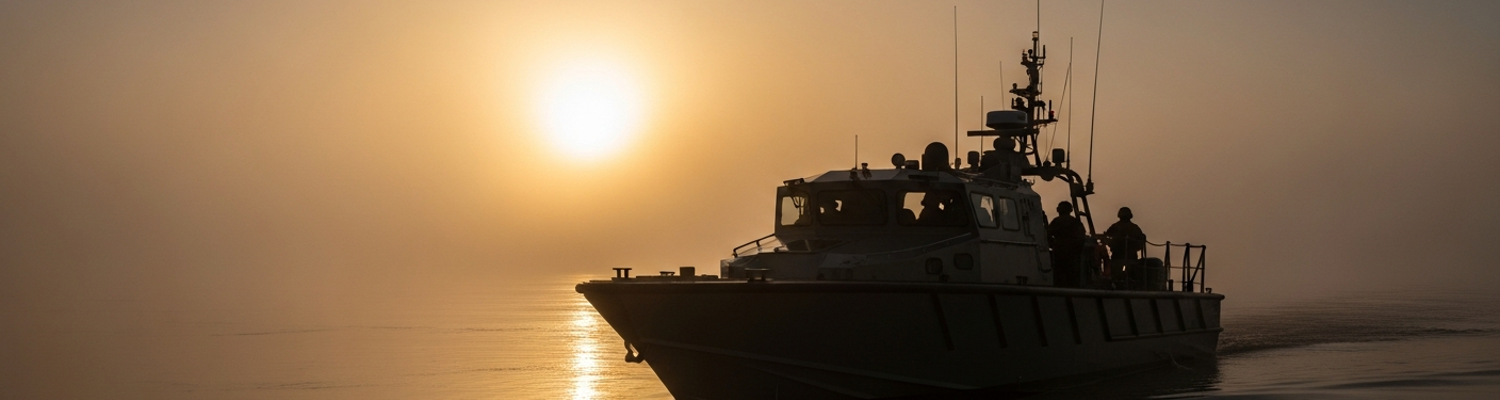
The arrival of US Navy Riverine Squadron 21 (RIVRON 21) in southern Spain marked a new, highly specialized phase in this effort. This was not a traditional naval deployment. RIVRON 21 was a brown-water unit, a force trained for inland waterways, a capability largely dormant since Vietnam but resurrected under the new Navy Expeditionary Combat Command (NECC). Operational logs (File Ref: RIVRON21-OPS-001A) show the unit was airlifted into the shared US-Spanish naval station at Rota. They brought a specific toolkit for their mission. The core of their force consisted of the Small Unit Riverine Craft, or SURC. These were not deep-water vessels. They were 39-foot armored patrol boats, powered by twin Yanmar diesel engines connected to Hamilton waterjets. This propulsion system was chosen specifically to avoid fouling with propellers in shallow, debris-filled water. This design allowed a SURC to operate in water as shallow as 24 inches and make a 180-degree turn in less than a single boat length. Each boat mounted three heavy machine guns, typically the M2HB, and was equipped with a Raymarine radar and depth sounder suite for close-quarters navigation. The deployment was a joint venture intended to augment the Guardia Civil’s Servicio Marítimo, whose own vessels lacked the specific high-speed, heavily armed profile of the American boats.
The mission was maritime anti-terrorism interdiction. A review of the operational planning reveals the complexity of this task within the Guadalquivir estuary. It was not simply patrolling. The core of the mission was Visit, Board, Search, and Seizure (VBSS), the tactical process of intercepting and inspecting suspicious vessels. Doing so on a massive container ship moving with the tide up a narrow commercial channel presented a unique danger. The rules of engagement (ROE) jointly drafted with Spanish authorities were exceptionally restrictive. Lethal force was governed by the principles of demonstrated hostile intent, a difficult threshold to prove when dealing with a commercial vessel that might simply be slow to respond. Planners had to account for the river’s geography, where high banks could create radar shadows and the sheer volume of civilian traffic provided endless cover. The interdiction strategy was therefore layered. Intelligence from international partners would flag high-risk vessels long before they reached the Spanish coast. RIVRON 21’s role was to be the sharp end, acting on that intelligence to conduct targeted boardings in the river’s lower estuary.
Operational realities quickly imposed themselves. The Guadalquivir is a tidal river, dominated by the Atlantic’s rhythm. This factor dictated every patrol schedule. The high sediment load of the river, a result of centuries of agricultural runoff, proved to be a persistent mechanical adversary. Maintenance records from the first weeks of deployment show a recurring issue with the Hamilton waterjets on the SURCs. Fine, abrasive silt was being ingested by the water intakes. This led to accelerated wear on the impellers and stator vanes inside the jet drives. This degradation reduced the boats’ top speed and acceleration, the very attributes that made them suitable for the mission. A SURC that was supposed to sprint at 39 knots to intercept a target might find itself struggling. The initial solution involved fitting finer mesh screens over the intakes, but this created its own problems. The screens would rapidly clog with river weed and other organic debris, starving the engines of water and forcing crews to conduct risky in-water cleaning operations.
The decision to emplace a physical barrier was made under extreme duress in the final quarter of 2001. A review of joint operational directives from Rota indicates that the persistent mechanical failures of RIVRON 21’s waterjets were a primary driver. The squadron could not guarantee its ability to rapidly intercept a potential threat vessel. This left a significant gap in the layered defense of the river. The proposed solution was a provisional floating barrier and sensor array, a measure intended to be a temporary backstop while the SURC maintenance issues were resolved. The compressed timeline was brutal. Planners at the NECC and their Spanish counterparts were directed to have a functional system in place before the high volume of holiday shipping began in late November. This left little time for proper environmental assessments or technological vetting. The contract was fast-tracked, relying on off-the-shelf components that were available for immediate delivery, not necessarily those best suited for the unique conditions of the Guadalquivir.
It was a stopgap solution.
The installation site selected was the river mouth, a wide, turbulent expanse of water where the Guadalquivir meets the Gulf of Cádiz near the port of Sanlúcar de Barrameda. From a tactical standpoint, this was the only logical chokepoint. Geographically, it was a disastrous choice. The estuary here is a dynamic, high-energy environment, characterized by a 3.5-meter tidal range, powerful Atlantic currents, and a massive volume of shifting sediment. The area is dominated by the marshy, protected wetlands of Doñana National Park, imposing severe environmental restrictions on any construction. Despite these challenges, a detachment from US Navy Underwater Construction Team Two (UCT 2), working alongside Spanish naval engineers, was tasked with the installation. Their operational logs detail a constant struggle against the environment. Concrete anchor blocks, weighing several tons each, were barged into position but immediately began sinking into the soft, silty riverbed. They failed to provide the solid mooring required. The powerful tidal flows made the work of the Seabee divers exceptionally hazardous.
The barrier itself was a composite system, reflecting its hasty procurement. It consisted of large, foam-filled polyethylene buoys linked by heavy-gauge galvanized steel nets, a design intended to stop or foul the propellers of small, fast-moving craft. The critical element was the integrated sensor array. This was an ambitious attempt to provide early warning. The system, designated the Provisional Underwater Intrusion Detection System (PUIDS), wove together two main technologies. First, a line of passive hydrophones was daisy-chained along the barrier’s length, intended to listen for the distinct acoustic signature of approaching boat engines. Second, a series of magnetic anomaly detectors (MADs) were attached to the anchor chains, designed to sense the large metal mass of a vessel’s hull passing overhead. Both systems were fundamentally unsuited for the environment. Archival performance reports show the hydrophones were immediately overwhelmed by the ambient noise of the busy shipping channel and the constant roar of tidal water, producing a continuous stream of false positives. The MAD sensors were rendered useless by the high concentration of natural iron deposits in the river’s sediment, creating a permanent magnetic distortion that masked any potential target. The provisional barrier had become a navigational hazard.
The first significant test of the barrier system came from a direction planners had underestimated. Meteorological records from late 2001 show a series of unusually aggressive Atlantic winter storms tracking further south than normal, directly into the Gulf of Cádiz. One system in particular, a deep depression that swept across the Iberian Peninsula in early December, subjected the barrier to forces its off-the-shelf components were never designed to withstand. The large polyethylene buoys were tossed by storm surges that elevated the sea level by over a meter, creating immense strain on the anchor chains. The heavy-gauge steel nets were subjected to repeated, cyclical loading from the wave action, causing metal fatigue at connection points. Post-storm damage assessment reports from UCT 2 divers noted numerous sheared shackle pins and stress fractures in the chain links. The integrated sensor array proved equally fragile. The force of the waves tore entire sections of hydrophone cable from their mountings, while the violent motion generated a cascade of meaningless acoustic data.
This was a catastrophic failure of environmental assessment.
Even without the force of the storms, the barrier’s location placed it in a constant battle against the tide. The Guadalquivir estuary experiences a semidiurnal tidal range that can reach 3.5 meters. This created powerful tidal currents that flowed perpendicular to the barrier’s orientation, exerting a relentless drag on the entire structure. Hydrographic surveys of the era confirm that current velocities at the mouth regularly exceeded one meter per second during the peak ebb and flow of spring tides. This constant, reversing pressure worked to undermine the barrier’s foundation. The multi-ton concrete anchor blocks, already settled precariously into the soft riverbed, were now subjected to a cyclical push-and-pull force. The current acted like a liquid crowbar, gradually rocking the anchors and creating voids in the sediment around them. This process was accelerated by scouring, where the fast-moving water eroded the riverbed around the base of the blocks, progressively reducing their holding power. Within weeks, divers from UCT 2 reported that some anchor blocks had been undermined by as much as a meter, causing their attached chains to sag and rendering entire sections of the net barrier ineffective.
The combination of storm damage and tidal fatigue created a cascade of failures. Weaknesses introduced by the winter storms were exploited by the daily grind of the tidal currents. A chain link fractured by wave-induced metal fatigue would hold for a time, only to finally snap under the sustained pull of an ebb tide. A section of netting torn loose from its buoy during a gale would then be dragged along the riverbed by the current, snagging on other components and pulling them apart. Maintenance and repair became an impossible task. UCT 2 and Spanish naval engineering teams would replace a sheared anchor chain in one section only to have another fail elsewhere. By early 2002, a review of operational reports (UCT2-DIVE-LOG-02-045) indicates that less than 40 percent of the barrier was considered fully intact. The remainder was a tangled wreck of buoys, nets, and cables, creating a serious navigational hazard for the very shipping it was meant to control.
The full scope of RIVRON 21’s operational paralysis remained obscured by optimistic command reporting until a specific, highly restricted document began circulating within the Pentagon. Internal NECC correspondence from early 2002 reveals repeated references to the ‘5 AWA 200 Draft Report ATO Response’. This was not a standard naval audit. The document originated from the 5th Asymmetric Warfare Assessment group, a specialized Army-led joint command analysis team. It was prepared as a direct response to an urgent request from the Department of Defense’s Anti-Terrorism Office (ATO). The report was a brutal, ground-level assessment of mission capability. It bypassed the normal chain of command and relied on direct interviews with RIVRON 21 maintenance crews at Rota. The document’s initial finding was stark. The squadron’s Small Unit Riverine Craft were not just suffering from accelerated wear. They were becoming systematically unrepairable.
The most damning section of the 5 AWA 200 draft report was also the most sensitive. A short paragraph was completely redacted in the initial versions distributed outside of the ATO. This blacked-out text detailed the specific origin of the failing waterjet components. To meet the urgent post-9/11 deployment timeline, the initial batch of SURCs delivered to RIVRON 21 had been fitted with HamiltonJet model HJ292 waterjets that used commercial-grade, off-the-shelf stainless steel impellers and wear rings. These were not the hardened, military-specification components designed to resist abrasion. The redaction concealed the fact that this decision was made at the procurement level to avoid a six-month delay in the production line. The commercial parts had a different stock number, a different wear tolerance, and a different supplier. This single procurement decision cascaded into a strategic failure. The fine, abrasive silt of the Guadalquivir was grinding away the softer commercial-grade steel at a rate maintenance crews had never encountered.
This was not a mechanical problem. It was a systemic logistical collapse. The nature of the failure became clear as RIVRON 21’s maintenance chief attempted to order replacements. When mechanics submitted work orders for the failing parts using the commercial serial numbers stamped on the components themselves, the Navy’s centralized supply system, the Naval Tactical Command Support System (NTCSS), repeatedly rejected the requests. The part numbers did not exist in the military’s master inventory. Archival evidence shows a spiral of bureaucratic failure. Requisitions for the correct military-spec impellers were submitted, but those parts would not fit the commercial-spec jet housings installed in the boats. The squadron was trapped. They possessed boats whose propulsion components could not be ordered because, according to the official supply chain, they did not exist. The only solution was to attempt to source the commercial parts directly from civilian distributors in Europe, a process that was slow, expensive, and not authorized under expeditionary force procurement rules. The 5 AWA 200 report stated plainly that of the twelve SURCs deployed, eight were non-mission capable due to this single, unresolvable supply chain fracture.
A review of operational directives from early 2002 reveals a specific, agonizing period of exposure that lasted for six weeks. This window of vulnerability was the direct outcome of the logistical failure that had paralyzed the American riverine squadron. The findings of the 5th Asymmetric Warfare Assessment group’s draft report had confirmed the worst. The commercial-grade HamiltonJet HJ292 waterjet impellers, ground down by the Guadalquivir’s silt, had no corresponding part number in the NTCSS. For a period of forty-two days, while high-level commands debated the report’s findings, the squadron was effectively dead in the water. Of the twelve high-speed interceptor craft deployed to defend the river, eight were officially listed as non-mission capable. The remaining four operated under severe performance restrictions that prohibited high-speed maneuvers.
The river was now open.
This logistical collapse transformed the mouth of the Guadalquivir into an undefended chokepoint. The failure of RIVRON 21 coincided perfectly with the disintegration of the Provisional Underwater Intrusion Detection System. The physical barrier was a submerged wreck. The high-speed intercept boats were tied to the pier. This left the wide estuary entrance at Sanlúcar de Barrameda, the single gate for all maritime traffic heading the 90 kilometers inland to Seville, completely unmonitored by the specialized counter-terrorism assets deployed for that exact purpose. The entire layered defense strategy had been built on stopping a threat in the lower estuary. With both the barrier and the intercept squadron removed from the equation, that strategy had ceased to exist.
The consequence was an acute and immediate vulnerability to maritime infiltration. The primary risk was no longer just a large container ship carrying a concealed weapon, but the far more nimble threat of small, fast-moving craft. Intelligence assessments of the period outlined scenarios where a rigid-hulled inflatable boat or a modified fishing trawler could exploit the gap. Such a vessel could leave a port in North Africa, time its arrival with a high tide during hours of darkness, and blend in with the legitimate fishing fleet operating in the Gulf of Cádiz. Without the SURCs to perform high-speed spot checks and with the PUDS hydrophone array non-functional, there was nothing to detect its distinct acoustic signature. Once past Sanlúcar, the craft could use the river’s high banks to create radar shadows, proceeding upriver toward Seville. The mission could be an attack on a passing tanker, the covert landing of a small attack or intelligence team in the protected marshlands of Doñana National Park, or the placement of a limpet mine on the hull of a vessel moored at the Port of Seville itself. For six weeks, the 90-kilometer transit to Spain’s only inland port was a soft target.
The dual collapse of the riverine squadron and the physical barrier created a profound vulnerability at the mouth of the Guadalquivir. The wreckage of the barrier was a submerged navigational hazard, its sensors long since silenced by storm damage and tidal scouring. Simultaneously, the revelation of the SURC logistical failure meant that RIVRON 21’s high-speed interceptors were confined to their piers at Rota. The result was a 90-kilometer blind spot, stretching from the open Atlantic to the port facilities at Seville. This left Spanish authorities, principally the Guardia Civil’s Servicio Marítimo, to cover a massive gap with patrol craft not specifically designed for high-speed, opposed boardings. The threat picture suddenly expanded. Intelligence assessments now had to account for fast-moving surface threats that could exploit the gap, transit the river under cover of darkness or civilian traffic, and approach the port undetected. The episode became a harsh lesson in the complexities of rapid deployment engineering. The core failure was not technological but procedural. The pressure to deploy capabilities immediately following 9/11 led to critical shortcuts in procurement and environmental vetting. In response, engineering protocols for expeditionary units were substantially revised. New directives mandated integrated logistics support plans as a non-negotiable component of any rapid acquisition. Before any off-the-shelf system could be approved for a rapid deployment, its core components had to have their part numbers entered and validated within the master military supply system. New protocols also required an accelerated but mandatory environmental survivability assessment, ensuring that equipment chosen for speed of delivery was also suited to the specific deployment location.