
REDSOX Framework and Early CIA Soviet Division Planning
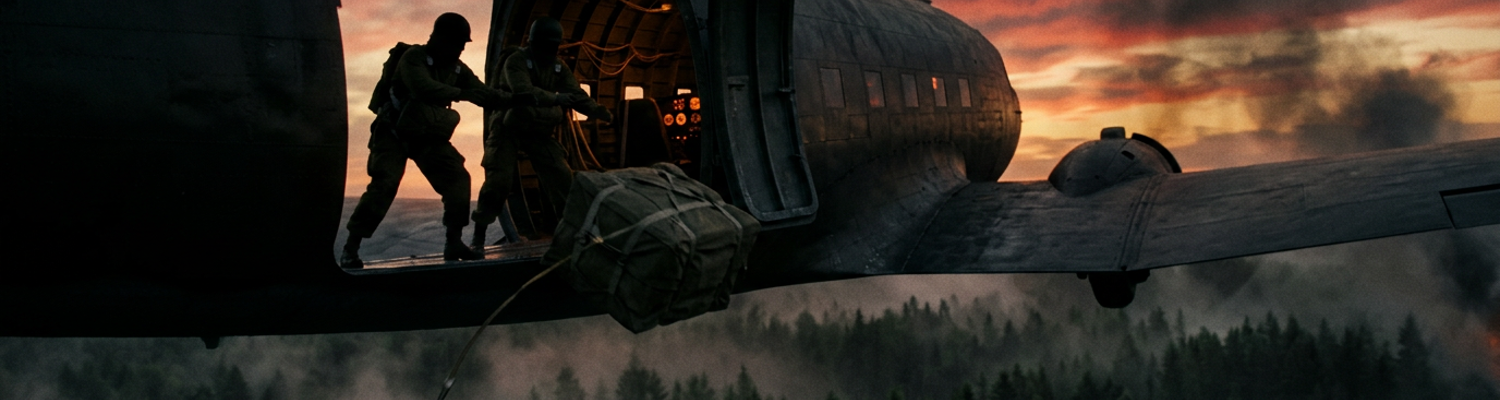
Douglas C-47 transports flew low over the choppy waters of the Baltic Sea without navigation lights, carrying heavy supply bundles and armed Latvian exile agents into hostile territory. Inside the stripped cargo cabins, jumpmasters wrestled heavy canvas containers packed with RS-1 shortwave radios, gold coins, false identity papers, and silenced pistols to the edge of the open doorway. Static lines snapped taut against interior steel cables as the containers fell away into the dark mist above thick pine forests. Flight crews listened to the harsh thrum of twin radial engines battling Baltic headwinds, unable to verify where the gear landed or if anyone waited below to secure the drop zone. Parachutes deployed in the cold rotor wash, carrying men and metal canisters down through dense branches toward the boggy coastal terrain. Ground teams relied on handheld radio beacons and fragile silk canopies that frequently tore on treetop branches, scattering gear and exposing incoming operatives to immediate detection by Soviet coastal patrols.
Soldiers from Soviet counterintelligence units tracked down these scattered parachutes across the coastal woods, while the intelligence officers directing the infiltrations sat thousands of miles away in Washington. CIA headquarters planners operated in strategic isolation, attempting to mount penetration missions into Soviet occupied Latvia despite a severe lack of verified ground intelligence. Desk officers initiated Project AECOB and Project ZRLYNCH under the overarching REDSOX operational umbrella during the early 1950s. Headquarters staff drafted ambitious plans to build a covert partisan network among the surviving Forest Brothers fighters hiding in the Latvian forests. Case officers worked behind soundproofed office walls, relying on outdated prewar road maps, rumors gathered from refugee camps in Sweden, and unverified reports passed down from earlier British intelligence efforts. Planners guessed about landing terrain, Soviet military checkpoints, and the loyalties of local contacts who had already vanished into the Soviet prison system.
Prison wardens locked away these vanished contacts while radios in the Washington communications room crackled with brief Morse code messages that offered desk officers very little clarity about the actual fate of their deployed field agents. Incoming dispatches from Project ZRLYNCH and Project AECOB took weeks to arrive by one way shortwave channels and secret writing mailed through neutral European addresses. Stifling bureaucratic pressure mounted on the Soviet Russia Division commanders to demonstrate active penetrations behind the Iron Curtain, leading them to accept ambiguous field messages as authentic proof of operational success. Staff officers repeatedly misread delayed replies and subtle transmission discrepancies that should have signaled enemy capture. Headquarters directors treated sporadic signal bursts as signs of an expanding resistance movement rather than warnings of hostile deception. Commanders pushed forward with fresh drop orders, unaware that Soviet security services had already seized the transmitters and were dictating the outgoing text.
Planners in the Soviet Russia Division approved new flight paths and packaged additional weapon canisters based entirely on these compromised Soviet communications. Division leaders routed more Latvian recruits through clandestine jump training at bases in West Germany and Virginia, preparing them for nighttime insertions into designated forest clearings. Case officers packed each agent kit with poison capsules, thousand ruble banknotes, forged internal passports, and miniature cameras before dispatching the teams toward European staging airfields. Every tactical decision made inside the isolated Washington offices sent another team directly into ambush zones prearranged by Soviet counterintelligence troops. Soviet state security officers waited in the timberlands of Courland with loaded submachine guns, capturing the infiltrators the moment their boots touched the soil.
Emigre Vetting Protocols and Baltic Cutout Networks
Handcuffs locked around the wrists of captured operatives while desk officers at CIA headquarters remained entirely unaware of the ambushes, demanding fresh recruits to replace the silent teams. Headquarters commanders operated in organizational isolation, feeling severe administrative pressure to keep penetration flights moving despite the total loss of contact with previous drops. American intelligence officers established clandestine recruiting networks across Allied occupation zones in West Germany, targeting crowded displaced persons camps where thousands of anti Soviet refugees lived in wooden barracks. Case officers needed trusted intermediaries who understood Baltic dialects and could approach potential recruits without exposing American intelligence sponsorship. Vetted Latvian emigres were established as cutouts and talent spotters across displaced persons camps in Western Europe to recruit operational candidates. Spotters moved through exile social clubs, relief societies, and veteran circles, watching for young Latvian men who showed strong physical endurance and intense hostility toward Soviet rule.
Spotters passed their candidate recommendations to American case officers in secure safe houses, initiating strict administrative screening processes designed to weed out Soviet infiltrators. Agency officers required every prospective recruit and cutout to undergo extensive security assessments before receiving operational clearance. CIA handlers screened displaced persons and Baltic emigres, including Janis Ozols, using extensive Personal Record Questionnaires. Candidates filled out Part One by hand, writing out detailed family histories, childhood addresses, schooling records, and wartime military service details. Case officers then completed Part Two in strict secrecy, compiling separate evaluations of the applicant political loyalty, alcohol habits, financial debts, and general reliability. Couriers packed these completed questionnaires into locked diplomatic pouches and shipped them directly to CIA headquarters for registry cross checks.
Desk officers in Washington examined the questionnaire sheets inside guarded offices, searching card registries for any trace of Soviet security recruitment. Headquarters staff worked under heavy pressure from senior intelligence directors who wanted immediate operational networks operating behind Soviet borders. Case officers had to make clearance decisions based purely on written answers, unable to interview the displaced persons face to face or verify their stories within Latvia itself. Staff analysts approved operational clearances for men like Janis Ozols and dozens of other emigres, sending approval cables back to West German stations without discovering whether the applicants had already caught the attention of Soviet intelligence. Administrative separation shielded headquarters planners from the complex social realities and security compromises simmering inside the crowded exile camps. Washington commanders stamped clearance paperwork approved and routed the files to the dispatch room.
Field officers in Munich and Frankfurt received these headquarters clearance authorizations and immediately ordered their cutout networks to sign up the selected candidates. Vetted spotters approached the approved recruits in private tavern backrooms and isolated safe apartments across Bavaria. Handlers transferred the newly recruited exiles to clandestine facilities, issuing false identity cards and packing them into unmarked vehicles bound for remote paramilitary training estates. Instructors issued combat fatigues, radio transmitters, and compasses to the recruits, beginning intensive field exercises in sabotage, weapons handling, and parachute jumps. Communications officers scheduled new aerial drop dates and radio frequencies for the graduating recruits, sending transmission timetables back to the command desks in Washington.
Air and Maritime Infiltration Vectors
Teletype printouts carrying these transmission timetables triggered immediate flight authorizations at CIA headquarters, where commanders committed their newly trained exile teams to dual insertion routes. Desk officers in Washington operated under intense administrative pressure from Agency leadership to produce intelligence sources behind Soviet borders, yet they remained isolated from actual Baltic conditions by thousands of miles of ocean. CIA operations deployed agent teams into Soviet Latvia utilizing nighttime aerial parachute drops and clandestine maritime landings along the Baltic coast. Planners charted aerial routes across Baltic airspace for unmarked transport aircraft and coordinated sea routes with British intelligence using stripped German motor torpedo boats. Agency commanders assumed these paired air and sea approaches would bypass Soviet border fortifications and prevent local coastal guards from cutting off access to the interior. Officers stamped final operational orders inside their sealed briefing rooms and dispatched the agent squads to forward staging points in West Germany and southern Sweden.
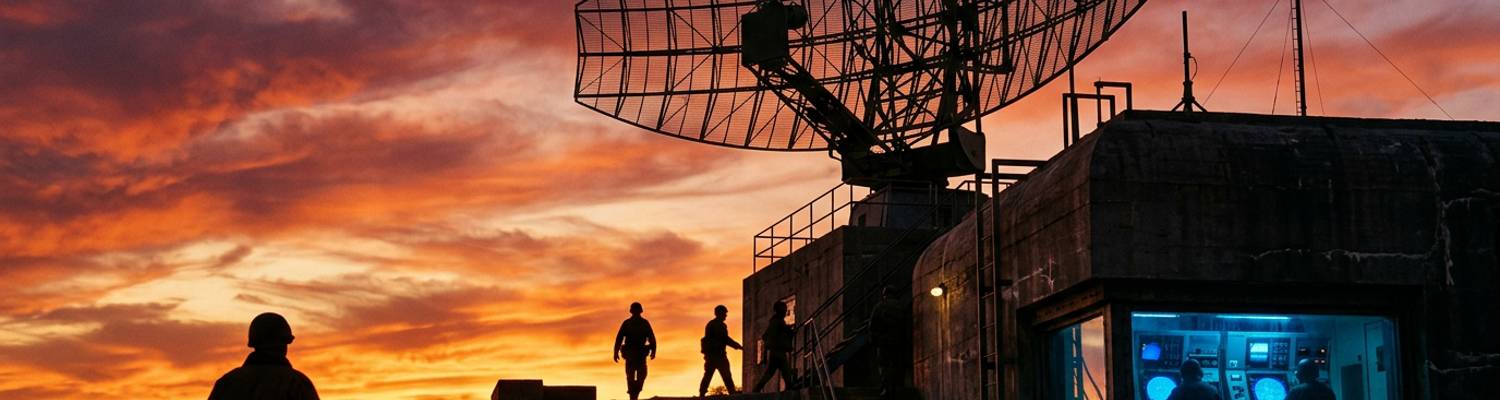
Motor torpedo boats crewed by veteran German sailors took aboard the maritime teams at Swedish and German ports under complete blackout conditions. Vessels sped across the Baltic Sea at night with muffled diesel exhausts, halting a few miles off the Latvian coast to deploy inflatable rubber rafts into the dark surf. Exile agents paddled through freezing ocean spray toward the rocky beaches of Courland, hauling waterproofed crates of ammunition, medical supplies, and shortwave radio batteries ashore beneath the sweep of Soviet radar stations. Transport aircraft flew simultaneous diversionary tracks further inland, pushing parachutists through open cargo doors into mist covered clearings above the Latvian tree line. Parachute silk caught on spruce branches as the men descended into the dark, forcing jumpers to cut their suspension lines with pocket knives and drop down into coastal marshland before Soviet searchlights converged on their positions.
Searchlights swept the coastal marshland while Latvian infiltrators gathered their dropped equipment from the damp brush and marched inland along hidden timber trails to link up with anti Soviet resistance fighters. Infiltrators were tasked with establishing direct contact with surviving Forest Brothers partisan groups to build a sustained underground intelligence apparatus. Operatives searched for concealed earthen bunkers deep in the forests of Courland and Vidzeme, carrying recognition passwords, gold coins, and one time cipher pads intended to supply active partisan units with reliable resources. Partisan contacts were supposed to provide safe hiding places, guide newly arrived agents around Red Army checkpoints, and gather military intelligence on Soviet naval bases and troop cantonments for transmission back to the West. Agents discovered that years of brutal Soviet counterinsurgency sweeps had already destroyed many genuine partisan cells, leaving behind decimated groups that were desperately short of food, weapons, and secure shelter.
Transmitters brought ashore by the infiltration teams sent erratic radio pulses into the atmosphere, but Soviet state security units had already surrounded the surviving forest hideouts with armed cordons and direction finding vans. State security officers impersonated resistance leaders, seized the agency radios, and forced captured radio operators to transmit scripted messages under gunpoint. Intelligence directors in Washington read the incoming Morse code reports without knowing that Soviet handlers dictated every word, because headquarters commanders lacked any independent field officers on Baltic soil to corroborate the dispatches. Bureaucratic pressure inside the CIA Soviet Division pushed desk officers to view these cooperative replies as proof of a thriving underground network rather than evidence of enemy control. Planners approved another wave of maritime landings and parachute drops on the basis of these false signals, directing subsequent agent teams straight into Soviet coastal traps.
Wireless Telegraphy Protocols and Communications Nodes
Operatives dodged these coastal traps by scattering into dense pine woods and dragging their camouflaged gear into concealed earth shelters. Infiltrated operatives such as AECAMUSO-2 and AECAMBARO-2 transmitted intelligence back to CIA stations via low power portable transmitters. Exile agents hauled bulky lead acid batteries and collapsible antenna masts through flooded bogs, working under constant threat of discovery by Soviet security cordons. Operators strung copper antenna wire high into the spruce canopy under complete darkness, carefully aligning the wire toward receiving bases in Western Europe before firing up their vacuum tubes. Soviet military patrols combed nearby roadways with directional listening vans, forcing the radio operators to limit their broadcasts to brief bursts of five letter cipher groups and pack their gear within minutes. Atmospheric disturbances and drained battery cells often garbled the weak shortwave signals, compelling the operatives to tap their Morse keys repeatedly through heavy static.
Antenna arrays erected across Western Europe captured these faint shortwave signals and routed the buzzing audio directly into American listening posts. Communications staging facilities in West Germany and Washington maintained scheduled high frequency wireless telegraphy and secret writing contact with field agents. Radio technicians at forward base stations near Frankfurt and Munich manned rotating around the clock listening watches, logging the timing, frequency, and exact Morse cadence of every incoming pulse onto wax recording cylinders. Intelligence couriers simultaneously gathered international postal letters sent by agents using secret writing techniques, forwarding the envelopes to specialized agency laboratories for chemical development. Technicians applied chemical reagents to the back of ordinary family correspondence, exposing invisible paragraphs written between the visible lines that revealed Soviet troop movements and partisan supply needs. Teletype operators typed the recovered messages onto paper punch tape and transmitted the decoded operational text directly to command desks in the United States.
Commanders gathered around teletype machines inside windowless offices at CIA headquarters in Washington, reading message strips that arrived days or weeks after agents sent them from Baltic hideouts. Severe communications lag caused long operational delays, leaving Washington managers separated from ground conditions by weeks of travel time for postal mail and erratic radio contacts. Stifling administrative pressure from agency leadership forced desk officers to keep Project AECOB active and show concrete intelligence production, even when incoming messages showed clear technical warnings of enemy control. Cryptanalysts noticed subtle shifts in Morse keying rhythms, omitted prearranged security indicators, and unusual phrasing that suggested field agents were transmitting under Soviet armed guard. Case officers dismissed these alarming technical discrepancies as simple operator fatigue or equipment wear, unwilling to admit that Soviet counterintelligence had compromised their communications chain. Headquarters staff filed the suspicious dispatches into active mission folders and marked the reports as verified field intelligence, completely unaware that Soviet state security officers had authored the text.
Officers acted on these deceptive messages by ordering new supply flights and dispatching follow up couriers across the Baltic border. Strategic isolation trapped the Soviet Russia Division in deep administrative self deception, where every scripted radio reply from Riga was taken as proof of expanding anti Soviet resistance. Case officers drafted fresh operational timetables, allocated thousands of operational rubles, and packaged new RS-1 shortwave radios into cargo drop containers. Technicians programmed new high frequency crystals and compiled replacement one time pads, scheduling future wireless contacts that were already monitored by Soviet state security. Officers loaded the crated equipment and transmission schedules into transport planes at West German staging fields, sending more men and gear straight toward Soviet coordinates.
Headquarters Rationalization and Ignored Security Indicators
Soviet state security officers seized these freshly delivered transmitters in the Courland pine clearings and forced the captured radio operators to broadcast scripted check ins back to Western listening posts. Radio technicians at European listening stations logged erratic Morse code signals that deviated sharply from the standard operating procedures established during training. Isolated headquarters case officers repeatedly rationalized delayed radio transmissions, altered transmission rhythms, and fragmented signal bursts. Desk managers in Washington assumed that autumn rain, damp forest terrain, and weak battery cells caused the irregular keying cadences and choppy message bursts. Administrative pressure from senior agency leadership pushed case officers to prove that Project AECOB was maintaining active networks behind Soviet lines. Case officers therefore explained away these irregular telegraph pulses as common mechanical glitches, filing the translated messages into operational dossiers and approving further contact schedules.
Teletype ribbons filed inside these active dossiers revealed that incoming transmissions lacked the protective safeguards built into agency communications training. Communications instructors had taught every Latvian wireless operator to use prearranged security indicators, such as inserting a deliberate spelling mistake into the fourth cipher group or omitting a specific punctuation code, to prove they were working freely. CIA handlers routinely ignored omitted prearranged security indicators and vital procedural duress codes that signaled agent capture. Captured operatives in Latvia intentionally dropped these required markers or transmitted specific warning digits to alert their handlers that Soviet counterintelligence officers stood over them with weapons. Headquarters managers dismissed these missing codes as simple human errors caused by field exhaustion, cold fingers, and rushed typing in dark forest hideouts. Case officers wrote explanatory memos arguing that an operative on the run could easily forget a complex cipher variation, brushing aside the explicit technical alarms that pointed directly to hostile control.
Commanders inside the isolated Soviet Russia Division accepted these flawed rationalizations because admitting an operational disaster would threaten their division funding and agency standing. Distance and slow communications completely detached the Washington staff from the realities of Baltic ground combat, creating an insular environment where paperwork replaced physical verification. Bureaucratic managers placed supreme value on maintaining scheduled radio contact with Courland, treating every successful decipherment as proof of a thriving underground partisan army. Soviet counterintelligence officers exploited this headquarters credulity by feeding carefully balanced military rumors and false intelligence reports back through the controlled transmitters. Washington analysts evaluated these fabricated reports as genuine raw intelligence, circulating the documents to senior agency planners as justification for expanding Project AECOB operations.
Planners responded to these favorable intelligence summaries by drafting new operational directives that committed additional exile agents to the Baltic infiltration routes. Logistics officers ordered replacement radio crystals, gold sovereigns, and false Soviet internal passports from agency supply depots to support the supposedly successful resistance cells. Case officers scheduled fresh aerial drops and coastal boat runs directly to coordinates provided by the captured transmitters, trusting geographic locations that Soviet ambush squads had already encircled with machine guns. Field recruits training in West Germany packed their parachutes and boarding gear under orders generated by an isolated headquarters staff that refused to read its own security warnings. Transport aircraft fueled their tanks at European airfields for another run into Soviet Latvia, carrying unsuspecting operatives straight toward capture and execution.
Soviet Counterintelligence and KGB Radio Playback Operations
Soldiers from Soviet state security intercepted and captured AECOB infiltration teams shortly after their arrival on Latvian territory. Ambush units tracked the incoming transport planes by radar, surrounding the designated forest clearings with armed cordons and tracking dogs before the parachutists even touched the branches. Border troops rushed the landing zones with submachine guns drawn, tackling the exile agents in the wet undergrowth before the men could unclip their harnesses or reach for their cyanide capsules. Soviet interrogators separated the captured radio operators from their team leaders on the spot, confiscating their personal documents, weapon cases, and concealed cipher materials. Coercion and threats of immediate execution broke the resistance of several operators within hours, forcing them to reveal their transmission schedules, frequency tables, and emergency call signs. Soviet officers packed the seized equipment into wooden crates and transported the gear to counterintelligence offices in Riga for technical examination.
KGB counterintelligence exploited captured radio gear and ciphers to execute long running radio playback operations, feeding controlled disinformation back to Washington. Soviet communications specialists set up the American made RS-1 shortwave transmitters inside secure rooms, hooking the radios to stable power supplies and stringing matched wire antennas over the rooftops. Handlers brought the captured Latvian wireless operators into the room under armed guard, ordering them to sit at the telegraph keys and tap out prearranged check in messages while Soviet officers monitored every stroke. Counterintelligence planners drafted scripts that blended authentic local details, such as genuine railway schedules and real weather reports, with fabricated claims of an expanding anti Soviet partisan network. Soviet telegraphers also learned to duplicate the specific finger tapping cadence of individual agents, ensuring that transmissions could continue smoothly even if an operative refused to cooperate or died in custody. KGB directors reviewed every coded script before broadcast, ensuring that each five letter cipher group sent across the Baltic airwaves reinforced the illusion of a successful clandestine mission.
Teletype machines in West Germany recorded these Baltic cipher bursts and relayed the transcripts directly to CIA headquarters in Washington. Command personnel inside the Soviet Russia Division read the decoded cables in complete isolation, cut off by thousands of miles of ocean from the physical reality of the Baltic woods. Stifling administrative pressure from agency leadership pushed desk officers to produce tangible intelligence victories, blinding them to the subtle warning signs embedded in the incoming messages. Case officers celebrated the deceptive radio reports as proof that Project AECOB was establishing a permanent underground intelligence network across the Latvian countryside. Communications delays of days or weeks between transmissions made real time verification impossible, allowing the commanders to make strategic decisions based entirely on Soviet scripted lies. Headquarters managers praised the field agents for their courage and filed the manipulated reports as verified operational successes, completely unaware that Soviet officers were controlling every transmission.
Riggers packed heavy canvas bundles with gold coins, ammunition, and replacement radio crystals to fulfill the supply requests sent by the Soviet controlled transmitters. Soviet counterintelligence officers specifically requested additional equipment and fresh agents in their playback messages, aiming to lure more CIA resources directly into their waiting custody. Headquarters commanders approved these logistics requests without independent corroboration, believing that every new parachute drop would expand their anti Soviet underground network. Case officers selected new Latvian recruits from training camps in West Germany, assigning them to drop zones that Soviet security forces had already ringed with machine gun positions. Flight coordinators scheduled low level nighttime runs into Soviet airspace, handing flight crews navigational waypoints that led straight to active ambushes. Commanders stamped final flight authorizations at their desks and sent the mission orders to forward airfields, sending another wave of operatives into Soviet hands.
Riga Public Disclosures and Project Termination
Soviet guards dragged these newly arrived agents from the drop zones directly into the basement cells of state security headquarters in Riga. Interrogators stripped the captured men of their flight suits and piled their agency gear alongside years of confiscated parachutes, RS-1 shortwave radios, gold coins, and forged identity booklets. Case officers in Washington sat behind their desks in total isolation, waiting for delayed Morse code transmissions and believing that their covert Baltic network was thriving. Administrative managers had ignored years of missing duress codes and irregular signal bursts because bureaucratic pressure pushed them to claim successful intelligence penetrations. Soviet counterintelligence leaders gathered the captured exile agents and assembled the stockpiles of seized hardware to expose the entire American infiltration effort to the international press. Soviet authorities publicly presented captured AECOB operatives and CIA espionage gear at press conferences in Riga between 1957 and 1958.
KGB officers arranged captured American equipment across long display tables inside the Riga briefing hall, setting out submachine guns, poison capsules, miniature cameras, and specialized radio transmitters. Guards escorted the captured Latvian operatives in front of rows of Soviet and foreign journalists, instructing the prisoners to describe their recruitments in West German displaced persons camps and their CIA training regimens. Operatives detailed how American handlers had taught them parachute jumping, radio encryption, and sabotage techniques before sending them across the Baltic frontier. Journalists inspected the serial numbers on American battery packs and recorded statements from former partisans who explained that state security had neutralized the armed underground years earlier. Photographers documented the stacks of forged Soviet internal passports, gold sovereigns, and waterproof maritime landing containers for publication in official state newspapers. Wire reports carrying photographs and transcripts from these Riga hearings arrived in Washington hours later, landing directly on the desks of the Soviet Russia Division commanders who had spent years operating in bureaucratic isolation.
Teletype ribbons carrying the Riga transcripts forced agency desk officers in Washington to confront the complete collapse of their operational assumptions. Planners who had rationalized missing duress codes, altered radio rhythms, and delayed messages now saw their covert operatives speaking under Soviet direction in front of international news correspondents. The public revelation of total Soviet penetration across the Latvian partisan underground forced the CIA to permanently terminate Project AECOB. Agency executives initiated immediate damage assessments, realizing that every radio transmission, supply coordinate, and courier route since the early 1950s had been dictated by Soviet counterintelligence. Headquarters supervisors ordered the immediate recall of active field couriers, canceled all pending supply drops, and locked the project dossiers inside agency vaults.
Riggers at forward airfields in West Germany unloaded packed cargo canisters from transport aircraft and returned crated radios to secure supply depots. Communications technicians switched off the dedicated high frequency monitoring receivers in West Germany and Washington, abandoning the Baltic call signs that Soviet operators had manipulated for years. Case officers dismantled their refugee cutout networks across European displaced persons camps, cutting ties with exile spotters and halting all recruitment interviews. Administrative directors reassigned the remaining Soviet Division desk staff to other regional branches, ending the blind strategic directives that had launched exile teams across the Baltic border. Archivists stamped final termination codes onto the operational folders, shelving the records in central headquarters filing rooms while the captured operatives remained serving long prison sentences in Soviet labor camps.