Patton Relieves Bastogne and Opens Southern Supply Corridor
Third Army armor widens the penetration into the besieged Belgian transport hub to evacuate wounded soldiers and resupply the 101st Airborne Division.
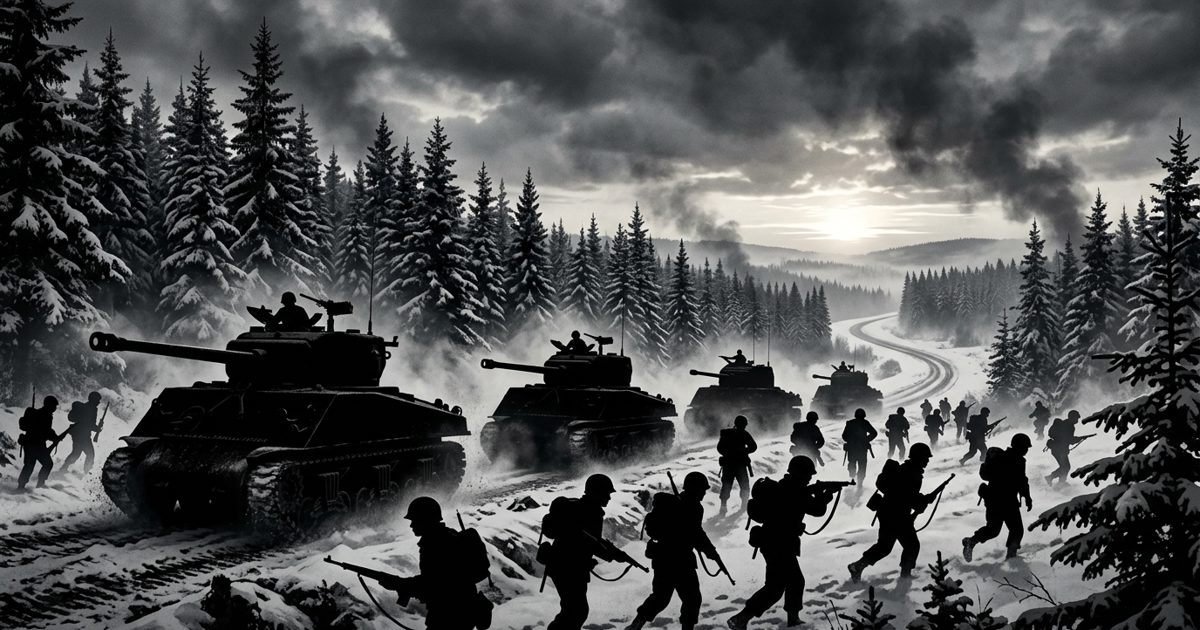
Tanks of the 4th Armored Division fought through snow-covered woods south of Bastogne on December 27, 1944, to widen a relief corridor into the encircled crossroads town. General George S. Patton Jr. had directed Combat Command R to secure the roadway leading up from Assenois after a small force of Sherman tanks first contacted the perimeter late the previous evening. German grenadiers and antitank batteries launched counterattacks across frozen fields to pinch off the fragile opening. American armor crews and attached infantrymen from the 53rd Armored Infantry Battalion repulsed each enemy thrust, battering German defensive nests with high-explosive shells and machine-gun fire.
Soldiers of the besieged 101st Airborne Division rushed forward from their foxholes to coordinate fields of fire with the arriving armor units. Paratroopers had defended the isolated Belgian transport hub for seven bitter days without adequate winter gear, medical supplies, or ammunition, repeatedly rejecting German surrender ultimatums. Brigadier General Anthony McAuliffe directed his regimental commanders to push outward alongside the Third Army tanks to expand the defensible shoulder around the Arlon highway. This combined ground action broke the tactical grip of the surrounding German divisions, opening the critical road network to heavy wheeled vehicles before nightfall.
Trucks carrying artillery shells, rations, and fresh medical teams rolled into the Bastogne perimeter during the afternoon under heavy fighter-bomber air cover. Medical officers immediately loaded outbound ambulances and transport trucks with hundreds of critically injured paratroopers who had suffered for days in damaged makeshift aid stations. Combat engineers subsequently repaired damaged sections of the roadway and cleared roadblocks to maintain uninterrupted two-way vehicle traffic. The arrival of the 4th Armored Division formally lifted the operational isolation of Bastogne, allowing Third Army forces to transition into a sustained general counteroffensive across the Ardennes.