CHRONOLOGICAL RECORD
May 2 Across U.S. Military History
9 Verified Events
1813
U.S. Army
• War of 1812
British Gunners Batter Fort Meigs in Ohio
British artillery batteries intensified an aggressive bombardment across the Maumee River against Fort Meigs on May 2, 1813. Major General William Henry Harrison directed American soldiers and militia behind earthen traverses to withstand more than a thousand cannon shots. Defenders repaired shattered breastworks under continuous shellfire while conserving ammunition for approaching infantry assaults.
1863
U.S. Army
Landmark Event
• Civil War
Stonewall Jackson Strikes the Union Eleventh Corps
Confederate infantry under Lieutenant General Thomas Stonewall Jackson completed a twelve-mile march to crush the exposed right flank of the Union Army of the Potomac on May 2, 1863. Soldiers of Major General Oliver O. Howard's XI Corps suffered total surprise and routed backward through Chancellorsville. Confederate pickets accidentally shot Jackson during a nighttime reconnaissance later that evening, inflicting fatal wounds.
1898
U.S. Navy
• Spanish-American War
Dewey Neutralizes Shore Batteries and Cuts Manila Cable
Sailors and Marines from Commodore George Dewey's Asiatic Squadron landed at Sangley Point on May 2, 1898, disabling Spanish coastal batteries and demanding the surrender of Corregidor. Dewey simultaneously severed the undersea telegraph cable connecting Manila to Hong Kong, isolating the Spanish colonial garrison from communication with Madrid. American landing parties spiked fortress guns and demolished munitions magazines along the bay shore.
1945
U.S. Army
Landmark Event
• World War II
Allied Airborne Troops Liberate Wobbelin Concentration Camp
Paratroopers of the 82nd Airborne Division and infantrymen of the 8th Infantry Division entered the Wobbelin concentration camp near Ludwigslust, Germany, on May 2, 1945. Troops discovered approximately 1,000 dead victims and 4,000 starving survivors abandoned by retreating SS guards. Division commanders immediately coordinated emergency medical relief and required local German townspeople to conduct formal burials for the deceased.
1945
U.S. Army
• World War II
Nisei Gunners Halt Dachau Death March in Bavaria
Scouts of the segregated, all-Nisei 522nd Field Artillery Battalion encountered hundreds of emaciated concentration camp prisoners near Waakirchen, Germany, on May 2, 1945. Nazi guards had driven thousands of prisoners south from Dachau before abandoning them in snowy fields. Japanese American gunners shared their field rations, distributed warm blankets, and organized medical evacuation for several thousand survivors.
1964
U.S. Navy
Landmark Event
• Vietnam War
Viet Cong Swimmers Mine Aircraft Transport USNS Card
Viet Cong combat swimmers from the 65th Special Operations Group infiltrated Saigon Port through drainage sewers on May 2, 1964, attaching limpet charges to the hull of the USNS Card. Detonations ripped a massive breach in the engine room, killing five civilian crewmen and sinking the vessel in shallow water. Navy salvage divers patched and refloated the carrier seventeen days later.
1968
U.S. Army
Landmark Event
• Vietnam War
Master Sergeant Roy Benavidez Fights Six Hours in Hell
Master Sergeant Roy P. Benavidez of the 5th Special Forces Group boarded a rescue helicopter on May 2, 1968, to extract a 12-man reconnaissance team surrounded by a North Vietnamese battalion near Loc Ninh. Benavidez leaped into heavy fire armed only with a knife and medical bag, sustaining severe wounds while reorganizing the perimeter and directing air strikes. He secured classified radio codes, loaded casualties aboard evacuation aircraft, and engaged attacking soldiers in hand-to-hand combat before collapsing with 37 wounds.
1999
U.S. Air Force
• Kosovo War
Combat Search and Rescue Team Recovers Hammer 34
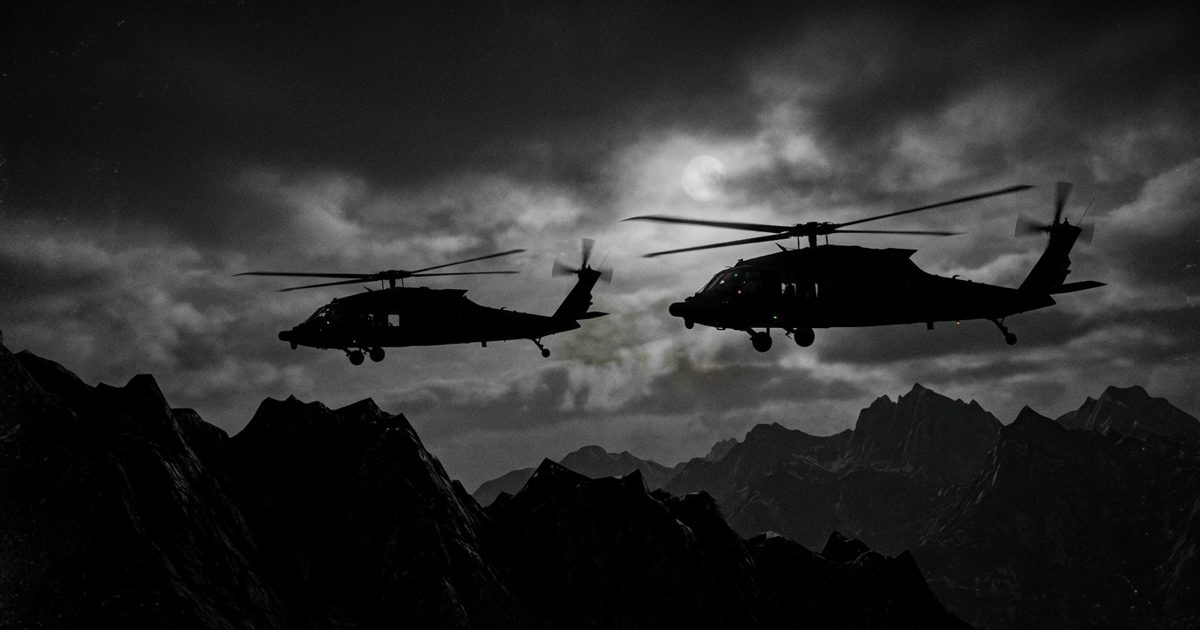
Pararescuemen and combat controllers aboard an MH-60G Pave Hawk penetrated Serbian air defenses to rescue Lieutenant Colonel David Goldfein on May 2, 1999. Serbian surface-to-air missiles had downed Goldfein's F-16CG fighter during night airstrikes against anti-aircraft batteries. Special tactics operators extracted the pilot from hostile woodland under vigorous small-arms fire less than two hours after his ejection.
2000
U.S. Air Force
Landmark Event
• Post-Cold War
Department of Defense Deactivates GPS Selective Availability
Air Force Space Command controllers ceased broadcasting the Selective Availability dithering error to global navigation satellites on May 2, 2000. Presidential directives removed the deliberate civil degradation feature to foster international commercial navigation while preserving wartime military jamming superiority. Civilian receivers worldwide instantly gained tenfold position accuracy improvements from roughly one hundred meters down to ten meters.