CHRONOLOGICAL RECORD
May 4 Across U.S. Military History
9 Verified Events
1776
Other
Landmark Event
• American Revolutionary War
Rhode Island Renounces Allegiance to the British Crown
Rhode Island legislators formally severed ties with Great Britain on May 4, 1776, becoming the first American colony to declare statutory independence. Colonial authorities immediately ordered the mobilization of local militia regiments and authorized letters of marque for armed vessels to seize British shipping. Rhode Island naval forces and infantry subsequently integrated into General George Washington's Continental Army.
1780
Continental Navy
• American Revolutionary War
Continental Congress Adopts First Official Naval Seal
Continental Congress delegates formally approved the design for the Board of Admiralty seal on May 4, 1780, establishing the first official naval emblem of the United States. Heraldic elements featured thirteen supporting stripes surmounted by a fouled anchor and a ship under sail. Navy administrators embossed the insignia onto official officer commissions and naval correspondence throughout the remainder of the Revolutionary War.
1863
U.S. Army
• Civil War
Sergeant Major Amos Cummings Rescues Artillery Under Fire
Sergeant Major Amos Jay Cummings of the 26th New Jersey Infantry rallied men under intense Confederate fire at Salem Heights, Virginia, on May 4, 1863. Cummings organized an impromptu team to drag exposed Union artillery batteries away from advancing enemy lines. War Department officials later awarded him the Medal of Honor for his decisive battlefield action.
1864
U.S. Army
Landmark Event
• Civil War
Grant Crosses the Rapidan to Begin Overland Campaign
Lieutenant General Ulysses S. Grant directed the Army of the Potomac across the Rapidan River on May 4, 1864, marching into the dense scrub forest known as the Wilderness. Union combat engineers threw pontoon bridges across Germanna Ford and Ely's Ford to facilitate the crossing of over one hundred thousand troops. Grant aimed to force General Robert E. Lee's Army of Northern Virginia into decisive combat.
1917
U.S. Navy
Landmark Event
• World War I
Destroyer Division 8 Reaches Ireland for Escort Duty
Commander Joseph K. Taussig led six American destroyers into Queenstown, Ireland, on May 4, 1917, establishing the first operational U.S. naval combat force in European waters. Taussig famously informed British Vice Admiral Lewis Bayly that his ships were prepared to deploy immediately against German submarines. Navy crews promptly commenced convoy escort and antisubmarine patrols across the Western Approaches.
1945
U.S. Army
• World War II
Third Infantry Division Captures Hitler Mountain Retreat at Berchtesgaden
Soldiers of the 7th Infantry Regiment, 3rd Infantry Division, advanced across the Saalach River bridges to occupy Berchtesgaden, Germany, on May 4, 1945. Combat patrols secured the mountain town and searched the damaged Obersalzberg complex, discovering extensive Nazi leadership bunkers and storehouses. Units of the 101st Airborne Division arrived the following morning to assume long-term garrison duty.
1945
U.S. Navy
Landmark Event
• World War II
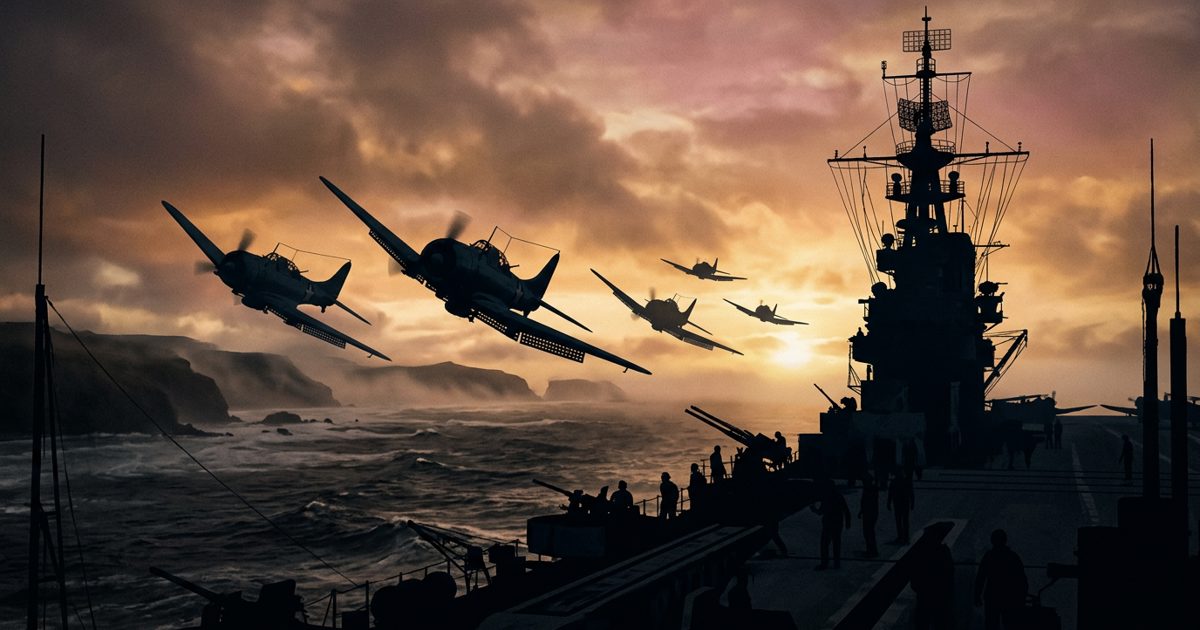
Kamikaze Strikes Sink Two Radar Picket Destroyers off Okinawa
Kamikaze aircraft attacked Radar Picket Station 1 and Station 12 off Okinawa on May 4, 1945, overwhelming naval air defense screens. Kamikaze strikes sank the destroyers USS Morrison and USS Luce within minutes of impact, causing heavy crew casualties. Fleet support craft rescued hundreds of survivors while surviving combat vessels maintained radar watch against incoming air strikes.
1946
U.S. Marine Corps
• Post-World War II
Marines Storm Alcatraz Cellhouse to Suppress Inmate Riot
Marines under the leadership of Warrant Officer Charles L. Buckner breached the roof of the Alcatraz Federal Penitentiary cellhouse on May 4, 1946. Pacific War combat veterans dropped rifle grenades and tear gas through drilled ceiling openings to pin down armed convict mutineers. Prison authorities entered the utility corridor hours later, recovering weapons and ending the two-day standoff.
1970
U.S. Army
Landmark Event
• Vietnam War
Ohio National Guard Opens Fire at Kent State University
Ohio Army National Guard troops dispatched to Kent State University opened fire on anti-war demonstrators on May 4, 1970, killing four students and wounding nine others. Soldiers discharged sixty-seven rifle rounds from an overlook following days of violent protests against the U.S. military incursion into Cambodia. Nationwide campus shutdowns and massive protests erupted across American cities following the shooting.