Jackson Shatters the British Assault at New Orleans
Major General Andrew Jackson leads an eclectic American force to decisively crush veteran British infantry along the Rodriguez Canal in 1815.
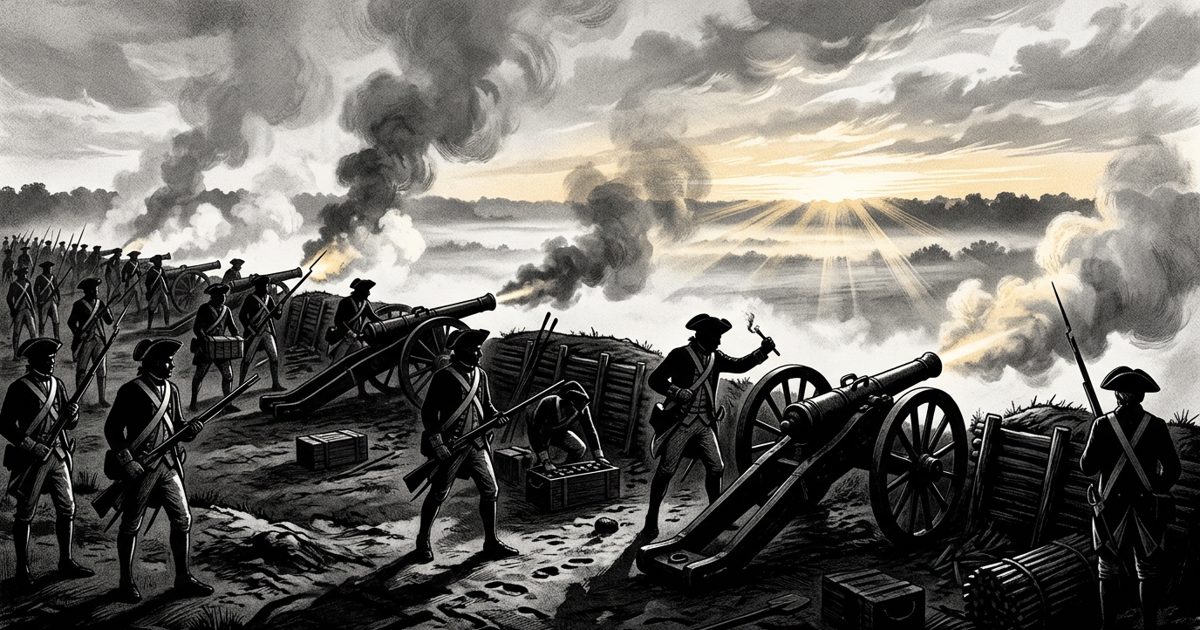
General Andrew Jackson established a fortified defensive line four miles south of New Orleans along the muddy banks of the Rodriguez Canal. His command assembled a coalition of federal regulars from the 7th and 44th Infantry, Tennessee and Kentucky frontiersmen, Choctaw warriors, and local militia. Naval gunners under Daniel Patterson and Baratarian artillerymen supplied heavy naval cannon to anchor the earthen ramparts stretching from the Mississippi River into a dense cypress swamp. The American garrison worked through freezing rain to construct defensive revetments and secure firing steps before daylight.
Major General Sir Edward Pakenham sent 8,000 veteran British soldiers forward across the mist-shrouded fields of Chalmette at dawn. The attacking columns quickly stumbled when assigned units failed to bring forward fascines and scaling ladders needed to breach the deep ditch. American gunners spotted the approaching redcoats as the morning fog lifted and unleashed raking canister shot along with coordinated rifle volleys. The murderous crossfire shattered the leading British brigades and threw advancing regiments into complete disorder across open sugarcane fields.
Canister rounds tore through the advancing British formations as Pakenham fell mortally wounded while attempting to rally his troops. Senior British officers Major General Samuel Gibbs and Major General John Keane also suffered severe gunshot wounds within minutes, leaving the assault without unified tactical direction. General John Lambert assumed command of the battered reserve and ordered a general retreat, ending the fight after roughly two hours of combat. British losses totaled more than 2,000 casualties including nearly 300 dead, whereas Jackson reported only 13 Americans killed and 39 wounded. Lambert withdrew the surviving expeditionary forces from Louisiana ten days later, preserving American sovereignty over the Mississippi Valley.