Massive Airborne Armada Crosses the Rhine in Operation Varsity
Paratroopers and glider forces of the 17th Airborne Division dropped east of the Rhine River on March 24, 1945, breaking into northern Germany.
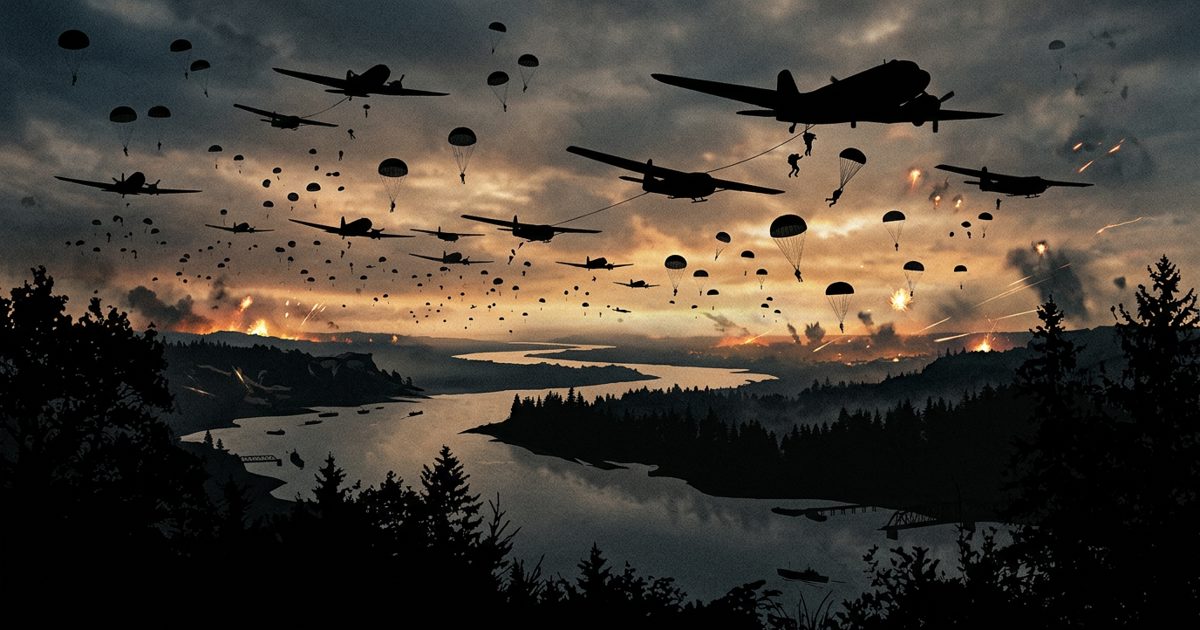
Transports filled western European skies as more than nine thousand soldiers of the U.S. 17th Airborne Division lifted off from bases in England and France. Douglas C-47 Skytrains and Curtiss C-46 Commandos towed hundreds of Waco gliders toward designated drop zones around the German town of Wesel. Planners designated this daylight assault Operation Varsity, coordinating the airborne drop with Field Marshal Bernard Montgomery's amphibious crossing of the Rhine River. Paratroopers and glider infantry descended directly over enemy defensive positions under intense flak to secure critical bridges and high ground east of the water barrier.
Artillery crews and antiaircraft gunners scored direct hits against dozens of transport planes and wooden gliders during the morning descent. Glider pilots guided burning craft into open farm fields while paratroopers from the 507th and 513th Parachute Infantry Regiments fought immediate skirmishes against entrenched defenders. Soldiers consolidated scattered platoons and eliminated flak batteries holding elevated terrain in the Diersfordter Forest. Private First Class Stuart S. Stryker charged a fortified headquarters building near Wesel, rallying his pinned platoon before falling in action.
Troops capitalized on Stryker's charge to surround the enemy headquarters and capture over two hundred German soldiers alongside three liberated American prisoners. Division units secured three vital bridges over the Issel River by late afternoon and neutralized artillery batteries threatening Allied amphibious crossings. Soldiers established firm radio contact and physical junction with advancing British ground forces before nightfall, securing the perimeter east of the Rhine. Operation Varsity concluded as the largest single-day airborne lift in military history, taking thirty-five hundred prisoners and opening the Allied path into northern Germany.