
Operation MIKE VII and the Zambales Landings
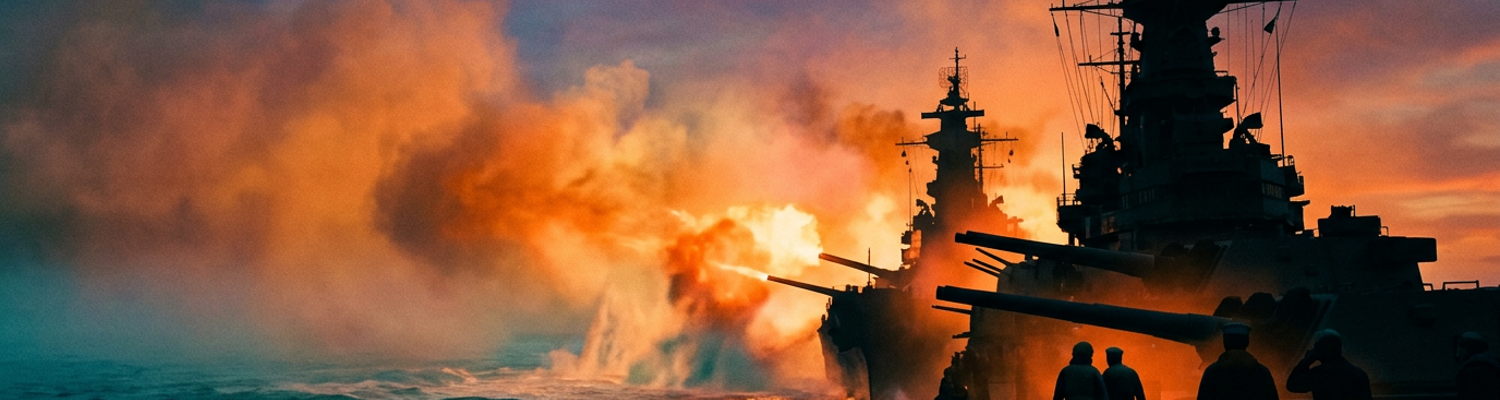
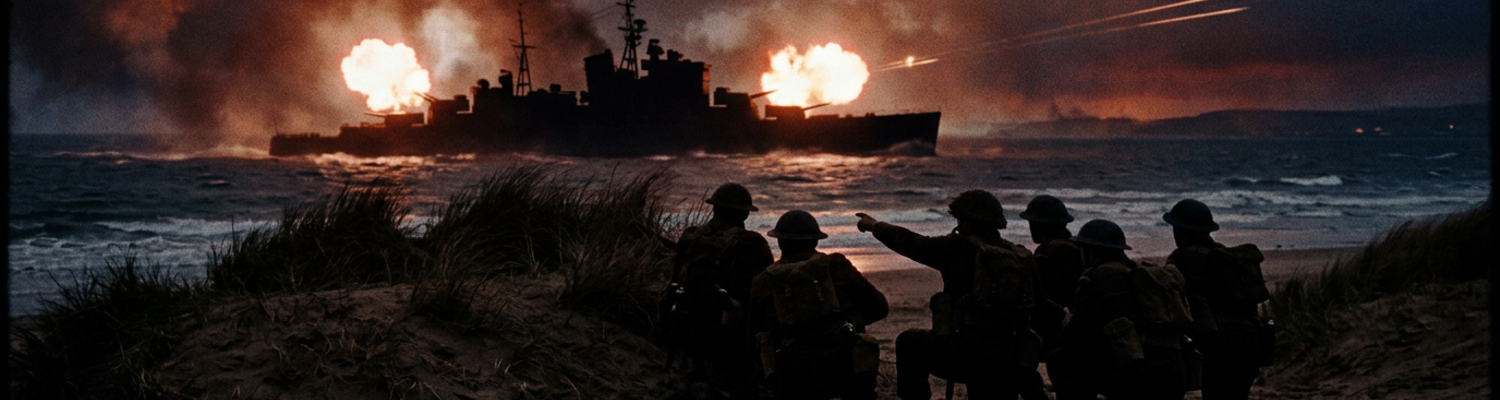
Radio operators on the amphibious command ship picked up frantic warning calls from forward scouts approaching the western Luzon coastline on January 29, 1945. Fleet headquarters immediately issued an emergency order to halt the pre assault bombardment for Operation MIKE VII after scout boats skimming the surf near San Antonio discovered thousands of Filipino civilians lining the sand dunes. Major General Charles P. Hall commanded the landing force of XI Corps and quickly approved the order to hold heavy naval gunfire, sending his assault troops ashore into an unopposed beachhead. Filipino guerrillas under Captain Ramon Magsaysay had already secured inland objectives including the San Marcelino airstrip before the amphibious assault commenced. Guerrilla runners walked out onto the airfields to greet arriving scouts and delivered disturbing intelligence that Colonel Sanenobu Nagayoshi had pulled his Imperial Japanese troops eastward into the jagged mountain terrain surrounding Highway 7.
Maps at division headquarters failed to reflect the true defensive depth of those mountain ridges, prompting commanders to order the 38th Infantry Division and the attached 34th Regimental Combat Team eastward along Highway 7 to secure Subic Bay. General Douglas MacArthur wanted the deepwater harbor opened without delay, demanding a rapid advance that would bottle up the Bataan Peninsula before enemy forces could dig in. Trucks carrying the lead battalions rolled past empty coastal trenches and through cheering crowds in Olongapo, giving frontline officers the illusion that the entire operation would remain an unhindered road march. Combat engineers riding in the advance echelons soon watched the pavement dissolve into a narrow track of churned dirt where steep volcanic slopes pinched the road into sharp hairpin curves known locally as Zigzag Pass. Japanese gunners concealed inside interlocking log bunkers held their fire while American scout cars penetrated deep into the horseshoe bends, waiting until the main infantry body entered the kill zones to strike.
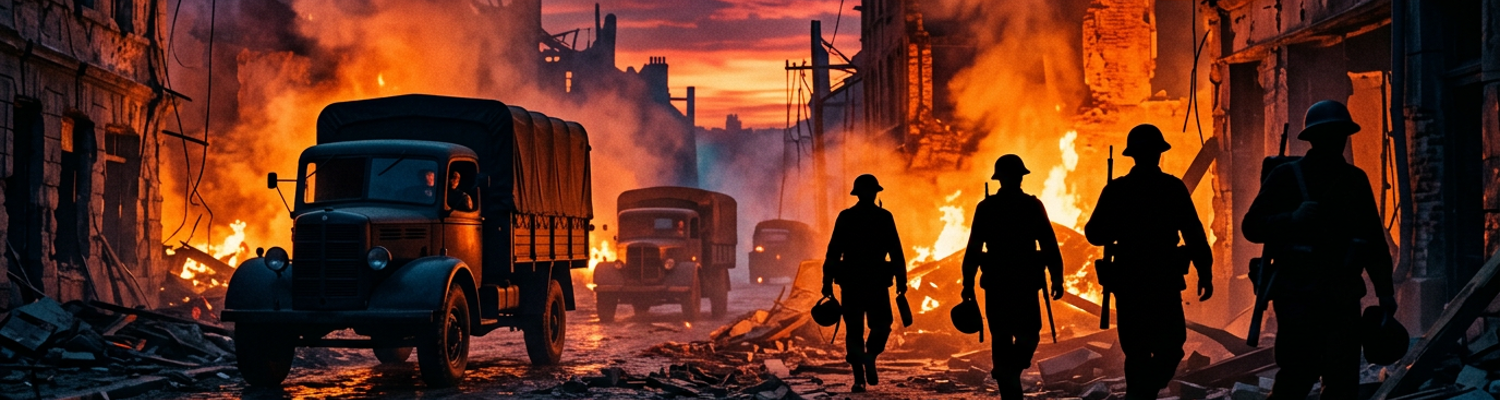
Artillery shells and concealed machine gun fire tore through the lead American platoons as soon as the forward elements rounded a blind curve. Explosions trapped vehicles against the sheer rock face and blew the front truck across the road, blocking the entire column. Combat engineers rushed forward under direct sniper fire with pickaxes, shovels, and tow cables to drag smoldering wreckage out of the ditch and throw fresh timber across deep craters. Heavy tropical downpours turned the exposed roadway into thick red clay within hours, causing supply trucks and artillery tractors to sink up to their axles while Japanese mortar rounds bracketed the stalled columns. Junior officers directing road crews along the embankments realized that quartermaster units had landed without adequate bulldozers or gravel trailers, leaving hand labor as the only tool to keep ammunition moving forward. Frontline soldiers dragged wooden crates of rifle ammunition and field rations up muddy ravines on their backs, watching the smooth operational timetable dissolve into desperate infantry charges against hidden pillboxes.
Dispatches detailing these stalled attacks and collapsed supply routes flashed across Sixth Army headquarters, shattering the assumption that XI Corps would sweep across Bataan in forty eight hours. General Douglas MacArthur had envisioned the Zambales landings as an effortless triumph that would showcase Allied operational speed, making the sudden stalemate on Highway 7 a direct political and military threat to his Luzon campaign. Division commanders facing intense pressure from above ordered repeated frontal attacks against the Japanese ridge defenses, even as wounded men piled up at roadside dressing stations without enough ambulances to evacuate them through the mud. Engineers worked continuously through the night to cut timber from the surrounding jungle, laying heavy mahogany logs into the muck so that artillery batteries could move forward to blast the fortified caves blocking the pass.
Colonel Nagayoshi and Kembu Group Defenses
Artillery tractors groaned across the raw mahogany logs before dawn, yet their high explosive barrages barely chipped the underground fortifications that Colonel Sanenobu Nagayoshi had prepared across Zigzag Pass. Nagayoshi anchored the 39th Infantry Regiment and attached naval defense personnel into the Kembu Group defense sector to transform the narrow gorge into an impassable roadblock. Japanese forces fortified the jagged limestone ridges and ravines with interconnected cave systems, hidden log bunkers, and concealed artillery positions overlooking Highway 7. Thousands of soldiers and naval troops had spent months digging through the dense coral rock and volcanic stone, carving multi level chambers that sheltered entire companies alongside stockpiles of food, medical supplies, and ammunition. Heavy logs cut from native hardwoods reinforced these earthen bunkers, absorbing direct hits from American shells while overhead covers of living jungle vines masked firing slits from aerial spotter planes. Underground tunnels connected these hilltop observation posts directly to deep ravine shelters, allowing defensive squads to shift positions beneath the earth without exposing themselves to the shrapnel falling along the ridgelines.
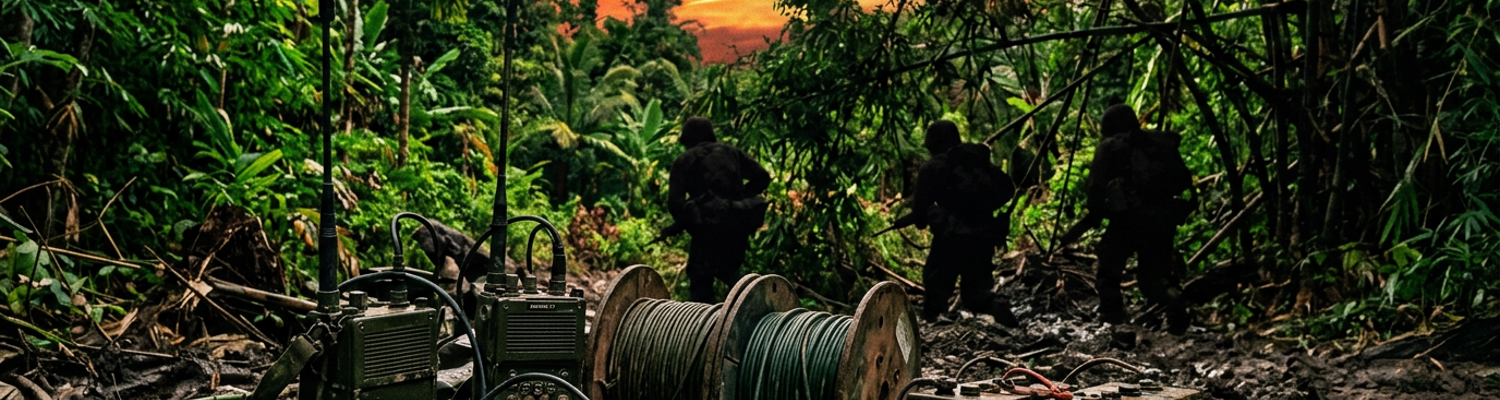
Lookouts stationed inside those limestone perches used buried telephone wires to direct battery fire from camouflaged mountain guns and heavy mortars onto every bend of the highway below. The defensive belt was constructed to channel advancing American armor and infantry directly into pre sighted artillery and machine gun kill zones around Horseshoe Bend. Nagayoshi situated his main line of resistance precisely where the single lane road coiled back on itself beneath vertical rock faces, eliminating any room for vehicles to maneuver or turn around. Concealed anti tank guns and dual purpose naval cannons zeroed their sights on the exact coordinates of the bend, waiting for lead vehicles to cross marked landmarks before firing. Machine gun bunkers flanked by dense bamboo stands covered the open ditches with interlocking fields of fire, guaranteeing that foot soldiers jumping from hit trucks landed straight into targeted areas. Japanese naval gunners and veteran infantry riflemen held their fire with strict discipline during initial American probing attacks, refusing to reveal their concealed firing ports until an entire company advanced within point blank range.
Riflemen of the 34th Infantry Regiment walked straight into this defensive kill zone as morning fog lifted from the slopes of Horseshoe Bend. Japanese heavy machine guns suddenly opened fire from masked openings less than thirty yards away, firing continuous bursts into the front ranks and igniting exposed fuel cans on the escorting Sherman tanks. Armor piercing shells struck the drive sprockets of the lead tank, disabling the vehicle and turning the steel hull into an impassable obstacle that blocked the rest of the motorized column. Junior officers crouched in the roadside mud shouted orders over the detonations of naval cannon shells bursting against the cliffs, watching their operational timetable dissolve against defenses that division intelligence staff had claimed were lightly held. Stalled infantrymen scrambled up the muddy slope with satchel charges to destroy the nearest pillbox, only to discover that the outer log roof was covered by crossfire from two higher caves set further up the limestone face. Wounded soldiers slid back down into the flooded drainage ditches while stretcher bearers took rifle fire, halting the American advance and trapping the assault force on the exposed pavement.
Radio sets back at the battalion aid station buzzed with emergency calls for smoke rounds and immediate ammunition replenishment, but the single mud choked supply route could not meet the urgent frontline demand. Quartermaster trucks carrying mortar shells and plasma remained jammed bumper to bumper five miles to the west, unable to bypass overturned trailers and shattered logs sunk deep into the volcanic mud. Frontline units expended their basic combat loads within two hours of heavy contact, forcing company commanders to ration rifle clips while their squads took plunging fire from the Kembu Group gun emplacements. Field reports documenting the paralysis of the 38th Division and the 34th Regimental Combat Team bypassed normal administrative channels and reached Sixth Army planners, triggering intense alarm among senior staff officers. General Douglas MacArthur had planned an unbroken drive across Bataan to demonstrate rapid operational success to Washington, meaning every stalled hour on Highway 7 threatened to expose the dangerous tactical overconfidence of his invasion timetable. Major General Charles P. Hall ordered fresh assault waves thrown against the fortified limestone ridges before dawn, directing the pass to be cleared regardless of the mounting losses in men and equipment.
Combat Engineering and Corduroy Roads on Highway 7
Riflemen advancing in those predawn assault waves required an unbroken supply line behind them to sustain the push against the fortified ridges. Combat engineers from the 113th Engineer Combat Battalion worked under constant sniper and mortar fire to repair blasted bridges and lay log roads across saturated mountain mud. Highway 7 devolved into a narrow, mud slick gorge track where disabled vehicles and shell craters prevented quartermaster transport from moving forward. Japanese mortar teams positioned on the overlooking limestone cliffs targeted every wooden culvert, blowing bridge spans into the rocky creek beds and shredding pioneer work parties with jagged shrapnel. American squads felled thick mahogany and banyan trees along the steep embankments with two man crosscut saws, trimming branches under sniper fire and dragging the heavy trunks into deep craters. Tropical downpours saturated the volcanic soil beneath these makeshift roadbeds within hours, causing the heavy timber to sink beneath the red mire and stranding an entire battery of pack howitzers on the canyon floor.
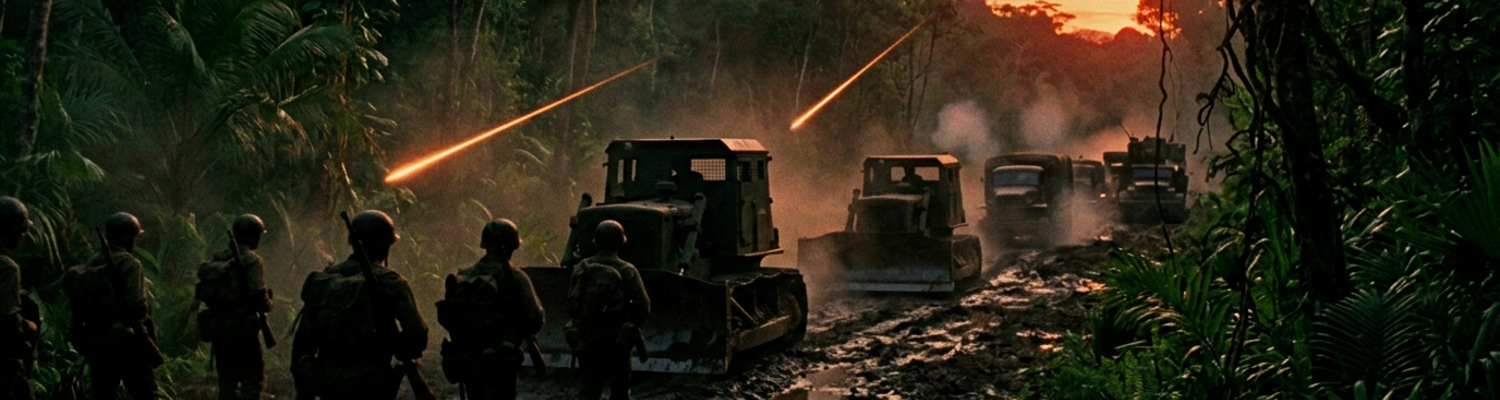
Engineers operated bulldozers as armored shields and recovery vehicles to clear landslides and extract immobilized artillery pieces along the narrow mountain pass. Operators bolted scrap steel plating and discarded vehicle armor around their open tractor seats, raising the heavy dozer blades high to deflect direct machine gun bursts while creeping forward through shell pocked clay. Mechanics crawled through waist deep mud under constant rifle fire to hook heavy steel winch cables onto the submerged axles of the stuck howitzers, dragging the field guns backward out of the volcanic slush one by one. Bulldozer blades shoved burning cargo trucks and heaps of dislodged limestone directly over the canyon drop offs, clearing just enough road width for tracked recovery tractors to squeeze through. Soldiers exposed on foot had to guide the blind bulldozer drivers past sheer precipices where soft dirt shoulders collapsed without warning under the heavy weight of the tracks. Japanese gunners zeroed their mountain artillery onto the loud diesel engines of the earthmovers, blowing hydraulic lines and disabling several tractors until recovery crews remained pinned under direct fire in the open roadcut.
Quartermaster trucks miles behind the blocked roadcut ground to a complete halt as the immobilized construction equipment sealed off the single route through the mountains. Junior officers managing the forward dumps watched hundreds of cargo trucks, fuel tankers, and field ambulances back up bumper to bumper along the coastal road toward Olongapo. Lifesaving blood plasma and dry rations sat useless in stalled truck beds while frontline infantry companies ran entirely out of mortar shells and rifle ammunition against the Kembu Group bunkers. Radio operators transmitted urgent dispatches detailing this complete quartermaster breakdown directly to Sixth Army headquarters, triggering panic among senior staff officers who knew the delay threatened the political promise of a swift Luzon campaign. Lieutenant General Walter Krueger demanded immediate answers from corps commanders as the operational timetable fell apart on the single impassable highway. Major General Charles P. Hall ordered every available soldier and reserve engineer to drop their combat gear, grab hand axes and shovels, and haul fresh timber into the muck manually to reopen the artery before army headquarters intervened.
Forward Reconnaissance Failures and Logistical Paralysis
Soldiers dragged freshly cut mahogany trunks into the red mire by hand, yet the clearing work came too late for lead units already advancing beyond the roadhead without eyes in the hills. Scouts sent forward along the ridgelines had failed to penetrate the dense bamboo screen or locate Japanese strongpoints, returning vague reports that the high ground was completely clear of enemy resistance. Advancing infantry battalions collided with camouflaged reverse slope bunkers between January 31 and February 3, 1945, after severe failures in forward reconnaissance left tactical commanders blind. Japanese defenders had deliberately positioned their reinforced pillboxes on the far sides of crests, allowing American probing elements to walk directly past the ridgelines before opening fire into their exposed backs from point blank range. Company officers studying inaccurate sketch maps found themselves trapped in interlocking crossfire from hidden log bunkers that forward patrols had completely bypassed during their hasty advances. Japanese mortar crews registered on these forward slopes unleashed sudden salvos of heavy shells that shattered the lead platoons and drove entire companies into steep, unmapped drainage gullies.
Riflemen of the 34th Infantry Regiment plunged down those slippery canyon walls under continuous machine gun fire, suffering heavy casualties and losing operational momentum when pinned down in ravines without field communication or direct fire support. Dense jungle foliage, tropical humidity, and towering rock bluffs deadened the radio signals of portable walkie talkies, leaving trapped company commanders completely unable to transmit their map coordinates to rear battery positions. Forward observers attempting to direct artillery fire through field telephone wire watched their lines get cut repeatedly by Japanese infiltrators and mortar shrapnel along the cliffs. American pack howitzers remained silent behind the pass because battery commanders had no reliable targeting data and risked dropping high explosive shells straight onto their own scattered platoons in the blind ravines below. Japanese rifle squads crawled through the dense brush above the creek beds, tossing hand grenades into the depressions where pinned American soldiers could neither see their attackers nor maneuver their weapons. Isolated squad leaders burned through their bandoliers of rifle ammunition within two hours, holding shallow slit trenches against probing Japanese counterattacks while their wounded companions bled to death in the volcanic mud.
Quartermaster supply echelons broke down between Olongapo and the forward fighting positions, halting ammunition delivery, water replenishment, and medical evacuation. Convoys of cargo trucks loaded with mortar crates, blood plasma, and five gallon water cans stalled along the single washed out highway behind Olongapo, blocked by overturned trailers and deep washouts that no vehicle could cross. Exhausted stretcher bearers tried to carry mangled soldiers to the rear on foot, but the steep mountain mud and constant sniper fire forced medical teams to leave casualties lying on ponchos beside the blocked road. Frontline riflemen drained their last canteens under the tropical heat, licking moisture off jungle broadleaf plants while company officers begged over surviving wire lines for basic rifle clips and clean drinking water. Junior officers watched these collapsed supply columns create an impassable logjam stretching miles down toward the coastline, paralyzing frontline battalions while Japanese gunners adjusted their sights onto the stalled transport lines. Drivers abandoned disabled vehicles along the road shoulder to seek cover in drainage ditches, leaving hundreds of tons of critical combat stores immobilized in plain view of Japanese mountain lookouts.
Command Friction and the Relief of General Jones
Cargo trucks sitting abandoned in the ditches drew continuous mortar fire from the high ground, confirming to observers that the advance down Highway 7 had collapsed into total paralysis. Radio dispatches reaching the rear painted a bafflingly optimistic picture, with division staff claiming steady progress even as forward infantry companies lay pinned in the mud. Persistent stalemate and inaccurate frontline reporting between January 31 and February 6 ignited sharp friction between Sixth Army leadership and division command. Lieutenant General Walter Krueger erupted in frustration at his headquarters when aerial reconnaissance photographs completely contradicted the maps sent by division planners. Junior officers in the logistics echelons watched courier jeeps race past the stalled supply columns with blistering reprimands from army headquarters, where commanders feared that every wasted day undermined Douglas MacArthur's grand timetable for the liberation of Manila. Division leaders attempted to defend their slow progress by citing impenetrable bamboo thickets and unexpected enemy fortifications, but army commanders viewed these excuses as evidence of hesitation and poor leadership.
Major General Charles P. Hall drove up Highway 7 to witness the paralyzed assault lines firsthand, determined to halt the growing tactical disaster. Hall walked through forward aid stations crowded with wounded infantrymen, finding units shattered by piecemeal attacks against camouflaged positions that division officers had failed to locate or suppress. The corps commander discovered that entire battalions had spent days attacking the wrong ridges because division headquarters had issued inaccurate terrain sketches to frontline officers. Major General Charles P. Hall relieved 38th Infantry Division commander Major General Henry L. C. Jones on February 6, temporarily replacing him before Brigadier General William C. Chase assumed command. Hall placed assistant division commander Brigadier General Roy W. Easley in interim charge of the division while Chase traveled westward from the 1st Cavalry Division to take over the assault. Staff cars carried the stunned former division commander to the rear through lines of exhausted soldiers, leaving regiment and battalion officers to absorb the sudden purge of their senior leader.
XI Corps restructured field operations by taking direct operational command of assault regiments and relieving fatigued frontline unit leaders to restore forward momentum. Corps staff officers bypassed standard bureaucratic channels, descending on regiment command posts to replace exhausted battalion commanders whose troops had suffered days of fruitless frontal assaults. Junior officers at forward observation posts watched fresh staff colonels take control of field map tables, halting blind infantry pushes and demanding precise target coordinates for supporting guns. Hall assigned special staff officers to oversee the assault regiments, removing worn out field commanders who had lost the confidence of their men. Pioneer details and infantry platoons received orders to dig in and hold their perimeters while corps staff organized coordinated assaults with heavy artillery and newly arrived Fifth Air Force fighter bombers.
Combat engineers seized this tactical pause to drag submerged logs and crushed gravel into the deepest road ruts, clearing the way for ammunition carriers and tank recovery vehicles to reach the front. Bulldozer crews pushed smashed trucks off the roadway shoulders, opening a continuous path for water trailers and mobile surgical trucks that had remained stranded near Olongapo for three days. Radio operators at corps forward headquarters established direct wire connections to artillery batteries, ensuring that assault waves would no longer advance without rolling barrages landing directly ahead of them. Weary riflemen in the hillside foxholes cleaned their clogged carbines and received fresh rations while newly appointed battalion leaders revised assault plans to envelop the Japanese bunker complexes. Patrols fanned out into the ravines to map the exact locations of hidden machine gun pillboxes before the next general advance commenced.
Fifth Air Force Napalm Strikes and Artillery
Maps compiled by those frontline patrols delivered the first reliable target coordinates to Allied strike planners at Subic Bay and Olongapo. General Headquarters directed the Fifth Air Force to conduct saturation strikes utilizing napalm canisters and heavy aerial bombardment to strip dense jungle foliage off Japanese ridge complexes. Douglas MacArthur and Walter Krueger recognized that their Luzon timetable was collapsing in the mountains, forcing headquarters to release vast stores of aviation fuel and munitions to blast the roadblock open. Flight after flight of twin engine bombers and fighter bombers roared low across the ridges, dropping finned aluminum tanks filled with jellied gasoline that ruptured across the green slopes. Burning gasoline incinerated acres of thick bamboo, tangled vines, and banyan trees within minutes, stripping away the dense vegetation that had shielded Japanese positions from Allied observation. Junior officers watching the strikes from forward trenches saw the burning brush uncover concrete blast walls, log bunkers, and hidden firing slits that had defied American probes for nearly a week.
Artillery forward observers targeted those newly exposed fortifications immediately, transmitting precise gun data back to batteries positioned along the western valley. Massed division and corps artillery battalions fired thousands of high explosive rounds in concentrated barrages to seal tunnel entrances and reduce concrete reinforced pillboxes. Batteries of howitzers maintained a continuous rate of fire for over four hours, pounding the limestone ridges until the stone faces fractured under the impact. Heavy shell bursts detonated against reinforced gun pits, shattering thick mahogany timbers and blowing defensive walls apart. Flying rock splinters and severe blast concussion incapacitated Japanese crews inside the chambers, collapsing underground passageways and setting off stacks of stored mortar ammunition. Forward gunners kept up their rolling barrages right to the base of the ridges, preventing surviving Japanese riflemen from manning their observation posts overlooking the highway.
Rifle companies moved forward through the smoking craters the moment the artillery lifted its fire onto the rear crests. Combined arms assaults integrating armored bulldozers, tank destroyers, and infantry flamethrower teams methodically neutralized bypassed Kembu Group strongpoints. Armored bulldozers fitted with heavy steel plates pushed shattered logs and blasted boulders off the trails, creating makeshift lanes for tracked vehicles along the steep ravines. Tracked tank destroyers crawled up those cut paths behind the dozer blades, firing high velocity explosive shells point blank into open cave mouths. Combat engineers armed with portable flamethrowers then crept along the flank ditches, directing burning fuel into air shafts and deep underground bunkers that resisted cannon fire. Machine gunners from the 38th Infantry Division laid down suppressing fire across the entrances, cutting down Japanese soldiers attempting to break out of the burning caves.
Engineers advanced directly behind those assault teams to clear the final log barricades and wrecked equipment off the pavement of Highway 7. Heavy winches mounted on recovery vehicles hauled burnt out Japanese gun trucks and fractured mahogany timbers down into the roadside ravines, opening two continuous lanes of crushed gravel. Quartermaster convoys loaded with mortar crates, blood plasma, and rations began rolling east through Zigzag Pass toward Dinalupihan, ending the multi day logistical paralysis that had infuriated Sixth Army headquarters. Field telephone lines were reconnected along the road shoulders, allowing Brigadier General William C. Chase to report that the main Japanese defense line had broken. Junior officers who had watched men die for small patches of mud now directed ambulance columns through the smoking gorge, clearing the route for the final push into Bataan.
Strategic Repercussions and the Manila Bay Timeline
Ambulance drivers steered their olive drab trucks past the final row of shattered log bunkers as American forces formally breached Zigzag Pass on February 8, 1945, at a cost of over 1,400 American casualties, while more than 2,400 Japanese defenders were killed. Stretcher bearers carried hundreds of severely wounded infantrymen down from the smoking limestone crests to frontline aid stations set up on the road shoulder. Junior officers processed company casualty lists that revealed entire rifle platoons had been reduced to just six or seven surviving men. Gravediggers and recovery details stacked discarded rifles, crushed helmets, and punctured water cans into salvage piles beside the newly laid gravel. Truck convoys hauling reserve infantrymen of the 38th Division and the 34th Regimental Combat Team then rolled eastward past those salvage heaps to link up with Allied spearheads at Dinalupihan.
General Douglas MacArthur tracked that overdue junction at Dinalupihan with mounting frustration, as the protracted tactical delay threatened his strategic schedule for clearing Bataan, opening Manila Bay, and developing Subic Bay as a primary logistics staging base. MacArthur had repeatedly promised theater planners that western Luzon would fall swiftly, allowing naval task forces to utilize Subic Bay to offload heavy equipment and fuel for the ongoing battle inside Manila. Japanese naval guns and coastal artillery still commanded the mouth of Manila Bay from Corregidor and the southern headlands, making Subic Bay the only safe deep water shelter for incoming transport fleets. Cargo ships laden with thousands of tons of ammunition, medical gear, and bridge materials remained backed up in open anchorages while engineers waited for Highway 7 to clear. Division commanders received direct warnings from Sixth Army headquarters that every additional hour spent neutralizing bypassed mountain pockets diverted vital combat power and engineering assets away from the impending amphibious assault on Corregidor.
Combat engineers diverted from the front line quickly observed that frontline supply failures and high level administrative panic during the engagement exposed serious flaws in rapid advance theater logistics across mountainous jungle terrain. Theater planners had built their operational timetables on the flawed assumption that heavy cargo trucks could navigate unimproved mountain trails during tropical storms without continuous road maintenance. Junior officers managing forward supply dumps watched fuel tankers sink to their axles in red volcanic mud, cutting off frontline infantry battalions from basic rations and rifle clips for days at a time. Staff officers at Sixth Army had reacted to those stalled columns by firing off urgent reprimands and replacing division leadership rather than sending forward gravel scrapers, heavy bulldozers, and additional pioneer battalions. Quartermaster crews had to abandon burned out vehicles in roadside drainage ditches, stripping functioning alternators and spark plugs to keep a shrinking pool of supply trucks running forward.
Work parties cleared those stripped chassis off the road shoulder with heavy tow winches so that fresh artillery battalions could advance toward the Bataan coast. Infantry companies from the 38th Division fanned out along the eastern exit of the pass, sweeping through abandoned Japanese supply depots and sealing off remaining cave entrances with satchel charges. Navy minesweepers began clearing Subic Bay deep water anchorages the moment artillery observers confirmed that Japanese guns on the overlooking ridges had been silenced. Dock crews at Olongapo unloaded the first heavy cargo lighters onto newly repaired piers, rushing artillery shells and pontoon bridges toward the awaiting assault forces along the Manila Bay shoreline. Patrol leaders gathered their surviving riflemen at the highway junction, checking their compasses and ammunition belts before marching south into the dense bamboo thickets of the Bataan Peninsula.