Eighth Air Force Mounts Largest Heavy Bomber Strike of World War II
Over two thousand bombers and eight hundred fighters strike German supply junctions and airfields to relieve the Ardennes front.
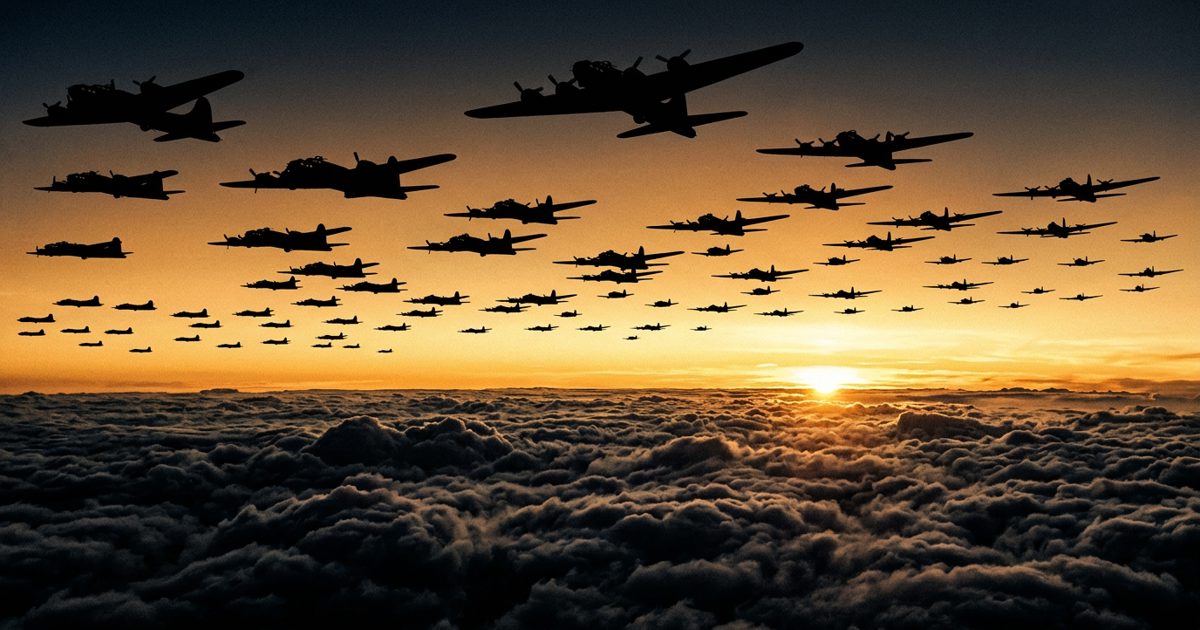
Lieutenant General James H. Doolittle, commander of the U.S. Eighth Air Force, directed the launch of Mission 760 on December 24, 1944, as clearing skies over the Ardennes broke days of persistent winter fog. Ground crews across dozens of airfields in eastern England launched 2,046 Boeing B-17 Flying Fortresses and Consolidated B-24 Liberators alongside 853 North American P-51 Mustangs and Republic P-47 Thunderbolts. The armada constituted the largest single air strike mounted by the Eighth Air Force during the entire war.
Formations converged over the European continent to hammer railroad yards, road junctions, and eleven Luftwaffe fighter bases behind German offensive lines. Allied planners designated key marshaling hubs in western Germany, including Babenhausen, Kaiserslautern, and Darmstadt, to paralyze the logistical network supporting Field Marshal Gerd von Rundstedt's armored assault. Fighter escorts swept ahead of the bomber streams, engaging Luftwaffe interceptors and strafing ground targets across the Rhine valley. Heavy flak batteries scored hits along the bomber corridors, bringing down several aircraft including the flagship bomber carrying Brigadier General Frederick W. Castle.
Bomb strikes shattered rail communications and destroyed dozens of German aircraft on the ground before they could challenge Allied tactical aviation over the front. Ground observers near the encircled American perimeter at Bastogne watched aerial supply drops and supportive strikes that relieved the isolated garrison. German commanders lost their ability to shift heavy armor and fuel rapidly along their western rail heads. The massive raid established Allied control over the skies above the Bulge and crippled Germany's last major western counteroffensive.