Eugene Ely Lands Curtiss Biplane on Armored Cruiser Pennsylvania
Pilot Eugene Ely touched down on a temporary wooden platform built over the stern of USS Pennsylvania in San Francisco Bay, completing the first shipboard landing.
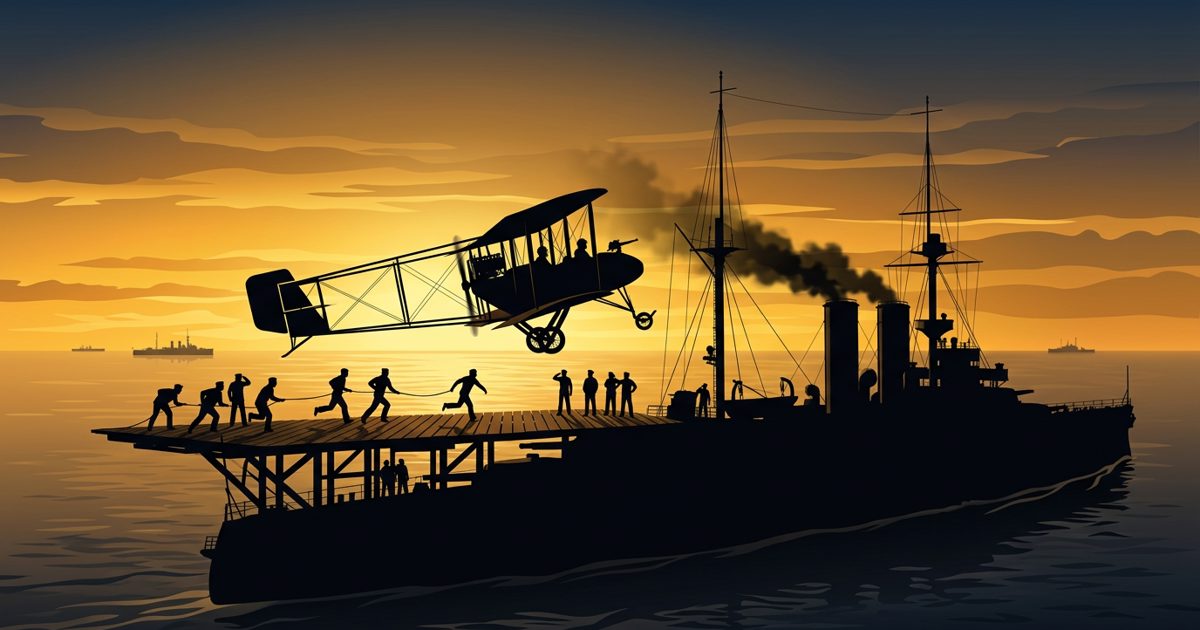
Aviator Eugene Ely climbed into the cockpit of his Curtiss Model D pusher biplane at Selfridge Field near San Francisco with bicycle inner tubes strapped around his chest for emergency flotation. Naval officers anchored the armored cruiser USS Pennsylvania in San Francisco Bay, outfitting the stern with a temporary wooden flight deck measuring 133 feet long and nearly 32 feet wide. Shipwrights rigged twenty-two pairs of fifty-pound sandbags attached to lateral ropes stretched across the wooden runway to catch three pairs of steel hooks installed on the undercarriage of the biplane. Spectators crowded the masts and superstructures of surrounding civilian vessels to watch the experimental military trial unfold across the clear harbor waters.
Ely approached the cruiser at forty miles per hour after making the short flight from Tanforan Racetrack. Sailors held their breath as the pilot aligned his biplane with the centerline of the wooden platform and cut his engine at a height of seventy-five feet. Wheels made contact with the wooden planks just above the cruiser stern, allowing the aircraft tailhook mechanism to engage eleven successive arresting lines. Resistance from the dragging sandbags slowed the pusher biplane smoothly to a halt in less than fifty feet without injury to the pilot or damage to the airframe.
Captain Charles F. Pond greeted the aviator on deck and declared the demonstration the most important military aeronautical event since the Wright brothers first flew. Crew members turned the biplane around on the wooden runway, refueled the engine, and cleared the arresting lines for an immediate departure. Ely lifted off from the deck less than an hour later and flew safely back to Selfridge Field to conclude the evaluation. Navy leadership incorporated the successful arresting hook and cable concepts into future carrier flight deck designs that became standard across fleet aviation.