Full Calendar
THIS DAY IN U.S. MILITARY HISTORY • JANUARY 23 1968 U.S. Navy Cold War

North Korean Gunboats Attack and Seize USS Pueblo off Wonsan

Commander Lloyd Bucher and his eighty-two crewmen face hostile boarding in international waters off North Korea in 1968.
North Korean Gunboats Attack and Seize USS Pueblo off Wonsan

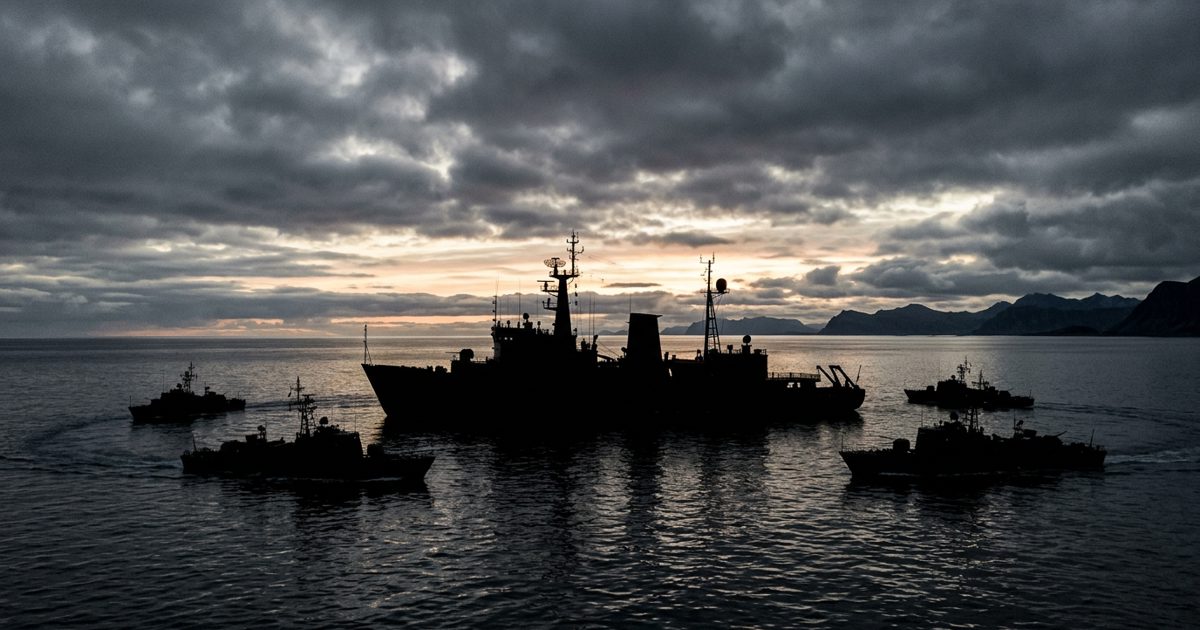
North Korean subchasers closed within yards of the technical research ship USS Pueblo sixteen miles off the coast of Wonsan. Commander Lloyd M. Bucher maintained course in international waters while intercepting hostile communications with a crew of eighty-two men. Gun crews aboard an SO-1 submarine chaser and three torpedo boats trained heavy cannon on the unarmored ship. MiG-21 fighter jets screamed overhead as North Korean signals demanded an immediate surrender. Bucher ordered radio operators to transmit distress calls while sailors rushed to burn classified codes below deck.

Artillery shells and machine gun bursts tore through the vessel when Bucher attempted to maneuver toward open sea. Shrapnel mortally wounded Fireman Duane Hodges as he carried classified cryptologic gear toward incinerators. Explosions wrecked the bridge and severed communications before the crew could destroy their secret intelligence files. American commanders in Japan received the emergency messages but lacked ready combat aircraft capable of intervening in time. Bucher surrendered the ship to save his remaining sailors from summary execution under point-blank fire.

North Korean soldiers boarded the vessel, blindfolded the survivors, and marched them into eleven months of harsh captivity. Interrogators beat the crew daily and staged forced propaganda statements, though the Americans subverted publicity photos with covert hand gestures. Diplomatic talks at Panmunjom finally secured the release of eighty-two surviving men across the Bridge of No Return in December 1968. Navy leaders examined the surrender during an inquiry, but Secretary of the Navy John Chafee dropped all charges. North Korea anchored the captured vessel in Pyongyang, where it remains the only commissioned U.S. Navy ship held by a foreign state.

CHRONOLOGICAL RECORD

January 23 Across U.S. Military History

8 Verified Events
1865 U.S. Navy Landmark Event • Civil War

Union Gunboats Repel Rebel Ironclads at Trents Reach

Warships belonging to the Confederate James River Squadron steamed downstream under darkness to attack the Union supply base at City Point. Federal shore batteries at Fort Brady opened fire before the monitor USS Onondaga joined river gunboats to contest the passage. Heavy Union cannon fire and navigational groundings forced the southern flotilla to retreat, preserving General Ulysses S. Grant's logistics hub.

1870 U.S. Army Landmark Event • Indian Wars

Second Cavalry Troops Attack Sleeping Piegan Camp

Major Eugene Baker led four companies of the 2nd U.S. Cavalry in an assault against a Blackfeet encampment along the frozen Marias River. Soldiers fired into the lodges of Chief Heavy Runner, killing 173 Native Americans, predominantly women, children, and elderly villagers suffering from smallpox. Outrage over the massacre prompted President Ulysses S. Grant to remove military officers from Indian agency directorships.

1875 U.S. Navy • Late 19th Century

Seaman John Dempsey Rescues Shipmate in Shanghai Harbor

Seaman John Dempsey plunged into icy river currents from the deck of the steam sloop USS Kearsarge at Shanghai, China. Dempsey fought swift tides to reach a fellow sailor who had fallen overboard and was rapidly being swept away. His courageous water rescue saved the drowning crewman and earned Dempsey the peacetime Medal of Honor.

1942 U.S. Army Air Forces • World War II

Army Air Forces Activates Flying Training Command

Headquarters established the Air Corps Flying Training Command to build a standardized nationwide pilot instruction pipeline for global combat. Major General Barton K. Yount directed the rapid expansion of flight schools, processing hundreds of thousands of aviation cadets. This organizational foundation later evolved into modern Air Education and Training Command.

1943 U.S. Army Landmark Event • World War II

Allied Ground Forces Eliminate Last Sanananda Resistance

Soldiers from the U.S. 32nd Infantry Division and 163rd Infantry Regiment overran the final Japanese defensive strongholds around Sanananda, New Guinea. General Robert Eichelberger reported the total destruction of enemy forces across the Papuan peninsula following months of brutal jungle swamp fighting. The victory secured the allied flank and eliminated Japan's overland threat to Port Moresby.

1945 U.S. Army Landmark Event • World War II

Seventh Armored Division Recaptures St Vith Crossroads

Tanks and infantry from Combat Command B, 7th Armored Division, stormed into the heavily bombed ruins of St. Vith, Belgium. American forces had lost the vital crossroads town a month earlier during the initial German Ardennes counteroffensive. Clearing out residual snipers and artillery observers, the division restored the Allied front line as the Battle of the Bulge collapsed.

1960 U.S. Navy Landmark Event • Cold War

Bathyscaphe Trieste Reaches the Challenger Deep Abyss

Lieutenant Don Walsh and scientist Jacques Piccard piloted the U.S. Navy bathyscaphe Trieste seven miles beneath the Pacific Ocean into the Mariana Trench. Operating under Project Nekton, the crew withstood eight tons of pressure per square inch at 35,797 feet. Their record descent proved that manned submersibles could survive and conduct research at the deepest point on Earth.

1991 U.S. Navy • Gulf War

Carrier Intruder Attack Jets Destroy Iraqi Naval Assets

Pilots flying A-6E Intruders from Persian Gulf carrier battle groups struck Iraqi naval craft operating off the Kuwaiti coast. Precision-guided munitions sank an armed tanker and an amphibious hovercraft that Iraqi forces used to track Allied air strike packages. The engagement severely crippled Iraqi coastal surveillance networks during the first week of Operation Desert Storm.

MEDAL OF HONOR ACTION 1945

Master Sergeant Nicholas Oresko Destroys Siegfried Line Bunkers

Master Sergeant Nicholas Oresko led his platoon from Company C, 302nd Infantry Regiment, into heavy German machine-gun fire near Tettingen, Germany. Dug-in Westwall pillboxes pinned down the advancing American assault line in deep snow. Oresko recognized that his riflemen faced slaughter without immediate intervention. Crawling forward alone under concentrated automatic fire, he approached the first enemy bunker and hurled a grenade through the aperture. Oresko then charged the entrance with his rifle, eliminating all surviving occupants.

Machine-gun bullets from a second fortified bunker immediately struck Oresko, ripping into his hip and knocking him down. Refusing evacuation despite severe blood loss, he struggled to his feet and pressed toward the second strongpoint. Oresko hurled another grenade into the firing slit before clearing the remaining defenders with point-blank rifle fire. Twelve enemy soldiers fell during his solo assault, allowing Company C to seize its objective. President Harry S. Truman presented Oresko the Medal of Honor in October 1945.