Allied Armies Extinguish the Ardennes Salient
American forces push the German army back to its starting lines after six weeks of freezing combat in Belgium and Luxembourg.
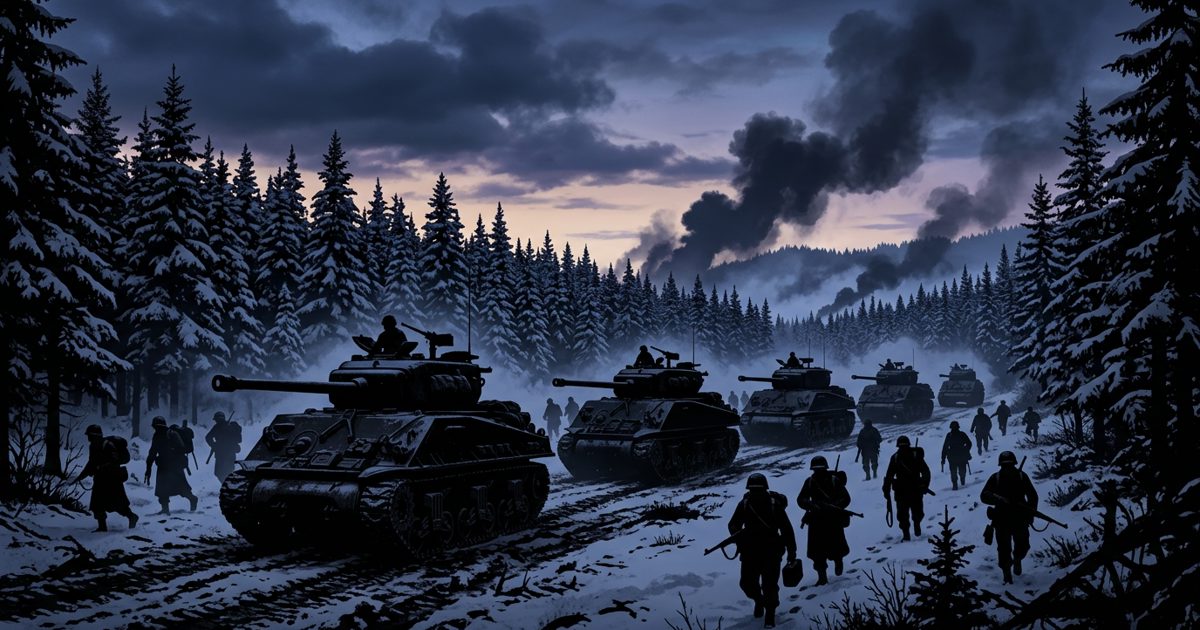
American soldiers of the First and Third Armies linked their offensive drives across the snowy forests of Belgium and Luxembourg, officially concluding the Ardennes Campaign. German field marshal Gerd von Rundstedt had launched twenty-eight divisions on December 16 in a desperate attempt to split the Allied coalition and capture the vital logistics port of Antwerp. Deep snow, sub-zero temperatures, and heavy fog initially grounded Allied air support and allowed armored columns to pierce thirty miles into the defensive line. Resolute defenses at critical crossroads like Bastogne and Elsenborn Ridge disrupted the enemy timetable until clearing weather allowed fighter-bombers to pulverize German supply routes.
General George S. Patton Jr. drove his Third Army northward while General Courtney Hodges directed First Army divisions south to squeeze the salient shut. Tank crews and infantrymen fought through waist-deep drifts and concealed minefields to clear the remaining enemy forces from towns such as Houffalize and St. Vith. German commanders burned their stranded tanks and transport vehicles as gasoline supplies evaporated under persistent air interdiction. Retreating enemy formations abandoned heavy artillery batteries and surrendered thousands of exhausted troops to advancing American patrols.
Records at Supreme Headquarters Allied Expeditionary Force documented the full restoration of the original front lines, formally closing the campaign after forty days of combat. American units sustained approximately eighty-one thousand casualties, including nineteen thousand soldiers killed, making the operation the costliest land campaign in United States Army history. German armies suffered more than one hundred thousand casualties and lost eight hundred irreplaceable tanks along with hundreds of combat aircraft. Depletion of these critical mobile reserves left the western German frontier defenseless against the upcoming Allied drive across the Rhine.