Full Calendar
THIS DAY IN U.S. MILITARY HISTORY • MARCH 16 1802 U.S. Army Early Republic

Congress Establishes the United States Military Academy at West Point

President Thomas Jefferson signs the Military Peace Establishment Act to organize the Army Corps of Engineers and train American officers.
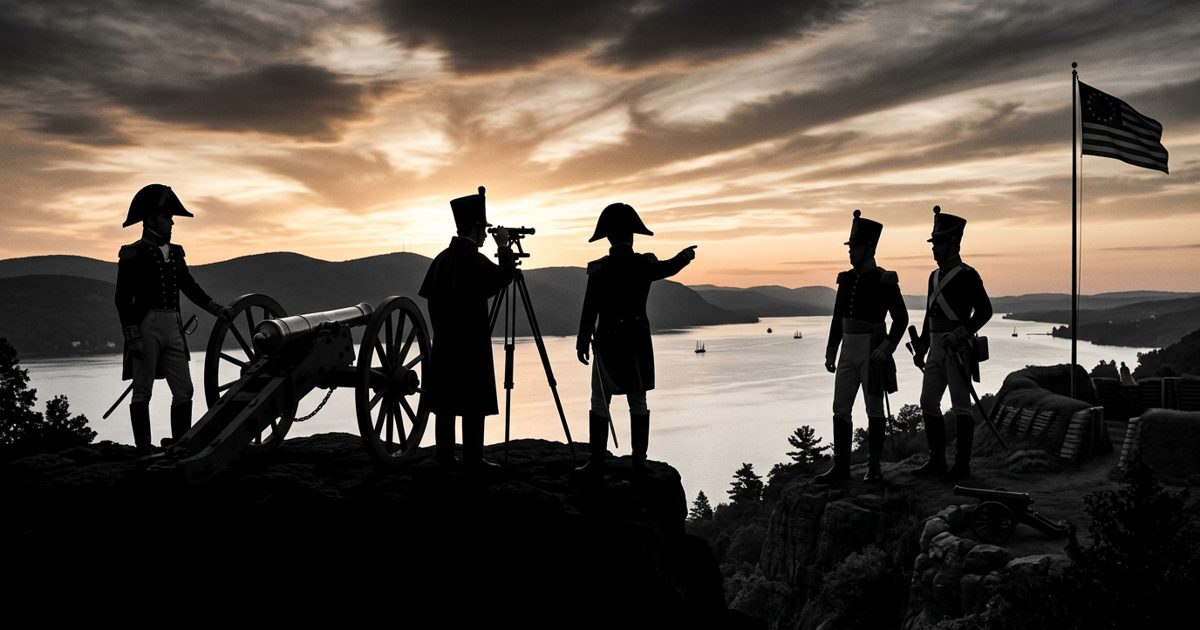
Congress Establishes the United States Military Academy at West Point

President Thomas Jefferson signed the Military Peace Establishment Act into law on March 16, 1802, directing the creation of a dedicated military academy along the Hudson River. American leaders recognized that the young republic relied too heavily on foreign-born engineers and tacticians during the Revolutionary War. Secretary of War Henry Dearborn collaborated with military planners to craft legislation that reduced the standing army while establishing a specialized technical school. West Point provided an ideal site because its fortifications had commanded the Hudson River corridor since 1778. The newly approved law formally constituted the U.S. Army Corps of Engineers and assigned its officers to direct instruction at the post.

Major Jonathan Williams took charge of the fledgling institution as its first superintendent and began organizing classes in engineering, mathematics, and artillery science. Instruction officially commenced in July 1802 with an initial group of just five officers and ten cadets. Early classes lacked formal textbooks and standardized dormitories, forcing cadets to study under austere conditions inside stone garrison barracks. Faculty members emphasized practical defense works, surveying, and mathematics to prepare graduates for civilian exploration as well as combat duty. Cadets produced their first graduate, Joseph Gardner Swift, within months, proving that native military instruction could function successfully.

West Point graduates quickly assumed responsibility for surveying national roadways, building coastal defense batteries, and leading regular Army regiments across expanding frontiers. Later reforms by Superintendent Sylvanus Thayer established the strict demerit system and civil engineering curriculum that defined nineteenth-century military instruction. Alumni from the academy went on to command armies on both sides of the American Civil War, including Ulysses S. Grant and Robert E. Lee. The institution preserved professional military education as an enduring federal responsibility rather than a temporary wartime measure. Federal authorities maintained the academy continuously at West Point, transforming the former highland garrison into the primary training ground for Army leadership.

CHRONOLOGICAL RECORD

March 16 Across U.S. Military History

9 Verified Events
1864 U.S. Navy • American Civil War

Union Gunboats Seize Alexandria During the Red River Campaign

Gunboats commanded by Rear Admiral David Dixon Porter occupied the port city of Alexandria, Louisiana, on March 16, 1864. Naval landing parties went ashore to secure the waterfront, warehouses, and municipal buildings before Confederate forces could burn stockpiled cotton. Porter held the town until Major General Nathaniel Banks arrived with Union Army infantry to continue the joint campaign up the Red River.

1865 U.S. Army • American Civil War

Union Infantry Engages Confederate Lines at Averasborough

Troops under Major General Henry W. Slocum attacked entrenched Confederate positions near Averasborough, North Carolina, on March 16, 1865. The Federal XX and XIV Corps drove through two defensive lines commanded by Lieutenant General William J. Hardee before a third line checked the advance. Hardee withdrew under cover of darkness after delaying the Union advance toward Goldsboro.

1889 U.S. Navy Landmark Event • Samoan Crisis

Apia Cyclone Destroys American Warships in Samoa

Warships USS Trenton, USS Vandalia, and USS Nipsic dragged their anchors as a violent cyclone struck Apia harbor on March 16, 1889. Heavy surf wrecked Trenton and Vandalia against coral reefs and beached Nipsic on a sandbar, claiming fifty-three American lives. The catastrophic storm ended a naval standoff between the United States and Germany over control of the Samoan islands.

1912 U.S. Navy Landmark Event • Pre-World War I

Battleship Maine Hulk Scuttled with Military Honors

Tugboats towed the salvaged stern of the battleship USS Maine four miles outside Havana Harbor into deep water on March 16, 1912. Sailors opened the vessel seacocks while escorting warships fired ceremonial cannon salutes as the hulk sank into the sea. Army engineers had previously recovered the remains of sixty-six sailors from the wreckage for reburial at Arlington National Cemetery.

1916 U.S. Army Landmark Event • Mexican Border Campaign

General Pershing Leads Punitive Expedition Across Mexican Border

Brigadier General John J. Pershing led elements of the 7th and 10th U.S. Cavalry across the international border into Mexico on March 16, 1916. Pershing launched the expeditionary campaign to pursue Francisco Pancho Villa following a deadly cross-border raid against Columbus, New Mexico. Cavalry regiments advanced into northern Chihuahua alongside motorized supply trucks and reconnaissance aircraft, establishing the first major operational use of motorized vehicles and airplanes by the U.S. Army.

1944 U.S. Navy • World War II

USS Tautog Sinks Two Japanese Ships off Hokkaido

Torpedoes launched by the submarine USS Tautog struck a Japanese convoy off Hokkaido on the night of March 16, 1944. The spread blew apart the destroyer Shirakumo and the troop transport Nichiren Maru, sending both vessels to the bottom within minutes. Tautog dived deep to evade retaliatory depth charge runs before continuing its successful Pacific war patrol.

1945 U.S. Marine Corps Landmark Event • World War II

Fleet Admiral Chester Nimitz Declares Iwo Jima Secure

Admiral Chester W. Nimitz issued an official radio communique on March 16, 1945, declaring the volcanic island of Iwo Jima secure at 1800 hours. Three Marine divisions had fought for twenty-six days through fortified Japanese cave complexes across the island at a cost of thousands of casualties. Marine and Army infantry continued mopping-up operations in northern ravines while Navy Seabees repaired damaged airfields for emergency landings by heavy bombers.

1950 U.S. Navy • Cold War

USS Pickerel Begins Record Submerged Snorkel Voyage

Submarine USS Pickerel departed Hong Kong on March 16, 1950, to undertake an unprecedented submerged transit across the Pacific to Pearl Harbor. The Tench-class boat stayed continuously beneath the surface for twenty-one days, using its snorkel induction mast to supply air to its diesel engines. Pickerel completed the 5,194-nautical-mile voyage without surfacing, proving the stamina of modern diesel-electric submarine crews.

2002 U.S. Army Landmark Event • War in Afghanistan

Coalition Forces Conclude Operation Anaconda in Shah-i-Kot Valley

Soldiers from the 10th Mountain Division and 101st Airborne Division completed combat sweeps to conclude Operation Anaconda in eastern Afghanistan on March 16, 2002. Combined Joint Task Force Mountain secured the rugged Shah-i-Kot Valley and surrounding mountain ridges after two weeks of intense mountain warfare against entrenched al-Qaeda and Taliban fighters. Allied aircrews and ground forces cleared fortified cave networks across high-altitude terrain, concluding the first major conventional ground offensive of the war.

MEDAL OF HONOR ACTION 1966

Specialist Alfred Rascon Shields Wounded Soldiers in Long Khanh

Specialist Four Alfred Rascon pressed forward through heavy automatic fire on March 16, 1966, during Operation Silver City in Long Khanh Province, South Vietnam. Rascon served as an airborne medic with the 1st Battalion, 503rd Infantry, 173rd Airborne Brigade. An ambush by North Vietnamese troops had pinned down the lead reconnaissance squad with intense rifle bursts and grenades. Rascon disregarded orders to remain in shelter, crawling forward to shield a wounded machine gunner and absorbing bullet wounds and shrapnel.

Enemy grenades continued to detonate around the squad as Rascon retrieved abandoned ammunition and delivered fresh belts to an adjoining rifleman. He then threw himself over a wounded grenadier, absorbing the blast of two additional grenades that severely wounded his face and chest. Rascon refused personal medical treatment after the enemy broke contact, insisting on stabilizing all casualties and guiding evacuation helicopters into the landing zone. President Bill Clinton presented Rascon with the Medal of Honor on February 8, 2000, following an Army review that rectified his misplaced valor nomination.