Soldiers of the Third Army Liberate Ohrdruf
Soldiers of the 4th Armored and 89th Infantry Divisions uncover the first Nazi concentration camp found by American troops.
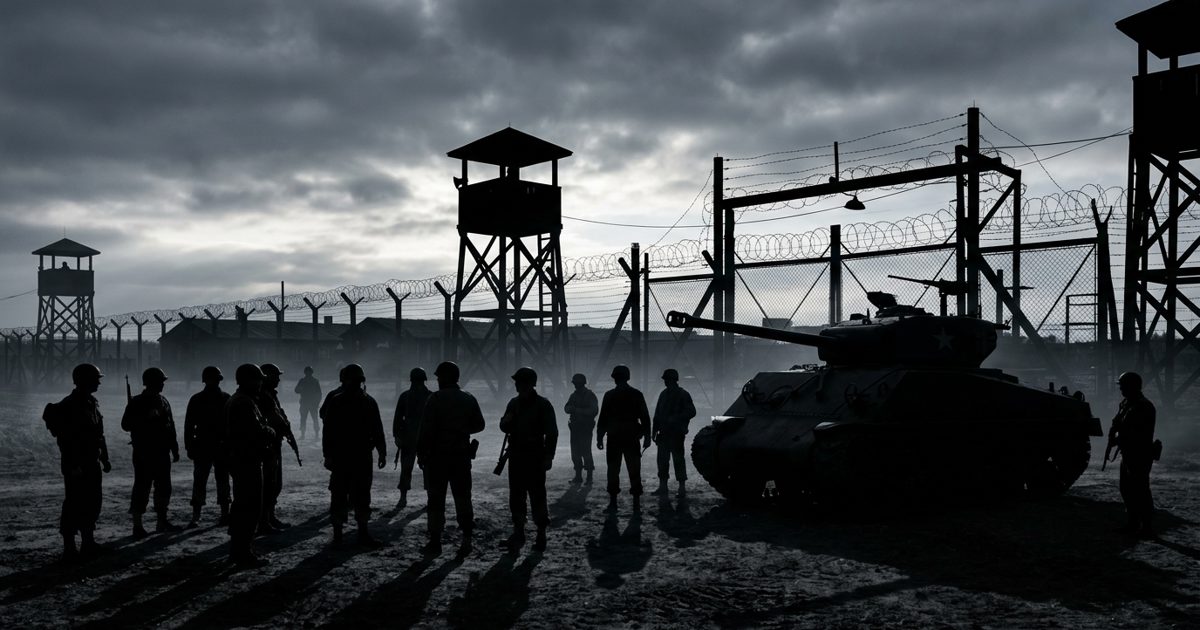
Scouts from the 4th Armored Division pushed into the Thuringian countryside alongside infantrymen from the 89th Infantry Division during the final Allied drive across central Germany. Advance patrols reached the outer wire of the Ohrdruf labor camp, an installation functioning as a subcamp of the larger Buchenwald concentration camp complex. SS guards fled the compound hours before American light armor approached the gates, leaving behind dozens of unburied victims in the main yard. Combat soldiers entered the installation expecting a conventional military barracks or supply depot. Shock rapidly spread among the infantrymen as they discovered mass graves, lime-covered bodies, and starved survivors hiding in unheated wooden barracks.
Medics immediately mobilized emergency field rations, plasma units, and blankets to treat the emaciated survivors clinging to life. Division commanders halted combat operations in the immediate sector to secure the compound perimeter and summon higher headquarters staff. General George S. Patton Jr. arrived at the scene days later alongside General Omar Bradley and Supreme Allied Commander Dwight D. Eisenhower. Eisenhower inspected the crematoria pyres, gallows, and sheds stacked with corpses so he could personally bear witness to the crimes. Supreme headquarters issued urgent cables requesting congressional delegations and journalists to document the atrocities with photographic evidence.
Eisenhower ordered townspeople from nearby Ohrdruf to march through the compound and bury the deceased prisoners under American military guard. Third Army medical and sanitary battalions evacuated surviving inmates to regional field hospitals for intensive recuperation and dietary rehabilitation. Investigators documented the physical site layout and assembled sworn survivor depositions for upcoming war crimes proceedings at Nuremberg. Combat units of the 89th Division resumed their eastward advance toward the Zwickau Mulde River after establishing secure administrative control over the camp. Records gathered at Ohrdruf provided the foundational forensic framework for Allied war crimes trials in post-war Europe.