Full Calendar
THIS DAY IN U.S. MILITARY HISTORY • APRIL 5 1943 U.S. Army Air Forces World War II

Allied Air Armada Strikes Axis Transports to Open Operation Flax

On April 5, 1943, Northwest African Air Forces struck German air transport fleets over the Sicilian Strait, severing supply lines to Tunisia.
Allied Air Armada Strikes Axis Transports to Open Operation Flax

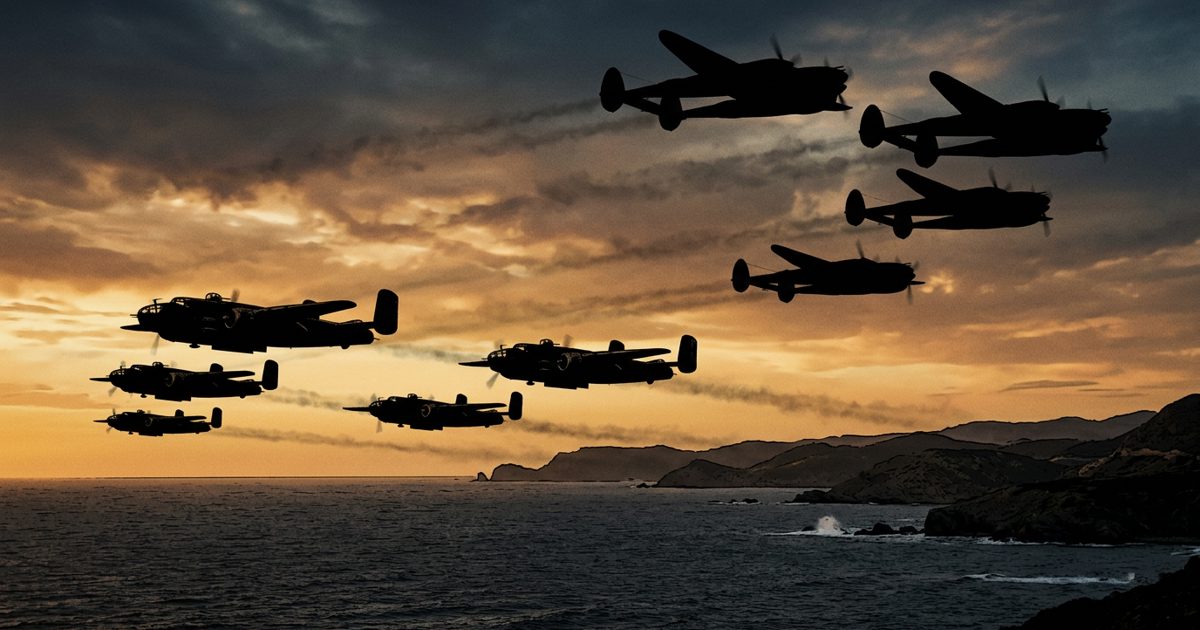
Operation Flax commenced at dawn on April 5, 1943, when Allied air commanders struck the vital airborne supply conduit between Sicily and Axis forces trapped in northern Tunisia. Major General James H. Doolittle directed the Northwest African Strategic Air Force to execute coordinated ambushes across the Sicilian Strait using intelligence gathered from decrypted Ultra communications. Radar stations and coastal spotters tracked waves of German Junkers Ju 52 transport aircraft escorted by Messerschmitt fighters attempting to ferry fuel, ammunition, and reinforcements to General Hans-Juergen von Arnim's army. Twin-engine P-38 Lightnings and Royal Air Force Spitfires established roving combat air patrols directly across the flight paths of the approaching air convoys.

Patrol flights spotted an enormous formation of fifty to seventy German transport planes flying low over the water north of Cape Bon. American P-38 fighters from the 1st and 14th Fighter Groups dove out of the morning sun to slash through the fighter screen and engage the heavily loaded German aircraft. Machine guns and 20mm cannon fire tore through slow-flying Ju 52 and giant six-engine Me 323 transports, sending dozens into the Mediterranean Sea in flames. Surviving German transports that managed to make landfall at Tunisian airstrips faced immediate follow-up strikes from Ninth Air Force B-25 Mitchell medium bombers and B-17 Flying Fortresses.

Bombardment squadrons pounded the Axis airfields at Sidi Ahmed, El Aouina, and Sicilian bases at Milo and Trapani throughout the remainder of the day. Ground-attack aircraft destroyed parked planes, ruptured fuel depots, and tore crater chains across operational runways to prevent subsequent transport sorties. Post-strike reconnaissance confirmed that Allied pilots destroyed dozens of German and Italian aircraft in the air and on the ground while losing only a handful of Allied fighters. Aerial resupply to Axis forces in North Africa collapsed over the following two weeks, directly accelerating the final capitulation of more than 250,000 Axis troops in Tunisia that May.

CHRONOLOGICAL RECORD

April 5 Across U.S. Military History

9 Verified Events
1800 U.S. Navy • Quasi-War

Frigate USS Philadelphia Is Commissioned in Pennsylvania

Shipwrights completed the 36-gun sailing frigate USS Philadelphia at Philadelphia on April 5, 1800, placing the vessel under the command of Captain Stephen Decatur Sr. Naval authorities deployed the frigate to the West Indies during the Quasi-War, where the crew captured five French armed privateers and recaptured six merchant vessels.

1862 U.S. Army Landmark Event • Civil War

Army of the Potomac Commences the Siege of Yorktown

Major General George B. McClellan halted the march of the Army of the Potomac up the Virginia Peninsula on April 5, 1862, after encountering Confederate earthworks at Yorktown. Confederate Major General John B. Magruder deceived Union commanders about his troop strength through theatrical troop movements, convincing McClellan to abandon an immediate assault in favor of month-long siege operations.

1865 U.S. Army • Civil War

Union Cavalry Clashes with Confederates at Amelia Springs

Brigadier General Henry E. Davies Jr. led a Union cavalry raid against General Robert E. Lee's retreating wagon train near Painesville on April 5, 1865. Major General Fitzhugh Lee's Confederate cavalry counterattacked in a running battle toward Jetersville, forcing Union forces to deploy reinforcements while denying the Army of Northern Virginia its vital supply wagons.

1943 U.S. Navy • World War II

Destroyer USS O'Bannon Engages Japanese Submarine RO-34

Crew members aboard the Fletcher-class destroyer USS O'Bannon engaged the surfaced Japanese submarine RO-34 off the Russell Islands on April 5, 1943. Sailors threw potatoes at the submarine's deck when the vessel drew too close for primary guns to depress, distracting the crew before maneuvering away to sink the submarine with depth charges.

1951 U.S. Army Landmark Event • Korean War

General Matthew Ridgway Launches Operation Rugged in Korea

Lieutenant General Matthew Ridgway initiated Operation Rugged on April 5, 1951, sending multiple corps forward across central Korea. American and allied divisions advanced north toward Line Kansas to seize dominating terrain above the 38th parallel, establishing fortified defensive lines before the expected Chinese spring counteroffensive.

1951 U.S. Navy • Korean War

Corpsman Richard DeWert Sacrifices Life Saving Marines

Hospital Corpsman Third Class Richard D. DeWert repeatedly braved intense machine gun fire near Chunchon on April 5, 1951, to rescue wounded Marines of Company D, 2nd Battalion, 7th Marines. DeWert treated three wounded men and dragged two to cover while sustaining multiple wounds himself, before falling mortally wounded while aiding a fourth Marine.

1970 U.S. Army • Vietnam War

Sergeant Brian Buker Destroys Bunkers in Chau Doc

Sergeant Brian L. Buker of Detachment B-55, 5th Special Forces Group, led a mobile strike force assault up a fortified mountain in Chau Doc Province on April 5, 1970. Buker destroyed one enemy bunker with hand grenades, suffered severe wounds, crawled forward under point-blank fire to neutralize a second bunker, and was mortally wounded while reorganizing his assault squad.

1972 U.S. Army Landmark Event • Vietnam War

North Vietnamese Armor Assaults Loc Ninh Outpost

Regiments of the North Vietnamese Army supported by Soviet-built T-54 tanks launched an assault on the border district capital of Loc Ninh on April 5, 1972. American military advisors with MACV Advisory Team 70 coordinated close air support strikes alongside South Vietnamese defenders against the opening thrust of the communist Easter Offensive.

1986 U.S. Army Landmark Event • Cold War

Terror Bombing Hits West Berlin Discotheque

Terrorists detonated a plastic explosive bomb inside the La Belle discotheque in West Berlin during the early morning hours of April 5, 1986. The blast killed two American soldiers, Sergeant Kenneth T. Ford and Sergeant James E. Goins, while wounding over two hundred patrons, triggering retaliatory U.S. air strikes against Libya under Operation El Dorado Canyon.

MEDAL OF HONOR ACTION 1945

Private First Class Sadao Munemori Saves Comrades on the Gothic Line

Soldiers of Company A, 100th Infantry Battalion, 442nd Regimental Combat Team, assaulted the Gothic Line near Seravezza, Italy, on April 5, 1945. Fortified German machine gun bunkers opened fire from high ground, pinning down the lead platoon and wounding the squad leader. Private First Class Sadao Munemori immediately assumed command under heavy grazing fire. Munemori exposed himself to enemy fire, charging forward alone to eliminate two machine gun nests with hand grenades.

Enemy defenders hurled a counter-volley of grenades as Munemori retreated toward a shell crater where two squadmates sought cover. One grenade ricocheted off Munemori's helmet and landed in the crater beside the trapped men. Munemori instantly smothered the blast with his own body, absorbing the explosion to shield his fellow soldiers. His sacrifice saved both men and allowed Company A to clear the ridge, earning Munemori the Medal of Honor posthumously as the first Japanese American recipient.