Full Calendar
THIS DAY IN U.S. MILITARY HISTORY • JANUARY 1 1945 U.S. Army Air Forces World War II

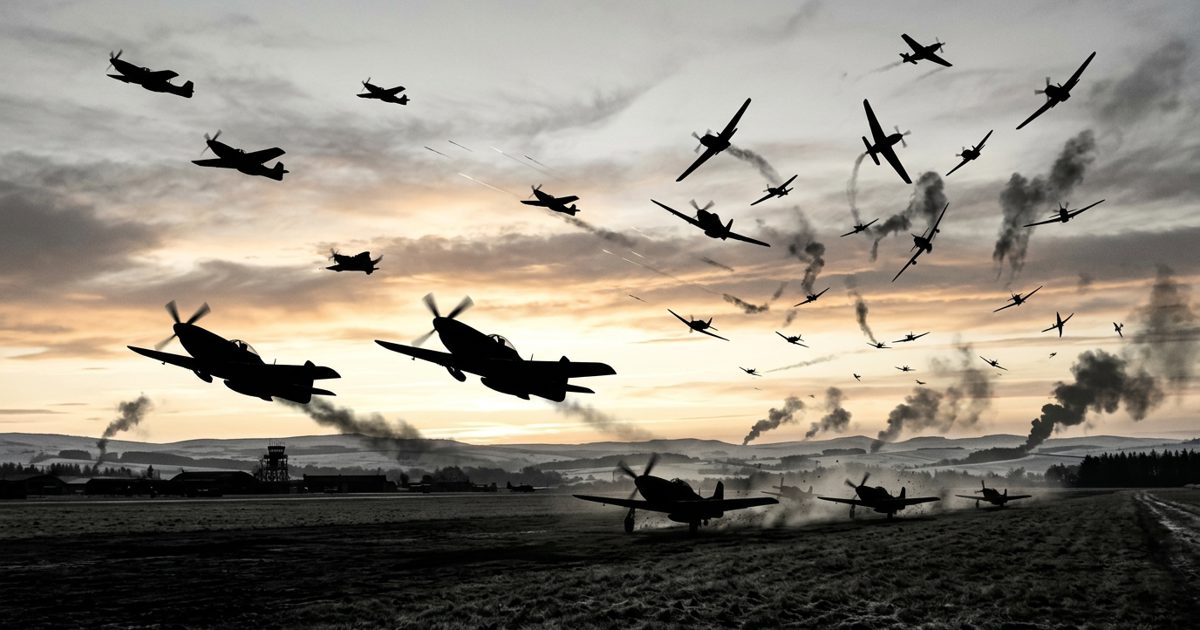
American Mustangs Defend Airfield Y-29 Against Luftwaffe Assault

Pilots of the 352nd Fighter Group scramble under strafing fire at Asch to shatter the German New Year air offensive.
American Mustangs Defend Airfield Y-29 Against Luftwaffe Assault

Luftwaffe fighter-bombers roared over the tree line at airfield Y-29 near Asch, Belgium, launching Operation Bodenplatte to wipe out Allied tactical air strength on New Year morning. Commander Günther Specht led more than fifty Focke-Wulf Fw 190 and Messerschmitt Bf 109 fighters from Jagdgeschwader 11 directly toward the forward airstrip. Lieutenant Colonel John C. Meyer of the 352nd Fighter Group had already placed his 487th Fighter Squadron on combat alert, anticipating enemy aggression during clear morning skies. Meyer initiated takeoff rolls with twelve P-51 Mustangs just as German strafing runs ignited fuel dumps and chewed into the sod runway.

Mustangs surged airborne directly through curtained tracers and dropped their wing tanks while clearing the tree tops. Captain William T. Whisner hauled his fighter upward and immediately destroyed an attacking Focke-Wulf banking across the base perimeter. American pilots engaged in low-altitude dogfights across the freezing Belgian skies alongside Republic P-47 Thunderbolts from the 366th Fighter Group. Whisner claimed four confirmed kills within twenty minutes while Meyer added two victories despite taking enemy machine gun hits to his wing.

Squadrons defending the forward airstrip routed the attacking German formation after forty-five minutes of continuous aerial combat across the Limburg countryside. American pilots from airfield Y-29 shot down twenty-four Luftwaffe fighters without losing a single aircraft in air-to-air engagements. Jagdgeschwader 11 suffered devastating personnel casualties, losing twenty-five pilots killed, missing, or captured, including Specht and multiple flight leaders. Ground crews patched two lightly damaged Mustangs and cleared debris from the runway before noon, returning the forward landing field to full operational readiness.

CHRONOLOGICAL RECORD

January 1 Across U.S. Military History

8 Verified Events
1776 Continental Army Landmark Event • American Revolutionary War

Washington Hoists Grand Union Flag at Prospect Hill

General George Washington raised the Continental Union Flag over the fortified encampment at Prospect Hill outside Boston. Continental Army regiments cheered under the new thirteen-stripe banner as artillery fired thirteen salutes to display colonial unity against the British garrison. British observers across the harbor initially mistook the banner for a signal of surrender.

1776 Continental Army Landmark Event • American Revolutionary War

Continental Militia Clashes at the Burning of Norfolk

Warships under Royal Governor Lord Dunmore bombarded the port of Norfolk, Virginia, sending landing parties ashore to ignite dock warehouses. Virginia militia and Continental riflemen engaged the landing parties and systematically burned remaining Loyalist properties to deny naval staging facilities to the Royal Navy fleet. American forces abandoned the ruined town weeks later.

1781 Continental Army • American Revolutionary War

Pennsylvania Regiments Revolt Over Lapsed Enlistments

Pennsylvania Line soldiers stationed at Mount Kemble near Morristown, New Jersey, revolted against miserable winter quarters and unpaid multi-year service contracts. Continental officers under Brigadier General Anthony Wayne negotiated directly with the mutineers after the soldiers arrested British agents attempting to recruit them. Negotiators granted furloughs and back pay to resolve the standoff.

1863 U.S. Army Landmark Event • American Civil War

Emancipation Proclamation Authorizes Black Military Recruitment

President Abraham Lincoln issued the finalized Emancipation Proclamation, legally freeing slaves in rebel states and explicitly authorizing African American enlistment into federal armed service. War Department officials established the Bureau of Colored Troops, rapidly organizing regiments that eventually brought nearly two hundred thousand Black soldiers and sailors into Union combat operations.

1863 U.S. Navy Landmark Event • American Civil War

Confederate Cottonclads Recapture Port of Galveston

Gunboats Bayou City and Neptune, converted into Confederate cottonclads, launched a surprise assault against Union blockading ships in Galveston Harbor, Texas. Boarding parties captured the federal gunboat Harriet Lane after fierce hand-to-hand fighting, and Union Commander William B. Renshaw died while scuttling his grounded flagship USS Westfield. Confederate forces held Galveston for the rest of the war.

1891 U.S. Army • Indian Campaigns

Sixth Cavalry Patrol Repels White River Ambush

Corporal Cornelius C. Smith led a four-man detachment of Troop K, 6th U.S. Cavalry, into defensive positions along the White River in South Dakota after encountering a superior warrior force. Smith directed rapid carbine fire to hold the perimeter against repeated assaults and then chased retreating fighters across broken terrain, earning the Medal of Honor.

1943 U.S. Navy • World War II

Dutch Harbor Naval Operating Base Officially Commissioned

Navy leadership formally commissioned the Dutch Harbor Naval Operating Base on Amaknak Island in the Aleutian Islands of Alaska. Naval construction battalions expanded deep-water docks, coastal fuel depots, and seaplane facilities to supply American fleets contesting Japanese garrisons on Attu and Kiska. The outpost served as an essential logistics hub through the end of the conflict.

1966 U.S. Army • Vietnam War

Paratroopers Launch Operation Marauder in Mekong Swamps

Paratroopers from the 173rd Airborne Brigade helilifted into Hau Nghia Province alongside Australian and New Zealand battalions to open Operation Marauder. American infantry assaulted canal systems in the Plain of Reeds, clearing fortified bunker lines and routing elements of the Viet Cong 267th Main Force Battalion over eight days of marshland fighting.

SPECIAL OPERATIONS 1962

Navy SEAL Teams Formed for Unconventional Maritime Warfare

President John F. Kennedy directed the expansion of specialized counterinsurgency units to combat guerrilla warfare in riverine and maritime battlegrounds. Chief of Naval Operations Admiral George W. Anderson Jr. responded by commissioning SEAL Team ONE at Naval Amphibious Base Coronado and SEAL Team TWO at Naval Amphibious Base Little Creek. Naval leadership selected veteran personnel from existing Underwater Demolition Teams to form sixty-man cadre units trained in direct action, clandestine scouting, and underwater sabotage. Lieutenants David Del Giudice and John Callahan assumed initial command of the West and East Coast units.

Operators immediately began grueling instruction in high-altitude parachuting, combat diving, land demolitions, and foreign weapons handling. Navy planners deployed the first detachment of SEAL advisors to South Vietnam two months later to train local commando units in the Mekong Delta. Personnel developed riverine ambush tactics and coastal insertion doctrines that redefined naval special warfare throughout the Indochina conflict.