Full Calendar
THIS DAY IN U.S. MILITARY HISTORY • JANUARY 2 1967 U.S. Air Force Vietnam War

Operation Bolo Traps North Vietnamese Interceptors Over Hanoi

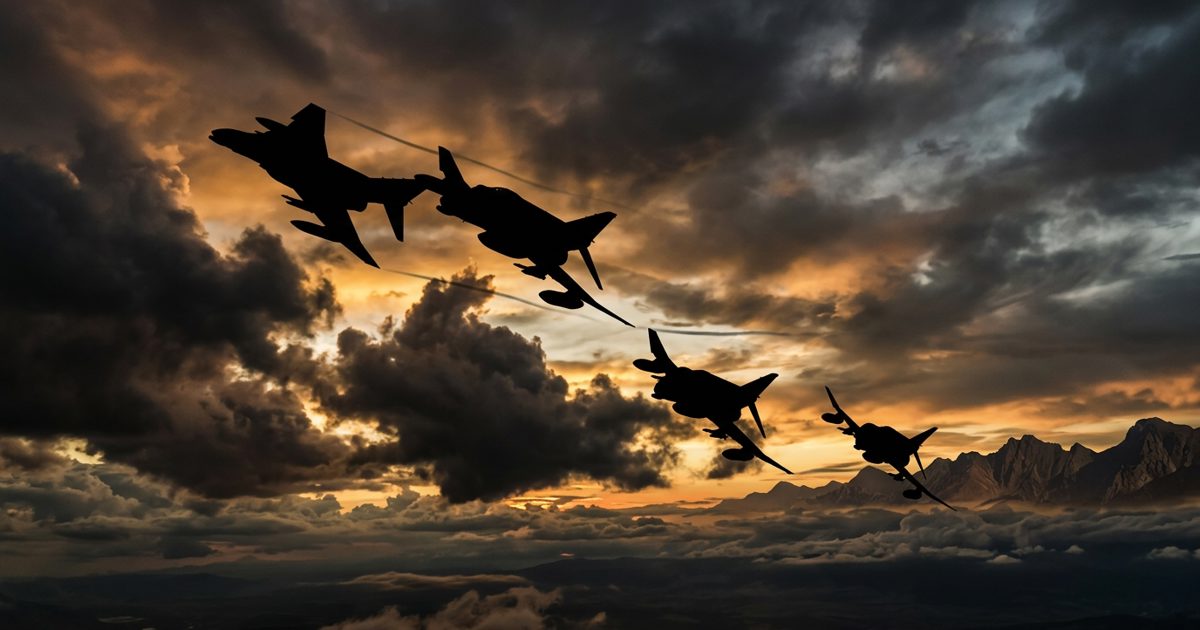
Colonel Robin Olds and the Eighth Tactical Fighter Wing disguise F-4C Phantom fighters to destroy seven MiG-21 interceptors over Phuc Yen Air Base.
Operation Bolo Traps North Vietnamese Interceptors Over Hanoi

Colonel Robin Olds led twenty-eight F-4C Phantom II fighter jets from Ubon Royal Thai Air Force Base into North Vietnamese airspace on January 2, 1967. North Vietnamese radar operators tracked what appeared to be an ordinary, heavily laden formation of Republic F-105 Thunderchief fighter-bombers following their standard ingress corridor toward Hanoi. Air Force planners had deliberately fitted the agile Phantoms with QRC-160 radar jamming pods, ordered the aircrews to maintain standard F-105 cruising speeds and altitudes, and transmitted routine bomber call signs over open radio frequencies. Soviet-trained controllers at Phuc Yen Air Base took the bait and scrambled their elite interceptor force through thick cloud cover to bounce the supposed bomb trucks.

MiG-21 interceptors punched through the gray overcast expecting sluggish, bomb-burdened targets but immediately ran into aggressive American fighter pilots maneuvering for missile locks. Olds broke formation into a hard turn, acquired an enemy fighter closing on his wing, and fired two AIM-9 Sidewinder missiles that blew the tail section off the jet. Flight leaders Captain John Stone and Lieutenant Ralph Wetterhahn quickly engaged additional hostile aircraft emerging from the cloud deck across the Red River valley. Aircrews fired radar-guided AIM-7 Sparrow and heat-seeking Sidewinder missiles across a swirling twelve-minute dogfight that completely shattered the enemy formation.

Air Force fighters downed seven MiG-21 aircraft during the engagement without suffering a single combat loss. Maintenance crews at Ubon lined the taxiways as returning pilots held up fingers outside their cockpit canopies to signal their confirmed aerial victories. North Vietnamese military authorities grounded their remaining MiG-21 fleet for several weeks to overhaul their intercept doctrine and flight tactics. American strike packages operated across the Hanoi sector with markedly reduced fighter interference throughout the following month.

CHRONOLOGICAL RECORD

January 2 Across U.S. Military History

8 Verified Events
1777 Continental Army Landmark Event • American Revolutionary War

Continental Troops Repulse Cornwallis at Assunpink Creek

General George Washington deployed Continental Army forces along the southern bank of Assunpink Creek near Trenton, New Jersey, on January 2, 1777. American artillery and riflemen repulsed three successive frontal assaults by British troops under Lieutenant General Charles Cornwallis. Washington then left campfires burning and slipped his army away at night to strike the British rear guard at Princeton.

1778 Continental Navy • American Revolutionary War

Continental Congress Dismisses Commander Esek Hopkins

Delegates of the Continental Congress voted on January 2, 1778, to formally terminate the naval commission of Commodore Esek Hopkins, the first commander-in-chief of the Continental Navy. Officers and enlisted sailors had petitioned Congress regarding his abusive treatment of prisoners and refusal to engage British warships. Congress upheld the whistleblower complaints and declined to appoint another supreme naval commander.

1863 U.S. Army Landmark Event • American Civil War

Massed Artillery Crushes Confederate Assault at Stones River

Captain John Mendenhall concentrated fifty-seven Union cannon on high ground overlooking McFadden's Ford along Stones River on January 2, 1863. Gun crews fired rapid canister and case shot into advancing Confederate divisions under Major General John C. Breckinridge, killing or wounding eighteen hundred men in under an hour. General Braxton Bragg abandoned the field the following night.

1918 U.S. Army • World War I

President Wilson Establishes Distinguished Service Cross

President Woodrow Wilson authorized the creation of the Distinguished Service Cross on January 2, 1918, establishing a second-highest award for extraordinary battlefield heroism. General John J. Pershing had requested the medal so the American Expeditionary Forces could honor exceptional valor comparable to allied military decorations. War Department General Order Number 6 promulgated the new decoration ten days later.

1942 U.S. Navy Landmark Event • World War II

Japanese Forces Seize Manila and Cavite Navy Yard

Japanese infantry marched into Manila and occupied the scorched Cavite Navy Yard on January 2, 1942. American naval personnel destroyed industrial workshops, fuel stores, and ordnance depots before evacuating to Corregidor and Bataan. Hospital staff stayed behind at Canacao Naval Hospital to care for wounded service members, while remaining naval forces integrated into the Bataan defense perimeter.

1943 U.S. Army • World War II

Thirty-Second Division Captures Buna Station in Papua

Infantrymen of the U.S. Army 32nd Infantry Division overran the final Japanese defensive lines at Buna Government Station in Papua on January 2, 1943. Lieutenant General Robert L. Eichelberger directed the bloody assault through coastal mangrove swamps alongside Australian forces, collapsing weeks of stubborn bunker resistance. Allied engineers immediately began converting the coastal plain into forward airfields.

1944 U.S. Army • World War WWII

Allied Task Force Lands at Saidor New Guinea

Troops from the 126th Regimental Combat Team splashed ashore at Saidor, New Guinea, on January 2, 1944, as part of Operation Dexterity. Naval gunfire from U.S. destroyers covered the landings, allowing engineers to seize the local airstrip and unload heavy construction machinery before noon. The tactical lodgment trapped retreating Japanese forces between Saidor and advancing Australian units.

1963 U.S. Army Landmark Event • Vietnam War

American Aviators and Advisers Clash at Ap Bac

Viet Cong guerrillas ambushed South Vietnamese troops and supporting American advisers at the hamlet of Ap Bac on January 2, 1963. Enemy machine gun fire struck fifteen U.S. Army helicopters ferrying infantry reinforcements into local rice paddies, shooting down five aircraft and killing three American service members. The battle exposed significant tactical flaws in joint helicopter airmobile operations.

MEDAL OF HONOR ACTION 1951

Sergeant First Class Junior Edwards Charges Enemy Machine Gun Nests

Sergeant First Class Junior Dean Edwards led soldiers of Company E, 23rd Infantry Regiment, 2nd Infantry Division, in defending a critical hill near Changbong-ni, Korea, on January 2, 1951. Enemy forces launched a fierce counterattack supported by raking fire from a machine gun on adjacent high ground, driving the platoon off its defensive line. Edwards grabbed a supply of hand grenades and charged alone up the exposed slope directly into hostile fire. His accurate grenade throws forced the enemy gunners to withdraw from their position before he expended his ammunition.

Enemy gunners brought up a second heavy machine gun and reopened fire on the scattered American riflemen. Edwards gathered another armload of grenades and dashed across the barren ground a third time to eliminate the crew. Hostile bullets mortally wounded Edwards during his final rush, but his grenades successfully destroyed the second weapon and wiped out its occupants. Surviving soldiers from his platoon rallied behind his single-handed breakthrough, counterattacked up the ridge, and secured the strongpoint. President Harry S. Truman posthumously awarded Edwards the Medal of Honor for his actions.