Full Calendar
THIS DAY IN U.S. MILITARY HISTORY • JANUARY 30 1945 U.S. Army World War II

Army Rangers Strike Deep Behind Enemy Lines at Cabanatuan

Lieutenant Colonel Henry Mucci led a combined force of Rangers and Filipino guerrillas thirty miles behind Japanese frontlines to rescue Allied prisoners.
Army Rangers Strike Deep Behind Enemy Lines at Cabanatuan

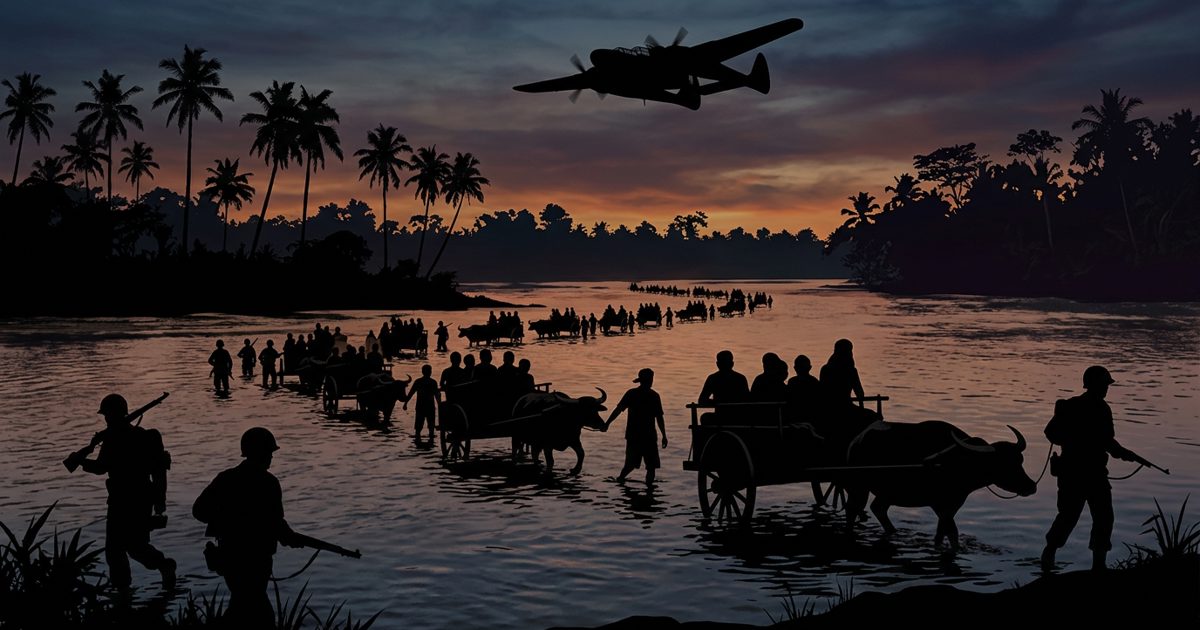
Lieutenant Colonel Henry Mucci led 121 soldiers of the 6th Ranger Battalion and Alamo Scouts into Japanese territory north of Manila to rescue Allied prisoners of war held near Cabanatuan. Japanese forces had intensified prisoner executions across the archipelago following American landings on Luzon, placing more than five hundred survivors of Bataan and Corregidor in immediate danger. Filipino guerrillas under Captain Juan Pajota and Captain Eduardo Joson joined the assault column, providing crucial intelligence and establishing roadblocks to isolate the compound from nearby Japanese divisions. A single P-61 Black Widow night fighter buzzed the compound at low altitude to divert the attention of the camp guards into the evening sky.

Ranger assault teams capitalized on the aerial distraction by crawling across hundreds of yards of open terrain before storming both gates of the prison compound at sundown. Captain Robert Prince directed the main breaching force through the front gate, neutralizing guard towers and machine gun nests with sustained rifle and submachine gun fire within minutes. Pajota and his Filipino fighters defended the Cabu River bridge, detonating explosive charges and holding back hundreds of responding Japanese reinforcements from the 359th Independent Infantry Battalion. Heavy fire raked the prison compound as American soldiers dismantled the barracks enclosures and gathered debilitated prisoners who were initially too startled to realize rescue had arrived.

Rescuers loaded dozens of bedridden and incapacitated captives onto local carabao wooden carts provided by nearby Filipino villagers before retreating back across the river. Ranger rear guard units fought off scattered Japanese resistance to secure the evacuation route, suffering only two men killed during the entire engagement. Allied soldiers evacuated five hundred and eleven prisoners across thirty miles of hostile territory, safely reaching friendly lines held by the Sixth Army on the following day. This tactical victory dismantled the largest prisoner encampment in Luzon and returned hundreds of Bataan veterans to American custody.

CHRONOLOGICAL RECORD

January 30 Across U.S. Military History

9 Verified Events
1862 U.S. Navy Landmark Event • American Civil War

Ironclad USS Monitor Launches in Brooklyn

Shipwrights at the Continental Iron Works launched the experimental ironclad USS Monitor into New York City's East River. Engineer John Ericsson designed the vessel with a steam-powered revolving turret and an extraordinarily low freeboard to neutralize Confederate naval power. The warship deployed south to Hampton Roads six weeks later.

1863 U.S. Army • American Civil War

Union Forces Clash at Deserted House

Brigadier General Michael Corcoran led Union forces from Suffolk, Virginia, to intercept Confederate troops conducting foraging operations under Brigadier General Roger Pryor. Combat erupted around Kelly's Store and an abandoned homestead, forcing Confederate units across the Blackwater River after four hours of artillery exchanges. Union troops secured the roadway before withdrawing into Suffolk.

1911 U.S. Navy Landmark Event • Early 20th Century

Destroyer USS Terry Executes First Airplane Rescue at Sea

Crew members aboard the destroyer USS Terry pulled Canadian aviator John McCurdy from the ocean ten miles off Havana, Cuba. McCurdy had attempted an overwater flight from Key West before engine oil loss forced him to alight in the Florida Straits. Terry hoisted the aviator and his Curtiss biplane aboard, completing the first recorded naval rescue of a downed airplane at sea.

1942 U.S. Coast Guard • World War II

Sinking of Coast Guard Cutter Alexander Hamilton

Crew members abandoned the torpedoed Treasury-class cutter USCGC Alexander Hamilton off the coast of Iceland after salvage tugs failed to keep the ship upright. German submarine U-132 had torpedoed the cutter the previous afternoon during convoy escort duties. Destroyer USS Ericsson fired upon the capsized hull to sink the vessel in deep water.

1943 U.S. Navy Landmark Event • World War II

Heavy Cruiser USS Chicago Sinks at Rennell Island

Mitsubishi torpedo bombers attacked the damaged heavy cruiser USS Chicago while naval tug Navajo attempted to tow the vessel toward Espiritu Santo. Twelve aircraft breached the fleet air screen, striking the ship with two additional torpedoes. Captain Ralph Davis ordered the crew over the side before the cruiser settled stern-first.

1944 U.S. Army Landmark Event • World War II

Darby Rangers Ambushed at Cisterna

Panzergrenadiers from the Hermann Goring Division surrounded the 1st and 3rd Ranger Battalions in drainage ditches outside Cisterna di Littoria during the breakout from the Anzio beachhead. Field Marshal Albert Kesselring had reinforced the sector overnight with armor and heavy infantry. German forces captured or killed 761 of the 767 Rangers during the daylong engagement.

1951 U.S. Army • Korean War

Lieutenant Robert McGovern Heroism at Kamyangjan

Lieutenant Robert Milton McGovern led Company A of the 5th Cavalry Regiment against fortified enemy positions near Kamyangjan-ni, Korea. McGovern threw incoming grenades away from his platoon and charged a machine gun nest despite sustaining painful wounds. He silenced the weapon with his sidearm before falling mortally wounded, earning a posthumous Medal of Honor.

1953 U.S. Air Force • Korean War

Starfire Interceptor Scores First Radar Victory

Captain Benjamin L. Fithian and radar observer Lieutenant Sam Lyons piloted a Lockheed F-94B Starfire to intercept a hostile Lavochkin La-9 over Korea. Ground control directed the crew into position before Lyons locked on with onboard radar in total night darkness. Fithian destroyed the aircraft using fifty-caliber machine gun fire without visual acquisition.

1968 U.S. Armed Forces Landmark Event • Vietnam War

Premature Opening Wave of Tet Offensive

Regiments from the North Vietnamese Army and Viet Cong assaulted provincial capitals and Allied military installations across central South Vietnam early due to internal calendar discrepancies. Rocket barrages and ground assaults struck Nha Trang, Pleiku, Da Nang, and Kontum before dawn. Allied headquarters canceled the planned lunar holiday truce and placed combat forces throughout the country on maximum alert.

MEDAL OF HONOR ACTION 1944

Staff Sergeant Jesse Drowley Guides Armor by Fire on Bougainville

Staff Sergeant Jesse Ray Drowley of the Americal Division held a reserve perimeter defense on Bougainville Island when concentrated Japanese bunker fire pinned down an attacking American infantry company. Heavy machine gun fire from an unseen enemy pillbox wounded three soldiers and stopped the battalion advance. Drowley immediately charged into open ground under direct fire, pulled two wounded soldiers to safety, and then spotted the camouflaged fortification that friendly tanks could not locate.

Drowley ran directly toward a moving American tank, climbed onto the exposed exterior turret, and traded his rifle for a submachine gun to guide the crew. Tracer rounds fired from his submachine gun marked the bunker embrasures, allowing the tank gunner to place cannon rounds straight into the target. Hostile fire struck Drowley twice, ripping through his chest and blinding him in the left eye, yet he remained on the hull directing fire until two Japanese bunkers were demolished. Medics evacuated him from the field only after the defensive position collapsed, and President Franklin D. Roosevelt presented him the Medal of Honor later that year.