Full Calendar
THIS DAY IN U.S. MILITARY HISTORY • JANUARY 4 1989 U.S. Navy Cold War

Navy Tomcats Down Two Libyan Fighters Over Mediterranean Waters

Fighter Squadron 32 aircrews flying from USS John F. Kennedy defend their airspace by destroying hostile MiG interceptors off North Africa.
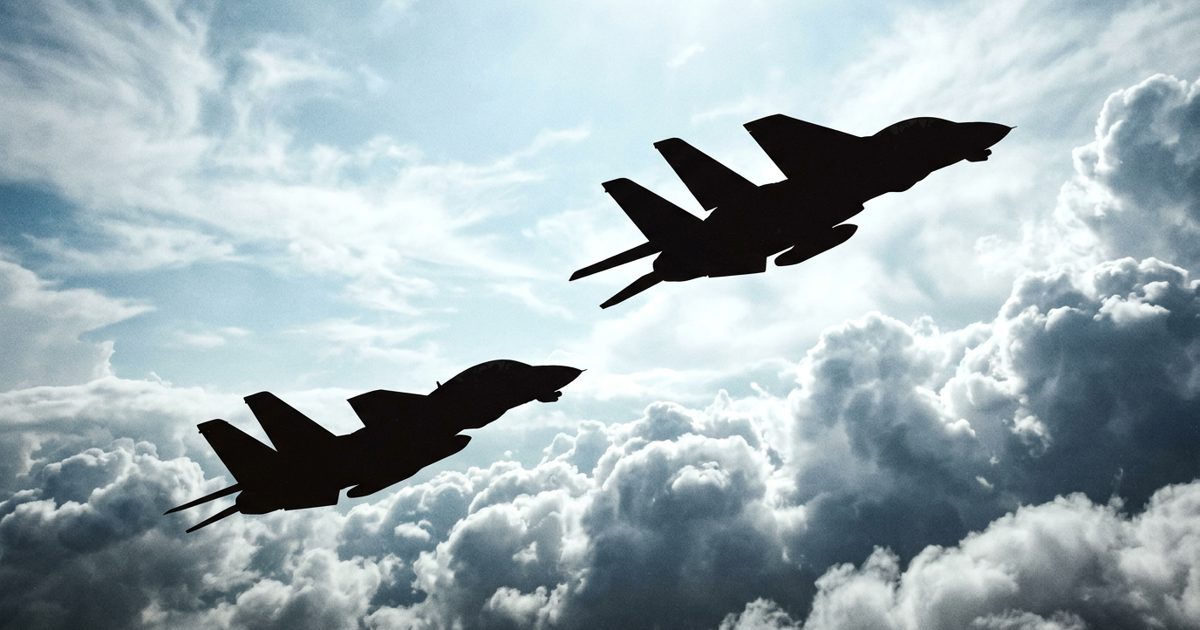
Navy Tomcats Down Two Libyan Fighters Over Mediterranean Waters

Radar operators aboard an E-2C Hawkeye early warning aircraft detected two Libyan Air Force MiG-23 Floggers launching from Al Bumbaw airfield shortly before noon. Two F-14A Tomcat interceptors from Fighter Squadron 32, flying combat air patrol from the aircraft carrier USS John F. Kennedy, immediately banked toward the incoming contacts over international waters north of Tobruk. Commander Joseph Connelly and Lieutenant Hermon Cook maneuvered their aircraft through five separate evasive turns to demonstrate non-hostile intent. The Libyan jets accelerated to eight hundred knots and adjusted course each time to reacquire head-on intercept headings against the Americans.

Commander Connelly recognized the persistent tracking as clear hostile intent and authorized his radar intercept officer to arm their weapons systems. The lead Tomcat crew launched an AIM-7 Sparrow radar-guided missile at twelve miles, followed quickly by a second missile from ten miles, though neither weapon tracked properly. Lieutenant Cook closed the distance to five miles and fired a third Sparrow that struck the trailing MiG-23 squarely in the fuselage. Flames erupted from the crippled jet as the Libyan wingman broke into a hard turn directly across the path of the lead American fighter.

Aircrews watched the second MiG maneuver aggressively until Connelly slipped his Tomcat onto the target tail and fired an AIM-9 Sidewinder missile. The heat-seeking missile struck the Libyan fighter exhaust nozzle, blowing the aircraft apart and sending the wreckage spinning into the sea. Both Libyan pilots successfully ejected with deployable parachutes, though North African search parties failed to recover them. Task force commanders ordered both Tomcats back to USS John F. Kennedy, ending the eight-minute engagement and cementing Navy operational air superiority over the Gulf of Sidra.

CHRONOLOGICAL RECORD

January 4 Across U.S. Military History

8 Verified Events
1777 Continental Army Landmark Event • American Revolutionary War

Washington Marches Continental Forces Toward Winter Quarters

General George Washington halted his marching columns at Somerset Court House along the Millstone River following the victory at Princeton. Continental soldiers had marched through freezing mud to evade pursuing British regulars under Lord Cornwallis. Washington finalized plans to secure elevated winter cantonments at Morristown, preserving his depleted army and solidifying control over northern New Jersey.

1861 U.S. Army • Secession Crisis

Alabama Militia Seizes Federal Mount Vernon Arsenal

State militia companies from Mobile scaled the brick walls of the United States Arsenal at Mount Vernon at dawn. Ordnance Captain Jesse L. Reno surrendered the installation without gunfire because his seventeen-man caretaker detachment faced overwhelming numbers. State authorities confiscated twenty thousand small arms and tons of gunpowder one week before Alabama officially voted to secede from the Union.

1910 U.S. Navy Landmark Event • Pre-World War I

First American All Big Gun Battleship Commissioned

Shipbuilders completed commissioning ceremonies for USS Michigan at Camden, New Jersey, placing the dreadnought under the command of Captain Nathan R. Usher. Michigan introduced superfiring main turrets placed along the centerline, establishing the architectural standard for all subsequent American capital ships. The dreadnought carried eight 12-inch guns and gave the Atlantic Fleet modern heavy firepower.

1944 U.S. Navy • World War II

American Warships Intercept German Blockade Runner Off Brazil

Cruiser USS Omaha and destroyer USS Jouett intercepted the German blockade runner Rio Grande in the South Atlantic. American gunners fired warning salvos across the freighter bow as the German crew attempted to escape. Scuttling charges detonated by the German crew sank the vessel, sending thousands of tons of crude rubber and tin to the ocean floor.

1945 U.S. Navy Landmark Event • World War II

Escort Carrier Ommaney Bay Sunk in Sulu Sea

Kamikaze pilots slipped through Allied air defenses to strike the escort carrier USS Ommaney Bay en route to the Lingayen Gulf invasion. Direct bomb impacts fractured internal water mains, rendering fire hoses useless as flames spread across parked aircraft and ordnance. Exploding shipboard torpedoes forced an evacuation, and escort destroyer USS Burns scuttled the burning hulk.

1945 U.S. Army • World War II

Paratrooper Charges German Armor at Flamierge Belgium

Staff Sergeant Isadore S. Jachman dashed across snow-covered fields under intense mortar fire to repel a German counterattack against the 513th Parachute Infantry Regiment. Grabbing a bazooka from a fallen comrade, Jachman single-handedly engaged two enemy tanks, damaging one and forcing both to withdraw. Jachman received a posthumous Medal of Honor for saving his company from encirclement.

1951 U.S. Army Landmark Event • Korean War

Eighth Army Completes Strategic Evacuation of Seoul

Infantry divisions under Lieutenant General Matthew Ridgway withdrew south across the frozen Han River during the Chinese Third Phase Offensive. Combat engineers detonated highway and rail bridges behind the retreating columns to slow advancing Chinese formations. Ridgway preserved Eighth Army combat power, regrouping friendly forces along a fortified line forty miles south to prepare future counteroffensives.

1954 U.S. Navy • Cold War

Aircraft Carrier Leyte Deploys for Antisubmarine Operations

Aviators aboard USS Leyte launched specialized tracking missions as the vessel commenced service as the fleet dedicated antisubmarine aircraft carrier. Redesignated as CVS-32, the carrier coordinated screening destroyers and fixed-wing search aircraft to hunt submerged targets. Fleet planners established innovative hunter-killer doctrine aboard Leyte that reshaped American maritime defense against Soviet submarine forces.

SPECIAL OPERATIONS 1944

Operation Carpetbagger Initiates Secret Airborne Supply Line to European Resistance

Bomber crews from the U.S. Eighth Air Force took off from RAF Tempsford under cover of darkness to fly the inaugural supply drops of Operation Carpetbagger. Flying modified B-24 Liberators painted matte black to evade German searchlights, the American airmen operated under the direction of the Office of Strategic Services. Flight routes carried the heavy bombers at dangerously low altitudes through hostile airspace across occupied France. Navigators relied on visual terrain landmarks and prearranged ground light codes displayed by underground partisans to identify remote drop zones.

Crews pushed containers filled with rifles, ammunition, wireless radios, plastic explosives, and forged documents through modified bomb bays directly to local resistance networks. Partisans secured the munitions immediately to sabotage rail lines and cut communication wires across western Europe ahead of the anticipated Allied cross-channel invasion. Successful delivery runs on this first night proved that heavy four-engine bombers could execute precision low-level covert airlifts inside occupied territory. Operations expanded dramatically over subsequent months, eventually delivering thousands of tons of weapons to allied guerrilla fighters throughout France, Belgium, and Italy.