Operation Eastern Exit Executes Night Helicopter Evacuation in Mogadishu
Marines and Navy SEALs launched from amphibious warships off Somalia to extract besieged American diplomats and foreign nationals amid intense urban street warfare.
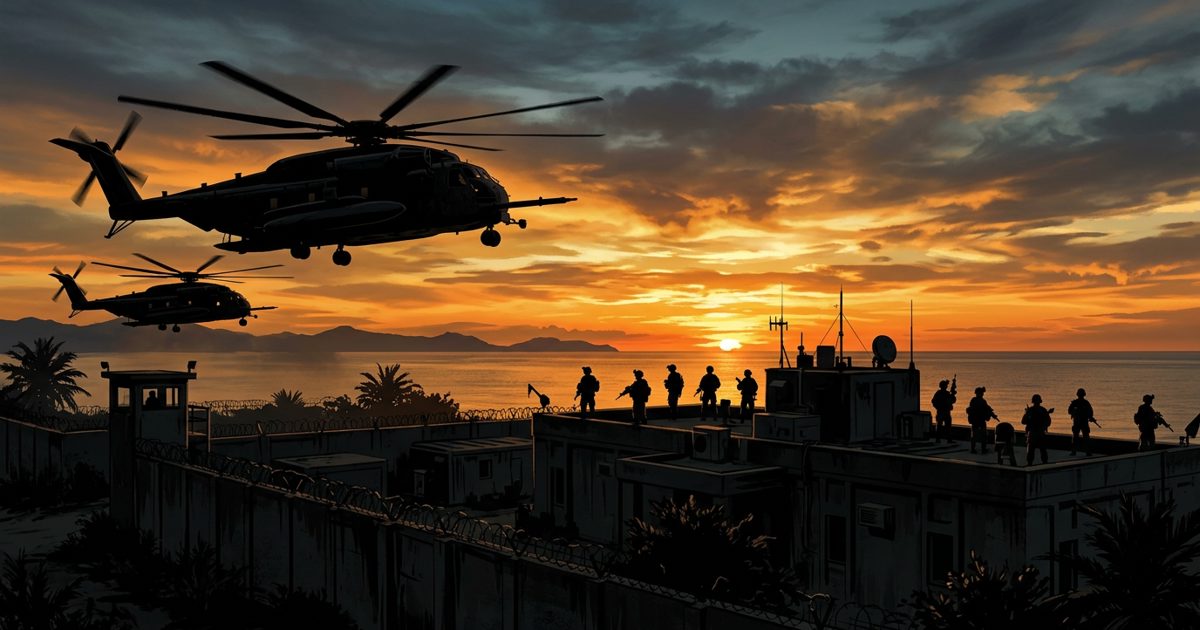
Insurgents surrounded the United States Embassy compound in Mogadishu in early January 1991, trapping American diplomats and foreign nationals behind barricaded compound walls. Ambassador James K. Bishop requested emergency military extraction as armed looters approached the perimeter fences and sprayed buildings with small-arms fire and rocket-propelled grenades. Vice Admiral Stanley R. Arthur, commanding United States Naval Forces Central Command, ordered the amphibious assault ship USS Guam and the amphibious transport dock USS Trenton to steam south at top speed. Two CH-53E Super Stallion heavy-lift helicopters from Marine Heavy Helicopter Squadron 461 launched from Guam across 466 miles of ocean during the pre-dawn darkness of January 5.
Helicopter crews completed two demanding night aerial refuelings with Marine KC-130 tankers before descending into the embassy grounds at daybreak. Sixty combat troops, comprising 51 Marines from the 4th Marine Expeditionary Brigade and nine Navy SEALs, fast-roped into the compound and immediately set up defensive sectors along the outer stone walls. Navy SEAL snipers took up positions on the embassy chancery roof to suppress hostile gunmen operating in adjacent neighborhood villas. Marine security teams organized the first wave of 61 evacuees, escorting American staff and foreign diplomats to the waiting heavy transports amid intermittent rifle exchanges.
Helicopters ferried those initial evacuees back to USS Guam before ten Marine CH-46 Sea Knight helicopters arrived to conduct continuous shuttle runs through the following night. Ground teams managed terrified civilian crowds, cleared landing zones under sniper fire, and evacuated personnel from 30 nations, including the Soviet ambassador and his entire diplomatic staff. Marines withdrew from the compound early on January 6 after extracting 281 people without losing a single American service member or evacuee. Naval planners subsequently used the mission as a prime tactical model for long-range expeditionary noncombatant evacuation doctrine.