Full Calendar
THIS DAY IN U.S. MILITARY HISTORY • MARCH 11 1942 U.S. Army World War II

General MacArthur Evacuates Corregidor Aboard Navy PT Boats

Four motor torpedo boats slip through Japanese naval blockades to transport Allied command from Manila Bay to Mindanao.
General MacArthur Evacuates Corregidor Aboard Navy PT Boats

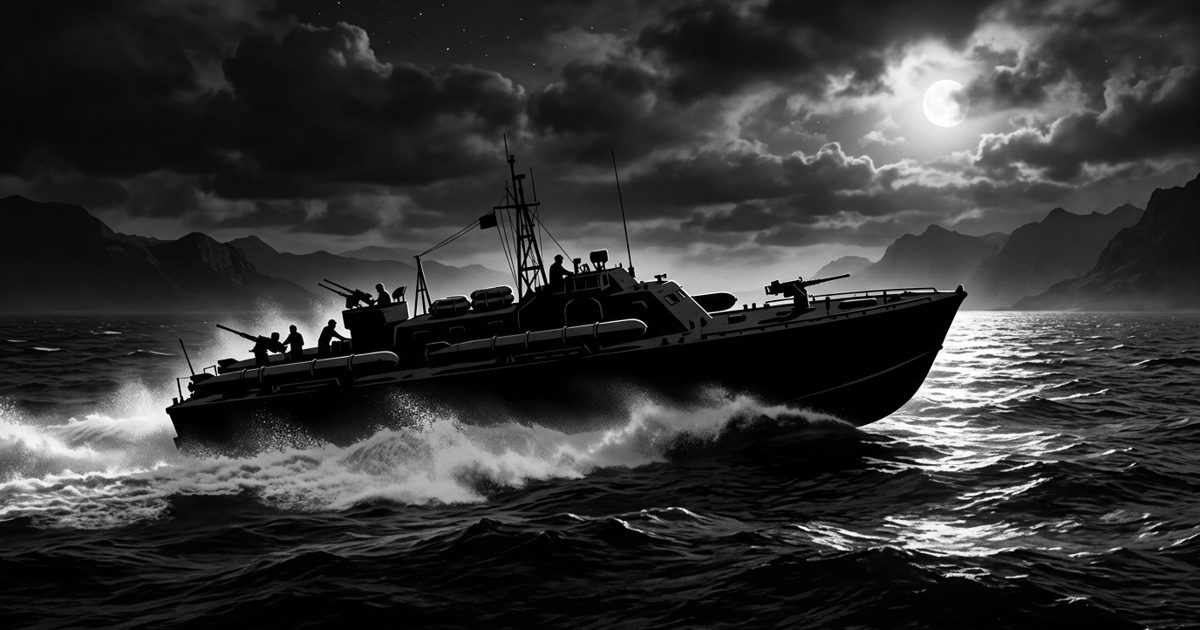
General Douglas MacArthur gathered his family and key staff officers at North Dock on Corregidor Island as darkness fell across Manila Bay on March 11, 1942. President Franklin D. Roosevelt had issued orders directing the commander to break out of the besieged fortress to organize Allied forces in Australia. Japanese siege guns pounded the battered island stronghold while enemy patrol vessels maintained a tight naval blockade across surrounding waters. Lieutenant John D. Bulkeley, commander of Motor Torpedo Boat Squadron 3, took charge of the surface breakout using four wooden craft consisting of PT-41, PT-34, PT-32, and PT-35. MacArthur boarded the lead vessel, PT-41, accompanied by his wife, young son, and essential staff officers.

Bulkeley throttled up the Packard engines at 1915 hours to navigate past underwater minefields and enter the open waters of the South China Sea. Heavy ocean swells battered the light wooden torpedo boats throughout the overnight passage, cracking fuel lines and shaking passengers violently. Crewmen strained their eyes into the darkness, altering course repeatedly to avoid Japanese naval patrols and surface picket lines. Mechanics cleared clogged fuel strainers at sea as carbon monoxide fumes filled passenger compartments and high waves threatened separation. Sunrise revealed scattered boats, but the squadron regrouped at Tagauayan Island to hide beneath camouflage nets until dusk.

Crews refueled their vessels from cached drums before embarking on the final open-water run toward northern Mindanao. PT-41 reached the wharf at Cagayan on the morning of March 13, delivering MacArthur and his command party safely ashore without drawing enemy fire. Army personnel immediately transferred the headquarters group to Del Monte Airfield, where Boeing B-17 Flying Fortress bombers stood ready to complete the evacuation. Transports flew the leadership team to northern Australia four days later, enabling MacArthur to establish Southwest Pacific Area headquarters in Melbourne and direct subsequent Allied counteroffensives across the Pacific theater.

CHRONOLOGICAL RECORD

March 11 Across U.S. Military History

8 Verified Events
1778 Continental Navy • American Revolutionary War

Continental Frigate Boston Captures British Ship Martha

Captain Samuel Tucker led the 24-gun Continental frigate Boston in an engagement against the armed British merchantman Martha in the North Atlantic on March 11, 1778. Marines traded musket fire with the merchant crew until the vessel surrendered. American prize crews navigated Martha to port while Boston delivered diplomat John Adams safely to France.

1779 Continental Army Landmark Event • American Revolutionary War

Continental Congress Establishes the Corps of Engineers

Delegates to the Continental Congress approved a resolution on March 11, 1779, establishing an official Corps of Engineers for the Continental Army. Brigadier General Louis LeBègue Duportail assumed command of the newly organized branch. Engineers constructed vital earthworks, trenches, and fortifications that secured American positions through the Siege of Yorktown.

1862 U.S. Army Landmark Event • American Civil War

President Lincoln Reorganizes Union High Command Structure

President Abraham Lincoln issued War Order Number 3 on March 11, 1862, removing Major General George B. McClellan as general-in-chief of all Union land armies. McClellan retained field command of the Army of the Potomac for the Peninsula Campaign. Major General Henry Halleck gained unified authority over the consolidated Department of the Mississippi.

1862 U.S. Navy • American Civil War

Naval Landing Party Secures St Augustine Florida

Sailors and Marines from the steam frigate USS Wabash landed unopposed at St. Augustine on March 11, 1862, under Commander C.R.P. Rodgers. Confederate defenders had abandoned Fort Marion the previous evening following the arrival of Union warships. Federal authorities raised the national colors over the ancient fortress, maintaining permanent naval control over the harbor.

1941 Joint Services Landmark Event • World War II

President Roosevelt Enacts Historic Lend-Lease Legislation

President Franklin D. Roosevelt signed House Resolution 1776 on March 11, 1941, enacting the Lend-Lease Act into federal law. Authorized provisions allowed the United States to supply Allied nations with warships, aircraft, and armaments without upfront payment. Mobilization of American manufacturing transformed national industrial capacity into the primary supply depot of the Allied war effort.

1945 U.S. Navy Landmark Event • World War II

Kamikaze Strikes Aircraft Carrier USS Randolph at Ulithi

Bombers from the Imperial Japanese Navy launched Operation Tan Number 2 on March 11, 1945, staging a long-range suicide raid against the Pacific Fleet anchorage at Ulithi Atoll. A twin-engine Yokosuka P1Y1 Frances struck the stern flight deck of the carrier USS Randolph, killing twenty-five sailors. Emergency repair crews restored the flight deck at Ulithi within four weeks.

1970 U.S. Marine Corps • Vietnam War

Staff Sergeant Kellogg Smothers Grenade to Shield Marines

Staff Sergeant Allan J. Kellogg Jr. led an evacuation patrol under intense fire in Quang Nam Province on March 11, 1970. Kellogg forced a live enemy grenade into the mud and shielded his squad from the explosion with his own body. Kellogg survived severe chest wounds and directed the safe extraction of his wounded men, later receiving the Medal of Honor.

2011 Joint Services Landmark Event • Modern Era

United States Launches Operation Tomodachi in Japan

Commanders across United States Pacific Command initiated Operation Tomodachi on March 11, 2011, mobilizing joint forces immediately after a catastrophic earthquake and tsunami struck northeastern Japan. Seventh Fleet diverted carrier strike groups while Air Force airlifters rushed relief supplies to coastal disaster zones. Joint service personnel cleared blocked airfields, delivered emergency provisions, and supported Japanese disaster recovery teams.

MEDAL OF HONOR ACTION 1968

Chief Master Sergeant Etchberger Defends Secret Radar Outpost

Sappers from North Vietnam launched a surprise assault on the secret U.S. Air Force radar installation atop Phou Pha Thi mountain in Laos on March 11, 1968. Chief Master Sergeant Richard L. Etchberger directed radar operations at Lima Site 85, guiding American strike aircraft over North Vietnam. Enemy infantry scaled sheer cliffs and opened fire, killing most technicians and leaving Etchberger with three wounded comrades on a narrow ledge. Etchberger defended the perimeter for hours, firing his rifle and throwing grenades down the slope to repel repeated attacks.

Helicopters from Air America arrived under intense fire as morning broke over the limestone peak. Etchberger exposed himself to heavy fire to secure his three wounded comrades into rescue slings, signaling the crew to winch each man to safety. Ground fire struck Etchberger as he was winched aboard the final helicopter, inflicting fatal wounds. Etchberger received the Air Force Cross in secret, followed by a posthumous Medal of Honor in 2010 after the mission was declassified.