Union Naval Armada Thrusts Into Louisiana Waters
Rear Admiral David Dixon Porter leads twenty-one federal warships into the Red River to open the joint campaign for Shreveport.
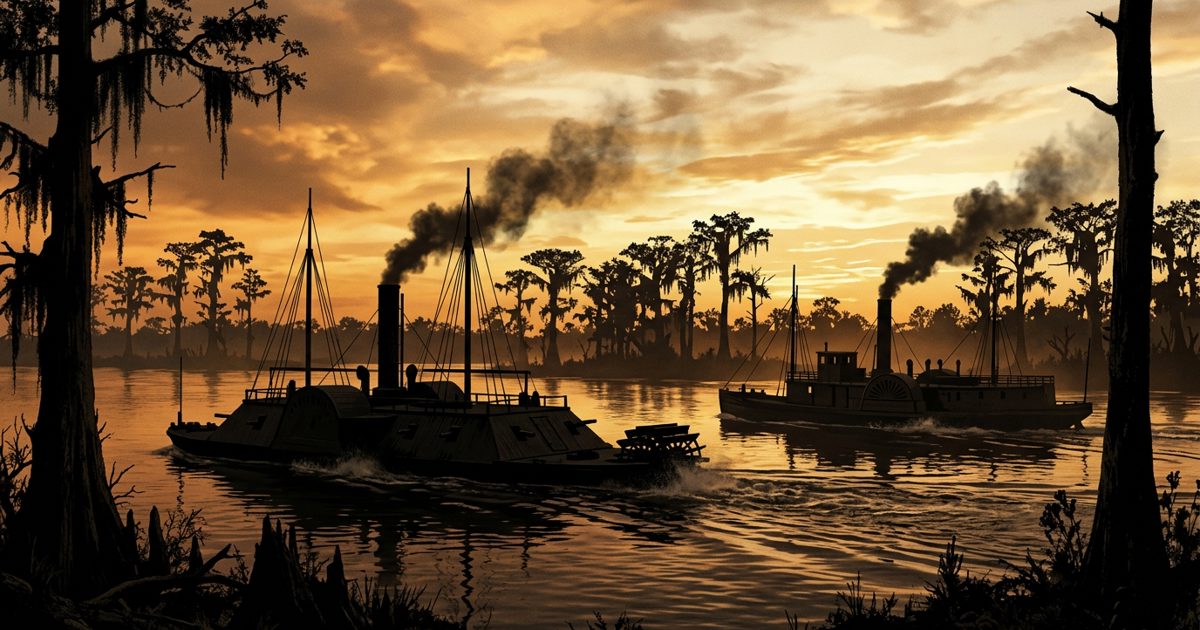
Admiral David Dixon Porter guided the ironclad gunboats of the Mississippi Squadron into the mouth of the Red River, initiating the largest combined naval and army expedition of the Trans-Mississippi theater. Thirteen heavily armored ironclads accompanied by four timberclads and four tinclads steamed past the junction with the Mississippi River to eliminate Confederate river defenses. Transport vessels trailed close behind the warships, carrying ten thousand soldiers detached from the Army of the Tennessee under Brigadier General Andrew Jackson Smith. Major General Nathaniel P. Banks coordinated the broader theater strategy from New Orleans, intending to unite his marching infantry columns with Porter at Alexandria before capturing the Confederate state capital at Shreveport.
Sandbars immediately complicated the Union advance as the massive ironclad USS Eastport ran aground near the river entrance. Crewmen worked for hours alongside support tugs to winch the stranded warship back into deep navigable water before the squadron resumed its northern ascent. Porter directed his gunboats toward Fort DeRussy, a formidable earthwork and casemated battery built by southern engineers to block naval passage toward Alexandria. Soldiers under General Smith prepared to disembark downstream at Simmesport, executing a rapid overland march to storm the defensive works from the rear while the gunboats cleared heavy pilings from the muddy river channel.
Troops secured the riverbanks over the ensuing forty-eight hours and battered Fort DeRussy into complete surrender, clearing the immediate path to Alexandria. Falling water levels soon threatened the entire flotilla as the seasonal spring rise failed to materialize across northwestern Louisiana. Confederate ground forces under Major General Richard Taylor subsequently checked Banks at Mansfield, forcing a frantic retreat that nearly trapped the Union warships in shallow rapids above the falls. Army combat engineers ultimately constructed temporary wing dams from timber to raise water levels and float the squadron back into the Mississippi River, concluding the costly expedition without the capture of Shreveport.