Washington Fortifies Dorchester Heights and Breaks the Siege of Boston
Continental soldiers covertly emplace heavy artillery overnight, rendering the British garrison and fleet in Boston harbor untenable.
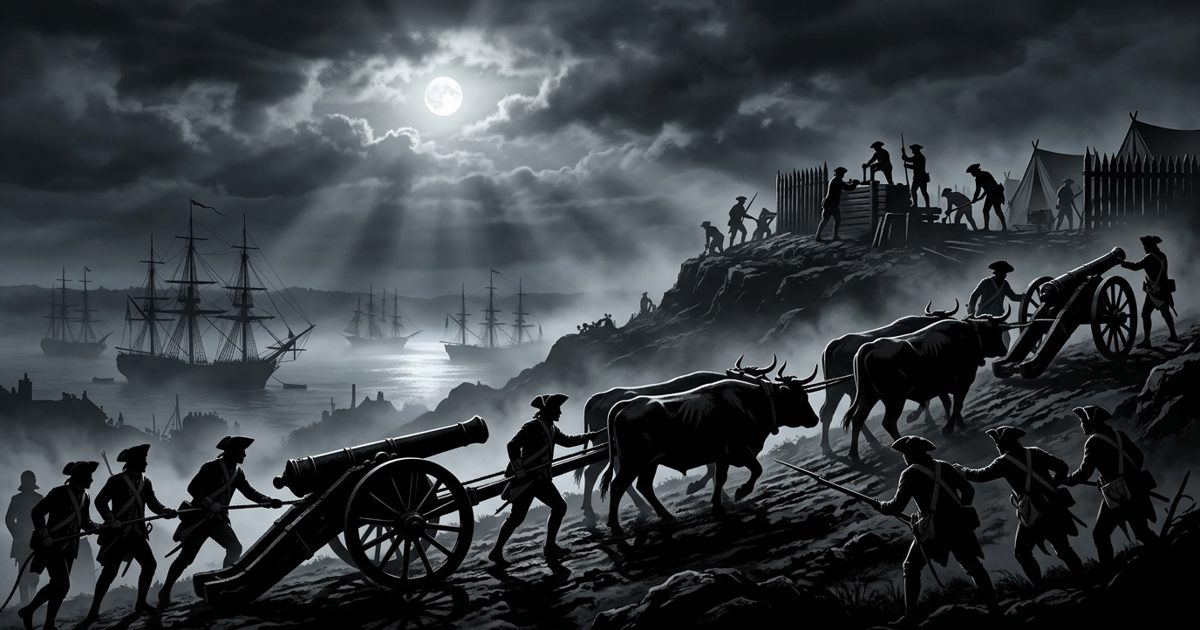
General George Washington initiated one of the boldest engineering operations of the Revolutionary War on the evening of March 4, 1776. Continental artillery batteries at Cambridge and Roxbury opened a thunderous diversionary bombardment against British positions occupying Boston. Under the protective roar of heavy cannon fire, Brigadier General John Thomas led a column of two thousand Continental soldiers onto the heights of Dorchester Peninsula. Colonel Henry Knox supplied the firepower, having dragged dozens of heavy siege guns over three hundred miles of frozen wilderness from Fort Ticonderoga. These heavy artillery pieces formed the core of Washington's plan to break the months-long stalemate across the Boston lines.
Soldiers worked through the freezing darkness with picks, shovels, and prefabricated timber fortifications called fascines and chandeliers. Hardened frozen ground prevented rapid trench digging, forcing the labor parties to stack bundles of tightly bound wood and heavy timber frames packed with earth. More than three hundred ox carts rolled quietly across roads cushioned with hay, transporting heavy naval cannon and ammunition up the steep inclines. Continental sentries watched the British warships resting at anchor below, knowing discovery would trigger devastating broadsides. By the early hours before sunrise, two completed redoubts stood fully armed with twenty heavy guns overlooking Boston harbor and the Royal Navy fleet.
Lookouts stared in astonishment across the water as morning mist cleared on March 5 to reveal the fortified ridge. British commander General William Howe recognized that the Continental artillery commanded both his garrison inside Boston and every anchorage used by his transports. Howe initially prepared an amphibious counterattack with twenty-four hundred British regulars, but a severe gale battered the harbor and scattered his landing boats. Howe ordered the complete evacuation of his army and loyalist refugees after recognizing that the American guns made the port untenable. British ships weighed anchor and sailed for Halifax on March 17, leaving Boston completely in Continental hands.