Marines Splash Ashore at Da Nang to Open American Ground War
Battalion Landing Team 3/9 wades ashore at Red Beach Two to establish perimeter security for the vital American air base.
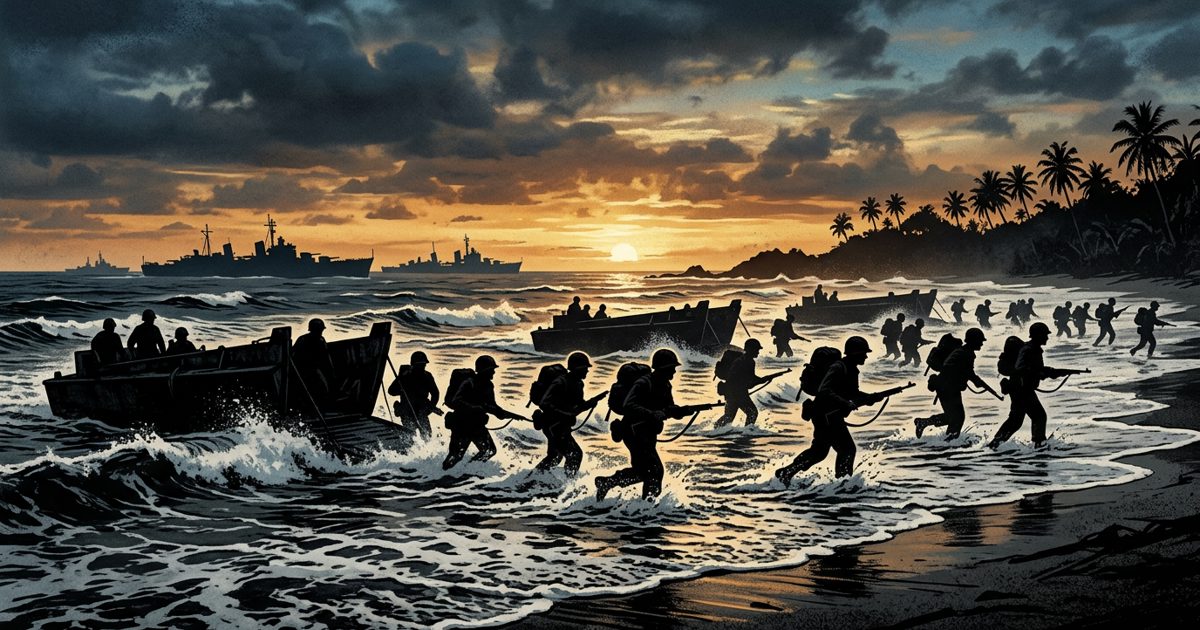
Marines of Battalion Landing Team 3rd Battalion, 9th Marines, splashed through heavy coastal surf toward Red Beach Two northwest of Da Nang on March 8, 1965. Brigadier General Frederick J. Karch directed the 9th Marine Expeditionary Brigade from transport ships USS Henrico, USS Union, and USS Vancouver anchored four thousand yards offshore. Approximately fourteen hundred riflemen waded ashore in full combat gear with flak jackets, steel helmets, and M14 rifles. Local officials and welcoming schoolgirls met the advancing infantry on the beach with floral wreaths instead of gunfire. Defense of the sprawling Da Nang Air Base remained the exclusive combat mission assigned to the landing force.
Aircraft from the base had launched Operation Rolling Thunder strikes against North Vietnam days earlier, leaving the runways vulnerable to retaliatory Viet Cong mortar barrages and ground attacks. General William C. Westmoreland requested the Marine combat battalions because South Vietnamese army units could not guarantee perimeter defense around the vital aviation hub. Marine transport aircraft simultaneously ferried Battalion Landing Team 1st Battalion, 3rd Marines, into Da Nang Airfield directly from Okinawa to reinforce the coastal lodgment. Engineers immediately dug defensive revetments and set up early warning listening posts along the sandy ridges fronting the installations. Patrols rapidly fanned out into surrounding paddies to disrupt insurgent sniper positions and mortar spotters.
Commanders originally restricted the brigade to static base defense, ordering troops not to engage in offensive jungle operations against communist guerrillas. Infiltration through the outer barbed wire lines during subsequent weeks demonstrated that passive security could not protect American jet squadrons from long-range rocket bombardment. Military leaders in Washington and Saigon revised these defensive rules by early summer, authorizing active search and destroy sweeps across the countryside. Deployments expanded rapidly from these initial thirty-five hundred leathernecks to more than one hundred eighty-four thousand American military personnel in South Vietnam by the close of the year.