USS Monitor Fights CSS Virginia in Navy's First Ironclad Duel
Lieutenant John Worden steered the revolutionary turreted ironclad into Virginia waters on March 9, 1862, to halt a Confederate naval rampage and protect the stranded steam frigate USS Minnesota.
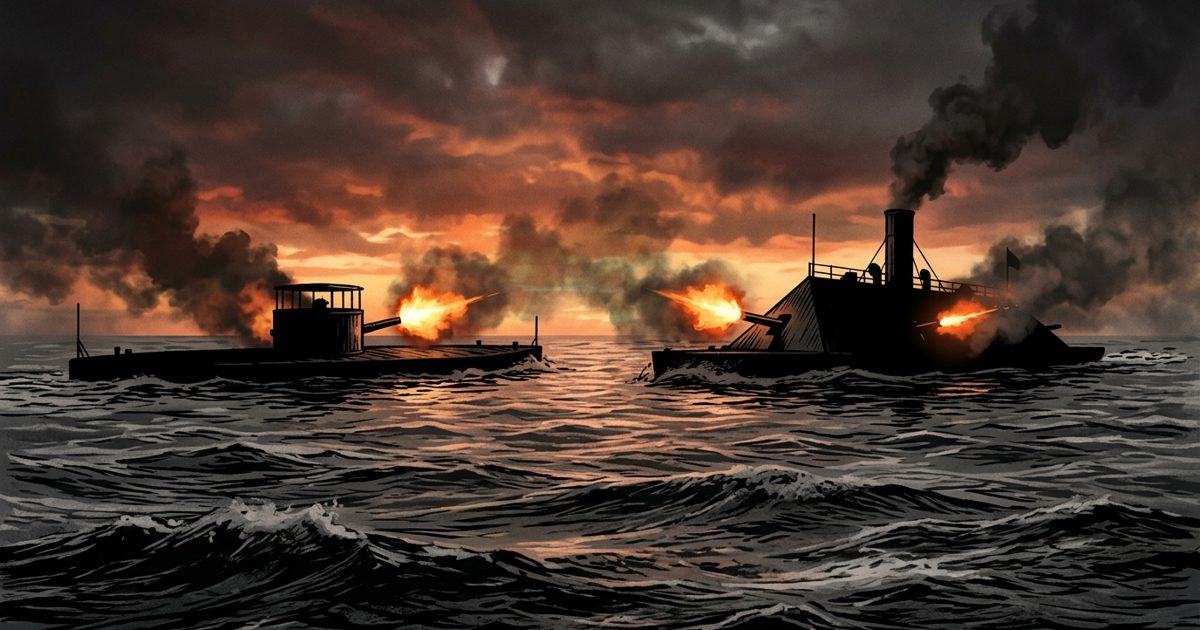
Smoke billowed across Hampton Roads as the Confederate ironclad ram CSS Virginia steamed toward the grounded Union frigate USS Minnesota. Lieutenant John L. Worden maneuvered USS Monitor out from the shadow of the stranded wooden warship to intercept the approaching vessel. Confederate gunners focused their broadsides on the radical federal craft, expecting its low-profile iron raft and revolving cylinder to shatter under heavy shot. Solid iron projectiles struck Monitor's armor plating and revolving turret with deafening clangs, bouncing harmlessly into the bay without penetrating the crew spaces.
Lieutenant Worden directed his gunners inside the rotating cylinder to return fire with twin eleven-inch Dahlgren smoothbore cannon at near point-blank range. Gun crews struggled against blinding gunsmoke, deafening concussions, and awkward turret controls as the two armored ships circled each other for four hours. Confederate officers attempted to ram the federal warship, but Monitor's shallow draft allowed Worden to slip away from the blunt iron prow. Shell fragments struck Monitor's forward pilothouse late in the morning, driving iron splinters and powder into Worden's eyes and temporarily blinding the Union commander.
Lieutenant Samuel Dana Greene assumed command immediately and steered Monitor into shallow water to assess the damage to the pilothouse. Confederate lieutenant Catesby ap Roger Jones surveyed his own battered ship, noting a leaking bow, failing engines, and an outgoing tide. Jones ordered Virginia to break off the engagement and retreat up the Elizabeth River toward the naval yard at Norfolk. Both warships survived the duel without structural collapse, but Monitor's tactical intervention permanently preserved the Union naval blockade of Chesapeake Bay and ended the era of wooden fighting fleets.