Full Calendar
THIS DAY IN U.S. MILITARY HISTORY • DECEMBER 30 1972 U.S. Air Force Vietnam War

Operation Linebacker II Concludes Strategic Bombing Over North Vietnam

President Richard Nixon halts heavy air strikes north of the twentieth parallel after Hanoi agrees to resume peace talks in Paris.
Operation Linebacker II Concludes Strategic Bombing Over North Vietnam

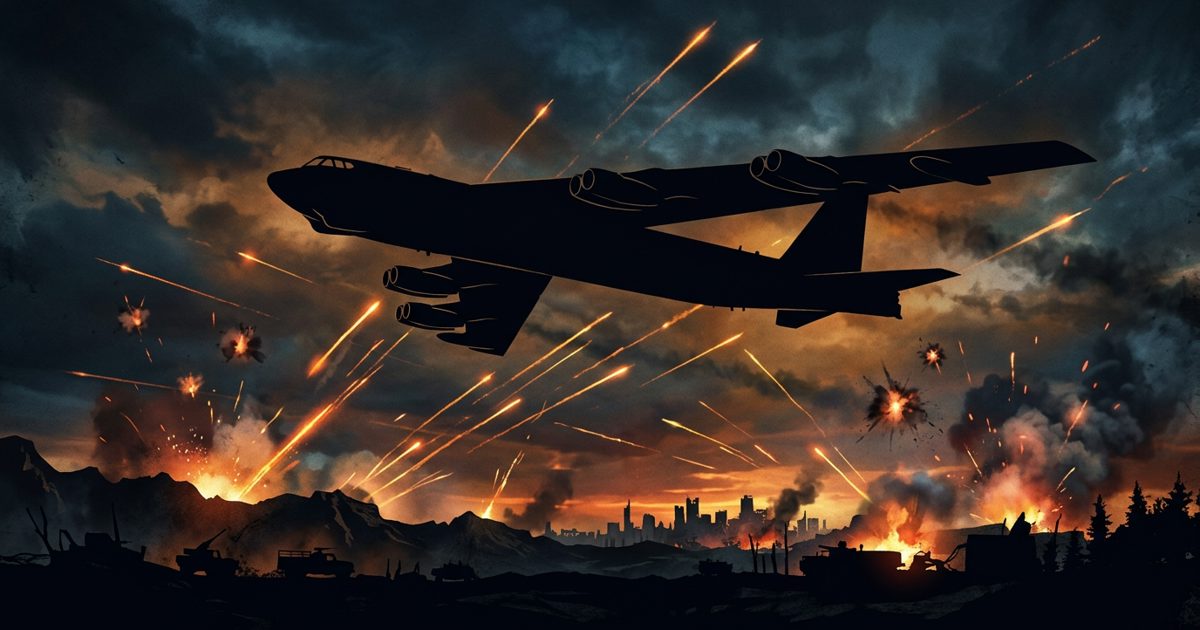
President Richard Nixon ordered the suspension of all aerial bombardment north of the twentieth parallel on December 30, 1972. This directive concluded Operation Linebacker II, an eleven-day strategic air campaign that compelled North Vietnamese leaders to return to peace negotiations in Paris. Strategic Air Command crews launched 729 combat sorties with Boeing B-52 Stratofortress heavy bombers flying from Andersen Air Force Base and U-Tapao Airfield. Supported by Navy and Air Force tactical strike fighters, the bombers struck railway yards, ammunition stores, and communication facilities around Hanoi and Haiphong.

North Vietnamese air defense crews launched more than one thousand Soviet-built SA-2 surface-to-air missiles against the incoming waves. Missile fire downed fifteen B-52s, prompting American mission planners to compress strike windows, adjust altitudes, and improve radar-jamming corridors. These tactical shifts rapidly degraded enemy defenses, depleting Hanoi stockpiles of surface-to-air missiles by the tenth night of raids. North Vietnamese officials subsequently notified Washington that their delegation would resume peace talks in Paris on January 2.

Diplomats reconvened in Paris within days of the bombing halt to complete the stalled treaty terms. National Security Advisor Henry Kissinger and North Vietnamese negotiator Le Duc Tho resolved remaining disputes and finalized the Paris Peace Accords. Representatives signed the agreement on January 27, 1973, bringing an end to direct American military combat involvement in the conflict. The treaty provisions also secured the repatriation of 591 American prisoners of war held in North Vietnamese captivity, including bomber crewmen downed during the December campaign.

CHRONOLOGICAL RECORD

December 30 Across U.S. Military History

9 Verified Events
1776 Continental Army Landmark Event • American Revolution

General Washington Moves Continental Army Back to Trenton

General George Washington shuttled the main body of the Continental Army back across the icy Delaware River on December 30, 1776. Washington established defensive positions along Assunpink Creek south of Trenton and offered a cash bounty to persuade veteran soldiers whose enlistments expired at year end to remain in service.

1813 U.S. Army • War of 1812

British Forces Cross Niagara River and Burn Buffalo

British soldiers and allied Native warriors crossed the Niagara River to assault American militia outposts on December 30, 1813. Major General Amos Hall attempted to mount a defense at Black Rock, but militia lines collapsed under coordinated fire. British troops captured the settlement and burned the village of Buffalo in retaliation for earlier American border raids.

1862 U.S. Navy Landmark Event • Civil War

USS Rhode Island Rescues Crew of Sinking Monitor

Sailors from the paddle steamer USS Rhode Island launched small cutters into heavy seas off Cape Hatteras on December 30, 1862. Rescue crews pulled forty-seven sailors from the flooded deck of the ironclad USS Monitor before the ship foundered. Several Rhode Island crewmen drifted for hours in open water and later received the Medal of Honor.

1890 U.S. Army • Indian Wars

Seventh and Ninth Cavalry Fight at Drexel Mission

Troopers of the 7th Cavalry encountered Lakota warriors along White Clay Creek near the Drexel Mission on December 30, 1890. Hostile fire pinned down the regiment in a narrow ravine until Major Guy V. Henry arrived with four companies of the 9th Cavalry Buffalo Soldiers, driving the Lakota from the surrounding ridges.

1941 U.S. Navy • World War II

Admiral Ernest J. King Assumes Naval Command

Admiral Ernest J. King assumed command as Commander in Chief, United States Fleet, on December 30, 1941. President Franklin D. Roosevelt established the revitalized post after the attack on Pearl Harbor, granting King complete operational control over all deployed American naval fleets and task forces worldwide.

1942 U.S. Army Air Forces • World War II

Eighth Air Force Debuts Combat Box Over Lorient

Boeing B-17 Flying Fortress crews of the Eighth Air Force first flew in a combat box formation against submarine pens at Lorient on December 30, 1942. Colonel Curtis LeMay designed the staggered, three-dimensional arrangement to mass defensive machine gun fire and improve bombing accuracy against heavy German fighter resistance.

1943 U.S. Marine Corps Landmark Event • World War II

First Marine Division Captures Cape Gloucester Airfields

Marines of the 1st Marine Division secured two Japanese airfields near Cape Gloucester on New Britain on December 30, 1943. Troops under Major General William H. Rupertus slogged through dense jungle swamps for three days following amphibious landings before overrunning enemy defensive positions around the airstrips.

1944 U.S. Army Landmark Event • World War II

Third Army Counterattacks West of Bastogne

Major General Troy Middleton's VIII Corps launched a major armored counteroffensive toward Houffalize on December 30, 1944. The 11th Armored Division and the 87th Infantry Division struck German lines west of Bastogne, engaging elements of the 5th Panzer Army in bitter winter combat during the Battle of the Bulge.

1959 U.S. Navy Landmark Event • Cold War

USS George Washington Commissioned as First Ballistic Submarine

Shipbuilders at Groton delivered USS George Washington into active naval service on December 30, 1959. Commander James B. Osborn assumed command of the vessel, which inaugurated the nation's nuclear deterrent submarine force. The submarine carried sixteen Polaris A-1 ballistic missiles capable of striking strategic targets from beneath the ocean surface.

MEDAL OF HONOR ACTION 1968

Sergeant First Class Robert L. Howard Earns the Medal of Honor

Sergeant First Class Robert L. Howard served as platoon sergeant for a joint American and South Vietnamese reconnaissance element operating in hostile territory on December 30, 1968. Assigned to the Military Assistance Command Vietnam Studies and Observations Group, Howard deployed with his unit on a mission to rescue an American soldier missing behind enemy lines. A reinforced two-company North Vietnamese force ambushed the patrol immediately after helicopters inserted the troops. An exploding grenade wounded Howard and destroyed his weapon, but he rallied his defenders and crawled forward under heavy fire to reach his severely wounded platoon leader.

Enemy rounds struck the ammunition pouch of the downed lieutenant during the rescue attempt, detonating cartridges and throwing Howard backward with additional blast wounds. Howard dragged the officer to cover despite his severe injuries, established a tight defensive perimeter, and coordinated air strikes against the surrounding attackers. His tactical leadership held the perimeter for three and a half hours until extraction helicopters landed under fire. Howard personally supervised the evacuation of all wounded personnel before boarding the final transport out of the engagement zone.