Full Calendar
THIS DAY IN U.S. MILITARY HISTORY • APRIL 14 1988 U.S. Navy Cold War

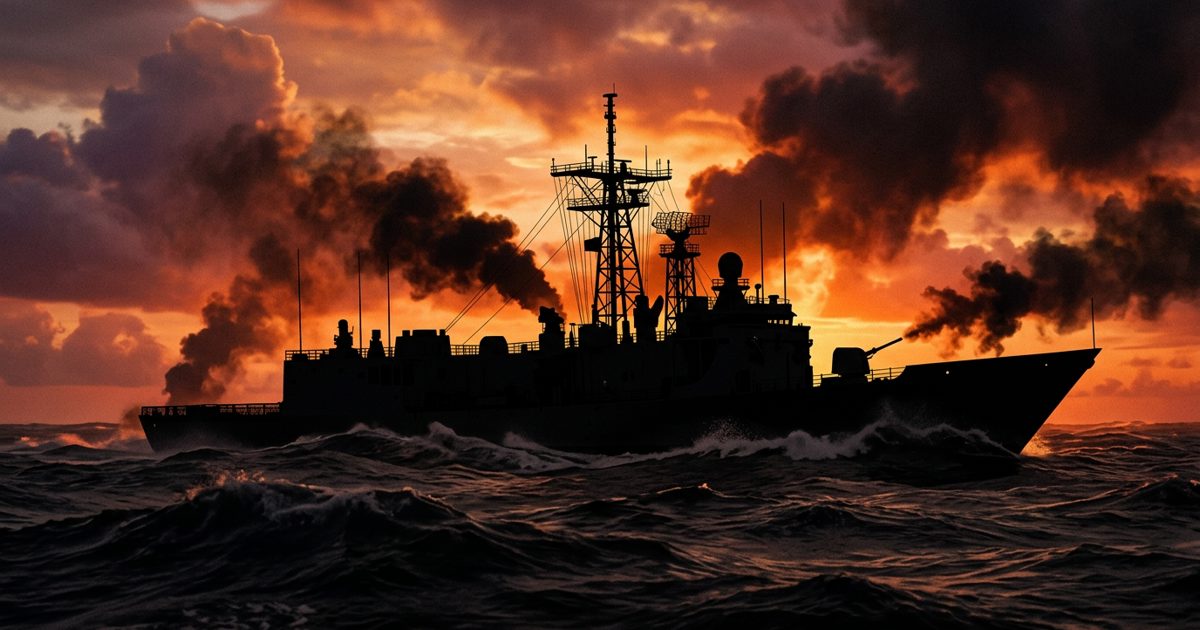
Guided Missile Frigate Samuel B. Roberts Survives Persian Gulf Mine Blast

Sailor damage control teams save their shattered frigate after striking an Iranian mine in the central Persian Gulf shipping channel.
Guided Missile Frigate Samuel B. Roberts Survives Persian Gulf Mine Blast

Lookouts aboard the guided missile frigate USS Samuel B. Roberts spotted three moored contact mines floating seven hundred yards ahead in international waters of the Persian Gulf. Commander Paul X. Rinn immediately sounded general quarters, halted the ship, and ordered the engine room to back down along the inbound wake to escape the field. Backing maneuvers came to an abrupt halt at 1659 hours when an undetected contact mine struck the bottom of the hull beneath the main engineering space. The concussion lifted the four-thousand-ton warship out of the water and cracked the main structural keel.

Seawater rushed into the engineering spaces through a fifteen-foot breach, immediately flooding the lower decks and knocking both gas turbine engines off their mounts. Thick smoke from burning fuel oil filled auxiliary machinery rooms as electrical generators failed across the ship. Sailors formed bucket brigades and deployed portable diesel pumps in knee-deep water while damage control parties applied heavy timber shores against bulging bulkheads. Chief petty officers guided emergency patching teams that kept the ship from breaking in two until auxiliary power could be restored.

Rescuers and escort vessels secured towlines after five hours of continuous firefighting, ensuring the frigate remained afloat without a single crew fatality. Explosive ordnance disposal teams recovered neighboring mines that bore serial numbers directly matching weapons previously seized from the Iranian minelayer Iran Ajr. President Ronald Reagan ordered retaliatory strikes based on this tactical evidence, launching Operation Praying Mantis against Iranian offshore platforms and combat ships four days later. Technicians transported the damaged frigate back to the United States aboard a heavy lift transport, completing full hull repairs that kept the vessel in fleet service until 2015.

CHRONOLOGICAL RECORD

April 14 Across U.S. Military History

8 Verified Events
1861 U.S. Army Landmark Event • American Civil War

Union Soldiers Evacuate Fort Sumter

Soldiers under Major Robert Anderson evacuated Fort Sumter following thirty-four hours of Confederate artillery fire in Charleston Harbor. Private Daniel Hough died during the final fifty-gun salute to the national banner when an accidental cannon detonation erupted on the parapet. Hough became the first military fatality of the American Civil War.

1865 U.S. Army Landmark Event • American Civil War

Union Flag Restored Over Fort Sumter

Union forces led by Major General Robert Anderson raised the thirty-three-star storm flag over Fort Sumter four years after surrendering the post. Northern dignitaries assembled in Charleston Harbor to celebrate the symbolic restoration of national authority across the South. John Wilkes Booth shot President Abraham Lincoln later that evening during a performance at Fords Theatre.

1918 U.S. Army Air Service Landmark Event • World War I

First American Air Service Victories Over Toul

Pilots Douglas Campbell and Alan Winslow scrambled their Nieuport 28 fighters from Gengoult Aerodrome near Toul, France, after spotters reported incoming German planes. Both aviators engaged two German aircraft directly over the airfield and shot them down within ten minutes. Campbell subsequently became the first American-trained fighter ace of World War I.

1942 U.S. Navy Landmark Event • World War II

USS Roper Sinks German Submarine U-85

Crew members aboard the destroyer USS Roper detected the German submarine U-85 off Cape Hatteras, North Carolina, and closed the distance at high speed. Roper fired deck guns into the conning tower before dropping depth charges that sank the enemy boat in shallow water. The engagement marked the first German submarine sunk by an American surface warship in World War II.

1945 U.S. Navy • World War II

USS Tirante Raids Quelpart Island Harbor

Commander George L. Street III took the submarine USS Tirante into the shallow, mine-strewn harbor of Quelpart Island off Korea on a surface night raid. Tirante torpedoed and sank a Japanese ammunition transport alongside two escort frigates before escaping seaward under fire. Street received the Medal of Honor for executing the daring raid inside enemy waters.

1948 U.S. Air Force Landmark Event • Post-WWII / Cold War

President Truman Establishes Air Force Reserve

President Harry S. Truman signed an executive directive formally creating the United States Air Force Reserve as an independent reserve component. The measure transferred thousands of World War II Army Air Forces veterans and combat units into the new service organization. Mobilized reserve wings subsequently deployed transport and light bomber aircraft across the Korean peninsula two years later.

1972 U.S. Army • Vietnam War

Major Duffy Rallies Firebase Charlie Garrison

Major John J. Duffy coordinated the defense of Fire Support Base Charlie in South Vietnam while advising the South Vietnamese 11th Airborne Battalion. Duffy directed close tactical airstrikes, distributed ammunition, and led defensive fire despite suffering multiple combat wounds. His actions enabled surviving soldiers to break through an encircling enemy battalion and reach safety.

1994 U.S. Air Force Landmark Event • Operation Provide Comfort

Black Hawk Friendly Fire Incident Over Iraq

Fighter pilots flying two United States Air Force F-15C aircraft mistakenly shot down two United States Army UH-60 Black Hawk helicopters over northern Iraq. Controllers aboard an airborne warning aircraft failed to alert the fighters that friendly transport helicopters were operating in the valley. The incident killed twenty-six military personnel and international officials during Operation Provide Comfort.

MEDAL OF HONOR ACTION 2004

Corporal Jason Dunham Shields His Squad in Karabilah

Corporal Jason L. Dunham led a Marine rifle squad toward an ambushed convoy near the town of Karabilah along the Syrian border in western Iraq. Insurgents engaged the patrol with rifle fire and rocket-propelled grenades as Dunham moved his team forward on foot to inspect departing civilian vehicles. Dunham tackled a driver who burst from a white vehicle and attempted to flee into an alley. The fighter pulled a hidden pin and released a live hand grenade during the physical struggle on the dirt road.

Dunham alerted his nearby squad mates, dropped onto the explosive device, and covered it with his Kevlar helmet and chest. The blast shredded the helmet and mortally wounded him while protecting the two Marines who had rushed forward to provide assistance. Medical teams evacuated Dunham to the National Naval Medical Center in Bethesda, where he died eight days later from head trauma. President George W. Bush posthumously presented the Medal of Honor to his parents, recognizing an action that saved the lives of his fellow riflemen.

DAILY EMAIL BRIEFING

Get This Briefing Every Morning

Start each day with verified U.S. military history delivered to your inbox. Straightforward historical reporting covering major battles and lesser-known tactical operations.

Subscribe Below