Doolittle Raiders Strike Tokyo from Deck of USS Hornet
Sixteen Army bombers launch from carrier flight decks in rough seas to strike the Japanese homeland.
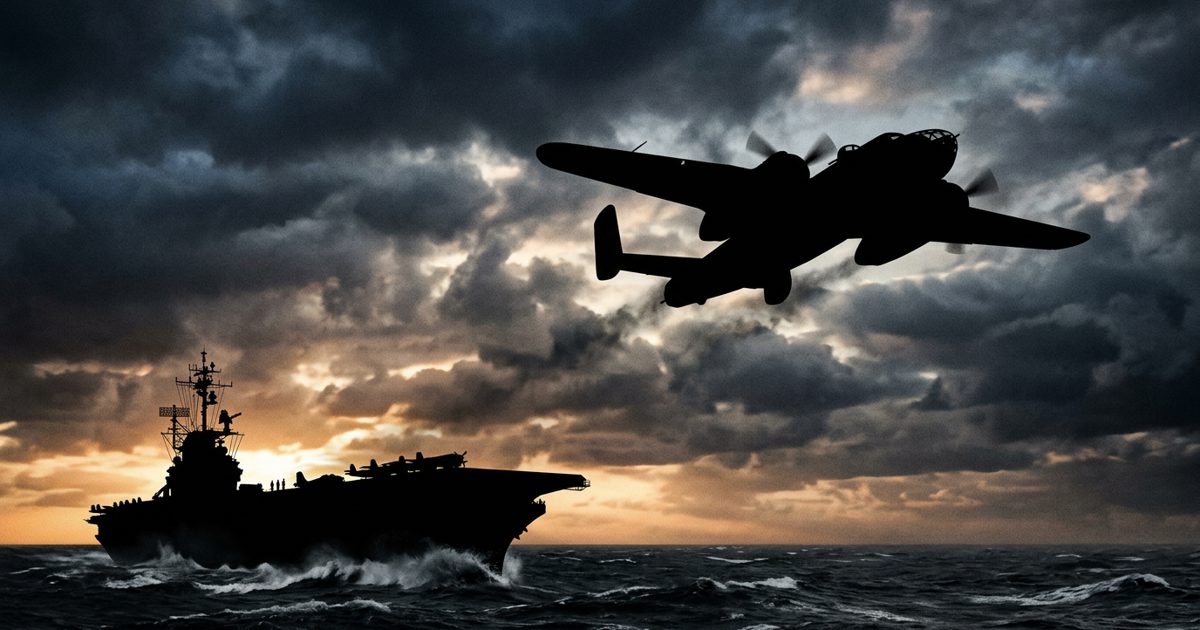
Sailors aboard the aircraft carrier USS Hornet battled heavy ocean swells six hundred miles east of Tokyo when lookouts spotted an enemy patrol boat. Vice Admiral William F. Halsey ordered the vessel sunk, but commanders knew the task force had lost surprise. Lieutenant Colonel James H. Doolittle ordered his crews to start sixteen twin-engine B-25B Mitchell bombers tied to the flight deck. Aircrews faced a takeoff ten hours earlier and two hundred miles farther out than planned. Doolittle gunned his engines at full throttle and lifted off into the gale, clearing the carrier bow with inches to spare.
Pilots in the remaining fifteen bombers followed their commander down the pitching timber deck, skimming just above the waves to evade Japanese radar. Crews climbed over Tokyo, Yokohama, Yokosuka, Nagoya, and Kobe around midday to drop high-explosive and incendiary bombs on factories and shipyards. Japanese antiaircraft batteries fired wildly while interceptor aircraft failed to break up the formations. Bombing runs caused modest physical damage, yet the sudden raid demonstrated that the Japanese homeland was vulnerable to American air attack.
Navigators steered their fuel-starved aircraft westward toward eastern China through darkness and driving rain. Zero visibility prevented the crews from finding designated airfields, forcing fifteen planes to ditch offshore or crash in rugged mountains. Chinese civilians guided sixty-four surviving fliers through enemy lines to safety. Japanese military leaders reacted by pulling frontline air units back for home defense and accelerating their plan to assault Midway Island.